Trang Ha Nguyen, University of Languages and International Studies, Vietnam National University, Vietnam
Nguyen, T. H. (2026). Book review: Motivation and learning strategies for college success: A focus on self-regulated learning. Studies in Self-Access Learning Journal, 17(3), 482–487. https://doi.org/10.37237/170311
Abstract
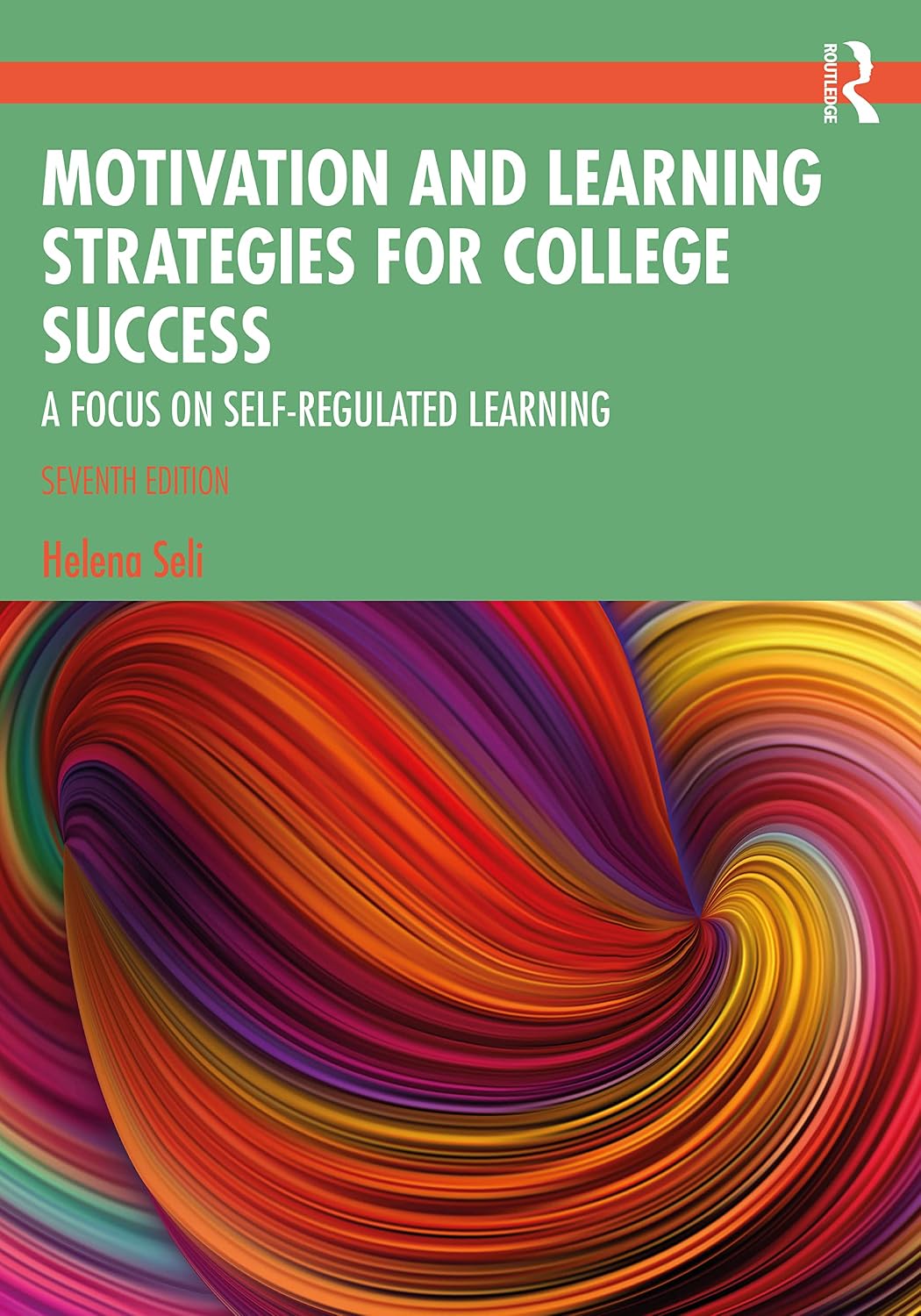
This paper reviews the 7th edition of the book Motivation and Learning Strategies for College Success: A Focus on Self-Regulated Learning by Helena Seli. Addressing the growing emphasis on learner autonomy and academic self-regulation in higher education, the book provides a structured and theory-based overview of self-regulated learning (SRL). Organized into four parts, it examines foundational concepts of motivation and learning, motivational and behavioral regulation, and practical study strategies for academic success. Combining theoretical explanations with reflective activities and practical techniques, the book serves as a useful resource for both students and educators. The review highlights the book’s strengths in systematically organizing SRL dimensions and integrating theory with practice, while also noting its relatively linear treatment of self-regulation and limited discussion of sociocultural and contextual influences on strategic learning practices.
Keywords: learning strategies, self-regulated learning, self-regulation, higher education
In the context of expanding access to higher education and digital learning, fostering learner agency and autonomy has become an increasingly important concern for college students and the educators who support their learning. Self-regulated learning (SRL), therefore, has been considered a key determinant of academic success and has become a central focus in contemporary educational research (Gupta et al., 2024; Pintrich, 2000; Santika et al., 2025; Yeh et al., 2019; Zimmerman, 2000). SRL refers to an active, goal-directed, and adaptive process in which learners regulate their cognition, motivation, emotions, behavior, and learning environment in response to task and contextual demands (Boekaerts, 2011; Pintrich, 2000; Zimmerman, 2000). It involves setting goals, planning strategies, monitoring performance, and using feedback and self-reflection to adapt subsequent learning processes (Winne & Hadwin, 1998; Zimmerman, 2000; Zimmerman & Moylan, 2009). Given the multi-dimensional and adaptive nature of SRL, we need to consider how college students can be supported to develop effective learning strategies and manage academic self-regulation (Biwer, 2020).
Although a substantial body of literature has examined individual aspects of learning strategies, study skills, motivation, and environment, fewer works have straightforwardly explained and systematically connected these components for students’ practical use. The book Motivation and Learning Strategies for College Success: A Focus on Self-Regulated Learning partly addresses this gap by offering a comprehensive and structured approach to academic self-regulation. Drawing on theoretical foundations, applied strategies, and students’ journals, the book is written to help students understand, develop, and implement self-regulation strategies across cognitive, behavioral, motivational, and environmental dimensions, making it a useful resource for both learners and educators in higher education contexts. Compared to previous editions, the 7th edition has placed greater emphasis on students from marginalized groups, non-traditional students, the impacts of online learning, and effective strategies to utilize technology.
Authored by Helena Seli, the book is organized into four interconnected parts, providing a comprehensive understanding of various aspects and strategies associated with academic self-regulation among college students. Part 1, Foundations of Learning and Motivation (Chapters 1 to 3), establishes the theoretical and conceptual basis for the book. Chapter 1 introduces the concept of “academic self-regulation” and the processes required for behavior change. Chapter 2 examines the significant role of motivation, with considerations of both internal and external influences, while Chapter 3 focuses on learning and memory, highlighting what shapes retention and which strategies are applicable to enhance it. Part 2, Motivational Strategies (Chapters 4 to 5), addresses self-regulation of motivation in detail. Chapter 4 focuses on goal setting as a key driver of motivation and academic performance, while Chapter 5 explores strategies for emotion regulation, including self-talk and anxiety management. Part 3, Behavioral Strategies (Chapters 6 and 7), gives information about the regulation of learning conditions. Chapter 6 addresses time management and procrastination, and Chapter 7 focuses on managing students’ physical and social environment, including attention control, help-seeking, and collaborative learning. Part 4, Learning and Study Strategies (Chapters 8 to 11), offers instructions on strategies to promote effective learning, preparation, and performance before, during, and after exams. Chapters 8 and 9 examine learning from course materials and classroom instruction, Chapter 10 then focuses on exam preparation and study planning, and Chapter 11 addresses test-taking strategies for answering both objective questions and essay prompts.
A major strength of the book is its systematic and coherent organization of self-regulated learning into clearly defined aspects or strategy domains. Despite the considerable number of techniques introduced, the author has synthesized foundational knowledge of academic self-regulation and represented it in a diagram, clarifying the importance of each dimension, as well as how they complement the overall self-regulatory process. Another key strength is the integration of theory and practice. The book does not merely describe learning strategies but situates them within established theoretical frameworks such as self-regulation cycles and information-processing models, as well as relevant concepts, namely SMART goals and emotional intelligence. This aligns with the keyword “Motivation” in the book title, as the rationale for strategy use and strategic behaviors would be a key driver for students’ self-regulation. Another strength of the book is its inclusion of structured exercises, self-observation tasks, and step-by-step instructions. This helps enhance its applicability for both learners and teachers, especially those who are seeking actionable, scaffolded guidance.
Despite its comprehensive coverage, the book tends to present self-regulated learning as a relatively linear and prescriptive process. The interaction of different domains and students’ orchestration of different strategies has not been explored in depth, especially in higher education contexts. The book focuses more on the strategies that can be applied than on how they can be selected, combined, and adjusted. Moreover, although aspects related to sociocultural, institutional, and disciplinary factors are mentioned, how they shape the enactment of self-regulation in authentic academic settings, particularly in marginalized contexts, remains underexplored. Some sections also provide relatively limited coverage of concepts and techniques for developing a more structured and theory-based understanding. For future editions or related work, the author might consider drawing on Anderson and Krathwohl’s (2001) Revised Bloom’s Taxonomy to distinguish more specific types of lower- and higher-level questions. The Cornell System for note-taking might also be considered as a useful template for both online and face-to-face learning (Pauk & Owens, 2010).
In conclusion, the book “Motivation and Learning Strategies for College Success: A Focus on Self-Regulated Learning” offers a comprehensive, theory-based, and structured understanding of academic self-regulation, especially in terms of regulating motivation and applying practical strategies. For students, the book serves as a practical guide for developing essential academic competencies and skills. For instructors, the book offers a useful pedagogical resource for designing learning activities and scaffolding students’ development of self-regulation in both formal and informal learning contexts. For researchers, the book provides several foundational frameworks and concepts that address multiple self-regulatory dimensions, making it a useful reference for further theoretical refinement and empirical investigation. Overall, the book’s integration of theoretical perspectives and practical strategies makes it a valuable resource for understanding and developing self-regulated learning in contemporary higher education.
Publication Information
Title: Motivation and Learning Strategies for College Success: A Focus on Self-Regulated Learning
Author: Helena Seli
Edition: 7th Edition
Language: English
Publisher: Routledge
ISBN: 9781032470207
eBook ISBN: 9781003385271
Date of publication: 1 August 2023
Format: eBook, Paperback
Notes on the Contributor
Trang H. Nguyen is a PhD Candidate in English Language Teaching Methodology at the University of Languages and International Studies, Vietnam National University (ULIS-VNU). She holds a Bachelor’s degree in English Language Teacher Education from ULIS-VNU and a Master of Science in TEFL from Southern New Hampshire University. She also has experience in university teaching, curriculum design, IELTS training, and academic management.
References
Anderson, L. W., & Krathwohl, D. R. (Eds.). (2001). A taxonomy for learning, teaching and assessing: A revision of Bloom’s taxonomy of educational objectives. Longman.
Biwer, F. (2020). Fostering effective learning strategies in higher education – A mixed-methods study. Journal of Applied Research in Memory and Cognition, 9(2), 186–203. https://doi.org/10.1016/j.jarmac.2020.03.004
Boekaerts, M. (2011). Emotions, emotion regulation, and self-regulation of learning. In B. J. Zimmerman & D. H. Schunk (Eds.), Handbook of self-regulation of learning and performance (pp. 408–425). Routledge.
Gupta, N., Ali, K., Jiang, D., Fink, T., & Du, X. (2024). Beyond autonomy: Unpacking self-regulated and self-directed learning through the lens of learner agency- a scoping review. BMC Medical Education, 24(1), 1519. https://doi.org/10.1186/s12909-024-06476-x
Pauk, W., & Owens, R. J. Q. (2010). The Cornell system: Take effective notes. In How to study in college (10th ed., pp. 235–277). Cengage Learning.
Pintrich, P. R. (2000). The role of goal orientation in self-regulated learning. In M. Boekaerts, P. R. Pintrich, & M. Zeidner (Eds.), Handbook of self-regulation (pp. 451–502). Academic Press. https://doi.org/10.1016/B978-012109890-2/50043-3
Santika, R., Arifin, S., Zulaiha, S., & Gashimov, E. (2025). The implementation of self-regulated learning strategies in promoting autonomy learner among university students. Jurnal Pendidikan Indonesia, 6(3), 1650–1660. https://doi.org/10.59141/japendi.v6i3.7381
Seli, H. (2023). Motivation and learning strategies for college success: A focus on self-regulated learning (7th ed.). Routledge. https://doi.org/10.4324/9781003385271
Wilson, L. O. (2001). Bloom’s taxonomy revised. The Second Principle. https://thesecondprinciple.com/teaching-essentials/blooms-taxonomy-revised/
Winne, P. H., & Hadwin, A. F. (1998). Studying as self-regulated engagement in learning. In D. Hacker, J. Dunlosky, & A. Graesser (Eds.), Metacognition in educational theory and practice (pp. 277–304). Erlbaum.
Yeh, Y.-C., Kwok, O.-M., Chien, H.-Y., Sweany, N. W., Baek, E., & McIntosh, W. (2019). How college students’ achievement goal orientations predict their expected online learning outcome: The mediation roles of self-regulated learning strategies and supportive online learning behaviors. Online Learning, 23(4). https://doi.org/10.24059/olj.v23i4.2076
Zimmerman, B. J. (2000). Attaining self-regulation: A social cognitive perspective. In M. Boekaerts, P. R. Pintrich, & M. Zeidner (Eds.), Handbook of self-regulation (pp. 13–39). Academic Press. https://doi.org/10.1016/B978-012109890-2/50031-7
Zimmerman, B. J., & Moylan, A. R. (2009). Self-regulation: Where metacognition and motivation intersect. In D. J. Hacker, J. Dunlosky, & A. C. Graesser (Eds.), Handbook of metacognition in education (pp. 299–315). Routledge.