
Introduction
Brian J Birdsell, Institute for the Promotion of Higher Education, Hirosaki University, Japan
Birdsell, B. J. (2024). Introduction Studies in Self-Access Learning Journal, 15(4), 575–378. https://doi.org/10.37237/150401
The theme of this special issue is “Integration.” The articles presented in this special issue discuss various ways that Hirosaki University’s SALC (“The English Lounge”) has become integrated into the university. This includes integration into the Liberal Arts English courses, as well as a special international exchange program called “Hayabusa College,” a minor program, and a university-wide lecture series. The authors of this special issue jointly oversee the day-to-day management of the English Lounge and have contributed the research articles or summary reports highlighting these different types of integration. As SALCs evolve to the demands of their unique environments, it is paramount to find ways to maintain their relevancy and centrality for language learning and cross-cultural understanding. We hope others who are involved in their own SALCs find this special issue useful and engaging.
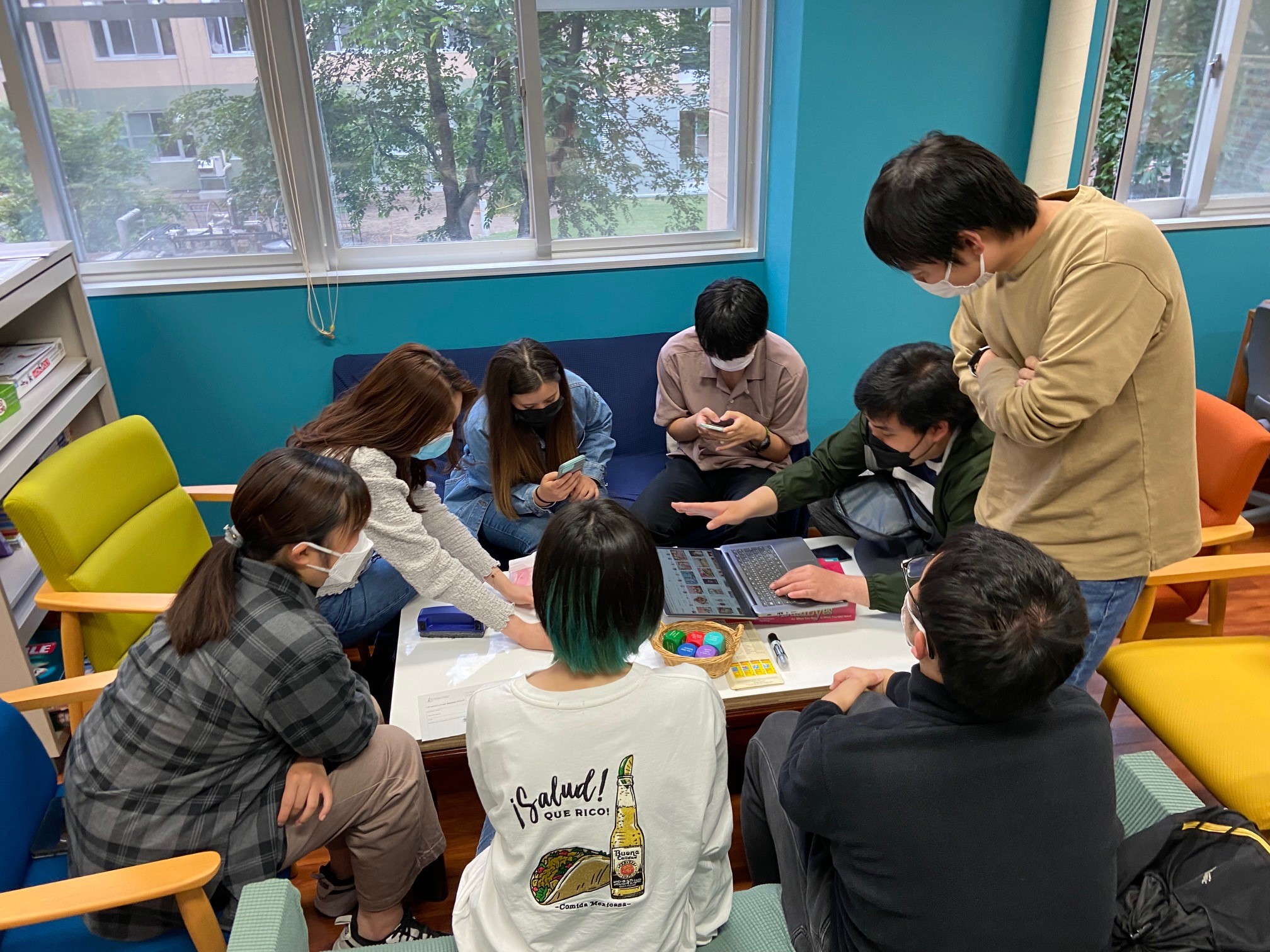
Figures 1 to 3 are photos from the three main areas of the English Lounge. Teachers hold special workshops and seminars in the Seminar Room. The English Lounge Forum also uses this space (see Katagiri, in this issue, for more information). The Reading Corner has graded readers and other English learning materials for students. The Conversation Space is an open space with sofas and chairs for students to interact with each other, play games, converse, and learn about different cultures. English Lounge Supporters – exchange students at the university – are hired to run this section of the SALC.
Figure 1
Seminar Room
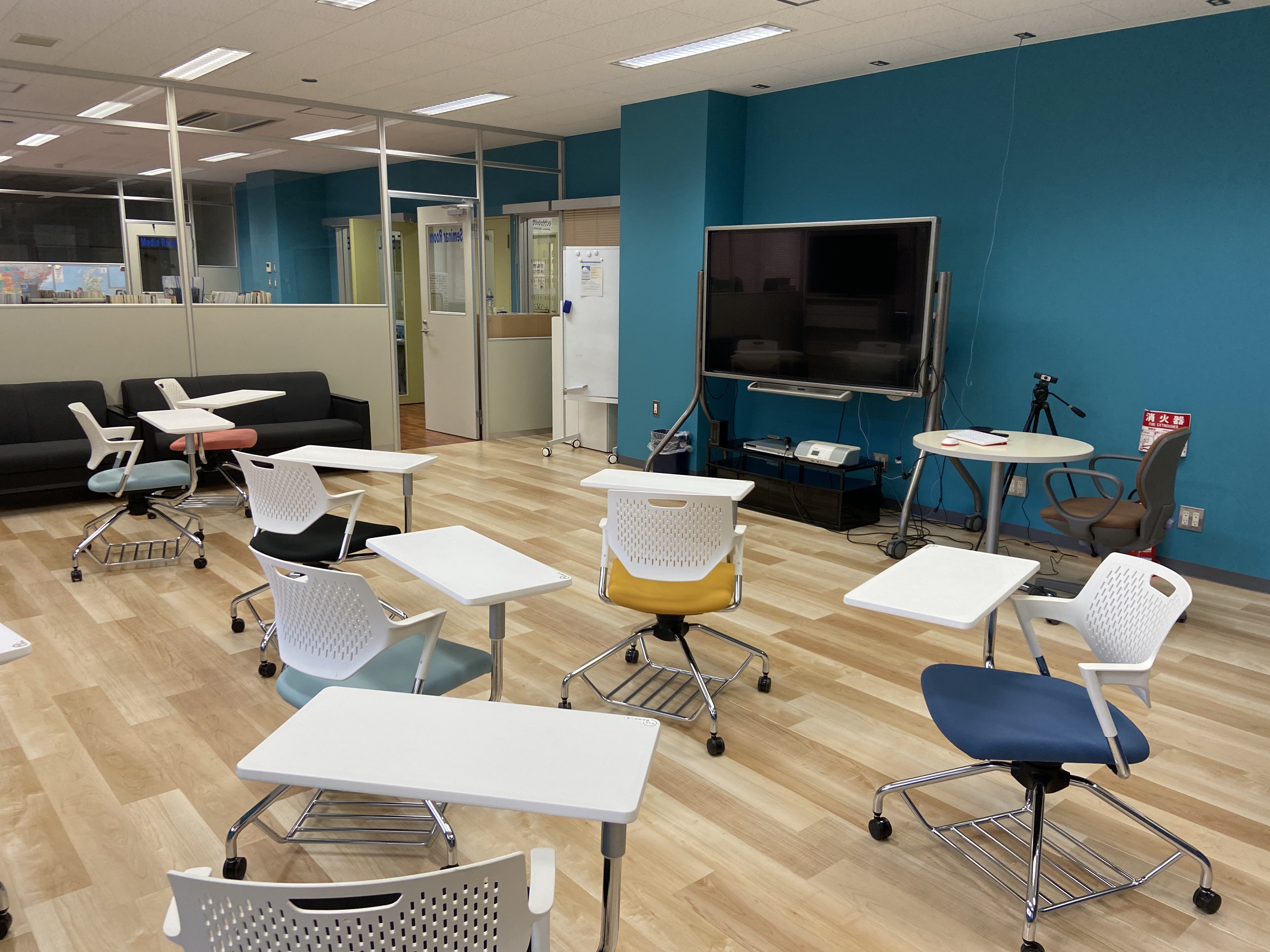
Figure 2
Reading Corner
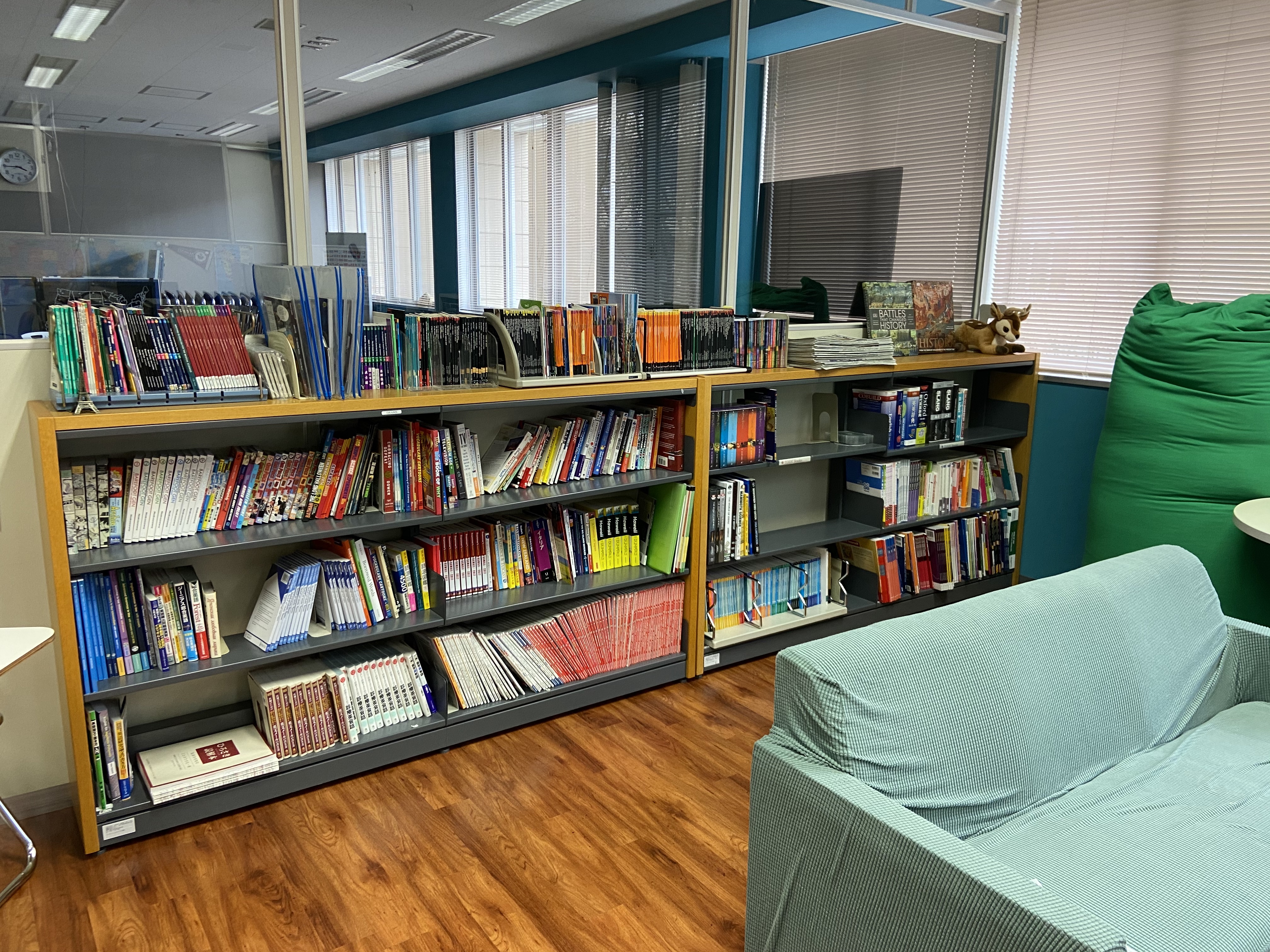
Figure 3
Conversation Space
Articles
The first research article by Brian J Birdsell and Saki Niioka looks at a short-term international exchange program called “Hayabusa College” and how this program is tightly integrated into the university’s SALC. Then, using an autobiographical narrative from the second author, who is a former Hayabusa College student, the authors analyze her experiences learning English and the role of the SALC. Using self-determination theory, they consider how her basic psychological needs were satisfied or, in some cases, frustrated. Their analysis shows the potential of using the lived experiences of students to understand the idiosyncratic path of language learning, including both emotional and motivational tendencies within a SALC context.
In the second article, Joshua Lee Solomon explores the diverse experiences and motivations of SALC use by using two surveys, one with heavy-recurrent SALC users and the other with EL supporters. He examines the complex community that emerges in the SALC space, emphasizing the need to view users as a multiplicity rather than a uniform group. The paper highlights the complex social space that emerges between people in a SALC.
In the third article, Brian J Birdsell discusses how the SALC has become integrated into the Liberal Arts English curriculum. He describes a classroom assignment that aims to heighten students’ awareness of and interest in the facility. This assignment requires first-year students to use the SALC to interview an EL supporter and then asks the students to reflect on this experience. Using these reflections, the author analyzes the experiences of the students using the SALC to interact with others in English.
Summaries
The first summary is by Megumi Tada and Shari Berman. They provide an overview of the history of the English Lounge from its inception to its current state. They review some of the key steps towards integrating the English Lounge into the university that are discussed in detail in the above research articles and the following summary reports. They also include three interviews with former students who have since graduated and started their careers. These students offer insight into the lives of frequent SALC users after becoming shakaijin (a member of society) and the impact of the SALC and having English communication skills on their careers and personal lives.
In the second summary, Reik Jagno outlines the newly formed minor program at Hirosaki University, focusing specifically on the Advanced Language Learning minor. He examines how the SALC is integrated into the core coursework for completing this minor.
In the third summary, Sanae Katagiri describes the English Lounge Forum, a series of lectures held in the SALC, which aims to “pull” students to the facility with activities throughout the year. This forum also situates the SALC as a “hub” for interdisciplinary learning, as it invites speakers from across the faculties and outside of the university to speak on topics ranging from language learning strategies to gender-related issues.
 SiSAL Journal