Yuko Tomiyama, Meiji University, Tokyo, Japan
Tomiyama, Y. (2026). A review of the learning mindset notebook: A 12-week reflective journal for language learning. Studies in Self-Access Learning Journal, 17(3), 488–492. https://doi.org/10.37237/170312
Abstract
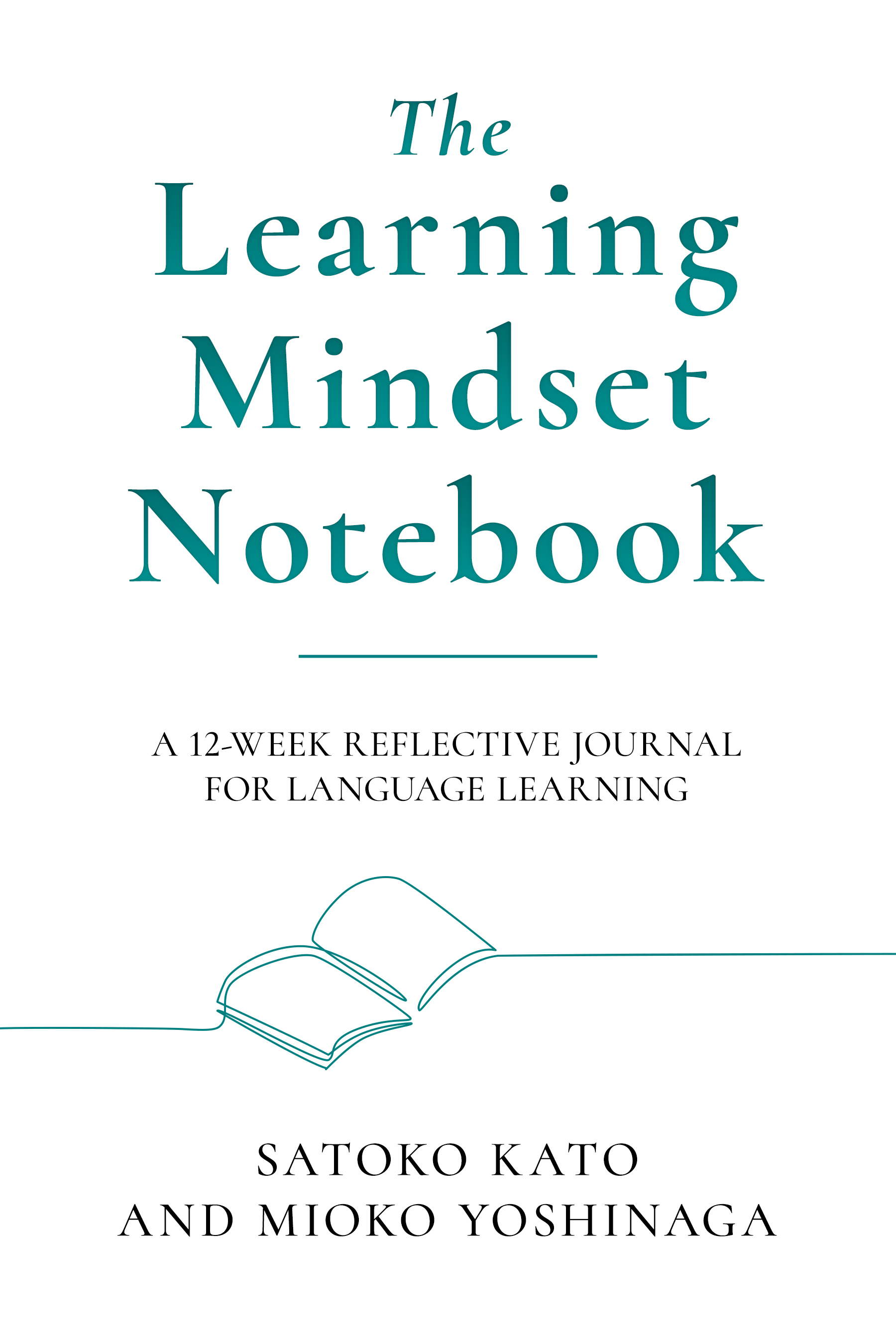
The Learning Mindset Notebook: A 12-Week Reflective Journal for Language Learning (Kato & Yoshinaga, 2026) is a guided workbook intended for language learners to clarify their goals and develop intentional learning practices through reflective activities. Intended for a broad audience of language learners and those who support them (i.e., teachers and learning advisors), the notebook is useful both as a self-study tool and a resource adaptable to classroom and learning advising contexts. It is published by Candlin & Mynard ePublishing, with downloadable worksheets available on their website (https://www.candlinandmynard.com/mindsetnotebook.html).
Keywords: learner autonomy; reflection; language learning; learning mindset; self-regulation; learner well-being; motivation
The Learning Mindset Notebook: A 12-Week Reflective Journal for Language Learning (Kato & Yoshinaga, 2026) is built on the premise that learning is achieved best when starting with reflection of a learner’s language learning journey, tendencies, and successes rather than immediately planning a schedule. This philosophy shapes the overall design of the book, which focuses on reflective activities prior to detailed schedule planning. To guide the learner through the process, the notebook is organized into three main sections: Part 1 Learning Mindset Program, Part 2 The Planner, and Part 3 Further Reading.
Part 1, Learning Mindset Program, first introduces the eight core principles that underpin the planning process, which are listed below:
- Start with reflection, not the plan
- Get used to thinking about your future
- Design your own plan, your own way
- Pay full attention to your present self
- Let your motivation guide your actions
- Keep a record of your learning journey
- Be aware of your well-being
- Develop your power of reflection
The eight principles appear to be inspired by Positive Psychology Interventions (PPIs) in positive psychology, and the activities are created by the same approach—deliberate, repeatable actions that lead to positive change (Kato & Yoshinaga, 2026). The principles address themes that assist learners to create a system that works for themselves rather than simply copying what others are doing. Each principle is presented with a brief rationale and a key-point summary in the beginning, followed by guided activities. These activities are often divided into a sequence of smaller tasks that scaffold learners’ thinking. For example, one activity in the first principle, Start with reflection, not the plan, asks learners to reflect on their language learning history by first drawing a motivation graph and then completing follow-up tasks that identify the thoughts, patterns, and values revealed through that reflection.
Part 2, The Planner, includes three components: a monthly calendar, a task calendar, and weekly schedules. The monthly calendar provides an overview of the month by allowing learners to record their goals, planned activities, and practical information such as the time and money spent. The task calendar complements the monthly calendar by asking learners to list concrete tasks for the month and mark the days on which the task is completed, providing a visual record of their progress over time. The weekly schedule allows learners to organize their days. The Planner is intended to encourage learners to articulate their monthly or weekly objectives, document their activities and reflections, thereby translating insights into concrete actions.
Finally, Part 3, Further Reading, provides a curated list of resources that support the notebook’s design. By situating it within research on educational psychology, learner autonomy, learning strategies, and advising, it highlights the theoretical foundation of the notebook. It can also be a guide for readers who would like to further explore the evidence behind the activities.
The notebook’s sustained focus is on reflection as the foundation of the language learning journey. Rather than providing strategy instruction or prescriptive advice, the activities encourage learners to develop self-awareness before planning and to consider the past, present, and future self, which makes the notebook different from a more prescriptive approach. For example, one of the activities in Part 1 consists in asking learners to remember their “best self” in previous successes and envision how they can learn from their “best self.” It is apparent that the activities are meant to situate language learning within a broad sense of identity and personal growth. It is important to note that this notebook does not offer specific, tactical “how-to” advice for language-specific tasks if that is what learners are seeking.
The range of areas and topics covered in the activities are similarly comprehensive. While learners can examine their learning preferences, strategies and resources, they are also encouraged to consider their emotions, motivation, and potential challenges. This approach frames learning as a holistic process than simply a behavioral and cognitive one. One example that reflects its holistic nature is an activity that helps learners reflect on their overall learning using the Wheel of Language Learning, which helps them evaluate their satisfaction level in six areas: motivation, goals, learning preferences & strategies, learning resources, time management, and focus and enjoyment while learning (Yamashita & Kato, 2012). Additionally, the book covers well-being and emotion. One example is the Learning Well-being Measurement, a 24-item self-assessment that examines learners’ overall well-being in language learning (Kato & Yoshinaga, 2026). By reflecting on all aspects of the learning process, learners can discover what works for them and design their own approach to achieving their goals.
Another strength of the notebook is the variety and accessibility of the activities. Instead of relying on open-ended questions, the notebook incorporates activities where learners fill in graphs, charts, diagrams, lists, and short answer questions along with some reflective writing tasks. While the activities require some time to finish all 31 activities, the activities are straightforward yet purposeful, featuring activities grounded in motivational theory such as Self-Determination Theory (Ryan & Deci, 2017) and learner autonomy research (e.g., Mynard & Carson, 2012), as listed in Part 3. By incorporating reflective tools such as self-assessments, the activities promote self-regulation and empower learners to take ownership of their progress. Furthermore, the language of the book is clear and concise using accessible language, making it suitable for English language learners. For example, complex well-being concepts are framed using straightforward prompts and simple description and rating scales rather than dense academic terminology.
The notebook’s flexibility in use across different learning contexts is another key advantage. While this notebook is intended primarily for individual self-study, it can also benefit language teachers and learning advisors who want to promote learner autonomy in their roles. The activities can be adapted in classroom or advisory settings as many of the reflective tasks can easily be incorporated into classroom discussions, small group work or guided advising sessions. The 12-week design further enhances its practicality as it aligns with the common academic term timeline and offers a manageable timeframe to learners to achieve their goals. This notebook can serve as a structured resource for educators to use to support the development of learner autonomy.
The workbook itself is lightweight, easy to carry, and provides space for learners to write their answers and use it as a planner. While a few downloadable worksheets and extra pages are available, a possible limitation is the limited space for learners who want to write more, or those who prefer to document their progress electronically. In addition, translating abstract self-awareness into concrete, daily study habits is challenging, meaning independent learners who struggle with self-direction may require the scaffolding of a language teacher or advisor to turn their reflections into actionable study plans.
Overall, the notebook is a structured yet flexible companion for any language learner who needs assistance in translating intention to reflective action across a 12-week learning journey. It is a useful tool that bridges the gap between theoretical concepts and everyday tasks for anyone who is looking to build sustainable learning practices.
Publication Information
Title: The Learning Mindset Notebook: A 12-Week Reflective Journal for Language Learning
Authors: Satoko Kato and Mioko Yoshinaga
Language: English
Publisher: Candlin & Mynard
ISBN: 9798244543087
DOI: https://doi.org/10.47908/41
Date of publication: 18 February 2026
Format: eBook, Paperback
Details and supplements: https://www.candlinandmynard.com/mindsetnotebook.html
Notes on the Contributor
Yuko Tomiyama is an English language educator specializing in Academic English, with international teaching experience across Japan, Australia, Sudan, and the United States. She has worked with diverse student populations and has extensive background in English language curriculum design, assessment development, and academic support advising.
References
Kato, S., & Yoshinaga, M. (2026). The learning mindset notebook: A 12-week reflective journal for language learning. Candlin & Mynard ePublishing. https://doi.org/10.47908/41
Mynard, J. & Carson, L. (2012). Advising language learning: Dialogue, tools and context. Pearson Education.
Ryan, R. M., & Deci, E. L. (2017). Self-determination theory: Basic psychological needs in motivation, development, and wellness. Guilford Press. https://doi.org/10.1521/978.14625/28806