Christopher Phelps, Osaka Institute of Technology, Japan
Phelps, C. (2026). Analysing student staff member community networks through basic psychological needs theory. Studies in Self-Access Learning Journal, 17(3), 314–334. https://doi.org/10.37237/170304
Abstract
Student staff members (SSMs) are a central component of self-access language learning (SALL) communities. Previous research has predominantly explored SSM psychology and practical issues from an individualistic perspective, rather than adopting holistic approaches that examine SSMs as a single yet complex group of interacting individuals. This article explores the internal dynamics of a community of 16 SSMs at a university self-access centre in Kansai, Japan, by drawing on research methods used in Social Network Analysis (SNA). Based on data collected from the SSMs via surveys, network graphs of SSM relations are produced and interpreted using both SNA and the lens of Basic Psychological Needs Theory. This approach results in visual snapshots of the internal structure of the SSM group’s dynamics and insights into how its organisation and structure may impact the motivation and well-being of the group as a whole. Analysis of the graphs reveals a generally cohesive community with both features suggestive of basic psychological need satisfaction and frustration. Practical recommendations are offered based on these results, and the theoretical and methodological implications of applying SNA to SSM communities are also discussed. Finally, limitations of the study and future research directions are considered.
Keywords: student staff members, social network analysis, basic psychological needs, group dynamics
Research on self-access language learning (SALL) has largely focused on student staff members (SSMs) at the local level, identifying themes across cases before applying findings globally (see Heigham, 2011; Murray & Fujishima, 2016; Phelps, 2025; Tassinari, 2018; Yamaguchi, 2011; Yamamoto, 2017). This approach has identified factors that motivate SSMs (Phelps, 2025) and informed effective SSM training measures (Moore & Tachibana, 2015). However, it may overlook broader group dynamics, such as how information or affect spreads within SSM communities and how relationships influence this flow. Such dynamics may impact group structure, efficiency, and psychology, yet only become clear when SSMs are examined holistically as a system of interacting agents.
Social Network Analysis (SNA) is well-suited to exploring such groups, but literature analysing SALL communities through this lens is limited. Therefore, in this paper, I employ SNA to create graphs that visualise the SSM community of one self-access centre (SAC) in Kansai, Japan. Viewing them as a holistic network of relationships, I reveal how ties within the community may shape its overall structure. Finally, I analyse these graphs using Basic Psychological Needs Theory (BPNT), a mini-theory of Self-determination Theory (SDT), and consider how group structure and organisation may affect SSM well-being and motivation.
Theoretical Background
Social Network Analysis
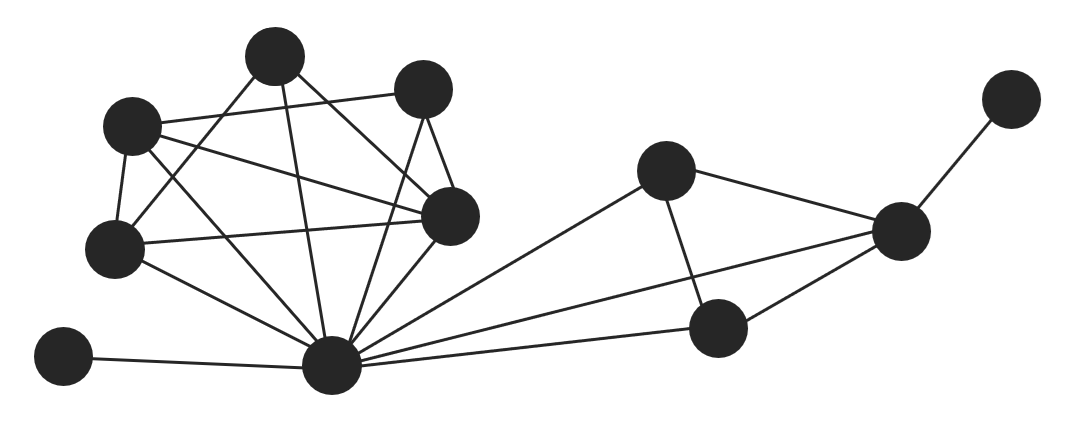
SNA studies social networks and the patterns among actors, often people within these systems, and relationships or ties, like friendship (Borgatti & Halgin, 2011; Borgatti et al., 2013; Marin & Wellman, 2011). As such, Mercer (2015) argues that SNA shifts from considering individuals in isolation to social beings in relation to others. It often employs specific methods to visualise social networks and explore these relationships (Mercer, 2015), like the graph in Figure 1. In such graphs, points denote actors (nodes) and lines (edges) represent the ties between them (Hanneman & Riddle, 2011). Relationships can be directed (e.g., advice), indicated by edges with arrows, or undirected (e.g., being seen with someone), without arrows (Borgatti et al., 2013).
Figure 1
Example of an Undirected Eleven Node Network
Theoretically, SNA assumes that an individual’s position within a network and a network’s structure influence one another (Borgatti et al., 2013). Key to this understanding of social networks are structural concepts such as network centrality, density, and flow. Centrality refers to how structurally connected a node is: those well connected are described as ‘central’, with highly central nodes often being viewed as influential (Borgatti et al., 2013), while those with few connections are ‘peripheral’. ‘Dense’ areas are highly connected parts of a network (Mercer, 2015). SNA also posits that social networks function as channels through which information flows, and that the aforementioned structural features may influence the speed and likelihood with which individuals receive information (Borgatti & Halgin, 2011). Another measure used in SNA is betweenness centrality, which measures how often a node appears on the shortest path (a sequence of connected nodes) between two others. This measure reflects a node’s structural capacity to broker or control relationships and information from advantageous positions within the network (Borgatti et al., 2013; O’Malley & Marsden, 2008). Crucially, Mullen and colleagues (1991) identified it as a predictor of leadership perception.
Self-determination Theory & Basic Psychological Needs Theory
SDT is a meta-theory of motivation and well-being that incorporates six mini-theories, including Basic Psychological Needs Theory (BPNT) (Ryan & Deci, 2017). SDT posits that humans have an inherent capacity for psychological growth, yet three basic psychological needs must be satisfied for development to occur (Ryan & Deci, 2017; Ryan & Deci, 2020). These needs, outlined in BPNT, are autonomy, competence, and relatedness (Ryan & Deci, 2017). Autonomy refers to the feeling that one’s behaviour is volitional. Competence needs are supported by feelings of growth and mastery. Relatedness needs are satisfied by feelings of belonging in mutually reciprocal relationships. The degree to which these needs are satisfied or frustrated predicts the kind and potency of the motivation individuals possess. When individuals engage in behaviours primarily out of enjoyment and BPNs are satisfied, they experience enhanced intrinsic motivation. Extrinsically motivated behaviours are engaged in for reasons other than enjoyment and vary in the degree to which they are controlled (Ryan & Deci, 2020).
Self-determination Theory & Self-access Language Learning
Within SALL, SDT has been increasingly applied to analyse student experiences. Yarwood et al. (2019) explored whether a SAC and its services supported user BPNs. Through interviews with 107 users, they found that the desire to satisfy relatedness and competence needs played a significant role in motivating SAC use. Similarly, Watkins (2022), who surveyed and interviewed students in SAC learning communities, found that participation satisfied autonomy, competence and relatedness needs. SDT has also been promoted as a framework for designing SALL practice. Asta and Mynard (2018) argued that employing SDT and BPNT may enable SALL practitioners to target specific areas for change and create autonomy-supportive environments. Mynard (2022) expands upon such ideas, focusing on how SDT might guide SALL practice in creating these environments, while Watkins and Hooper (2023) utilise the theory in their guide to developing student leaders who support learners’ BPNs. This literature demonstrates how SDT and BPNT might be utilised to improve SALL experiences, primarily for users.
Research on SSMs has similarly found that BPN support influences their motivation. In a study involving eight SSMs across two SACs in Japan, Phelps (2025) found that social opportunities satisfy SSMs’ relatedness needs, while language and skill-learning opportunities fulfil competence needs. Such findings align broadly with previous research on SSM motivation (see Dobson et al., 2021; Handford et al., 2021; Heigham, 2011; Murray & Fujishima, 2016; Tassinari, 2018; Yamaguchi, 2011; Yamamoto, 2017). Despite the existence of such literature, few studies conceptualise these communities as a single body. SNA has the potential to view SSM groups in this way and illuminate structural and organisational characteristics that may affect BPNs.
Mapping Student Staff Member Relations
In this study, I combine SNA and BPNT to map SSM relationships visually and then analyse these ties, asking how community structure and organisations may impact SSMs’ BPNs.
Context and Participants
The study involved 16 SSMs working at an engineering university SAC in Kansai, Japan. The SAC occupies one floor of a building near the main campus and has spaces for group and self-study, as well as a classroom. It offers group conversation and one-to-one English practice sessions, a book-and-DVD lending service, and hosts four SSM-run seasonal events throughout the year.
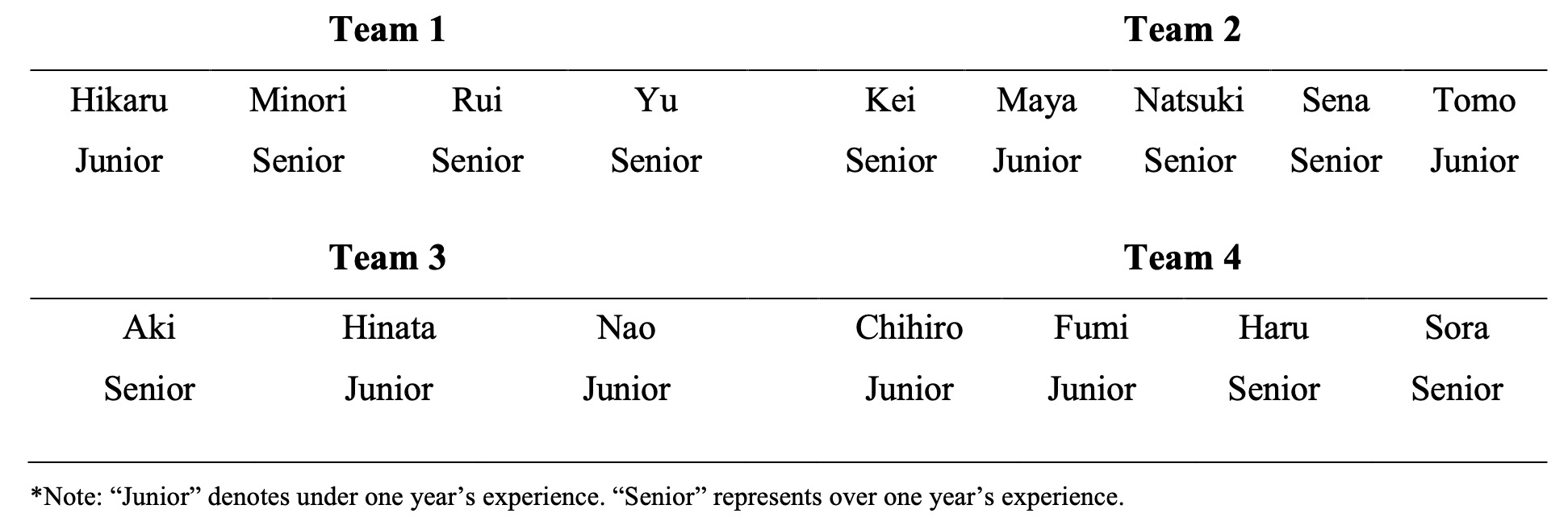
The SAC is run by a director, two teachers and one manager. The SSMs assist the SAC staff by working counter shifts or running daily group conversation sessions. They are divided into four teams: an events team that runs the seasonal events, a social media team that promotes the SAC online, designers who decorate the centre, and a team that runs the group conversation service. SSMs handle team tasks predominantly during their shifts but occasionally perform duties, such as monthly team meetings, outside them. Shifts are determined by availability and align with the university timetable. Each year, two training sessions are held at the beginning of both semesters that all SSMs are asked to attend. Additionally, as part of their individual training, the centre’s director encourages each member to join the SAC’s services (particularly group and individual language practice sessions) to further their understanding of the SAC. At the beginning of the academic year, each team selects a leader responsible for connecting and collaborating with other teams’ leaders. Table 1 shows the SSMs in their teams and their seniority. To preserve anonymity, names are pseudonymised, and the teams are numbered 1-4.
Table 1
SSM Teams & Member Seniority
Approach
In order to map and explore the architecture of the SAC’s SSM community, I examined relationships among SSMs, staff, and users through surveys, SNA methodology and the lens of BPNT. First, all 16 SSMs at the SAC were approached. After I explained the study and each participant agreed to take part, they signed informed consent forms and completed a bilingual survey via Google Forms. The survey contained four questions:
- Please list anyone that you commonly interact with (on LINE, in person, etc.) at [the SAC].
- Who at [the SAC] do you have positive working relationships with?
- Who at [the SAC] do you consider a friend?
- Who do you go to for advice at [the SAC]?
I selected these questions to explore the structure of the SSM community by identifying cliques within it or potential issues within teams (Q. 1, 3), information pathways (Q. 1, 2, 4), and patterns of interaction relevant to BPNs (Q. 1-4). In the survey, the SSMs were asked to list as many names as they felt appropriate, including other SSMs, student users, and staff. To standardise meaning, interactions were defined to include both online and in-person contact to reflect the full range of communication occurring among SSMs, and friendship was defined as someone you often socialise with, inside or outside the SAC, or whom you feel especially close to. After all data had been collected, I anonymised the names of any users reported and the SSMs by assigning pseudonyms.
From the survey data, I constructed five network graphs in Gephi, a network visualisation program, using the Fruchterman-Reingold algorithm to display them (Fruchterman & Reingold, 1991). Three depict undirected relationships (SSMs’ common interactions, friends, and positive working relationships). As ties were included on the graphs when either party reported them, I assigned weights  to edges on a scale of 1 or 2, under the assumption that relationships are dyadic and vary in intensity (Granovetter, 1973). When a relationship was reported by only one party, I assigned it a weight of 1 (w=1), and when reported by both parties, a weight of 2 (w=2). These weights were linked to edges in the graphs, visually distinguishing mutually confirmed w=2 relations with thicker lines and w=1 ties with thinner lines. Weighting, therefore, expresses the intensity or memorability of relationships, while preserving low-intensity ties and data for non-participating nodes (e.g., staff and users). Rather than deleting w=1 ties, this approach also accounts for research limitations, such as inaccurate participant reporting and respondents being limited to SSMs. The final two graphs, depicting advice channels, feature directed, unweighted relationships, assuming that seeking advice from someone is a one-way exchange. After all graphs were produced, various algorithms in Gephi were used to further analyse the data. Later, BPNT was employed to examine how community organisation and structure might impact BPNs, and in turn, SSM motivation and well-being.
Analysing Student Staff Member Relations
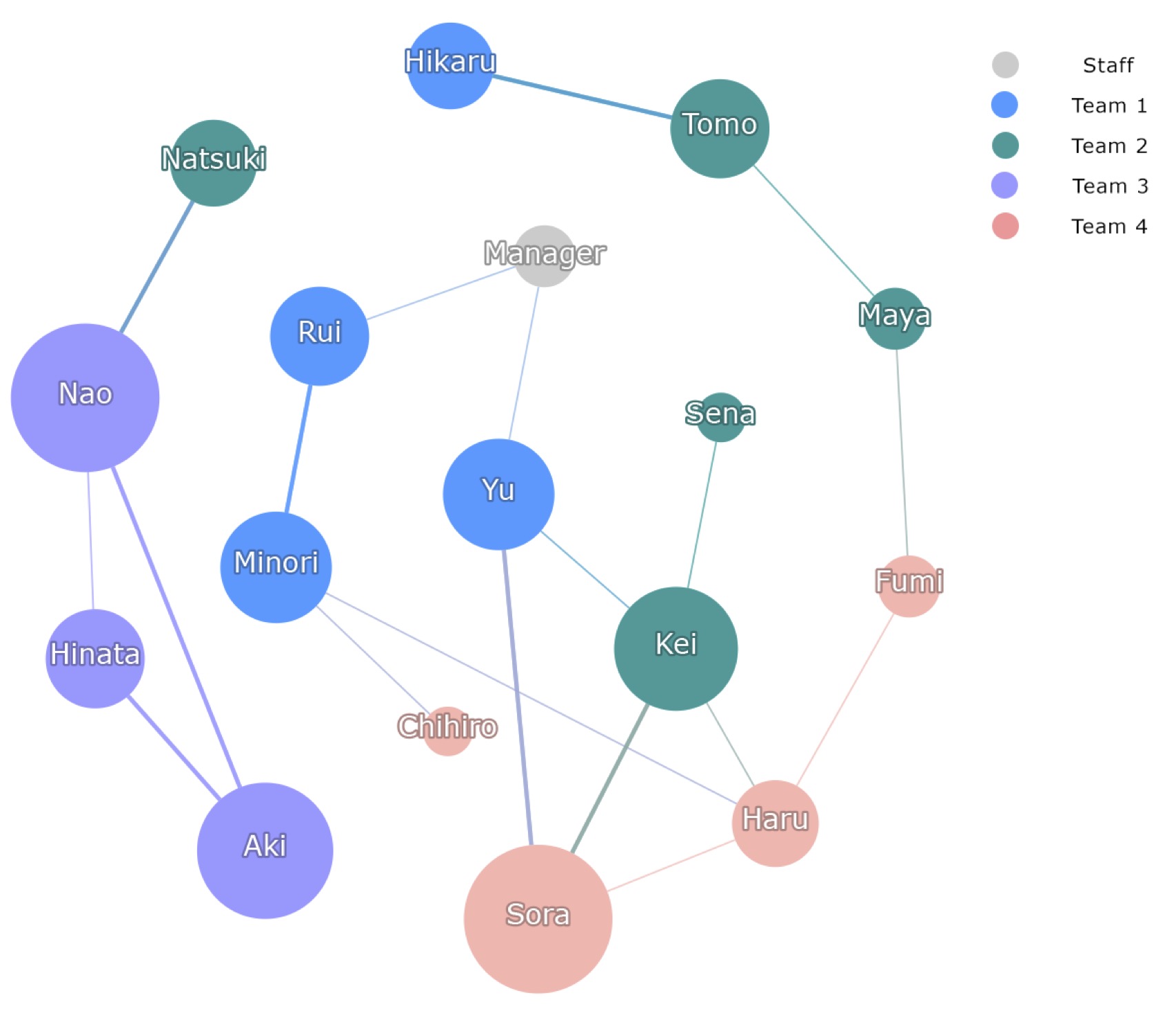
Figures 2-5 display three of the four types of ties (common interactions, positive working relationships, and advice-seeking relationships). The friendship graph can be found in Appendix A. Nodes in these graphs represent SSMs, the teachers or the manager, or a student user, with colours signifying team membership or role. Node size represents the degree of connection. Edges between nodes indicate relationships, with line thickness representing weight (w). In Figures 4 and 5, arrows represent from whom advice is sought. In all graphs where they appear, teachers are treated as a single, overarching node. As some teachers work closely with individual SSMs due to the day of their shift, this approach protects SSM anonymity and maintains the primary focus on the SSM community. Users, who only feature in the common interactions graph, are treated as individual nodes due to their unique roles within this network.
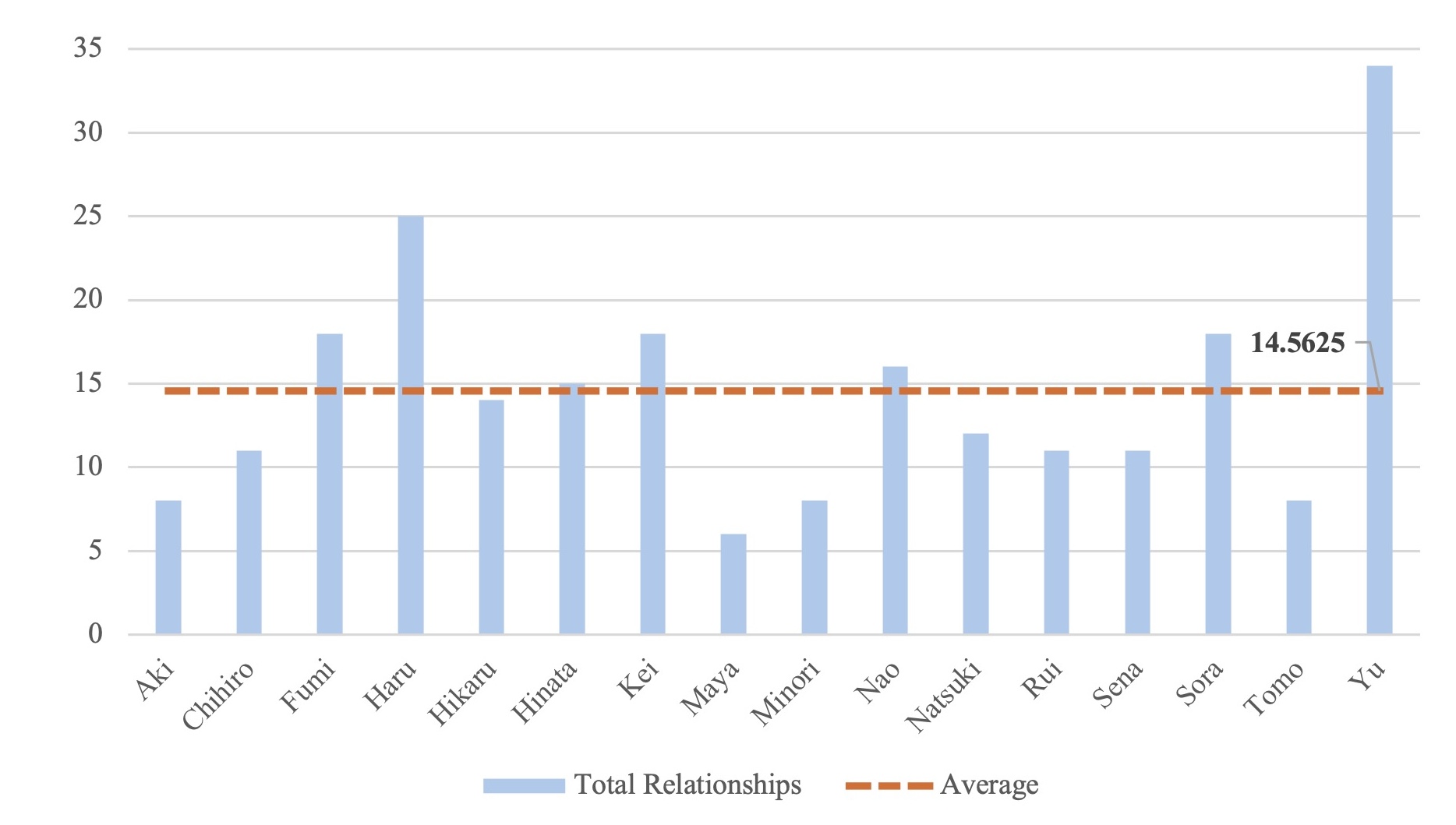
In the survey these graphs were based on, the 16 SSMs reported 233 relations across four categories: common interactions, positive working relationships, friendship, and advice-seeking relationships. Of these, 33 responses represented unweighted, directed relationships (advice-seeking), 74 were w=2 relationships confirmed by both parties that may reflect stronger or more frequent interaction. In 126 cases, only one member confirmed the tie (w=1), suggesting lower intensity, frequency, or memorability. Across all categories, the SSMs averaged 14.56 ties (see Appendix B), spread across an average of 7.87 individuals in the SAC community (including teachers, users and other SSMs), implying overlapping relationships with the same individuals (for instance, positive working and advice-seeking relationships with the same SSM). For the remainder of this section, I focus on the common and positive working interaction graphs and those that depict advice-seeking relationships.
Common Interactions
Figure 2 shows common interactions among 24 nodes: 16 SSMs, 6 users, the teachers, and the manager, with each node averaging 8.58 connections. Of the edges, 40 were w=2 interactions and therefore validated as common, while 63 were w=1, potentially indicating less frequency or memorability. The graph is dense with 103 interactions out of a possible 276 (37.3%) occurring commonly. Accounting for the difference between w=1 and w=2 interactions, the percentage of common interactions lies between 14.5% confirmed common interactions, and 37.3% potential ones, suggesting a fairly cohesive network. High transitivity (53.8%) supports this portrayal of the group, as it measures, in this case, the likelihood that two nodes interact if both interact with a mutual third node (Borgatti et al., 2013). These findings suggest that the SSM community provides members with opportunities to socialise and increase their sense of belonging, thereby increasing the potential of relatedness needs satisfaction from the perspective of BPNT.
Figure 2
Common Interactions in the SSM Community
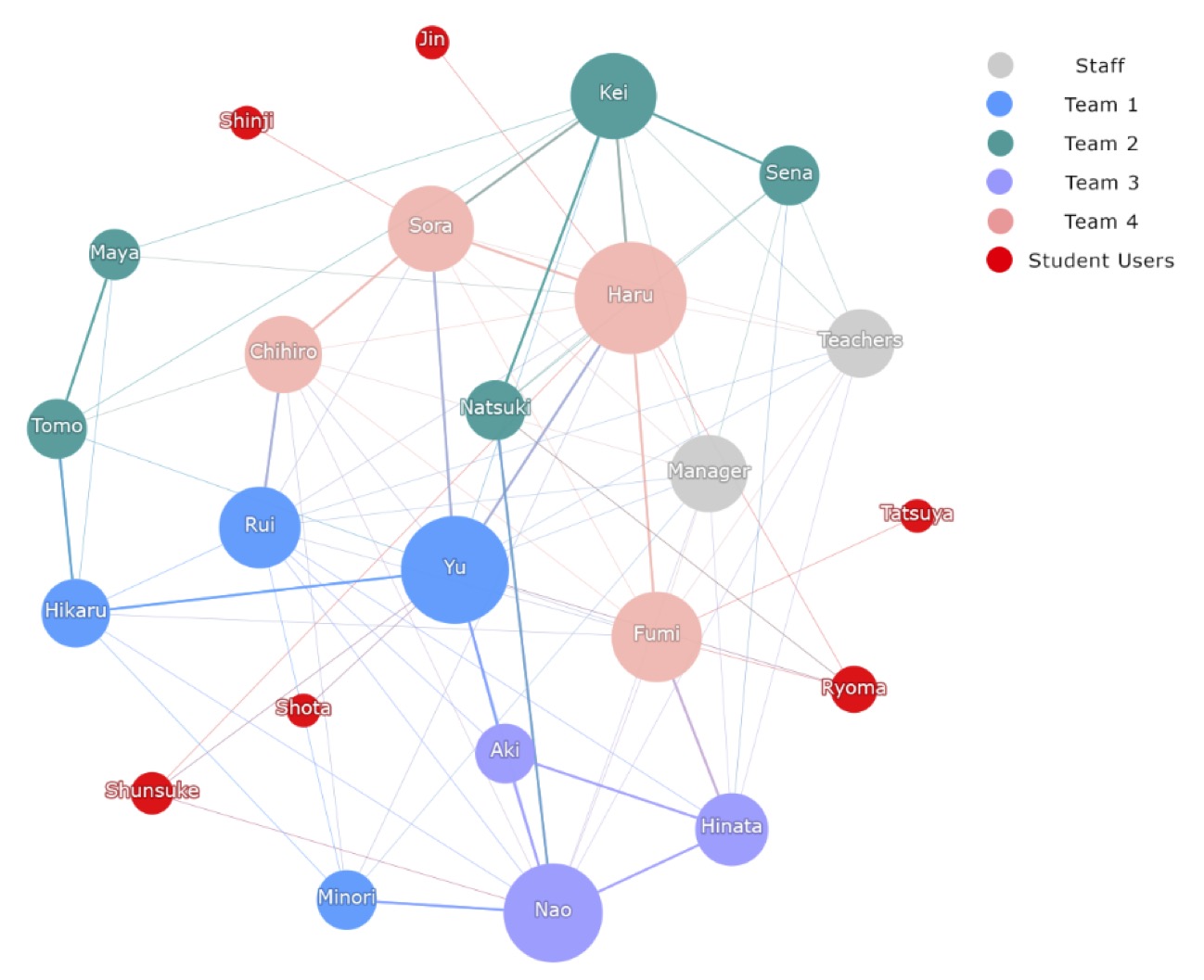
Though most teams appear to interact commonly both inside and outside their teams, Team 2 is an outlier, doing so to a lesser extent with members of other teams. Their limited interactions may stem from their predominantly student-facing role, which limits cross-team interaction. However, their peripherality may mean that, being unable to form as many stable relationships, they are structurally vulnerable to relatedness needs frustration. Nevertheless, Kei stands out as an exception within this team, being a central member who maintains cross-team interactions. In other teams, Yu and Haru are also highly central members, as evidenced by their larger node sizes and the numerous edges connecting them to others in the SSM community. These three members occupy leadership roles within their teams, and their centrality may reflect SSM team leaders’ responsibilities for coordinating and overseeing various aspects of the SAC in cooperation with other leaders. Comparing Team 2 and the leaders shows that the ability to form relationships may be determined by community organisation and network structure.
Yu and Haru, as well as other members like Fumi and Sora, also rank highly in betweenness centrality scores for common interactions, calculated using Brandes’s (2001) algorithm (see Table 2). As noted by O’Malley & Marsden (2008), these individuals’ high betweenness centrality scores mean they have substantial brokerage potential. This measure, along with their tendency to interact with numerous SSMs, may underline central SSMs’, including leaders’, potential to impact group direction and affect, and therefore BPNs.
Table 2
Betweenness Centrality of SSMs Based on Common Interactions
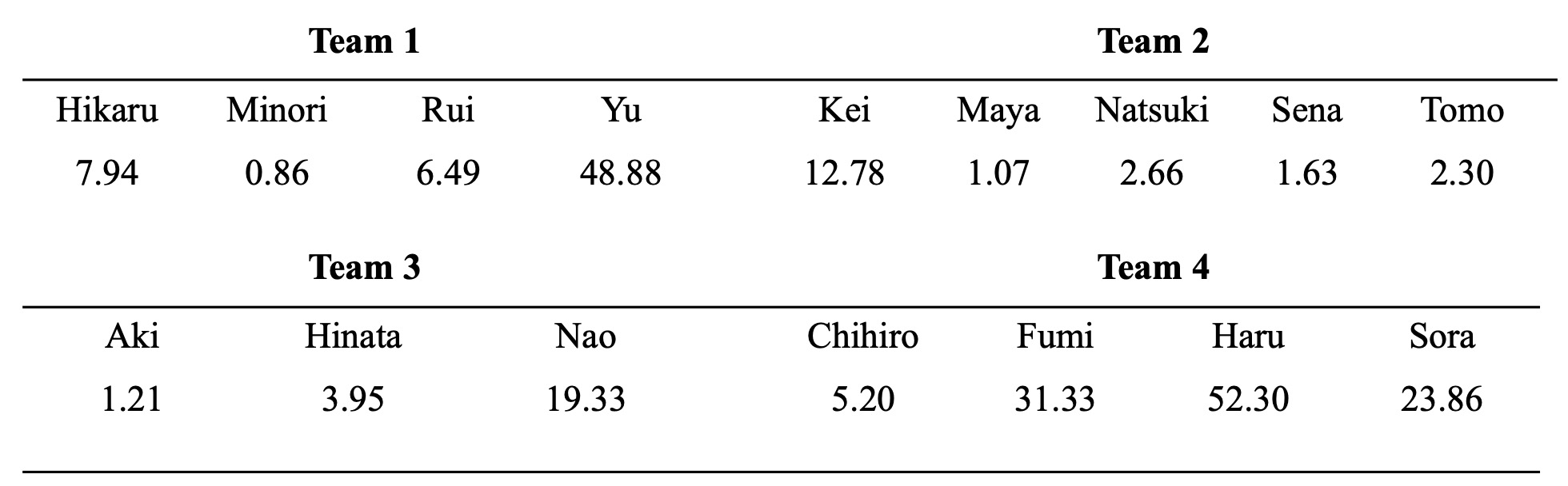
In Table 2, Team 3 member Nao emerges as an SSM who exhibits high betweenness centrality, comparable to leaders despite not being one. Nao, who interacts extensively both within their own team and with others, has a score of 19.33, the fifth highest among the 16 SSMs. While leaders might be presumed to occupy similar network positions, given their greater experience as SSMs and the fact that their roles require interaction with others in the group, Nao is new to their role. In line with SNA theory, Nao’s similar patterns of interaction to other leaders may also reflect their capacity to control information, broker relationships within the SAC, and reveal their leadership potential. That being said, appearing to behave similarly to leaders structurally may not equate to taking on leadership duties.
As Nao is neither a senior member nor a formal leader, their position also invites questions about structural asymmetries within the network, including those relating to support distribution, and the demands or expectations of the current SSM team structure at the SAC. The peripherality of the other members of Nao’s team, including the leader, who appear to interact less commonly with members of other teams, may create issues with factors such as information flow into this team. Moreover, Borgatti and colleagues (2013) argue that network peripherality is potentially problematic for leadership. Taking these issues into consideration, the team’s overall effectiveness may be hindered , which, from the perspective of BPNT, could potentially frustrate members’ sense of competence. Moreover, as teams need to cooperate to run the SAC (for example, the events team needs to work with the social media team to promote parties), a lack of common interactions between this team and its leader and those of other teams could affect the BPNs of the wider community. Rather than a relational issue, this finding may stem from structural choices: SAC staff asking SSMs to nominate leaders at the beginning of the academic year may mean that some leaders, particularly those in small teams, feel forced into the role. Not being a volitional choice may frustrate autonomy needs, thereby diminishing well-being and reducing motivation for the role. Hypothetically, these leaders may not act because of the controlled process by which leaders are selected in the SAC. Alternatively, it may indicate that staff do not equally satisfy SSM competence needs to the degree that all those in leadership roles feel able to lead teams.
Positive Working Relations
Figure 3 displays the network of positive working relations among the SSMs and staff in the SAC, totalling 18 nodes. Each SSM has nearly eight positive working relationships, with the average degree being 7.88. The SSMs’ responses to the survey listed only staff and other SSMs, and suggest that the SSMs work well with many of their colleagues inside and outside their teams. Graph density supports this argument, indicating that approximately 46.4% of all possible positive working relationships exist, despite a maximum group size of three to five members and little overlap in the SSMs’ shifts. These results suggest cohesiveness in the SSM community. However, since only 22 of these ties are mutually confirmed w=2 relationships (14.4% of the total possible), and the remaining 49 are unconfirmed w=1 ties, some ambiguity exists about the degree to which the community works well together. Nevertheless, general cohesiveness among the SSMs supports the suggestion that the environment within which the community exists largely supports SSM relatedness needs. Moreover, high density in the positive working relationship network would likely mean that SSMs perceive many of these relationships as respectful, satisfying relatedness needs. Additionally, because SSMs work with those with whom they have positive relationships, their work may feel less controlled, thereby supporting autonomy needs. This hypothesis is especially relevant to w=2 ties, as these would affect both parties. However, given the aforementioned ambiguity in this network, there is also the potential for SSMs in teams with fewer positive relationships to perceive their experience negatively, thereby thwarting BPNs.
Figure 3
Positive Working Relationships in the SSM Community
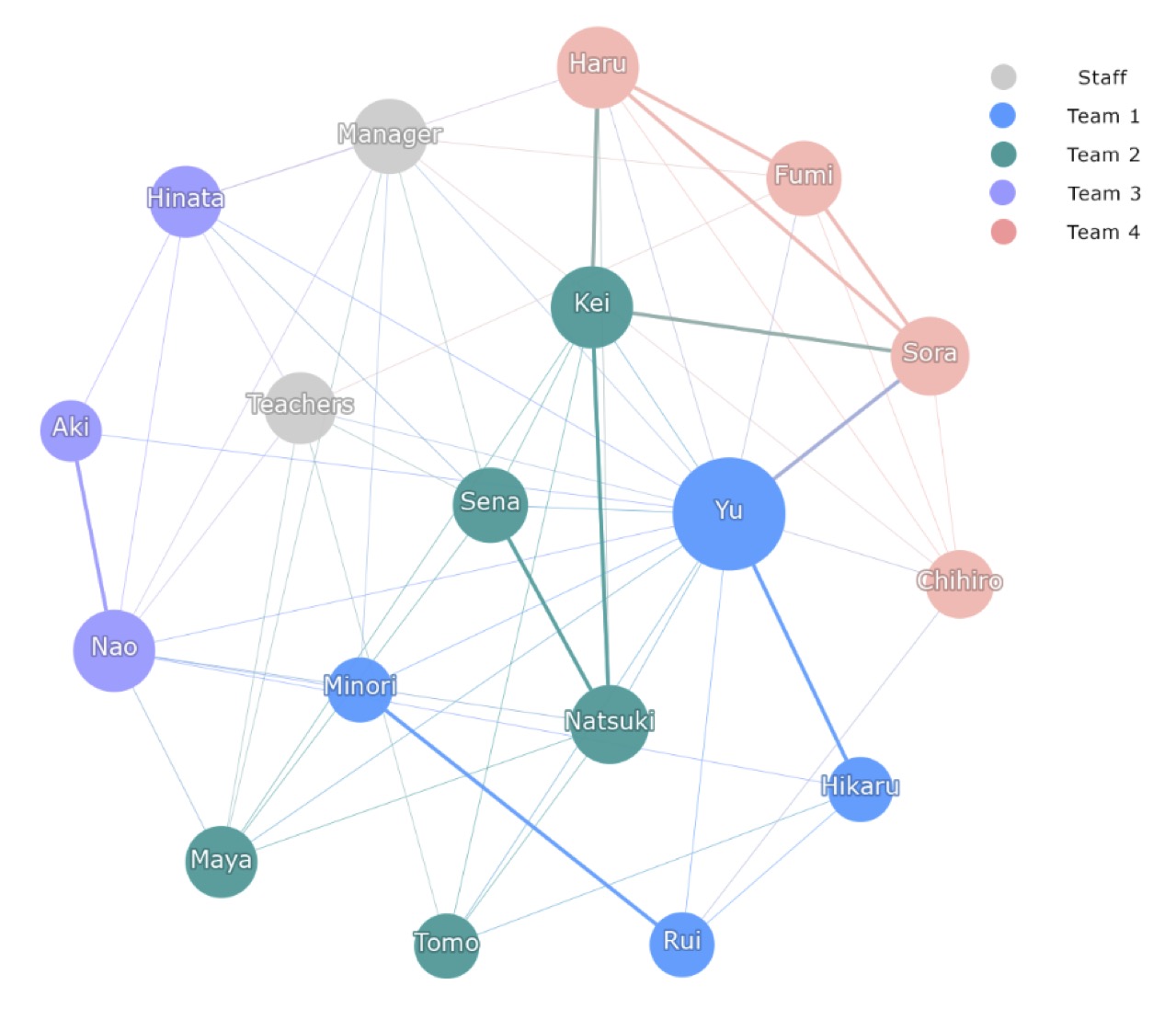
That being said, within most teams working relationships also appear positive, with Team 4 having notably strong working relations, as revealed by the thicker edges between them, denoting w=2 confirmed edges. Consistent with Figure 2, SSMs such as Nao and Fumi appear well integrated into the SSM community, with positive working relationships within and beyond their teams. Though junior members, both have nodes of comparable size to those of senior members in the SSM community, indicating they maintain positive working relationships with others to a similar degree. These findings suggest that the group’s structure and organisation enable new SSMs to integrate and work effectively with other SSMs.
SSM leaders such as Haru, Yu and Kei are once again central members who work particularly well with others, evidenced by several w=2 edges. Their centrality highlights the theoretical link between leadership and centrality in SNA (Borgatti et al., 2013). From an SDT perspective, it hints at the substantial influence leaders may have over SSM relatedness needs, as they maintain positive relationships with others and can broker connections between SSMs. Considered alongside these leaders’ centrality in the common interaction network, the fact that many of their interactions may be nested within positive working relationships demonstrates the potential leaders have to frequently reinforce SSM relatedness needs.
Advice Seeking Relationships
The final two graphs explore advice paths within the SSM community, demonstrating some of the forms of professional interaction SSMs may have with one another. Figure 4 includes the teachers and the manager, while Figure 5 excludes them to provide a clearer view of which of their peers from whom the 16 SSMs receive support. A comparison of Figures 4 and 5 shows that the average degree decreases by nearly 50% from 3.66 in Figure 4 to 1.87 in Figure 5 when teachers are removed, emphasising strong dependence on staff by SSMs. This reliance is especially evident in Teams 1 and 4, in which all members seek advice from the manager, and many from the teachers. Aside from the manager or teachers, some members, such as Tomo, draw on their friends, other junior SSMs, for advice. Staff centrality within the network is largely positive, likely contributing to SSMs’ sense of competence, demonstrating how teachers, but especially the SAC manager, who usually works in physical proximity to the SSMs, may support SSM BPNs. However, as some shifts are scheduled when staff are unable to work closely with SSMs, these results once again underscore issues with asymmetrical support distribution, which prevents practitioners from advising SSMs and supporting their needs. From this perspective, SSM community organisation may contribute to but also hinder competence needs satisfaction.
Figure 4
SSM Community Advice Paths (Staff Included)
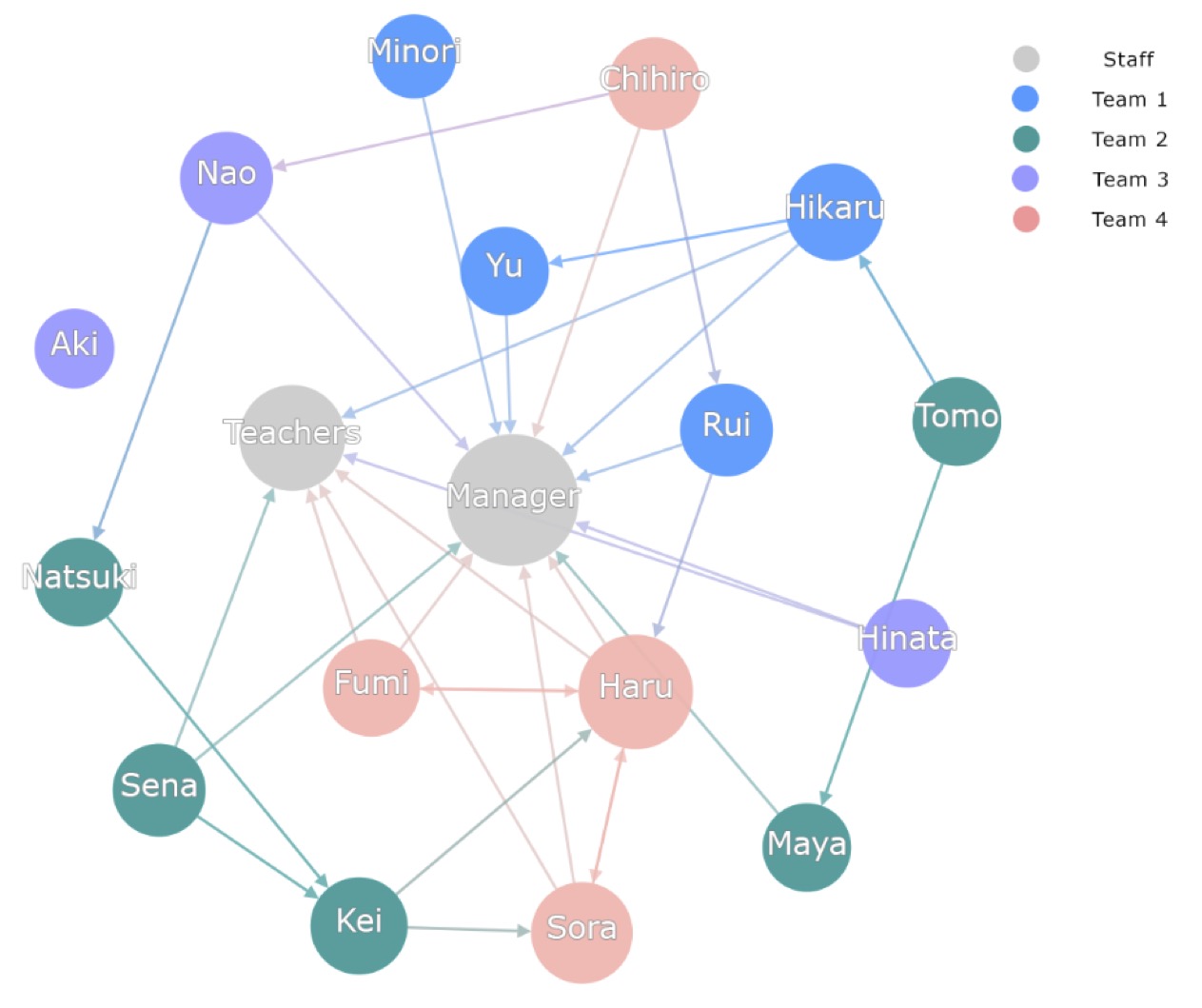
In Figures 4 and 5, several SSM leaders are also sought out for advice and, like staff, may contribute to competence needs satisfaction. However, by removing staff in Figure 5, Haru’s status as a particularly influential and supportive SSM becomes evident. Though no overarching leader role formally exists in the SSM community, Haru appears to have emerged as an overall leader whom many in the community report going to for advice, occupying a central role in the main advice path. Haru’s influence in the community is reflected in their betweenness centrality score for common interactions at the SAC (see Table 2), which is the highest among SSMs. This finding aligns with Mullen and their colleagues’ (1991) assertion that high betweenness centrality predicts leadership perception and may explain why others within the group look to Haru for advice. Haru’s emergence in this position is positive, enabling SSMs from various groups, including team leaders, to access support. In this sense, Haru may occupy a role like that of the manager, as a figure whom SSMs feel comfortable approaching. Though all leaders may help support SSMs’ competence and relatedness needs, Haru may have a particularly significant effect on SSM motivation and well-being.
Despite some positives, peripherality is also an issue in the advice network. Some SSMs are on an advice path disconnected from the main advice channel. This path largely consists of new SSMs, including Hikaru and Yu, both in Team 1, and Tomo and Maya, with Yu being an exception, being a senior SSM and the leader of Team 1. In this path, Yu acts as a key node who may control the flow of advice, but because they are disconnected from other SSMs, they may only receive advice from teachers rather than other SSMs. While Hikaru seeks out Yu, presumably because they are on the same team, other advice-seeking interactions in this path appear to be based on friendship (See Appendix A). As three of these SSMs are junior members, this may suggest that it takes time for some newer members to feel comfortable enough to ask senior members for advice. Moreover, the advice received along this path may differ from that received by members of the main advice path, and advice may flow more slowly. The disconnection between the two advice paths may also support Borgatti and Halgin’s (2011) assertion that network density can influence information flow, in this case negatively.
Figure 5
SSM Community Advice Paths (Staff Removed)
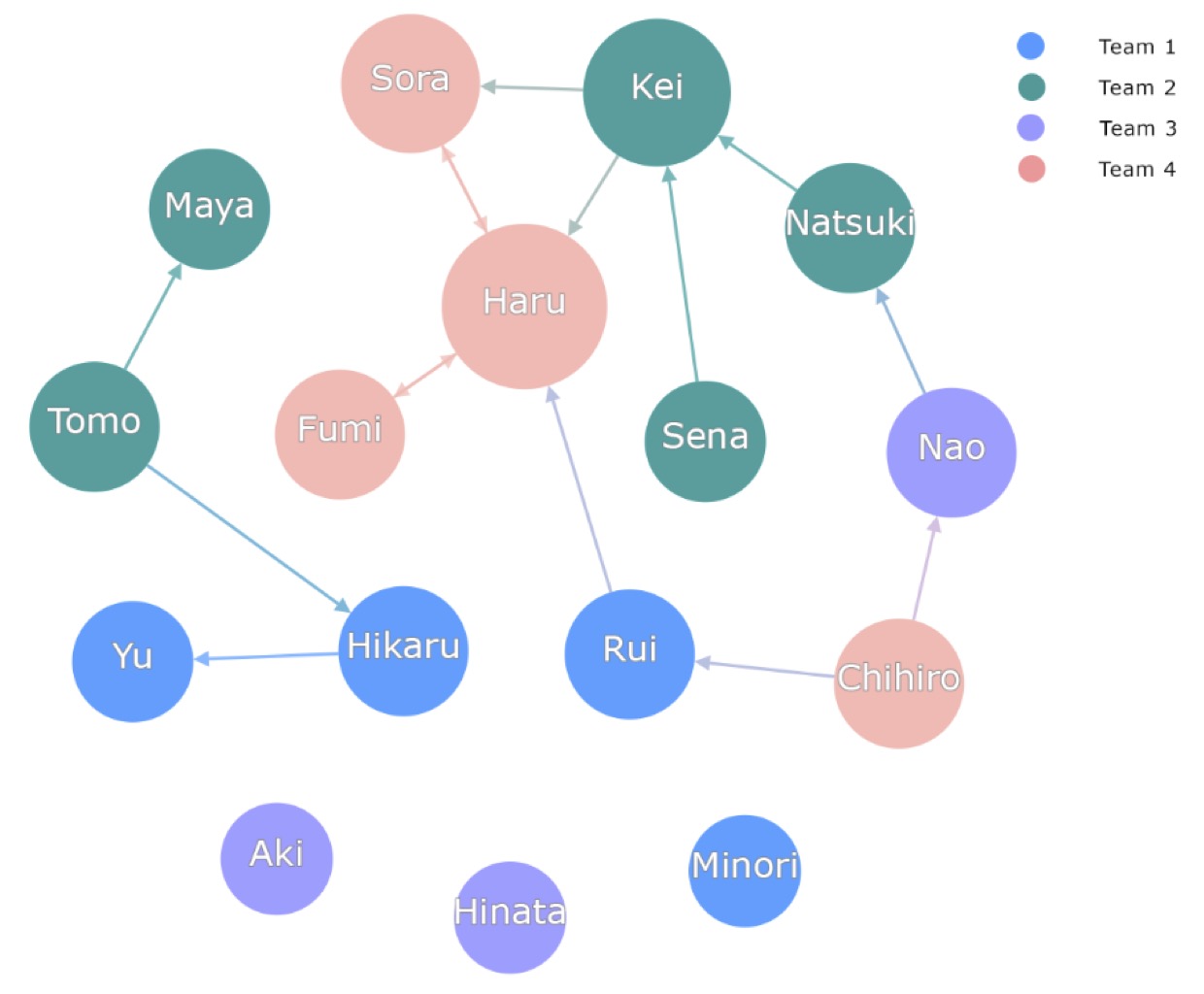
Aki and Hinata of Team 3, and Minori of Team 1, appear as peripheral SSMs in Figure 5, falling outside both advice paths, with Aki also doing so in Figure 4. These SSMs also have low betweenness centrality scores in the common interactions network. Notably, two of them work shifts during which they are often isolated from the manager, teachers, and their peers, suggesting limited access to support and opportunities to form cross-team relationships. Although all other teams have at least one inter-team advice relationship, none exists within Team 3, which may significantly affect members’ competence needs. It might be argued that these members are unavailable to give or seek advice, working off-peak shifts; however, the solitary w=2 edge in the positive working relationship network in Figure 3 that Team 3 has invites questions about whether they work well together, and whether this impacts advice-seeking ties.
Based on these findings, motivation and well-being issues may be affected when teams have few members. Small group sizes may not only lead to issues in appointing leaders but also result in frustration with relatedness and competence needs, as fewer individuals are available for interaction and advice. Further, structural isolation within these sub-groups due to organisational or institutional design (such as working off-peak shifts) may effectively trap SSMs in a cycle of being unable to learn from or meet others, and of regularly experiencing BPN frustration and diminished motivation and well-being as a result. Conversely, SSMs may avoid BPN frustration by leveraging ties established before starting the role. As such, Figures 4 and 5 demonstrate that competence need satisfaction levels likely vary depending on an individual’s position within the advice-seeking network.
Conclusion
Key Findings
Exploring the SSM community through SNA and BPNT revealed various idiosyncrasies that may affect SSM motivation and well-being. High density and transitivity in the common interactions and positive working relationships networks (Figures 2 and 3) suggest that the SSMs have opportunities to socialise, develop a sense of belonging, experience respectful relationships in the community, and satisfy their relatedness needs. SSM leaders, possessing high betweenness centrality scores and advantageous positions in the common interaction network, may be able to broker relationships, contributing broadly to group relatedness needs. They may also satisfy competence needs through their central positions in advice networks (Figures 4 and 5). Lastly, the SAC manager’s physical proximity to the SSMs enables them to facilitate relationships in which SSMs feel comfortable asking for advice, having a powerful effect on SSM competence and relatedness needs.
Despite these positives, there are also issues within the SSM community. The presence of unconfirmed w=1 relationships creates ambiguity surrounding the community’s overall cohesiveness and, therefore, the extent to which it promotes feelings of belonging among SSMs. Leadership selection at the SAC may undermine autonomy, and the teachers and manager may distribute support in ways that do not sufficiently satisfy some members’ competence needs, thereby undermining motivation for leadership roles. Likewise, factors such as shift time or group size may be linked to BPN frustration. Smaller group sizes may also complicate BPN support, as SSMs have fewer opportunities to socialise or seek advice. These issues may be especially problematic if compounded.
Implications
Principally, this study demonstrates the value of using SNA as a lens for examining SACs and SSM communities. In creating autonomy-supportive SACs, Mynard (2022) has suggested surveying SAC communities to take students’ perspectives. SNA may offer one way to do so, serving as a diagnostic tool in SACs: analysing whether SSM teams are working well, identifying gaps in SAC communities, and highlighting potential leaders. Measures such as network and betweenness centrality may reveal individuals who are already perceived as leaders and may be suited to the role, aiding the search for leaders. Gently inviting these SSMs into the role, based on their ability to broker relationships, may help support their autonomy and competence needs. Using SNA to identify other characteristics, such as peripherality, enables SALL practitioners to actively shape SACs and their communities and prevent negative effects from rippling through them. Support systems may be introduced for structurally vulnerable SSMs, such as those working late shifts or teams whose social focus lies outside the main SSM community. Shift changes may be logistically difficult, but events, parties and meetings can be strategically organised to welcome and train new members, simultaneously connecting peripheral SSMs.
Multi-tiered leadership can create several sources of advice for SSMs and leaders, and be particularly important in supporting the competence needs of peripheral members. Simplifying contact among leaders by promoting SNS app use may also help increase group cohesion, and adopting an overarching leader and inter-leader meetings may ensure the leadership group can access advice and feel part of a wider community. However, given Haru’s high betweenness centrality and central position across several networks, care should be taken to implement processes that mitigate institutional memory loss when key leaders leave and new leaders transition into the role. Otherwise, when such leaders graduate, information flow, group cohesion, and BPNs may be affected. Collaboration via leadership meetings, communication on SNS apps, and mentoring systems may all help with this issue.
Finally, when considering SSM team structure, smaller SACs may benefit from fewer, larger teams to reduce the demand on the SSM community to produce multiple leaders and to support autonomy during this process. Without careful consideration of group members and size, advice flows may also be limited, and BPNs may be frustrated. Although SALL practitioners will inevitably face practical issues when attempting to balance groups or schedule shifts at particular times, organising SSM communities to support BPNs remains an important challenge.
Limitations and Future Research
Though the theoretical applications highlighted in this paper are promising, the study had methodological limitations that may affect the validity and generalisability of its findings. The distinction between w=1 and w=2 may be too simple to fully illuminate the actual state of relations within the SSM community on SNA graphs. Furthermore, the results could either overrepresent relations in the community or underrepresent them due to recall bias. Future research may address some of these issues by listing community members’ names in the survey and providing an “Other” option for SSMs to include users’ names, thereby prompting participants and reducing the likelihood of relationships being forgotten.
There were also issues with the timing of the study. As a snapshot study, it yielded limited results and analysed the community only as it was at the end of an academic year. Due to these issues, the current study could not examine changes in motivation as the SSM community evolved. Additionally, as the study was conducted in a single, specific context, that being a SAC at an engineering university in Kansai, Japan, the applicability of the results may be limited. These issues may be addressed through a longitudinal study across multiple institutions. Finally, because the study focused only on relationships within the community, it did not consider additional factors that may affect motivation.
Notes on the Contributor
Christopher Phelps is a specially appointed lecturer at the Language Learning Center (LLC) at Osaka Institute of Technology. He has worked in various contexts in Japan, and in self-access centers since 2020. His research interests include self-access language learning, and student staff motivation and well-being.
References
Asta, E., & Mynard, J. (2018). Exploring basic psychological needs in a language learning center. Part 1: Conducting student interviews. Relay Journal, 1(2), 382–404. https://doi.org/10.37237/relay/010213
Borgatti, S. P., Everett, M. G., & Johnson, J. C. (2013). Analyzing social networks. SAGE Publications Ltd.
Borgatti, S. P., & Halgin, D. S. (2011). On network theory. Organization Science, 22(5), 1168–1181. https://doi.org/10.1287/orsc.1100.0641
Brandes, U. (2001). A faster algorithm for betweenness centrality. Journal of Mathematical Sociology, 25(2), 163–177. https://doi.org/10.1080/0022250X.2001.9990249
Dobson, J., Freimuth, H., & Rodriques, I. (2021). Student volunteer motivations in a student support centre for English for academic purposes students. BC TEAL Journal, 6(1), 59–77. https://doi.org/10.14288/bctj.v6i1.389
Fruchterman, T. M., & Reingold, E. M. (1991). Graph drawing by force‐directed placement. Software: Practice and Experience, 21(11), 1129–1164. https://doi.org/10.1002/spe.4380211102
Granovetter, M. S. (1973). The strength of weak ties. American Journal of Sociology, 78(6), 1360–1380. https://doi.org/10.1086/225469
Handford, V., Dobson, J., & Liu, Y. (2021). Student, faculty, and graduate teaching assistant perceptions of support provided by a graduate student writing centre. Studies in Self-Access Learning Journal, 12(2), 148–176. https://doi.org/10.37237/120203
Hanneman, R. A., & Riddle, M. (2011). Concepts and measures for basic network analysis. In J. Scott & P. J. Carrington (Eds.), The SAGE handbook of social network analysis (pp. 340–369). SAGE Publications Ltd. https://doi.org/10.4135/9781446294413.n24
Heigham, J. (2011). Self-access evolution: One university’s journey toward learner control. Studies in Self-Access Learning Journal, 2(2), 78–86. https://doi.org/10.37237/020204
Marin, A., & Wellman, B. (2014). Social network analysis: An introduction. In J. Scott & P. J. Carrington (Eds.), The SAGE handbook of social network analysis (pp. 11–25). SAGE Publications Ltd. https://doi.org/10.4135/9781446294413.n2
Mercer, S. (2015). 8. Social network analysis and complex dynamic systems. In Z. Dörnyei, P. MacIntyre & A. Henry (Eds.), Motivational dynamics in language learning (pp. 73–82). Bristol, Blue Ridge Summit: Multilingual Matters. https://doi.org/10.21832/9781783092574-010
Moore, A. R., & Tachibana, M. (2015). Effective training for SALC student staff: Principles from experience. Studies in Self-Access Learning Journal, 6(4), 444–460. https://doi.org/10.37237/060412
Mullen, B., Johnson, C., & Salas, E. (1991). Effects of communication network structure: Components of positional centrality. Social Networks, 13, 169–185. https://doi.org/10.1016/0378-8733(91)90019-P
Murray, G., & Fujishima, N. (2016). Social spaces for language learning: Stories from the L-café. Palgrave Pivot. https://doi.org/10.1007/978-1-137-53010-3
Mynard, J. (2022). Reimagining the self-access centre as a place to thrive. In J. Mynard & S. J. Shelton-Strong (Eds.), Autonomy support beyond the language learning classroom: A self-determination theory perspective (pp. 224–241). Multilingual Matters. https://doi.org/10.21832/9781788929059-015
O’Malley, A. J., & Marsden, P. V. (2008). The analysis of social networks. Health Services and Outcomes Research Methodology, 8(4), 222–269.
https://doi.org/10.1007/s10742-008-0041-z
Phelps, C. (2025). Pulling back the curtain in self-access: Stories of student staff member motivation. Candlin & Mynard. https://doi.org/10.47908/39
Ryan, R. M., & Deci, E. L. (2017). Self-determination theory: Basic psychological needs in motivation, development, and wellness. Guilford. https://doi.org/10.1521/978.14625/28806
Ryan, R. M., & Deci, E. L. (2020). Intrinsic and extrinsic motivation from a self-determination theory perspective: Definitions, theory, practices, and future directions. Contemporary Educational Psychology, 61, 101860. https://doi.org/10.1016/j.cedpsych.2020.101860
Tassinari, M. G. (2018). Autonomy and reflection on practice in a self-access language centre: Comparing the manager and the student assistant perspectives. Studies in Self-Access Learning Journal, 9(3), 387–412. https://doi.org/10.37237/090309
Watkins, S. (2022). Creating social learning opportunities outside the classroom: How interest-based learning communities support learners’ basic psychological needs. In Mynard & S. J. Shelton-Strong (Eds.), Autonomy support beyond the language learning classroom: A self-determination theory perspective (pp. 109–129). Multilingual Matters. https://doi.org/10.21832/9781788929059-009
Watkins, S., & Hooper, D. (2023). From student to community leader: A guide for autonomy-supportive leadership development. Candlin & Mynard. https://doi.org/10.47908/25
Yamaguchi, A. (2011). Fostering learner autonomy as agency: An analysis of narratives of a student staff member working at a self-access learning center. Studies in Self-Access Learning Journal, 2(4). 268–280. https://doi.org/10.37237/020404
Yamamoto, S. (2017). Implementation of the Konan language loft: A self-access center with dual functions at Konan University. Memoirs of Learning Utility Center for Konan University Students, 2, 51–79.
Yarwood, A., Lorentzen, A., Wallingford, A., & Wongsarnpigoon, I. (2019). Exploring basic-psychological needs in a language learning center. Part 2: The autonomy supportive nature and limitations of a SALC. Relay Journal, 2(1), 236–250. https://doi.org/10.37237/relay/020128
Appendices
Appendix A
SSM Community Friendship Groups
Appendix B
Distribution of SSM Relationships