
Damar Isti Pratiwi, Politeknik Perkeretaapian Indonesia Madiun, Madiun, Indonesia. https://orcid.org/0000-0002-8009-0215
Fadhila Yonata, STAIN Sultan Abdurrahman Kepulauan Riau, Bintan, Indonesia. https://orcid.org/0000-0002-8983-9771
Pratiwi, D. I., & Yonata, F. (2026). Promoting learner autonomy in online vocabulary learning using an interactive response system: A case of Quizlet. Studies in Self-Access Learning Journal, 17(1), 106–127. https://doi.org/10.37237/170107
Abstract
Digital platforms are increasingly used to support vocabulary learning and learner autonomy in online English as a Foreign Language (EFL) contexts. This study investigates the use of Quizlet as a digital tool for online vocabulary learning and examines its potential role as a self-access learning resource. Employing a one-group pretest–posttest design, the study involved 72 Indonesian non-English-major university students enrolled in a General English II course, categorized into high- and low-proficiency groups. Over a 10-week intervention conducted via synchronous Zoom sessions, Quizlet was integrated to support vocabulary practice. Data were collected through vocabulary pretests and posttests, as well as a post-intervention questionnaire measuring learners’ perceptions of vocabulary learning and autonomy. The results showed modest overall improvement in vocabulary knowledge, with statistically significant gains observed only among high-proficiency learners. Although students reported positive perceptions of Quizlet as an engaging and useful vocabulary learning tool, these perceptions did not correspond to a clear development of learner autonomy. The findings suggest that while Quizlet offers affordances aligned with self-access learning—such as flexible access, self-paced practice, and opportunities for self-monitoring—autonomy development requires intentional pedagogical design, learner involvement, and appropriate scaffolding. The study contributes to self-access learning research by highlighting the conditions under which digital vocabulary tools may support, but not automatically foster, learner autonomy in online EFL settings.
Keywords: learner autonomy, online EFL, Quizlet, self-access learning, vocabulary learning
The integration of digital technology has become an integral part of English language instruction worldwide, reshaping how learners access, practice, and manage language-learning resources. In particular, interactive and gamified platforms have gained prominence in the English as a Foreign Language (EFL) context due to their potential to increase learner engagement and provide flexible learning opportunities. Among these technologies, Interactive Response Systems (IRS) have been widely adopted in vocabulary instruction, as vocabulary knowledge plays a fundamental role in overall language acquisition (Kukulska-Hulme & Shield, 2008; Ludwig, 2018). Previous research has suggested that interactive digital platforms can enhance vocabulary learning by making practice more engaging and by bridging the gap between classroom instruction and learners’ individual study needs (Dehghanzadeh et al., 2019).
Despite these pedagogical benefits, vocabulary learning remains a demanding and cognitively challenging task for many EFL learners. Learning and retaining lexical items, including accurate verb forms, are influenced by a complex interaction of learner-related factors (e.g., motivation, attitudes, and prior linguistic knowledge) (Pratiwi et al., 2024), task-related characteristics (e.g., task type, complexity, and level of abstraction) (Pfenninger, 2015), and environmental conditions (e.g., learning culture and the availability of rich input and output opportunities) (Abdulzahra, 2020). These factors jointly shape learners’ engagement, persistence, and success in vocabulary acquisition. Evidence from regional EFL contexts further highlights these challenges; for example, learners in Vietnam have been reported to possess limited knowledge of both single-word and formulaic vocabulary, underscoring the need for more effective and sustained vocabulary learning conditions (Vu & Peters, 2021). Consequently, researchers and practitioners have emphasized the importance of providing repeated exposure to high-frequency vocabulary, opportunities for focused attention on lexical items, and learning activities that extend beyond classroom boundaries through the use of technology.
A growing body of research has examined the effectiveness of IRS platforms for vocabulary learning in tertiary EFL contexts. For instance, Fithriani (2021) investigated the use of Quizlet in an Indonesian university setting and found that students in the experimental group demonstrated significantly greater vocabulary gains and reported positive perceptions of enjoyment and motivation. Similar findings have been reported in other Indonesian studies, which highlight the effectiveness of IRS applications in supporting vocabulary learning and their positive reception among EFL learners (Arifani et al., 2020; Pratiwi & Ubaedillah, 2021). These studies collectively suggest that gamified digital tools can enhance vocabulary learning outcomes and learner engagement across different proficiency levels (Banafshi et al., 2020; Waluyo & Bucol, 2021).
However, research findings are not entirely consistent. While some studies suggest that digital platforms support vocabulary learning more effectively than traditional paper-based methods, others report no significant differences in learning outcomes (Sari, 2016). Moreover, learners’ individual characteristics, such as proficiency level and learning preferences, appear to mediate the effectiveness of technology-enhanced vocabulary instruction. For example, higher-proficiency learners may be better positioned to benefit from digital tools because they can regulate their learning strategies and process input more independently (Pratiwi et al., 2024). These mixed findings indicate that the effectiveness of digital vocabulary learning tools cannot be understood solely in terms of learning outcomes, but must also be examined in relation to how learners engage with and manage their learning processes.
From a self-access learning perspective, digital platforms such as Quizlet have the potential to function as virtual self-access environments by offering learners flexible access to materials, multiple study modes, self-paced practice, and opportunities for self-monitoring (Wu, 2015). These features align closely with core principles of learner autonomy, which emphasize learners’ responsibility for planning, monitoring, and evaluating their own learning. However, simply providing access to digital tools does not necessarily lead to autonomous learning. Learners may engage enthusiastically with technology while remaining dependent on teacher-directed tasks, particularly when opportunities for decision-making, self-management, and reflection are limited.
Despite the growing use of Quizlet in EFL classrooms, relatively little research has examined its role specifically as a self-access learning tool and its contribution to the development of learner autonomy. Many existing studies focus primarily on vocabulary gains or learners’ positive perceptions, leaving the relationship between digital tool use and autonomous learning behaviours underexplored. Addressing this gap, the present study investigates the use of Quizlet in an online university EFL context, with particular attention to its potential to support self-access vocabulary learning. Specifically, this study aims to explore (1) students’ vocabulary learning outcomes following Quizlet-mediated instruction and (2) students’ perceptions of Quizlet in relation to autonomous vocabulary learning. By examining learners with different proficiency levels and situating the analysis within a self-access learning framework, the study seeks to provide deeper insight into the conditions under which digital vocabulary tools may support—or limit—the development of learner autonomy. The findings are expected to contribute to research on self-access learning and to inform educators and institutions seeking to integrate digital platforms into online and self-access learning environments more effectively.
Theoretical Framework of the Study
Learner Autonomy in EFL and Self-Access Learning Contexts
Learner autonomy has long been recognized as a central principle in language education, referring to learners’ capacity to take responsibility for their own learning through goal-setting, decision-making, self-management, and evaluation of learning outcomes. In EFL contexts, autonomy does not imply the absence of teacher support; instead, it involves a gradual shift of responsibility from teacher-directed instruction to learner-controlled engagement (Benson, 2006; Nunan, 2003). Autonomy and dependence are therefore best understood as existing along a continuum, with learners moving towards greater independence as their linguistic competence and learning awareness develop (Blidi, 2016).
In formal educational settings, the development of learner autonomy is closely related to learners’ language proficiency, prior learning experiences, and beliefs about learning. Learners with limited linguistic resources may initially struggle to regulate their learning independently, making teacher guidance and scaffolding essential in the early stages of autonomy development (Genç, 2015). Research has shown that guided autonomy–where teachers provide structured support, model learning strategies, and gradually reduce control–can significantly enhance learners’ ability to engage autonomously (Çakici, 2015; Yusnimar, 2019). Teachers, therefore, play a crucial role in designing learning environments that foster autonomy by encouraging reflection, strategic thinking, and independent decision-making (Pratiwi & Waluyo, 2023; Susanti et al., 2023).
From a self-access learning perspective, autonomy is not only a learner attribute but also a function of the learning environment. Self-access learning environments–whether physical or digital–are designed to provide learners with flexible access to resources, opportunities for self-paced practice, and tools for self-monitoring and reflection (Namaziandost et al., 2024). In such environments, learners are expected to make decisions about what, how, and when to learn, while teachers act as facilitators rather than sole knowledge providers (Nation, 2022; Rayson, 2021). Autonomy in this sense is demonstrated through observable behaviors, such as voluntary engagement with learning resources, repeated practice beyond class requirements, and conscious regulation of learning strategies.
Learner Autonomy in Vocabulary Learning
Vocabulary learning is particularly conducive to autonomous and self-access learning because it requires sustained engagement, repeated exposure, and individual pacing. Successful vocabulary learners actively select lexical items relevant to their needs, choose appropriate learning strategies, monitor progress, and evaluate learning outcomes (Kaur, 2013). In this process, learner autonomy is reflected in the ability to prioritize learning goals, select suitable resources, and regulate learning independently (Lestari & Hardiyanti, 2020). Those suggest that several learner-related factors influence autonomy in vocabulary learning, including learners’ mindset, metacognitive awareness, and proficiency level. Learners who demonstrate a positive attitude towards learning, awareness of effective strategies, and sufficient lexical knowledge are more likely to engage autonomously with vocabulary resources (Blachowicz & Fisher, 2000; Ng & Raghbir, 2021). Moreover, autonomy in vocabulary learning can be fostered through strategy instruction that encourages learners to select target words, assess vocabulary growth, and engage in reflective learning practices.
However, autonomy in vocabulary learning does not emerge automatically. Without opportunities for learner choice, reflection, and self-monitoring, learners may remain reliant on teacher-directed tasks even when using digital tools. This highlights the importance of instructional design in transforming vocabulary learning activities into genuine self-access experiences.
Vocabulary Training and Assessment in Autonomous Learning Contexts
Effective vocabulary instruction involves clear instructional objectives, carefully selected content, and appropriate instructional methods that support meaningful engagement with lexical items (Yue, 2017). Traditional vocabulary teaching strategies, such as word lists, vocabulary journals, and word walls, have long been used to support lexical development by promoting repeated exposure and contextualized use of words (Kitano & Chiba, 2019; Sariani et al., 2020). While these strategies can be effective, they often rely heavily on teacher direction and may offer limited opportunities for learner autonomy if not accompanied by reflective and self-managed learning tasks.
Assessment plays a critical role in vocabulary learning, particularly in identifying learners’ needs and informing instructional decisions. Vocabulary assessment should go beyond surface-level word recognition and encompass multiple dimensions of lexical knowledge, including word meaning, form, grammatical function, and contextual usage (Güngör & Önder, 2022; Pratiwi et al., 2024). From an autonomy-oriented perspective, assessment can also serve as a tool for self-monitoring, enabling learners to evaluate their progress and adjust learning strategies accordingly.
In digital and self-access learning environments, vocabulary training and assessment can be integrated to support autonomous learning by providing immediate feedback, opportunities for repeated practice, and flexible access to learning materials (Waluyo & Pratiwi, 2025). When learners are encouraged to use assessment results to reflect on their learning and plan subsequent actions, vocabulary learning becomes not only an instructional activity but also a self-regulated process (Anggoro & Pratiwi, 2023). This theoretical perspective underpins the present study, which examines Quizlet as a potential self-access learning tool for vocabulary development and learner autonomy in an online EFL context.
Research Methodology
Research Design
The present study adopted a one-group pretest–posttest design, which is commonly used in classroom-based research where random assignment and control groups are not feasible. Although this design is often categorized as quasi-experimental, it is more accurately described as a pre-experimental design, and the findings are interpreted with this methodological limitation in mind. The design was selected to examine the effectiveness of Quizlet in supporting online vocabulary learning and to explore its potential role in promoting learner autonomy.
A single group of participants engaged in an online vocabulary learning program that integrated Quizlet as an instructional and independent practice tool. Prior to the intervention, participants completed a vocabulary pretest to establish their baseline vocabulary knowledge. Following a series of structured instructional sessions, a posttest was administered to assess changes in vocabulary learning outcomes attributable to the intervention. In addition, a five-point Likert-scale questionnaire was distributed at the end of the study to collect learners’ perceptions of the learning method, with particular attention to vocabulary learning practices and the development of learner autonomy.
Context and Participants
The study was conducted at an Indonesian vocational university in the 1st semester of the 2024/2025 academic year. It included 72 non-English majors among the 1st-year students in the General English (GE) II course, conducted online via Zoom. The participants were categorized into high- and low- proficiency levels based on their English proficiency test results in the 1st semester (high proficiency = 27 students, 37.5%; low proficiency = 45 students, 62.5%). They were all included in a group receiving the same vocabulary treatments in an online class. Before collecting the data, all participants were informed about the purposes of the study, and their voluntary research participation would not affect course grades. Informed consent was distributed and collected to meet the ethical considerations of the study.
Procedure
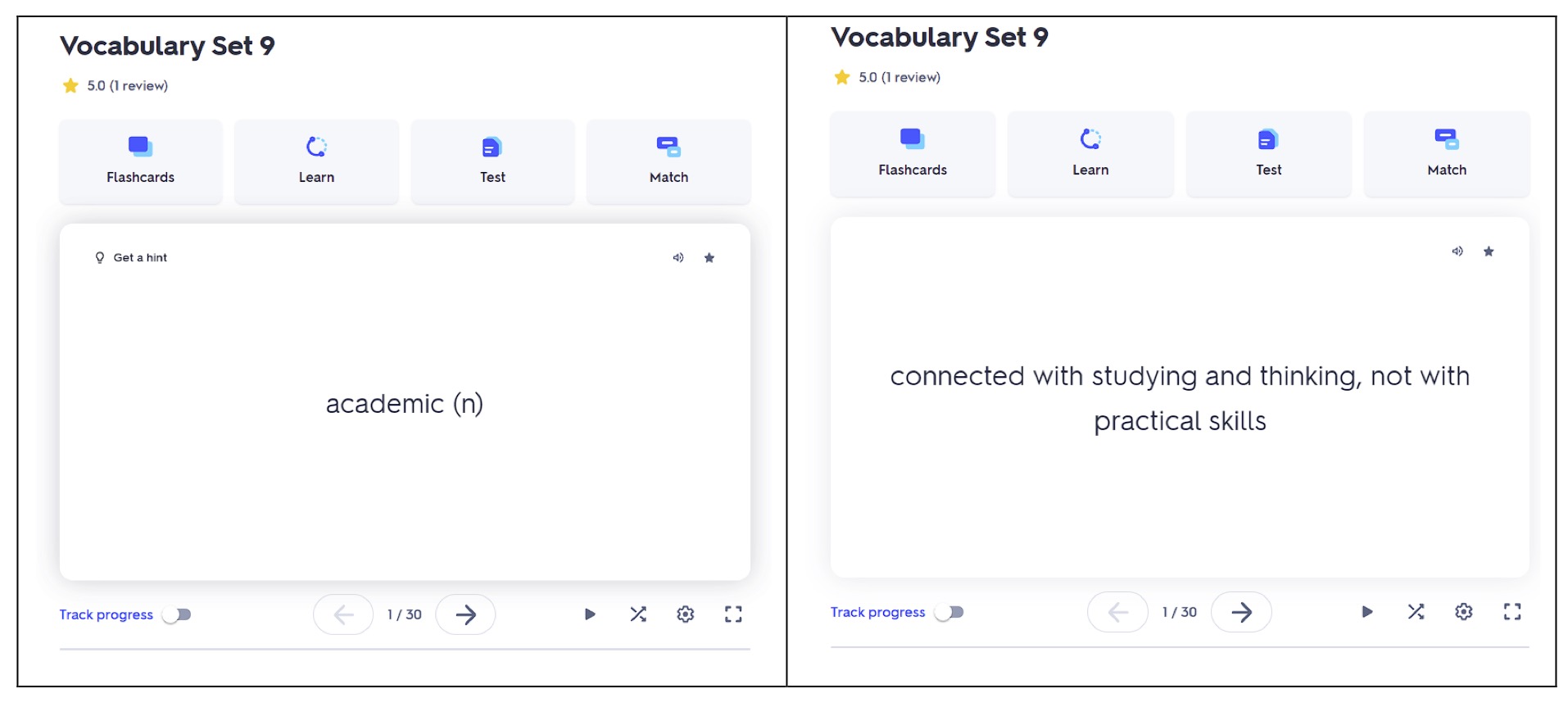
Prior to the study, 10-week vocabulary sets were prepared using the Quizlet application. The vocabulary list materials were taken from the Academic Words List (AWL) – a list of scientific vocabulary consisting of context-independent formal words with a high frequency and wide range of occurrence across many scientific disciplines (Dizon, 2016). It was purported to encompass vocabulary often found in academic books, making it a valuable gauge of learners’ academic proficiency. In the present study, the target words comprised 300 words, distributed to students as 10-week online vocabulary learning materials. The words were divided into 10 sets, with 30 words per week.
Figure 1
Sample of Vocabulary List Materials in Quizlet
The instructional intervention was conducted over 12 weeks in an online classroom environment with 72 first-year Indonesian EFL university students enrolled in the General English II course. These learners were non-English majors who had previously received vocabulary instruction primarily through paper-based, teacher-led classroom activities, a context commonly reported in Indonesian tertiary EFL settings (Pratiwi et al., 2024). The process is shown in Figure 2.
Figure 2
Online Learning Procedure
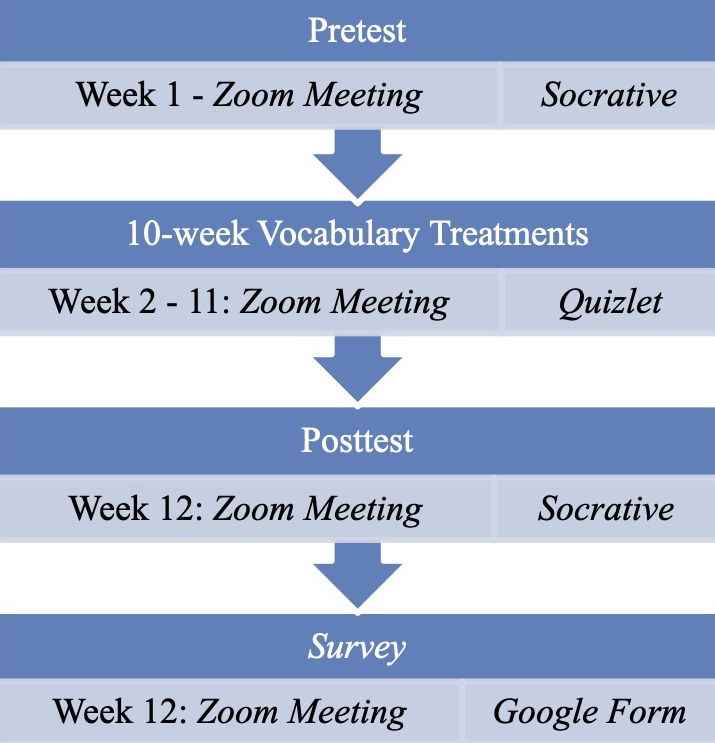
In the first week, participants completed a vocabulary pretest administered via the Socrative application to establish baseline vocabulary knowledge. From Weeks 2 to 11, students participated in a 10-week online vocabulary learning program delivered through synchronous Zoom meetings, with Quizlet integrated as the main learning and practice platform. Each week, students were introduced to a set of 30 academic vocabulary items. The instructor explained the target words, including their meanings and parts of speech, during the initial phase of each Zoom session.
Following this brief instructional phase, students engaged with Quizlet activities, including flashcards, matching exercises, and sentence-completion tasks. These activities allowed learners to practise vocabulary at their own pace and to repeat exercises as needed. To support deeper lexical understanding, the instructor guided students in exploring synonyms and antonyms using an online thesaurus during the Zoom sessions. Vocabulary instruction was scheduled for approximately 30 minutes at the beginning of each weekly meeting, as the General English II course integrated vocabulary with other language skills. Importantly, although Quizlet activities were introduced during synchronous class time, learners retained continuous access to the vocabulary sets outside the Zoom meetings. This enabled students to revisit the materials independently, supporting self-paced practice and self-monitoring—key principles of self-access learning. In this way, Quizlet functioned not only as a classroom tool but also as a digital self-access learning resource.
In Week 12, participants completed a posttest via Socrative to measure vocabulary learning outcomes following the intervention. Immediately after the posttest, a questionnaire administered through Google Forms was distributed to collect students’ perceptions of the learning method, with particular attention to vocabulary learning practices and learner autonomy.
Data Collection and Instruments
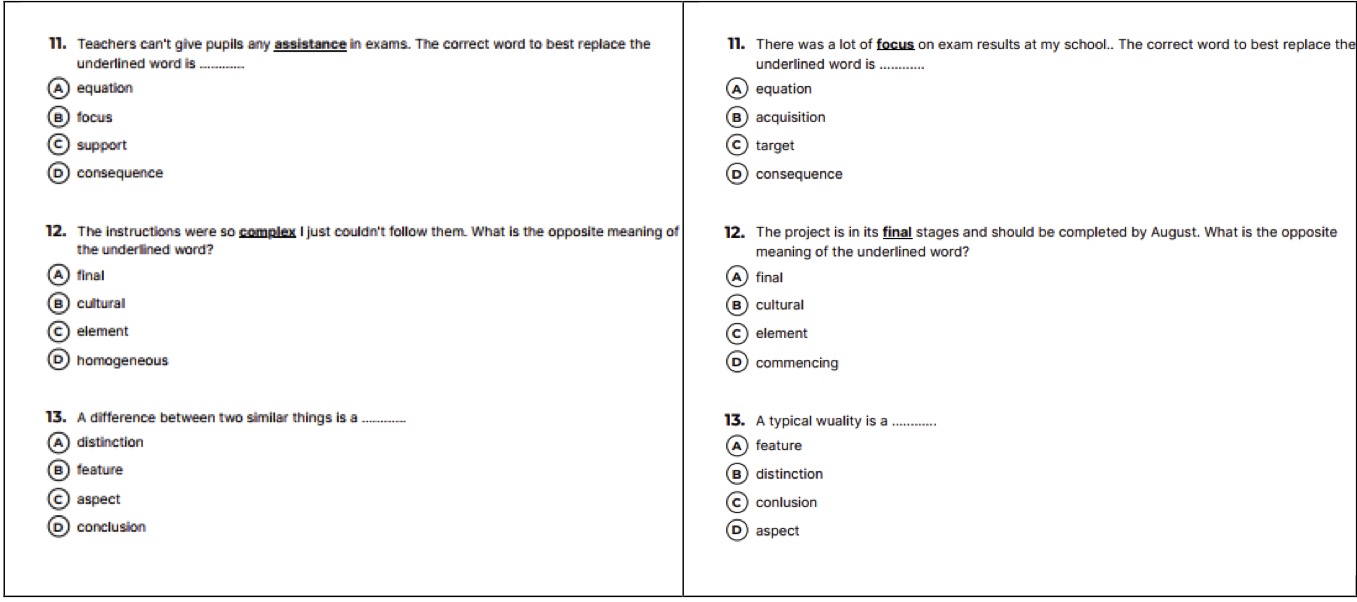
Data were collected through vocabulary tests and a learner-perception questionnaire. Vocabulary learning outcomes were measured using a pretest and a posttest adapted from a validated instrument developed in previous EFL vocabulary research (Pratiwi et al., 2024). Both tests consisted of 50 multiple-choice items designed to assess learners’ receptive vocabulary knowledge, including word meaning, synonyms, antonyms, parts of speech, and sentence-level usage. Although the lexical items differed between the pretest and posttest, the two tests were parallel in format, content coverage, and level of difficulty to ensure comparability. Test items were drawn from the target vocabulary taught during the 10-week intervention, with 5 items per weekly vocabulary set. Each test was administered within a 50-minute time limit.
Figure 3
Sample of Pretest and Posttest
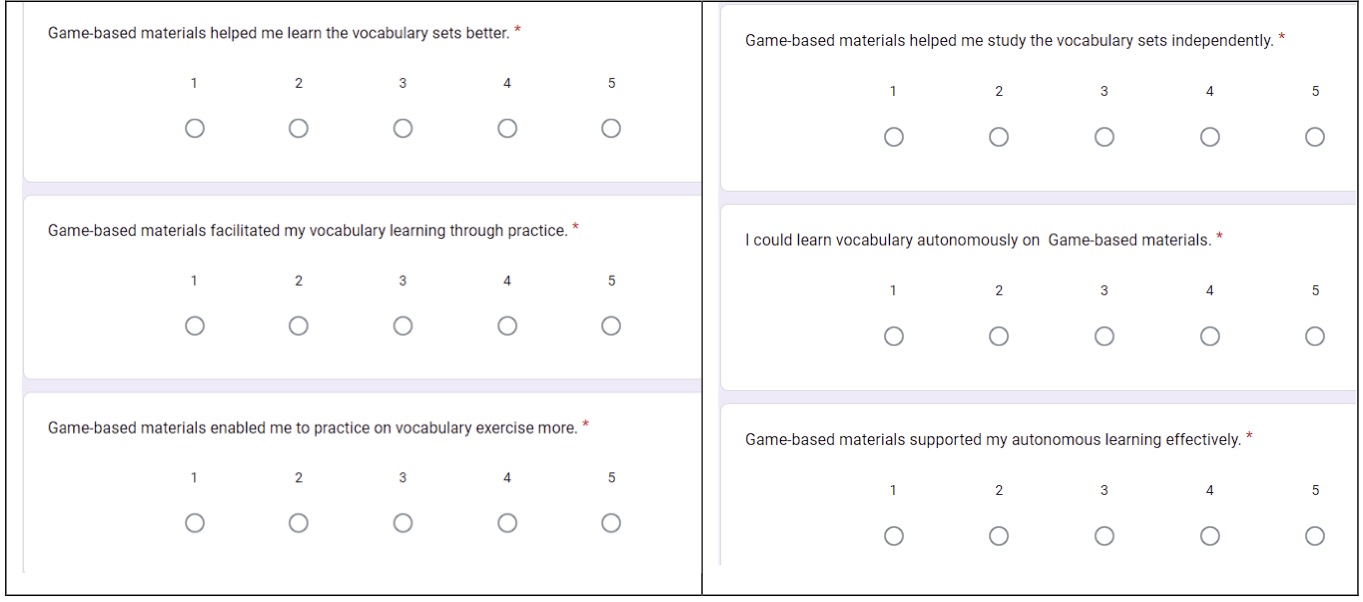
In addition to the vocabulary tests, a questionnaire was administered to examine students’ perceptions of vocabulary learning using Quizlet and its contribution to learner autonomy. The questionnaire was adapted from an established survey instrument used in prior studies on gamified vocabulary learning and learner autonomy in EFL (Waluyo & Bakoko, 2021). It comprised 12 items organized into two constructs: perceptions of vocabulary training using Quizlet (eight items) and perceptions of autonomous learning behaviors (four items). All items were measured on a five-point Likert scale, ranging from 1 (strongly agree) to 5 (strongly disagree). The questionnaire was distributed in the final week of the study, following the administration of the posttest.
Figure 4
Sample of Survey Questions
Data Analysis
Before analyzing the data, the test and survey results were checked for normality. Then, the data were divided by students’ proficiency levels to assess the efficacy of the vocabulary treatment for high- and low-proficiency learners. In the present study, the analysis employed a Parametric Test (including Pearson r correlation and Cohen’s d coefficient) for the test results and Descriptive Statistics for the survey results for each student’s proficiency level. All analyses were done in SPSS 25. To gain comprehensive insight, both results were integrated, providing valuable contributions and adding to the existing theory on enhancing learners’ autonomy in an online learning environment using Quizlet as an IRS application for students with different proficiency levels.
Results and Discussion
Test Results
To confirm the homogeneity of the data, Skewness and Kurtosis analysis was run in SPSS 25 and resulted that the data was homogeneous since those ranged between +2 and -2 (Skewness = -869, -.455, -.968, -.591, -425, -569; Kurtosis = 1.429, .422, 1.294, .447, 1.226, .700). The data was checked for all data and each proficiency level. Therefore, the data met the assumptions for analysis using the Paired Sample t-test. The results of the paired analysis differed across all participants and at various proficiency levels. See Table 1 for a summary of the descriptive statistics.
Table 1
Descriptive Statistics Results
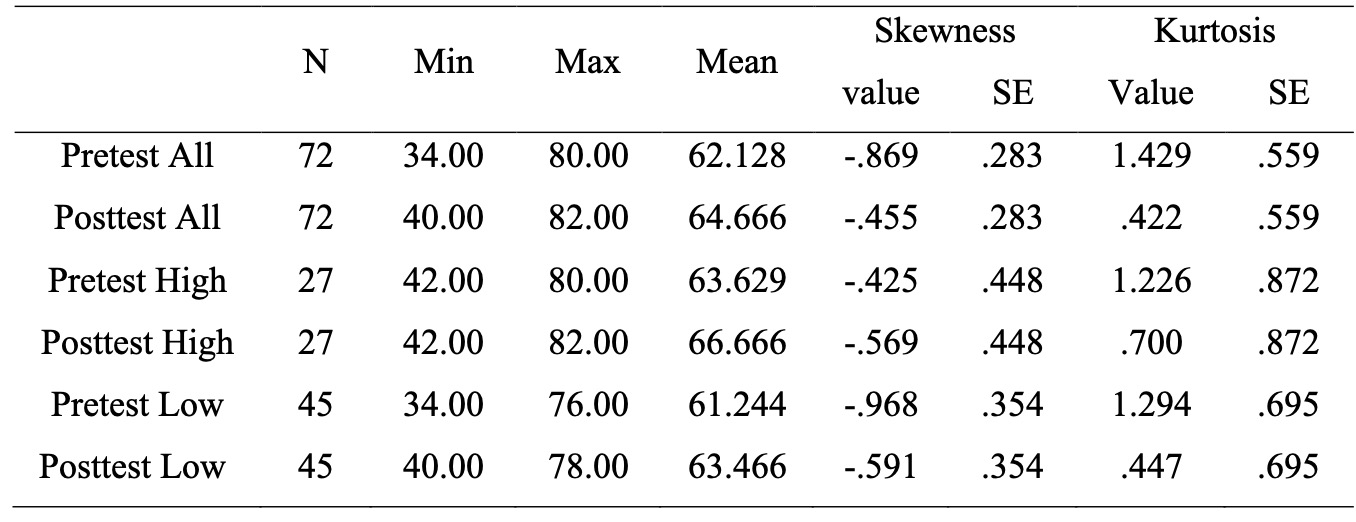
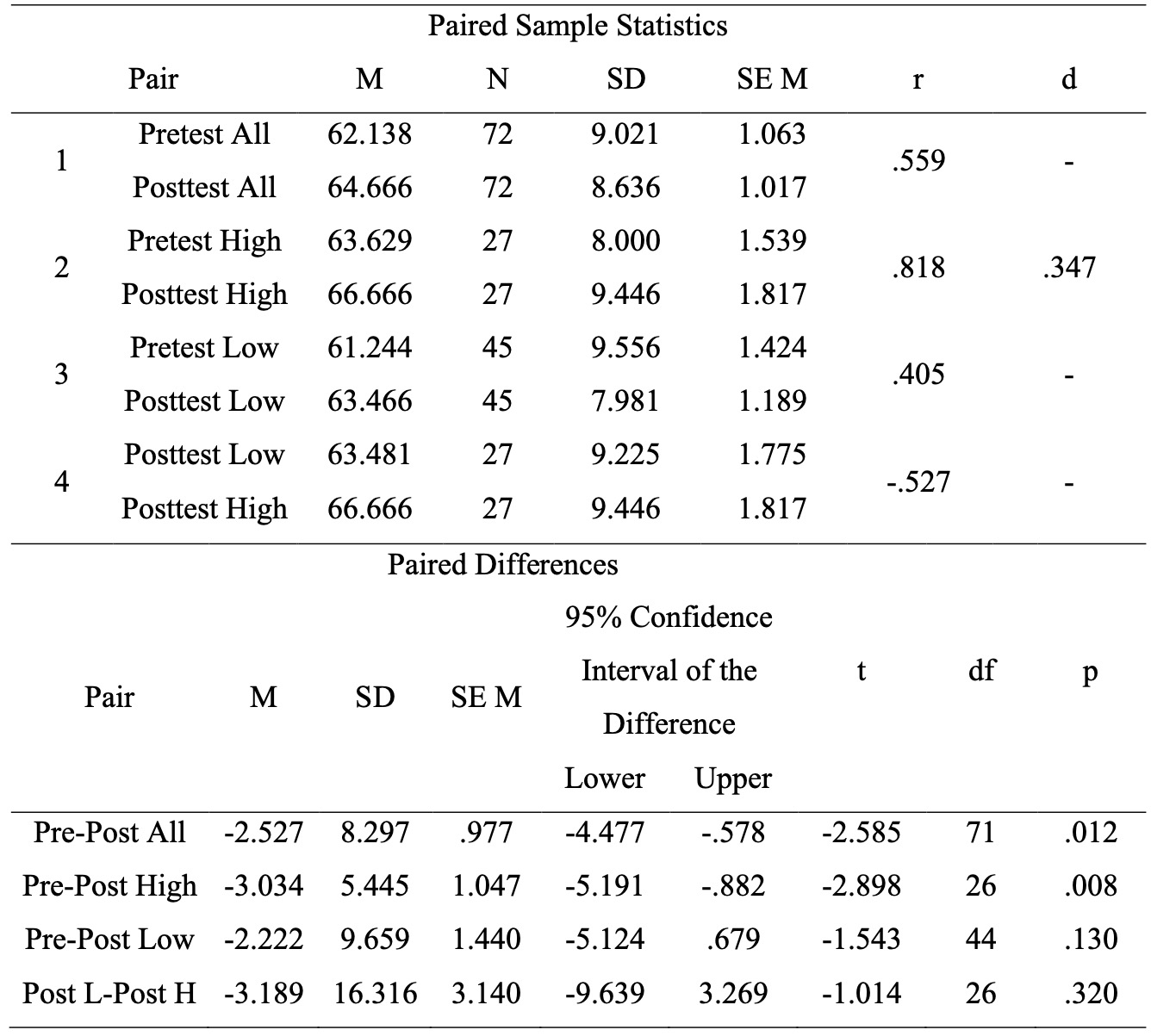
All participants showed an improvement of 2.527 from the pretest (M = 62.128, SD = 9,021) to the posttest (M = 64.666, SD = 8.636). The Pearson analysis indicated no difference between the pretest and posttest (t(71) = -2.585, p = .012) and a medium correlation (r = .559), so the effect size could not be calculated. Overall, using Quizlet for online vocabulary learning did not significantly enhance students’ learning outcomes, with no effect size. On the high-proficiency level, there was a mean difference of 3.034 (SD = 5.445) from the pretest (M = 63.629, SD = 8) to the posttest (M = 66.666, SD = 9.446). The Paired Sample t-test showed a significant difference (t(26) = -2.898, p = .008), with a very high correlation (r = .818) and a small effect size (d = .347). It meant that Quizlet significantly enhanced students’ vocabulary learning outcomes in an online learning setting for high-proficiency learners.
For low-proficiency learners, the test results improved by 2.222 from the pretest (M = 61.244, SD = 9.556) to the posttest (M = 63.466, SD = 7.981). Paired statistics indicated no difference between the pretest and posttest (t(44) = -1.543, p = .130) and a medium correlation (r = .405), so the effect size could not be calculated. This analysis revealed that Quizlet slightly improved students’ learning outcomes in online vocabulary learning, with a moderate correlation between the pretest and posttest, but the effect was insignificant. Comparing posttest results between high- and low-proficiency learners, the mean difference was 3.189 (SD = 16.316). The Paired Sample t-test (Table 2)showed that there was no significant difference between the pretest results (t(26) = -1.014, p = .320), with a medium correlation (r = -.527) and no effect size. The results showed that vocabulary learning outcomes between high- and low-proficiency learners differed slightly in an online Quizlet-based learning setting.
Table 2
Results of Paired Sample t-test
Survey Results
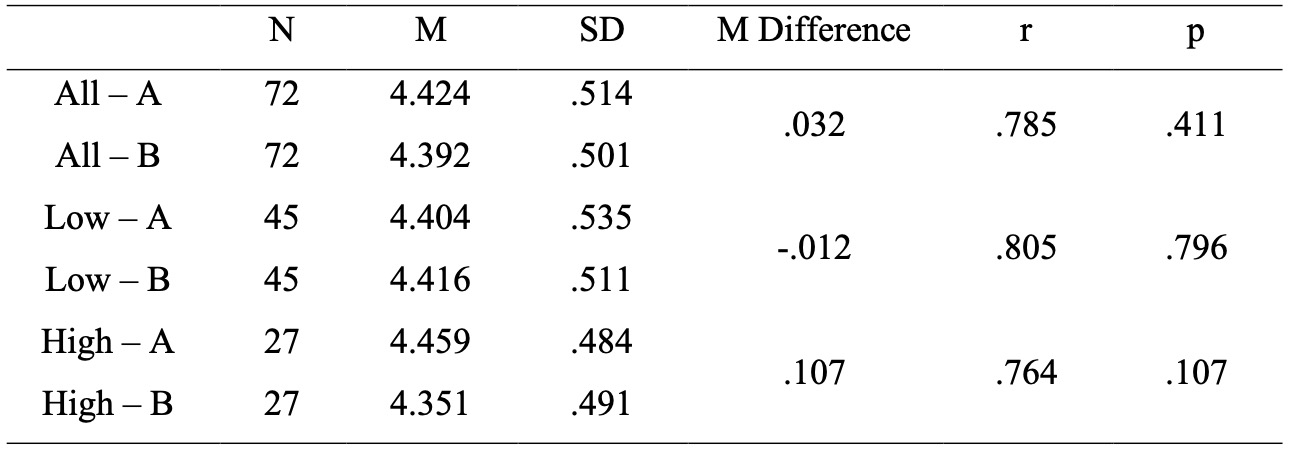
The survey results (Table 3) indicated that the students perceived highly positive on the use of Quizlet as a vocabulary training application toward all participants (M = 4.424, SD = .514), low-proficiency (M = 4.404, SD = .535) and high-proficiency (M = 4.459, SD = .484) to promote learners’ autonomy (Mall = 4.392, Mlow = 4.416, Mhigh = 4.351). The analysis showed no significant difference in students’ perceptions of vocabulary training and of enhancing autonomous learning, with a high correlation for low-proficiency learners (r = .764) and a very high correlation for high-proficiency learners (r = .805). It revealed that students’ positive perceptions of Quizlet as a vocabulary learning platform did not align with the learners’ autonomy enhancement.
Table 3
Survey Results
Drawing on the analysis, students’ perceptions were similar across participants and proficiency levels. The students reported that Quizlet helped them study the weekly vocabulary sets more effectively by practicing exercises on the platform. The application assisted vocabulary learning, leading to increased students’ vocabulary scores. Therefore, the students suggested that the English teacher could use Quizlet to facilitate vocabulary learning. Regarding learners’ autonomy, students found that Quizlet helped them with independent learning and supported autonomous learning effectively. These perceptions, however, were not significantly correlated with students’ views on Quizlet as a place for vocabulary training and learning.
Discussion
This study employed complementary quantitative data to examine the role of Quizlet as a digital tool for online vocabulary learning and its potential contribution to learner autonomy within a self-access learning framework. The findings indicate that while Quizlet supported vocabulary development to some extent, its effectiveness and pedagogical implications varied according to learners’ proficiency levels and the degree of autonomy embedded in the instructional design.
With regard to vocabulary learning outcomes, all participants demonstrated improvement from the pretest to the posttest; however, statistically significant gains were observed only among high-proficiency learners. This finding is consistent with previous studies reporting that learners with stronger linguistic foundations are better able to benefit from gamified and technology-enhanced vocabulary instruction (Rasti-Behbahani & Shahbazi, 2022; Waluyo & Bucol, 2021). High-proficiency learners may possess greater metalinguistic awareness and strategy use, enabling them to take advantage of features such as repeated exposure, immediate feedback, and varied practice modes. In contrast, low-proficiency learners showed only modest and non-significant gains, suggesting that access to digital tools alone may be insufficient without additional scaffolding. This aligns with research indicating that vocabulary learning through digital platforms is mediated by learners’ existing proficiency and their capacity to regulate learning strategies independently (Benedict & Shabdin, 2021; Pratiwi et al., 2024). Furthermore, as the participants were first-year university students, unfamiliarity with academic vocabulary demands and online learning environments may have constrained the effectiveness of the intervention, particularly for learners with limited prior exposure.
Students’ perceptions of Quizlet as a vocabulary learning platform were overwhelmingly positive. Learners reported that the platform was engaging, accessible, and enjoyable, and that the variety of activities supported vocabulary practice. These findings corroborate earlier research demonstrating that gamified platforms such as Quizlet enhance learner motivation and engagement in vocabulary learning (Dizon, 2016; Fithriani, 2021). From an instructional perspective, such positive affective responses are valuable because they may encourage sustained engagement with vocabulary-learning tasks.
However, a key finding of this study is the lack of alignment between students’ positive perceptions of Quizlet and the development of learner autonomy. Despite high levels of enjoyment and perceived usefulness, learners did not demonstrate a corresponding increase in autonomous learning behaviours. This finding supports the view that autonomy involves more than motivation or positive attitudes; it requires opportunities for learners to plan, monitor, and evaluate their own learning (Blidi, 2016; Pratiwi & Waluyo, 2023). In the present study, learners primarily engaged with Quizlet through teacher-assigned tasks during synchronous sessions, which may have limited their perception of the platform as a self-access resource. Without explicit opportunities for learner choice, goal-setting, or reflection, Quizlet may have functioned largely as a teacher-directed instructional tool rather than a genuine self-access learning environment.
The limited development of autonomy may also be attributed to learners’ minimal involvement in designing or selecting vocabulary content. Previous research suggests that learner ownership and decision-making are critical for fostering autonomy (Morris et al., 2025; Wu, 2015). When learners are excluded from decisions about learning materials and strategies, their engagement may remain compliance-driven rather than self-directed. This issue may be particularly salient for low-proficiency learners, who often require explicit strategy instruction and guided reflection to engage autonomously with digital tools (Pratiwi et al., 2024). Without such support, these learners may rely heavily on teacher direction, even when self-access tools are available.
From a self-access learning perspective, the findings highlight the importance of instructional design in transforming digital platforms into effective self-access environments. While Quizlet offers features conducive to autonomy – such as flexible access, self-paced practice, and opportunities for repetition – these affordances must be intentionally leveraged through pedagogical strategies that promote learner responsibility (Kaya & Keçik, 2021; Ma & Chen, 2025). Assigning optional, self-paced activities beyond class time, encouraging learners to create their own vocabulary sets, and integrating reflective tasks may help bridge the gap between engagement and autonomy (Anggoro & Pratiwi, 2023; Ghazali, 2020). Additionally, monitoring and support systems, such as learning management systems or online communication platforms, can provide guidance while gradually fostering independent learning (Pratiwi & Waluyo, 2023).
Overall, this study suggests that Quizlet has the potential to support vocabulary learning and contribute to self-access learning; however, its effectiveness in promoting learner autonomy depends on learners’ proficiency levels and the extent to which autonomy is embedded in the learning design. These findings reinforce the view that digital tools should be integrated not merely as engaging instructional aids but as components of thoughtfully designed self-access learning environments (Anggoro & Pratiwi, 2023; Blidi, 2016; Dizon, 2016; Morris et al., 2025).
Implications, Limitations, and Recommendations for Future Research
The findings of this study offer several important implications for English language teaching and learning in tertiary contexts, particularly with regard to academic vocabulary development and self-access learning. Given the central role of English in academic reading and writing, limited vocabulary knowledge can pose significant challenges for university students, especially those enrolled in English for Specific Purposes (ESP) programs. Digital platforms such as Quizlet, therefore, offer valuable opportunities to support vocabulary learning by providing flexible access, repeated exposure, and interactive practice.
The results indicate that Quizlet can be an effective tool for enhancing vocabulary learning, particularly for high-proficiency learners who appear better equipped to take advantage of its features independently. For these learners, Quizlet may serve as a self-access resource for self-paced practice and consolidation of lexical knowledge. However, the limited impact on learner autonomy observed in this study suggests that autonomy does not emerge automatically from the use of digital tools. Instead, autonomy must be intentionally fostered through pedagogical design.
To promote learner autonomy within self-access learning frameworks, instructors may consider integrating Quizlet in ways that encourage learner agency and responsibility. For example, learners could be invited to create their own vocabulary sets, select words relevant to their academic needs, or choose preferred study modes. Reflective learning logs or self-monitoring checklists may also help learners track their progress and evaluate the effectiveness of their learning strategies. In addition, assigning optional, self-paced activities beyond class time can support learners in transitioning from teacher-directed engagement to more autonomous use of self-access resources.
The findings further highlight the need for differentiated support, particularly for low-proficiency learners. These learners may require explicit strategy instruction, guided practice, and gradual scaffolding to develop the skills necessary for autonomous learning. Monitoring systems, such as learning management systems or online communication platforms, may provide ongoing support while progressively encouraging independence.
Several limitations should be acknowledged when interpreting the findings of this study. First, the use of a one-group pretest–posttest design limits the ability to make causal claims regarding the effectiveness of Quizlet. Future studies employing control groups or longitudinal designs may provide stronger evidence. Second, the study relied primarily on quantitative data, particularly Likert-scale survey responses, to examine learner autonomy. While these data offer useful insights into learners’ perceptions, they may not fully capture actual autonomous learning behaviors. Additionally, the study did not include qualitative data such as learner reflections, interviews, or usage analytics, which could have provided richer insights into how learners engaged with Quizlet as a self-access tool. Finally, the findings are context-specific, as the study was conducted with first-year Indonesian university students in an online General English course, which may limit generalizability to other contexts.
Building on the findings and limitations of the present study, future research could explore several avenues. First, incorporating qualitative methods – such as learner interviews, learning diaries, or reflective journals – would allow for a deeper examination of how learners experience and enact autonomy in digital self-access environments. Second, future studies could investigate the impact of specific pedagogical interventions designed to foster autonomy, such as learner-generated content, reflective tasks, or strategy training, when using Quizlet or similar platforms. Further research may also examine the role of learner variables, including motivation, learning styles, and prior digital literacy, in mediating the effectiveness of self-access tools. Comparative studies across different proficiency levels, instructional contexts (e.g., ESP vs. general English), or learning modes (online vs. blended) would contribute to a more nuanced understanding of how digital platforms can support self-access learning. Finally, longitudinal studies could provide insight into the sustained development of learner autonomy over time, moving beyond short-term interventions to examine long-term learning trajectories.
Conclusion
This study investigated the use of Quizlet as a digital tool for online vocabulary learning and examined its potential contribution to learner autonomy within an Indonesian university EFL context. By analyzing vocabulary learning outcomes alongside learners’ perceptions, the study sought to move beyond evaluating instructional effectiveness to consider Quizlet as a possible self-access learning resource. The findings indicate that while Quizlet supported vocabulary development overall, statistically significant gains were observed only among high-proficiency learners. This suggests that learners with stronger linguistic foundations may be better positioned to benefit from gamified digital tools, particularly in terms of self-paced practice and repeated exposure to lexical items. In contrast, low-proficiency learners showed more limited gains, highlighting the need for differentiated scaffolding and strategy support when implementing self-access tools in online vocabulary instruction.
Although learners reported highly positive perceptions of Quizlet as an engaging and useful vocabulary learning platform, these perceptions did not translate into a corresponding development of learner autonomy. This misalignment underscores a central insight of the study: learner autonomy requires more than access to digital tools or positive attitudes toward technology. Autonomy develops through intentional pedagogical design that provides learners with opportunities for decision-making, self-management, and reflection. Without such opportunities, digital platforms may function primarily as teacher-directed instructional tools rather than as genuine self-access learning environments.
From a self-access learning perspective, the study highlights both the potential and the limitations of integrating Quizlet into online EFL instruction. While the platform offers affordances that align with self-access principles – such as flexible access, varied practice modes, and opportunities for self-monitoring – these affordances must be actively leveraged to support autonomous learning. Instructors play a crucial role in transforming digital tools into self-access resources by involving learners in learning decisions, encouraging independent use beyond class time, and providing appropriate scaffolding, particularly for lower-proficiency learners.
In conclusion, this study contributes to self-access learning research by demonstrating that digital vocabulary tools alone do not guarantee the development of learner autonomy. Instead, autonomy emerges from the interaction between learner characteristics, instructional design, and the learning environment. By foregrounding this interaction, the study offers insights for educators and institutions seeking to integrate digital platforms more effectively into online and self-access learning contexts.
Notes on the Contributors
Damar Isti Pratiwi is an Assistant Professor at Politeknik Perkeretaapian Indonesia Madiun. She has expertise in teaching English from junior high school to higher education in university level. She actively publishes articles in reputable international journals in the scope of TEFL and Teaching English with Technology. Her research interest is on teaching English with technology, English for specific purposes, teaching English as a foreign language, and educational technology.
Fadhila Yonata, PhD in English language education, is a Lecturer in STAIN Sultan Abdurrahman Kepulauan Riau, Bintan, Indonesia, and an Academic Consultant at Regalia Institute. His research interests include textbook analysis, language materials development, discourse analysis, intercultural communicative competence, intercultural citizenship education, and teacher professional development.
References
Abdulzahra, S. F. (2020). The effect of using mobile phones for learning new vocabulary items by Iraqi non-English major college students. International Journal of Innovation, Creativity and Change, 14(4), 414–429. https://www.ijicc.net/images/Vol_14/Iss_4/14428_Abdulzahra_2020_E_R.pdf
Anggoro, K. J., & Pratiwi, D. I. (2023). Fostering self-assessment in English learning with a generative AI platform : a case of Quizizz AI. Studies in Self-Access Learning Journal, 14(4), 489–501. https://doi.org/10.37237/140406
Arifani, Y., Hidayat, N., Mulyadi, D., & Wardhono, A. (2020). Enhancing EAP learners’ vocabulary acquisition: an investigation of individual sms-based reporting activities. Teaching English with Technology, 20(5), 125–146. https://tewtjournal.org/download/8-enhancing-eap-learners-vocabulary-acquisition-an-investigation-of-individual-sms-based-reporting-activities-by-yudhi-arifani-nur-hidayat-dodi-mulyadi-and-agus-wardhono/
Banafshi, M., Khodabandeh, F., & Hemmati, F. (2020). Comparing EFL learners’ responses in online and traditional classes: a mixed method approach. Turkish Online Journal of Distance Education, 21(4), 124–142. https://doi.org/10.17718/TOJDE.803382
Benedict, M. C., & Shabdin, A. A. (2021). A comparison of the vocabulary learning strategies employed by high and low proficient pre-university students in Malaysia. LEARN Journal: Language Education and Acquisition Research Network, 14(2), 222–246. https://so04.tci-thaijo.org/index.php/LEARN/index
Benson, P. (2006). Autonomy in language teaching and learning. Cambridge University Press, 21–40. https://doi.org/10.1017/S0261444806003958
Blachowicz, C. L. Z., & Fisher, P. (2000). Vocabulary instruction. In M. L. Kamil, P. B. Mosenthal, P. D. Pearson, & R. Barr (Eds.), Handbook of Reading Research, Volume III. Routledge. https://doi.org/10.4324/9781315200613
Blidi, S. (2016). Collaborative learner autonomy: a mode of learner autonomy development. In Collaborative Learner Autonomy: A Mode of Learner Autonomy Development. Springer. https://doi.org/10.1007/978-981-10-2048-3
Çakici, D. (2015). Autonomy in language teaching and learning process. Journal of the Faculty of Education, 16(1), 31–42. https://doi.org/10.17679/iuefd.16168538
Dehghanzadeh, H., Fardanesh, H., Hatami, J., Talaee, E., & Noroozi, O. (2019). Using gamification to support learning English as a second language: a systematic review. Computer Assisted Language Learning, 34(7), 934–957. https://doi.org/10.1080/09588221.2019.1648298
Dizon, G. (2016). Quizlet in the EFL classroom: enhancing academic vocabulary acquisition. Teaching English with Technology, 16(2), 40–56. https://tewtjournal.org/download/4-quizlet-in-the-efl-classroom-enhancing-academic-vocabulary-acquisition-of-japanese-university-students-by-gilbert-dizon/
Fithriani, R. (2021). The utilization of mobile-assisted gamification for vocabulary learning: its efficacy and perceived benefits. Computer Assisted Language Learning Electronic Journal, 22(3), 146–163. http://callej.org/journal/22-3/Fithriani2021.pdf
Genç, G. (2015). Autonomous learning capacity of EFL student teachers. International Journal of Languages’ Education, 1(Volume 6), 23–23. https://doi.org/10.18298/ijlet.483
Ghazali, F. Al. (2020). Challenges and opportunities of fostering learner autonomy and self-access learning during the Covid-19 pandemic. Studies in Self-Access Learning Journal, 11(3), 114–127. https://doi.org/10.37237/110302
Güngör, B., & Önder, A. (2022). Development of English picture vocabulary test as an assessment tool for very young EFL learners’ receptive and expressive language skills. Early Education and Development, 1–18. https://doi.org/10.1080/10409289.2022.2043134
Kaur, N. (2013). The need for autonomous vocabulary learners in the Malaysian ESL classroom. GEMA Online Journal of Language Studies, 13(3), 7–16. https://ejournal.ukm.edu.my/gema/article/view/4216
Kaya, S. Ü., & Keçik, İ. (2021). Practical ideas on developing learner autonomy for young learners. Studies in Self-Access Learning Journal, 12(3), 266–280. https://doi.org/10.37237/120306
Kitano, M., & Chiba, K. (2019). Comparing the effectiveness of word cards and list learning with Japanese learners of English. Vocabulary Learning and Instruction, 8(1), 70–75. https://doi.org/10.7820/vli.v08.1.kitano.chiba
Kukulska-Hulme, A., & Shield, L. (2008). An overview of mobile assisted language learning: from content delivery to supported collaboration and interaction. ReCALL, 20(3), 271–289. https://doi.org/10.1017/S0958344008000335
Lestari, I. W., & Hardiyanti, N. (2020). Vocabulary learning autonomy through incorporation of English songs: Indonesian EFL students’ perspectives. 3L: Language, Linguistics, Literature, 26(2), 94–104. https://doi.org/10.17576/3L-2020-2602-07
Ludwig, C. (2018). Using vocabulary apps to enhance students’ vocabulary knowledge. Studies in Self-Access Learning Journal, 9(3), 306–323. https://doi.org/10.37237/090305
Ma, Y., & Chen, M. (2025). The human touch in AI: optimizing language learning through self-determination theory and teacher scaffolding. Frontiers in Psychology, 16(July), 1–18. https://doi.org/10.3389/fpsyg.2025.1568239
Morris, T. H., Bremner, N., & Sakata, N. (2025). Self-directed learning and student-centred learning: a conceptual comparison. Pedagogy, Culture & Society, 33(3), 847–866. https://doi.org/10.1080/14681366.2023.2282439
Namaziandost, E., Çakmak, F., Heydarnejad, T., & Rezai, A. (2024). The predictive effects of learner autonomy and academic engagement on willingness to communicate, foreign language learning self-esteem, and L2 grit in an EFL context. Acta Psychologica, 250, 104528. https://doi.org/10.1016/j.actpsy.2024.104528
Nation, I. S. P. (2022). Vocabulary-learning strategies and autonomy. In I. S. P. Nation (Ed.), Learning Vocabulary in Another Language (3rd ed., pp. 316–335). Cambridge University Press. https://doi.org/10.1017/9781009093873.009
Ng, L. L., & Raghbir, R. S. A. (2021). Learning English vocabulary via computer gaming. Issues in Language Studies, 10(1), 93–109. https://doi.org/10.33736/ils.2708.2021
Nunan, D. (2003). Nine steps to learner autonomy. Symposium, 193–204.
Pfenninger, S. E. (2015). MSL in the digital ages: effects and effectiveness of computer-mediated intervention for FL learners with dyslexia. Studies in Second Language Learning and Teaching, 5(1), 109–133. https://doi.org/10.14746/ssllt.2015.5.1.6
Pratiwi, D. I., Fitriati, S. W., Yuliasri, I., & Waluyo, B. (2024). Flipped classroom with gamified technology and paper ‑ based method for teaching vocabulary. Asian-Pacific Journal of Second and Foreign Language Education, 9(1), 1–18. https://doi.org/10.1186/s40862-023-00222-4
Pratiwi, D. I., & Ubaedillah, U. (2021). Digital vocabulary class in English for railway mechanical technology. Teaching English with Technology, 21(3), 67–88. https://tewtjournal.org/download/digital-vocabulary-class-in-english-for-railway-mechanical-technology-by-damar-isti-pratiwi-and-ubaedillah-ubaedillah/
Pratiwi, D. I., & Waluyo, B. (2023). Autonomous learning and the use of digital technologies in online English classrooms in higher education. Contemporary Educational Technology, 15(2). https://doi.org/10.30935/cedtech/13094
Rasti-Behbahani, A., & Shahbazi, M. (2022). Investigating the effectiveness of a digital game-based task on the acquisition of word knowledge. Computer Assisted Language Learning, 35(8), 1920–1945. https://doi.org/10.1080/09588221.2020.1846567
Rayson, C. (2021). Learner autonomy: what you need to know. World of Better Learning – Cambridge University Press & Assessment. https://www.cambridge.org/elt/blog/2021/01/29/learner-autonomy/
Sari, R. N. (2016). Learning vocabulary through paper and online-based glossary. Journal of ELT Research, 1(2). https://doi.org/10.22236/jer_vol1issue2pp144-157
Sariani, S., Yaningsih, Y., & El Khairat, M. (2020). Assessing the Effectiveness of Mobile-Application Technology: A Project-Based Learning. JEES (Journal of English Educators Society), 5(1), 67–73. https://doi.org/10.21070/jees.v5i1.376
Susanti, A., Rachmajanti, S., & Mustofa, A. (2023). Between teacher’ roles and students’ social: Learner autonomy in online learning for EFL students during the pandemic. Cogent Education, 10(1). https://doi.org/10.1080/2331186X.2023.2204698
Vu, D. Van, & Peters, E. (2021). Vocabulary in English language learning, teaching, and testing in Vietnam: a review. Education Sciences, 11(563). https://doi.org/10.3390/educsci11090563
Waluyo, B., & Bakoko, R. (2021). Vocabulary list learning supported by gamification: classroom action research using Quizlet. The Journal of Asia TEFL, 18(1), 289–299. https://doi.org/10.18823/asiatefl.2021.18.1.20.289
Waluyo, B., & Bucol, J. L. (2021). The impact of gamified vocabulary learning using Quizlet on low-proficiency students. Computer Assisted Language Learning Electronic Journal (CALL-EJ), 22(1), 164–185. http://callej.org/journal/22-1/Waluyo-Bucol2021.pdf
Waluyo, B., & Pratiwi, D. I. (2025). AI chatbot-assisted English learning and willingness to communicate: a narrative meta-synthesis of evidence from Asian English as a foreign language contexts. The JALT CALL Journal, 21(3), 1–25.
Wu, J. (2015). Effects of CALL on self-directed FL vocabulary learning. Studies in Self-Access Learning Journal, 6(2), 191–215. https://doi.org/10.37237/060204
Yue, N. (2017). Computer multimedia assisted English vocabulary teaching courseware. International Journal of Emerging Technologies in Learning, 12(12), 67–78. https://doi.org/10.3991/IJET.V12I12.7955
Yusnimar, Y. (2019). Autonomous learning and teacher guidance: towards the improvement of EFL students’ prepared talk in speaking practice. Studies in English Language and Education, 6(1), 97–107. https://doi.org/10.24815/siele.v6i1.10080
 SiSAL Journal