
Mai Sri Lena, University of Szeged, Hungary; Universitas Negeri Padang, Indonesia. https://orcid.org/0000-0002-1835-1963
Marianne Nikolov, University of Pécs, Hungary. https://orcid.org/0000-0001-5844-4729
Lena, M. S., & Nikolov, M. (2026). A systematic review of factors influencing young learners’ motivation to learn English. Studies in Self-Access Learning Journal, 17(1), 55–75. https://doi.org/10.37237/170105
Abstract
This study reviews current empirical studies on young learners’ (YLs) motivation to learn English published between 2020 and 2024 in nine countries. We focus on how authors defined motivation, what research design they used, what the main findings are, and what factors influence YLs’ motivation. We followed the procedures of systematic reviews recommended by Arksey and O’Malley (2005). First, we screened publications along these inclusion criteria: listed in Scopus-indexed journals Q1 and Q2, published in English between 2020 and 2024, and empirical studies on children’s motivation. This study revealed that effective teaching practices, self-regulated learning strategies, collaborative learning, self-accessed extramural activities in English and enjoyment in doing them, personality traits, meaningful, appropriate, and challenging tasks in classes, and good relationships between teachers and YLs were the key factors impacting children’s motivation most strongly. These have implications for practice. We argue that children’s self-access learning must be developmentally scaffolded and socially supported, and motivation should involve and lead to autonomy. Therefore, children should have access to enjoyable and age-appropriate activities not only in the classroom, but also at home and in digital settings to sustain their motivation.
Keywords: motivation, young learners, EFL, learning, teaching
Understanding the factors influencing young learners’ (YLs) motivation to learn English has gained a lot of attention in recent years. As globalization continues to shape educational landscapes, understanding what factors drive YLs’ enthusiasm and engagement in language learning has become a key domain. This systematic review analyzes recent empirical studies on key factors shaping YLs’ motivation to learn English, drawing on a diverse range of studies conducted over the past five years. It focuses on the definitions of motivation that framed studies, the research design researchers used, and their main findings.
YLs are children between six and 15 years of age (Mihaljević Djigunović & Nikolov, 2019). What motivates this age group differs significantly due to cognitive, emotional, and social developmental factors (Webber et al., 2023). Six-year-olds are often driven by intrinsic motivation: they enjoy learning through curiosity, play, and immediate experiences (Omrani et al., 2019). In contrast, 15-year-olds blend intrinsic and extrinsic motives, focusing on goals like grades and future aspirations (Webber et al., 2023). Cognitively, young children are motivated by tangible rewards, immediate feedback, and mastery motives, when they find tasks doable, whereas adolescents can engage in abstract thinking and long-term planning (Omrani et al., 2019). Socially, six-year-olds are motivated by cooperative play, while teenagers are influenced by group dynamics, competition, and social status. Additionally, younger learners need more guidance for self-regulation, while adolescents are more independent and goal-oriented (Opdenakker, 2022). Emotional factors also differ, as children respond strongly to both positive and negative experiences, whereas teens can navigate more complex emotions and social pressures better, which can impact their motivation (Omrani et al., 2019).
Nikolov (1999) argued that YLs tend to be motivated to learn additional languages. She claimed that the key factors shaping their motivation were the teacher and intrinsically motivating and cognitively challenging tasks aligned with YLs’ age and abilities (Nikolov, 1999). A lot of research has been conducted on children learning English (e.g., Butler, 2015; Liao et al., 2023; Wu & Hung, 2022; Tsai, 2020; Villarreal & Lázaro-Ibarrola, 2022); thus, it is timely to review what factors influence YLs’ motivation in learning English. Furthermore, research on self-access learning for young children is limited, but it stresses the teachers’ role in preparing them for autonomous learning. With teacher support and clear guidance, YLs can choose suitable materials and take responsibility for their learning (Park, 2015). Scaffolded choice and reflection boost motivation and persistence in self-directed English study (Takahashi, 2015), and autonomy-focused practices develop early metacognitive awareness and independent learning behaviors (Mynard & Carson, 2012). From the perspective of self-determination theory, autonomy-supportive teaching, positive teacher–student relationships, and engaging activities foster intrinsic motivation and self-initiated learning (Reeve, 2009; Reeve & Cheon, 2021). Therefore, the primary EFL classroom is crucial for building learners’ confidence, agency, and willingness to use English in and beyond school, and for enabling self-access language learning activities.
This review aims to enhance our understanding of the complex interplay of motivational factors that influence YLs’ motivated behavior when learning English. By identifying them, teachers and policymakers can design more effective interventions to create a supportive learning environment. Fostering high levels of motivation is crucial to supporting language learning, as intrinsically motivated students are more likely to devote more time and effort to mastering the English language.
This review, therefore, aims to answer these questions:
1. How is motivation defined by the authors of the selected studies?
2. What research design did the authors use?
3. What are the main findings of the studies?
4. What factors influence YLs’ motivation most strongly?
Method
The procedures of this systematic review were as follows (Arksey & O’Malley, 2005):
1) Clarification of terminology
First, we identified relevant studies using the Scopus database (ScienceDirect) because it includes high-quality, peer-reviewed journals in education and applied linguistics. Keywords for the search included young learner, motivation for YL, English, EFL, and ESL. The authors used Boolean operators (and, or) with a combination of keywords.
2) Inclusion and exclusion criteria
The inclusion criteria were: (1) listed in Scopus-indexed journals, (2) published in English between 2020 and 2024, (3) empirical studies on children’s motivation, (4) published in refereed Q1 and Q2 journals, and (5) participants were between six and 15 years old (ISCED 1-2). We excluded: (1) papers not published in Q1 and Q2 journals, (2) articles not in English, (3) overviews, chapters in books, book reviews, and conference proceedings, (4) papers on subjects other than English, and (5) participants who attended pre-school or upper secondary school (ISCED 0 or 3).
3) Charting and assessing the data by reading the articles one by one.
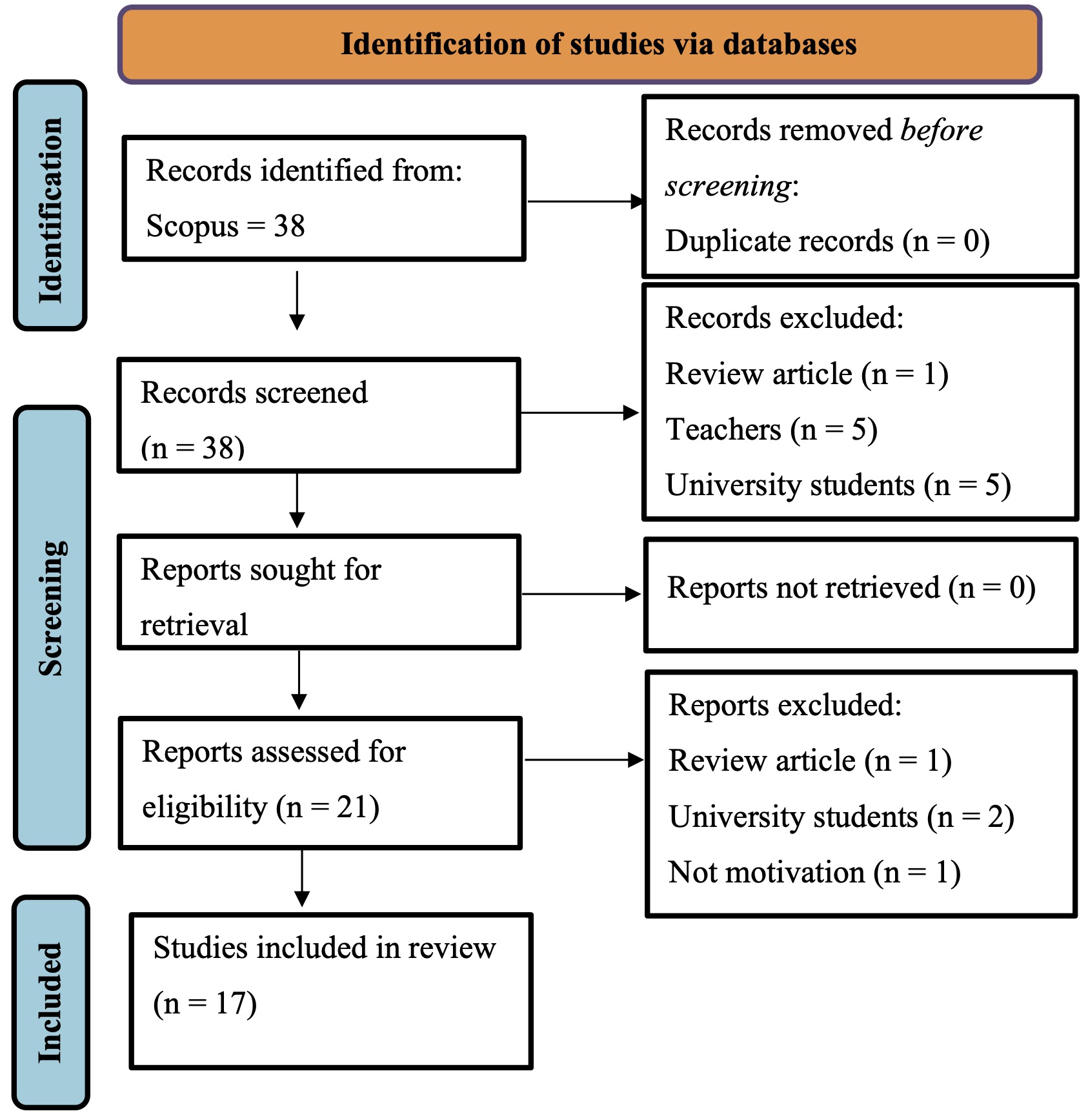
The data collection process is shown in Figure 1, including identification, screening, and inclusion for this review (Page et al., 2021). The search activity was conducted in April 2024. First, we read the title and abstract of the articles; in the second screening, we read the whole text to ensure that they fit the inclusion criteria. The keyword search resulted in 38 articles. After verifying duplicates, 38 abstracts were assessed using the inclusion and exclusion criteria. Seventeen publications were excluded for these reasons: it was a review article (n =1), the participants were teachers (n = 5), and university students (n = 5), and the topic was not motivation (n = 6), resulting in 21 full articles for the second screening. These articles were closely read, after which four were excluded because they were review articles (n = 1), not related to motivation (n = 1), and the participants were university students (n = 2). Finally, the database included 17 papers.
Figure 1
Flow Chart of Literature Search and Article Selection (Adapted from Page et al., 2021)
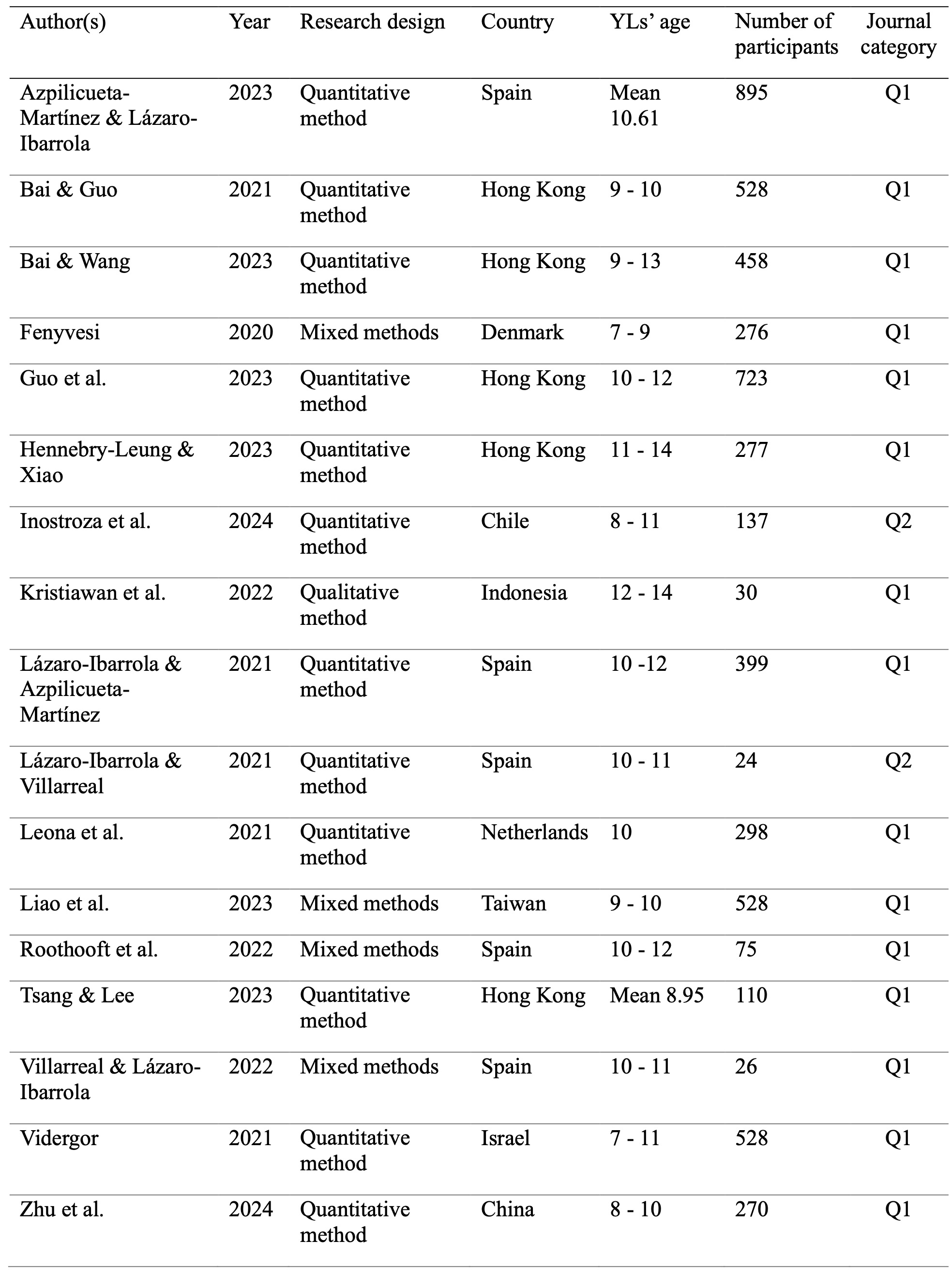
The two authors read the articles and collaborated to finalize their specifics. Next, we discuss their characteristics to ensure the reliability of data charting. We list key information about each study: authors, year of publication, research design, countries, age, number of participants, and Q-Journal. The summary of selected studies is presented in Table 1.
Table 1
Characteristics of 17 Studies
4) Collating, summarizing, and reporting the results
Finally, the 17 articles were analysed using content analysis and summarized and reported in a narrative text.
Results
Definition of Motivation
According to the authors of the selected studies, motivation is conceptualized as a driving force for language learning (Fenyvesi, 2020; Inostroza et al., 2024; Lázaro-Ibarrola & Azpilicueta-Martínez, 2021; Lázaro-Ibarrola & Villarreal, 2021; Villarreal & Lázaro-Ibarrola, 2022), and a dynamic and multifaceted construct that affects learners’ engagement, behavior, and performance in language learning tasks (Azpilicueta-Martínez & Lázaro-Ibarrola, 2023; Kristiawan et al., 2022; Villarreal & Lázaro-Ibarrola, 2022). Motivation is also defined as willingness to participate in, an interest, and enthusiasm about learning tasks (Guo et al., 2023; Roothooft et al., 2022; Tsang & Lee, 2023; Vidergor, 2021). Motivation is a multifaceted construct including self-efficacy and task values (Bai & Wang, 2023), and self-efficacy, interest, and growth mindset (Bai & Guo, 2021). Furthermore, motivation is a key factor related to the effort YLs make and the success in language learning (Leona et al., 2021). Three authors did not define motivation (Hennebry-Leung & Xiao, 2023; Liao et al., 2023; Zhu et al., 2024).
Research Design and Data Collection Instruments
We classified the research design specified by the authors into three: mixed methods (n = 4), quantitative (n = 12), and qualitative (n = 1). The results are illustrated in Figure 2.
Figure 2
The Research Design Used in 17 Publications
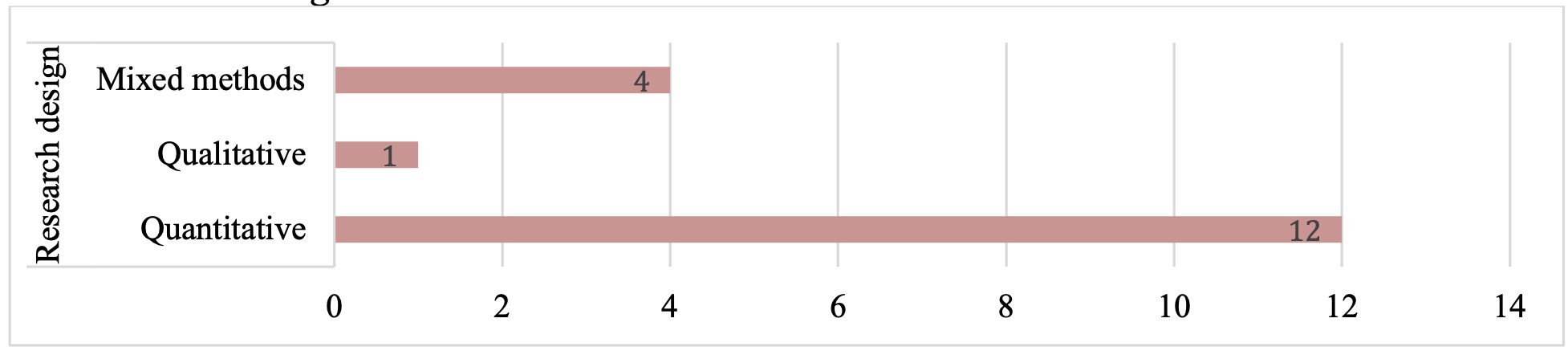
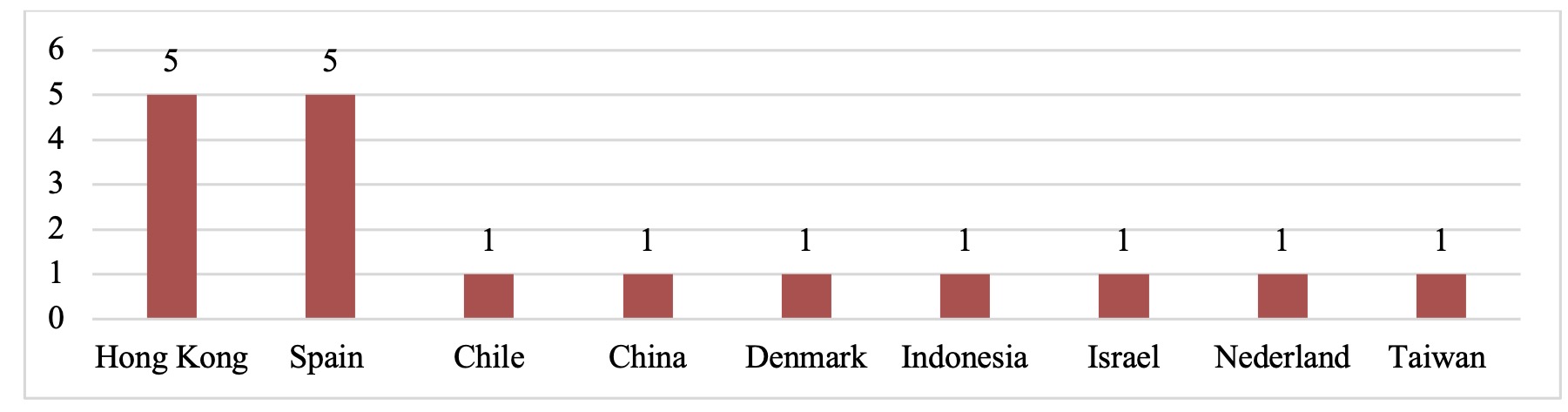
Figure 3 displays the geographical distribution of the 17 articles across nine countries, namely Hong Kong, Spain (n = 5), Chile, China, Denmark, Indonesia, Israel, Nederland, and Taiwan (n = 1), respectively. The number of YLs who participated in these studies ranged from 24 to 895, whereas their ages ranged between 7 and 14 years.
Figure 3
Contexts of the Selected Studies
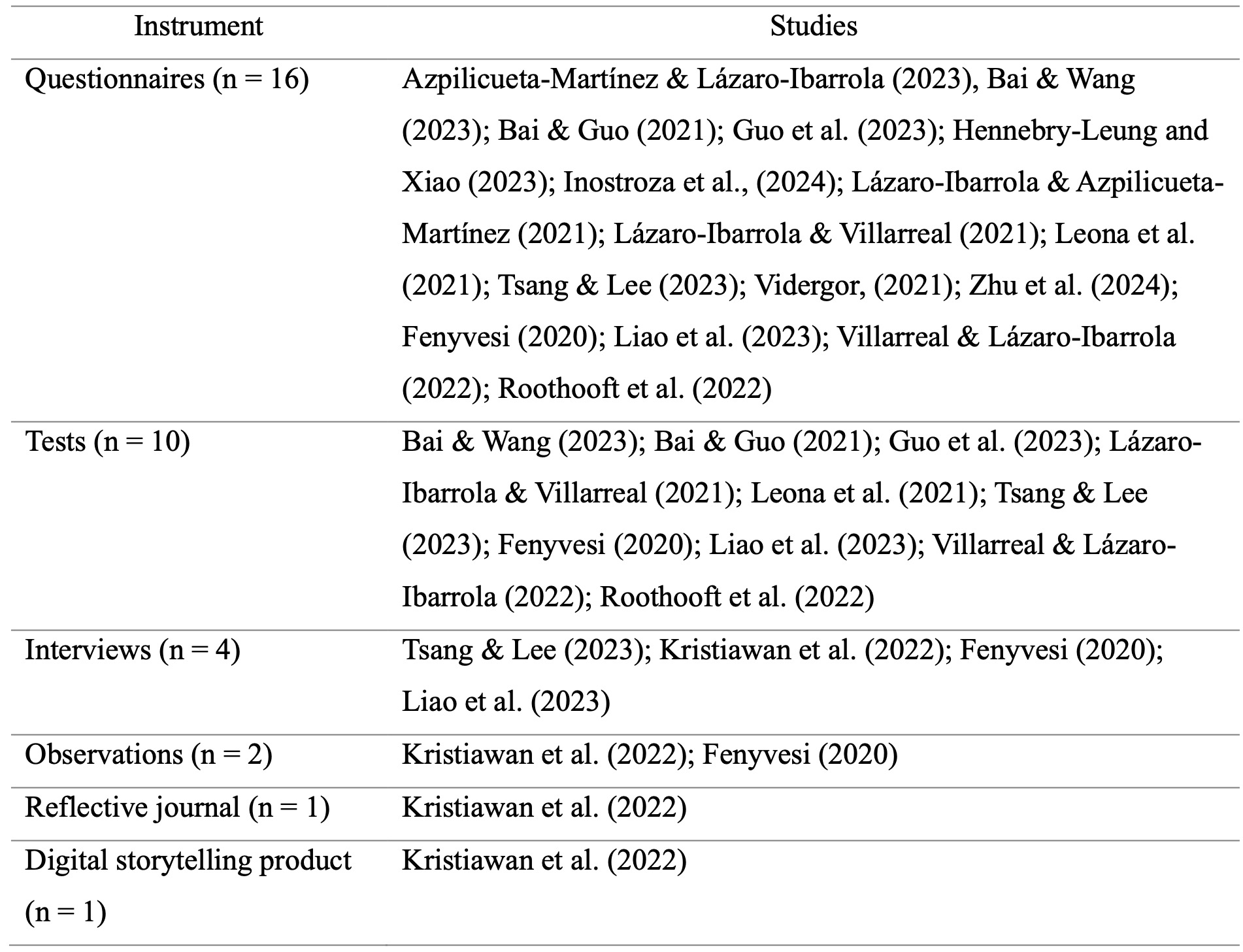
The instruments used for collecting data included questionnaires (n = 16), tests (n = 10), interviews (n = 4), observations (n = 2), a reflective journal, and a digital storytelling product (n = 1). They are presented in Table 2.
Table 2
Instruments Used in Selected Studies
Main Findings
The main findings of the 17 studies were organized into four groups: (1) comparing CLIL and student’ motivation (n=3), (2) YLs’ self-regulated learning (SRL) strategies and writing competence (n=3), (3) factors that influenced student’ motivation (n=9) and (4) personality and teacher variables, motivation (n=2). Interestingly, some studies used multiple instruments: for example, Kristiawan (2022) collected data with four instruments, and Fenyvesi (2020) with three.
Three studies showed that CLIL had a positive impact on students’ motivation: children in more intensive, high-CLIL programs were more motivated than their peers in low-CLIL and non-CLIL classes (Azpilicueta-Martínez & Lázaro-Ibarrola, 2023). CLIL students had higher motivation in two domains (the Ideal L2 Self and the L2 Learning Experience) than non-CLIL participants (Zhu et al., 2024) and more positive attitudes towards English (Lázaro-Ibarrola & Azpilicueta-Martínez, 2021).
Three studies found that self-regulated learning strategies had positive effects on YLs’ writing competence. Bai and Wang (2023) revealed that the self-regulated reading-to-write scale (SR-R2W) strategy positively influenced children’s writing competence; those who had high levels of self-efficacy used more SR-R2W strategies. Bai and Guo (2021) showed that high-achieving learners had higher motivation and SRL strategy than average students, motivation affected SRL strategy, and learners’ competence in writing. Furthermore, Guo et al. (2023) found that grit was the strongest predictor of SRL strategy utilisation, whereas self-efficacy predicted critical thinking and achievement in English.
Nine studies identified factors that influenced YLs’ motivation. Kristiawan et al. (2022) showed that digital storytelling boosted students’ motivation after ten meetings. Fenyvesi (2020) revealed that YLs were strongly motivated because English is an international language. Leona et al. (2021) claimed that various types of self-accessed extramural English activities directly influenced students’ vocabulary, mediated by motivational factors. Liao et al. (2023) showed that the game-based augmented reality (AR) interventions improved students’ motivation. Lázaro-Ibarrola and Villarreal (2021) and Villarreal and Lázaro-Ibarrola (2022) documented how pair work and task repetition contributed to high task motivation. Roothooft et al. (2022) revealed that learners’ task motivation was high during writing in a task repetition group, but it decreased slightly with direct corrections. Tsang and Lee (2023) revealed that enjoyment had the strongest correlation with speaking motivation and English proficiency. Vidergor (2021) showed that game experiences influenced students’ motivation and collaboration; a digital escape room enhanced collaboration, social experience, and motivation to learn.
Two studies showed how YLs’ personality variables and teacher variables impacted motivation and self-efficacy. Hennebry-Leung and Xiao (2023) found that conscientiousness and extraversion showed large effects for motivational orientations. Inostroza et al. (2024) revealed that teachers’ profiles including English language teaching training and access to multisensory materials were a major factor in students’ motivation and attitude to English learning.
Factors Influencing Young Learners’ Motivation Most Strongly
Table 3 presents several factors found to impact children’s motivation to learn English in the 17 studies. They were classified into these categories: children’s individual differences, contextual factors, environmental influences, pedagogical approaches and methods.
Table 3
Factors Influencing Young Learners’ Motivation
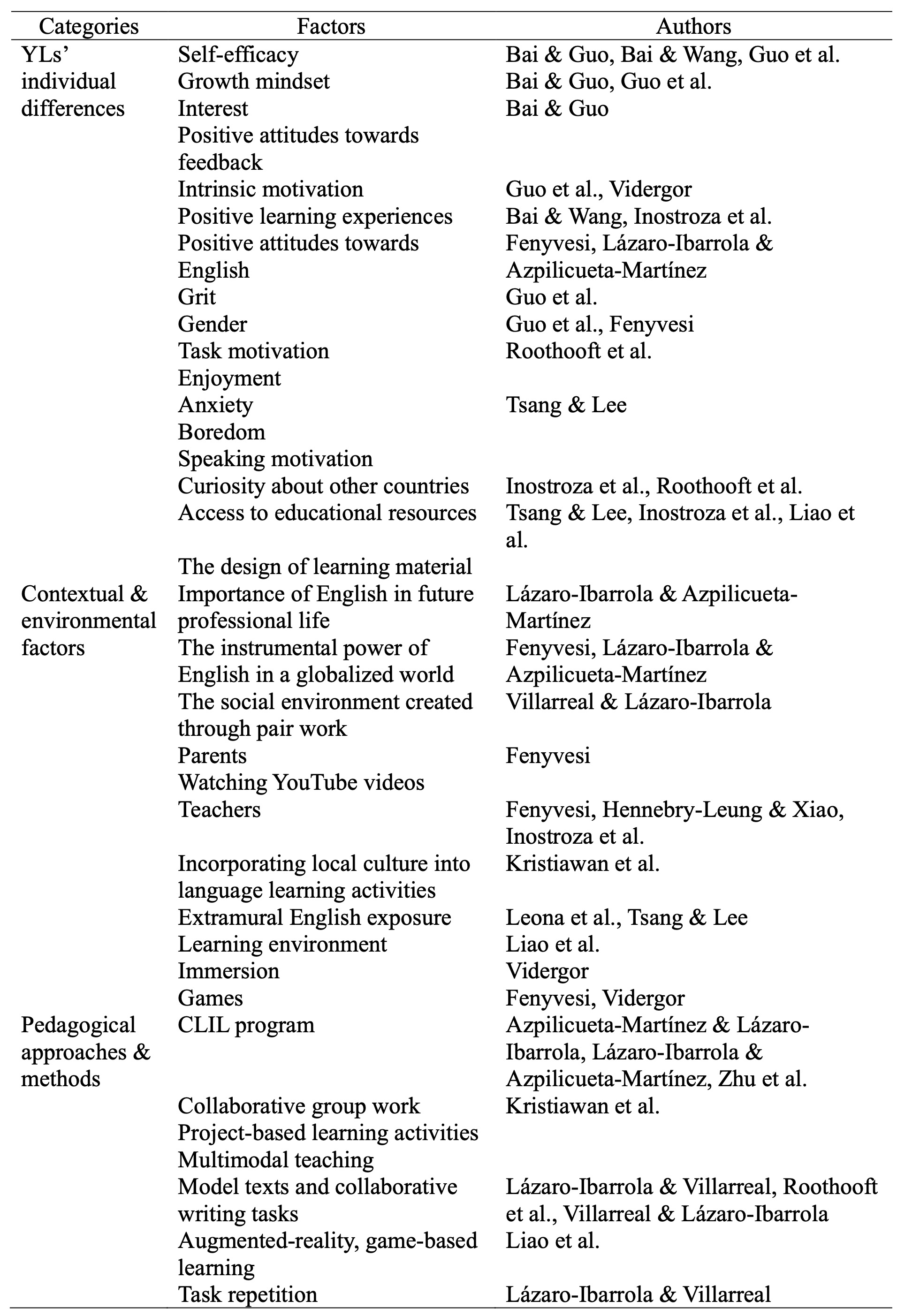
We identified some factors with a significant impact on YLs’ motivation in the selected studies. First, the approach and methods used by teachers, such as effective teaching practices engaging students and fostering a positive learning environment, improved motivation (Hennebry-Leung & Xiao, 2023; Inostroza et al., 2024). The use of SRL strategies, such as setting goals and self-monitoring, was shown to positively affect motivation (Bai & Guo, 2021; Bai & Wang, 2023). Collaborative learning experiences, for example, working with peers, improved task motivation (Lázaro-Ibarrola & Villarreal, 2021; Villarreal & Lázaro-Ibarrola, 2022). Enjoyment in learning activities, including playful game-based learning, significantly boosted students’ motivation (Tsang & Lee, 2023; Vidergor, 2021).
Different types of self-selected activities involving English outside the classroom were also found to incease children’s motivation. These included social networks and social interactions with family members, directly influencing students’ motivation (Leona et al., 2021). Individual personality traits, such as grit, were strong predictors of children using self-regulated learning strategies (Guo et al., 2023). Tasks that were perceived as meaningful and appropriately challenging also tended to motivate students effectively (Roothooft et al., 2022). Positive relationships between teachers and students, as well as in peer groups, improved motivation. Students were more motivated to learn when they felt supported and valued by their teachers and peers (Inostroza et al., 2024).
Discussion
As far as definitions used in the selected studies are concerned, they ranged from motivation as a driving force for language learning (Fenyvesi, 2020; Inostroza et al., 2024; Lázaro-Ibarrola & Azpilicueta-Martínez, 2021) to a dynamic and multifaceted construct that affects learners’ engagement, behaviour, and performance in language learning tasks (Azpilicueta-Martínez & Lázaro-Ibarrola, 2023; Kristiawan et al., 2022; Villarreal & Lázaro-Ibarrola, 2022). In our view, “children’s language learning motivation concerns their situational and sustained willingness to participate in language-learning activities related to their interests, enjoyment, perceived competence, task characteristics, and support from their teachers, peers, and parents” (Lena & Nikolov, submitted for publication). These definitions are in line with what Mihaljević Djigunović and Nikolov (2019) emphasised in their framework.
Concerning the second research question, twelve empirical studies on YLs’ motivation to learn English used quantitative methods (Azpilicueta-Martínez & Lázaro-Ibarrola, 2023; Bai & Guo, 2021; Bai & Wang, 2023; Guo et al., 2023; Hennebry-Leung & Xiao, 2023; Inostroza et al., 2024; Lázaro-Ibarrola & Azpilicueta-Martínez, 2021; Lázaro-Ibarrola & Villarreal, 2021; Leona et al., 2021; Tsang & Lee, 2023; Vidergor, 2021; Zhu et al., 2024). Researchers involved large samples of children to make their findings possible to generalize to other contexts. For example, Azpilicueta-Martínez and Lázaro-Ibarrola (2023) involved 895 YLs, whereas Kanonire et al. (2022) included 979 children. One study used qualitative methods (Kristiawan et al., 2022), and four publications applied mixed methods (Fenyvesi, 2020; Liao et al., 2023; Roothooft et al., 2022; Villarreal & Lázaro-Ibarrola, 2022). Ten studies were conducted in Hong Kong and Spain (n = 5), respectively: the others were done in seven other countries.
Questionnaires were used to collect data in 16 studies, ten studies used tests, four used interviews, two used observation, and one study used reflective journals and digital storytelling. The most widely used instruments worldwide are questionnaires for collecting data on YLs’ motivation and our findings are aligned with this trend.
In response to the third research question, the review found that SRL strategies positively impacted YLs’ writing competence, as was highlighted in studies by Bai and Wang (2023), Bai and Guo (2021), and Guo et al. (2023). This finding aligns with previous research that has consistently shown that students who actively engage in self-regulation tend to perform better on language tasks (see Pintrich, 2004; Zimmerman, 2002).
Motivation is influenced by individual differences. YLs’ self-efficacy influenced motivation (Bai & Guo, 2021; Bai & Wang, 2023; Guo et al., 2023), in line with earlier studies by Piniel and Csizér (2013) and Usher and Pajares (2008). A growth mindset also impacted children’s motivation (Bai & Guo, 2021; Guo et al., 2023). Liu (2022) revealed a positive relationship between growth mindset and motivation. Interest was another individual factor related to motivation (Bai & Guo, 2021). As Daskalovska et al. (2012) argued, learners’ motivation increases when they find the content and the tasks intrinsically motivating and interesting (Guo et al., 2023; Vidergor, 2021). Additionally, gender (Guo et al., 2023) also interacts with motivation in line with previous studies indicating that boys tended to be more motivated than girls (Mihaljević Djigunović & Nikolov, 2019). In contrast, Carreira’s (2011) earlier study showed that girls are more motivated than boys in learning English.
Furthermore, we found that positive attitudes toward English (Fenyvesi, 2020) and enjoyment (Inostroza et al., 2024; Tsang & Lee, 2023) also impact student motivation. Additionally, Wallace and Leong (2020) revealed that most YLs expressed positive attitudes toward learning English and found English interesting and enjoyable to learn.
Access to educational resources and the design of learning materials (Liao et al., 2023) also played a role in YLs’ motivation. Tomlinson (2012) argued that the adaptability of materials is important; when teachers can modify materials to fit their specific classroom contexts and learner needs, it increases motivation. Positive experiences with feedback enhanced YLs’ motivated behavior (Roothooft et al., 2022), as was argued by Ellis (2009): feedback can help them understand their progress and areas for improvement.
The 17 studies revealed how some contextual and environmental factors shaped motivation. Incorporating local culture into language learning activities and providing opportunities for students to express their identity and cultural experiences also increased children’s motivation (Kristiawan et al., 2022). Gay (2018) underscored that when teachers acknowledge and incorporate their pupils’ diverse cultural perspectives, it validates their identities and encourages greater participation.
Pedagogical approaches and methods can influence motivation. CLIL programs contribute to how children perceive their learning of English (Azpilicueta-Martínez & Lázaro-Ibarrola, 2023; Lázaro-Ibarrola & Azpilicueta-Martínez, 2021; Zhu et al., 2024). Previous research showed that CLIL can increase children’s motivation (Coyle & Roca de Larios, 2020). Multimodal teaching strategies that incorporate visual, auditory, and kinesthetic elements enhanced students’ motivation (Kristiawan et al., 2022). Mayer (2002) underscored that when students receive information through multiple modes, they process it more deeply, which fosters positive attitudes toward the learning process. Lázaro-Ibarrola and Villarreal (2021) argued that task repetition improved students’ skills and motivation in learning activities. This supports Ellis’ study (2009), which revealed that repeated practice in language tasks can lead to greater fluency and accuracy, contributing to a stronger sense of self-efficacy. The use of model texts also influenced young learner motivation in writing (Lázaro-Ibarrola & Villarreal, 2021; Roothooft et al., 2022; Villarreal & Lázaro-Ibarrola, 2022). Kristiawan et al. (2022) argued that project-based learning activities increased YLs’ motivation. This aligns with Shin’s (2018) study, which showed that project-based learning had a positive impact. Liao et al. (2023) revealed that game-based learning using augmented reality boosted motivation, in line with Tsai’s study (2020), which also found a similar relationship.
Regarding research question four, we found some factors that influenced YLs’ motivation most strongly. First, effective teaching practices that engage students and foster a positive learning environment enhance motivation (Hennebry-Leung and Xiao, 2023; Inostroza et al., 2024). From a self-access learning perspective, a key to YLs’ motivation to use their English for their own purposes, concerns their access to autonomous activities beyond their English classes. Supportive parental practices, positive teacher–student and peer relationships can lead to engaging extramural activities, which in turn build confidence and independence in using English. This way, classroom instruction can serve as a gateway to self-access learning. This aligns with self-determination theory, which shows that autonomy-supportive teaching, positive teacher–student relationships, and engaging activities foster intrinsic motivation and self-directed learning (Reeve, 2009; Reeve & Cheon, 2021).
Second, the use of SRL strategies, such as goal setting and self-monitoring, has been shown to positively affect motivation (Bai & Guo, 2021; Bai & Wang, 2023). Research has indicated that, in light of this relationship, the cognitive support and assessment provided by EFL teachers may hold considerable potential for improving students’ goal setting and planning both within and outside cooperative learning contexts (Bai et al., 2026). Because YLs’ autonomy is still developing, the link between grit and self-regulated learning shows that motivation drives their use of self-access resources. This highlights the need for scaffolded self-access learning with strategy instruction and structured guidance that gradually fosters independence (Reeve, 2009; Reeve & Cheon, 2021).
Third, collaborative learning, such as working with peers, improved task motivation (Lázaro-Ibarrola & Villarreal, 2021; Villarreal & Lázaro-Ibarrola, 2022), supporting findings that collaborative learning and interaction enhanced students’ motivation in writing tasks (Azkarai & Kopinska, 2020; Lan et al., 2015; Villarreal & Lázaro-Ibarrola, 2022). Next, the enjoyment of learning activities, such as game-based learning, significantly boosted YLs’ motivation (Tsang & Lee, 2023; Vidergor, 2021). This aligns with a previous study that claimed that enjoyment influences YLs’ intrinsic motivation (Carreira, 2011).
Enjoyment, meaningful tasks, and collaborative learning experiences have direct implications for self-access learning, as game-based and appropriately challenging activities encouraged further voluntary and autonomous engagement with English. Different types of extramural English activities, such as the use of online media and social interactions, directly influenced students’ motivation (Leona et al., 2021) and supported sustained out-of-class learning. Sylvén and Sundqvist (2012) argued that spare-time activities are typically self-selected, and they often lead to a high level of motivation to perform well in them. These findings highlight the importance of designing self-access environments that integrate enjoyable, socially embedded, and meaningful opportunities for English use based on the children’s own interests.
Individual personality traits, such as grit, were strong predictors of the utilization of SRL strategies (Guo et al., 2023). Liu (2022) found a positive relationship between grit and motivation. Tasks that are perceived as meaningful and appropriately challenging tend to motivate students more effectively (Roothooft et al., 2022). It is in line with the studies reviewed by Mihaljević Djigunović and Nikolov (2019) and Nikolov’s (2016), arguing that the tasks for YLs should be considered at the level of difficulty because if the task is too difficult, too easy, or boring, YLs can be demotivated. Positive relationships between teachers and students also enhance motivation (Nikolov, 1999. When students feel supported and valued by their teachers, they are more likely to be motivated to learn (Inostroza et al., 2024).
Conclusion and Implications
Based on the review, we define children’s language learning motivation as their situational and sustained willingness to participate in language-learning activities related to their interests, enjoyment, perceived competence, task characteristics, and support from their teachers, peers, and parents (Lena & Nikolov, submitted for publication). The systematic review has found factors impacting YLs’ motivation: these include age-appropriate approaches and methods used by teachers, children’s self-regulated learning strategies, collaborative and game-based learning, exposure to and self-selected activities using English outside the classroom, grit, meaningful and appropriately challenging tasks, and positive relationships between teachers and YLs and among peers.
Based on the findings, teachers can integrate some tasks into their teaching practices, such as digital storytelling, game-based learning, and CLIL approaches, because they can significantly boost students’ motivation. Teachers can teach students how to self-regulate their learning to help them take ownership of their learning. They should create a positive and supportive classroom atmosphere, encourage peer collaboration, and focus on enjoyment and engagement.
This study revealed a complex interplay of individual, contextual, and pedagogical elements with implications for practice. As teachers and researchers continue to explore these dynamics, it is important to identify the complexity of motivation and to employ strategies that fit YLs’ various needs. By doing so, teachers can generate engaging and effective language learning experiences that not only boost motivation but also impact the success of YLs becoming autonomous users and learners of English.
The implications also concern how teachers, parents, and peers can shape YLs’ engagement with extramural English activities. Children’s self-access learning needs to be developmentally scaffolded and socially supported as they develop towards full autonomy. Classroom practices that foster enjoyment, meaningful and appropriately challenging tasks, collaboration, and self-regulated learning strategies encourage learners to use English in self-access and out-of-class contexts. Effective self-access support should provide easily accessible, enjoyable, socially embedded resources across classroom, home, and digital settings to sustain motivation beyond formal instruction.
Limitations and future research
This systematic review has some limitations: we included publications in English published over the past five years in Q1 and Q2 refereed journals. Therefore, some studies published in edited volumes and less prestigious journals or in other languages were not included. For the larger picture, a longer period and other languages should also be included.
Notes on the Contributors
Mai Sri Lena is an Associate Professor at Universitas Negeri Padang, Indonesia, and she is currently a PhD candidate at the University of Szeged, Hungary. Her research project examines young learners of English. She has published papers on topics related to young learners’ motivation and task engagement at Indonesian elementary schools.
Marianne Nikolov is Professor Emerita of English Applied Linguistics at the University of Pécs, Hungary. Her publications include longitudinal classroom research, large-scale national assessment projects, case studies, and reviews. She has published widely on topics related to language learning and teaching.
References
Arksey, H., & O’Malley, L. (2005). Scoping studies: Towards a methodological framework. International Journal of Social Research Methodology: Theory and Practice, 8(1), 19–32. https://doi.org/10.1080/1364557032000119616
Azkarai, A., & Kopinska, M. (2020). Young EFL learners and collaborative writing: A study on patterns of interaction, engagement in LREs, and task motivation. System, 94, 102338. https://doi.org/10.1016/j.system.2020.102338
Azpilicueta-Martínez, R., & Lázaro-Ibarrola, A. (2023). Intensity of CLIL exposure and L2 motivation in primary school: Evidence from Spanish EFL learners in non-CLIL, low-CLIL and high-CLIL programmes. IRAL – International Review of Applied Linguistics in Language Teaching, 1–22. https://doi.org/10.1515/iral-2022-0239
Bai, B., Dan, Q., Li, J., & Guo, W. (2026). EFL students’ self-regulated learning, motivation, and perceived teacher support in cooperative learning: A network analysis perspective. System, 137(103941). https://doi.org/10.1016/j.system.2025.103941
Bai, B., & Guo, W. (2021). Motivation and self-regulated strategy use: Relationships to primary school students’ English writing in Hong Kong. Language Teaching Research, 25(3), 378–399. https://doi.org/10.1177/1362168819859921
Bai, B., & Wang, J. (2023). Conceptualizing self-regulated reading-to-write in ESL/EFL writing and investigating its relationships to motivation and writing competence. Language Teaching Research, 27(5), 1193–1216. https://doi.org/10.1177/1362168820971740
Butler, Y. G. (2015). Parental factors in children’s motivation for learning English: a case in China. Research Papers in Education, 30(2), 164–191. https://doi.org/10.1080/02671522.2014.891643
Carreira, J. M. (2011). Relationship between motivation for learning EFL and intrinsic motivation for learning in general among Japanese elementary school students. System, 39(1), 90–102. https://dx.doi.org/10.1016/j.system.2011.01.009
Coyle, Y., & Roca de Larios, J. (2020). Exploring young learners’ engagement with models as a written corrective technique in EFL and CLIL settings. System, 95, 102374. https://doi.org/10.1016/j.system.2020.102374
Daskalovska, N., Gudeva, L. K., & Ivanovska, B. (2012). Learner motivation and interest. Procedia – Social and Behavioral Sciences, 46, 1187–1191. http://dx.doi.org/10.1016/j.sbspro.2012.05.272
Ellis, R. (2009). A typology of written corrective feedback types. ELT Journal, 63(2), 97–107. https://doi.org/10.1093/elt/ccn023
Fenyvesi, K. (2020). English learning motivation of young learners in Danish primary schools. Language Teaching Research, 24(5), 690–713. https://doi.org/10.1177/1362168818804835
Gay, G. (2018). Culturally responsive teaching: Theory, research, and practice. Teachers College Press.
Guo, W., Bai, B., Zang, F., Wang, T., & Song, H. (2023). Influences of motivation and grit on students’ self-regulated learning and English learning achievement: A comparison between male and female students. System, 114(February), 103018. https://doi.org/10.1016/j.system.2023.103018
Hennebry-Leung, M., & Xiao, H. A. (2023). Examining the role of the learner and the teacher in language learning motivation. Language Teaching Research, 27(1), 30–56. https://doi.org/10.1177/1362168820938810
Inostroza, M., Perez-Villalobos, C., & Tabalí, P. (2024). Chilean primary learners ‘ motivation and attitude towards English as a foreign language. Education Sciences. https://doi.org/10.3390/educsci14030262
Kanonire, T., Lubenko, J., & Kuzmina, Y. (2022). The effects of intrinsic and extrinsic reading motivation on reading performance in elementary school. Journal of Research in Childhood Education, 36(1), 1–13. https://doi.org/10.1080/02568543.2020.1822961
Kristiawan, D., Ferdiansyah, S., & Picard, M. (2022). Promoting vocabulary building, learning motivation, and cultural identity representation through digital storytelling for young Indonesian learners of English as a foreign language. Iranian Journal of Language Teaching Research, 10(1), 19–36. https://doi.org/10.30466/ijltr.2022.121120
Lan, Y. J., Sung, Y. T., Cheng, C. C., & Chang, K. E. (2015). Computer-supported cooperative prewriting for enhancing young EFL learners’ writing performance. Language, Learning and Technology, 19(2), 134–155. https://doi.org/10.64152/10125/44421
Lázaro-Ibarrola, A., & Azpilicueta-Martínez, R. (2021). Motivation towards the foreign language (English) and regional language (Basque) in immersion schools: Does CLIL in the foreign language make a difference? Language Teaching Research. https://doi.org/10.1177/13621688211031737
Lázaro-Ibarrola, A., & Villarreal, I. (2021). Are EFL writers motivated or demotivated by model texts and task repetition? Evidence from young collaborative writers. International Journal of English Studies, 21(2), 29–55. https://doi.org/10.6018/IJES.466401
Leona, N. L., van Koert, M. J. H., van der Molen, M. W., Rispens, J. E., Tijms, J., & Snellings, P. (2021). Explaining individual differences in young English language learners’ vocabulary knowledge: The role of extramural English exposure and motivation. System, 96, 102402. https://doi.org/10.1016/j.system.2020.102402
Liao, C. H. D., Wu, W. C. V., Gunawan, V., & Chang, T. C. (2023). Using an augmented-reality game-based application to enhance language learning and motivation of elementary school EFL students: A comparative study in rural and urban areas. Asia-Pacific Education Researcher. https://doi.org/10.1007/s40299-023-00729-x
Liu, Y. (2022). Investigating the role of English as a foreign language learners’ academic motivation and language mindset in their grit: A theoretical review. Frontiers in Psychology, 13(May), 1–7. https://doi.org/https://doi.org/10.3389/fpsyg.2022.872014
Mayer, R. E. (2009). Multimedia learning (Vol. 41, pp. 85–139). Cambridge University Press. https://doi.org/10.1016/S0079-7421(02)80005-6
Mihaljević Djigunović, J., & Nikolov, M. (2019). Motivation of young learners of foreign languages. The Palgrave Handbook of Motivation for Language Learning, 515–533. https://doi.org/10.1007/978-3-030-28380-3_25
Mynard, J., & Carson, L. (2012). Advising in language learning: Dialogue, tools and context. Routledge.
Nikolov, M. (1999). ‘Why do you learn English?’ ‘Because the teacher is short.’ A study of Hungarian children’s foreign language learning motivation. Language Teaching Research, 3(1), 33–56. https://doi.org/10.1177/136216889900300103
Nikolov, M. (2016). A framework for young EFL learners’ diagnostic assessment: ‘Can do statements’ and task types. In M. Nikolov (Ed.), Assessing young learners of English: Global and local perspectives (pp. 65–92). Springer International Publishing. https://doi.org/10.1007/978-3-319-22422-0_4
Omrani, A., Wakefield-Scurr, J., Smith, J., & Brown, N. (2019). Survey development for adolescents aged 11–16 years: A developmental science-based guide. Adolescent Research Review, 4(4), 329–340. https://doi.org/10.1007/s40894-018-0089-0
Opdenakker, M. C. (2022). Developments in early adolescents’ self-regulation: The importance of teachers’ supportive vs. undermining behavior. Frontiers in Psychology, 13(November), 1–15. https://doi.org/10.3389/fpsyg.2022.1021904
Page, M. J., McKenzie, J. E., Bossuyt, P. M., Boutron, I., Hoffmann, T. C., Mulrow, C. D., Shamseer, L., Tetzlaff, J. M., Akl, E. A., Brennan, S. E., Chou, R., Glanville, J., Grimshaw, J. M., Hróbjartsson, A., Lalu, M. M., Li, T., Loder, E. W., Mayo-Wilson, E., McDonald, S., … Moher, D. (2021). The PRISMA 2020 statement: An updated guideline for reporting systematic reviews. The BMJ, 372. https://doi.org/10.1136/bmj.n71
Park, H. (2015). ‘After mom gets some books, then I’ll make a selection’: A 5-year-old ELL’s decision-making in the book-related home play. Studies in Self-Access Learning Journal, 6(4), 332–351. https://doi.org/10.37237/060402
Piniel, K., & Csizér, K. (2013). L2 motivation, anxiety and self-efficacy: The interrelationship of individual variables in the secondary school context. Studies in Second Language Learning and Teaching, 3(4), 523. https://doi.org/10.14746/ssllt.2013.3.4.5
Pintrich, P. R. (2004). A conceptual framework for assessing motivation and self-regulated learning in college students. Educational Psychology Review, 16(4), 385–407. https://doi.org/10.1007/s10648-004-0006-x
Reeve, J. (2009). Why teachers adopt a controlling motivating style toward students and how they can become more autonomy supportive. Educational Psychologist, 44(3), 159–175. https://doi.org/10.1080/00461520903028990
Reeve, J., & Cheon, S. H. (2021). Autonomy-supportive teaching: Its malleability, benefits, and potential to improve educational practice. Educational Psychologist, 56(1), 54–77. https://doi.org/10.1080/00461520.2020.1862657
Roothooft, H., Lázaro-Ibarrola, A., & Bulté, B. (2022). Task repetition and corrective feedback via models and direct corrections among young EFL writers: Draft quality and task motivation. In Language Teaching Research. https://doi.org/10.1177/13621688221082041
Shin, M.-H. (2018). Effects of project-based learning on students’ motivation and self-efficacy. English Teaching, 73(1), 95–114. http://dx.doi.org/10.15858/engtea.73.1.201803.95
Sylvén, L. K, & Sundqvist, P. (2012). Gaming as extramural English L2 learning and L2 proficiency among young learners. ReCALL, 24(3), 302–321. https://doi.org/10.1017/S095834401200016X
Takahashi, C. (2015). L2 motivation and young self-instructed learners’ persistence in learning English: A causal analysis. Studies in Self-Access Learning Journal, 6(4), 365–381. https://doi.org/https://doi.org/10.37237/060404
Tomlinson, B. (2012). Materials development for language learning and teaching. Language Teaching, 45(2), 143–179. https://doi.org/10.1017/S0261444811000528
Tsai, C. C. (2020). The effects of augmented reality to motivation and performance in EFL vocabulary learning. International Journal of Instruction, 13(4), 987–1000. https://doi.org/10.29333/iji.2020.13460a
Tsang, A., & Lee, J. S. (2023). The making of proficient young FL speakers: The role of emotions, speaking motivation, and spoken input beyond the classroom. System, 115(November 2022), 103047. https://doi.org/10.1016/j.system.2023.103047
Usher, E. L., & Pajares, F. (2008). Sources of self-efficacy in school: Critical review of the literature and future directions. Review of Educational Research, 78(4), 751–796. https://doi.org/10.3102/0034654308321456
Vidergor, H. E. (2021). Effects of digital escape room on gameful experience, collaboration, and motivation of elementary school students. Computers & Education, 166(February), 104156. https://doi.org/10.1016/j.compedu.2021.104156
Villarreal, I., & Lázaro-Ibarrola, A. (2022). Models in collaborative writing among CLIL learners of English in primary school: Linguistic outcomes and motivation matters. System, 110(October 2020). https://doi.org/10.1016/j.system.2022.102922
Wallace, M. P., & Leong, E. I. L. (2020). Exploring language learning motivation among primary EFL learners. Journal of Language Teaching and Research, 11(2), 221–230. http://dx.doi.org/10.17507/jltr.1102.10
Webber, C., Wilkinson, K., Duncan, L., & McGeown, S. (2023). Approaches for supporting adolescents’ reading motivation: existing research and future priorities. Frontiers in Education, 8(September). https://doi.org/10.3389/feduc.2023.1254048
Zhu, Y., Peng, B., Shu, D., & Du, F. (2024). Unpacking Chinese young learners’ L2 learning motivation: Does CLIL make a difference? International Journal of Applied Linguistics (United Kingdom), November 2023, 1–20. https://doi.org/10.1111/ijal.12541
Zimmerman, B. J. (2002). Becoming a self-regulated learner: An overview. Theory into Practice, 41(2), 64–70. https://doi.org/10.1207/s15430421tip4102_2

 SiSAL Journal