
Rozanah Katrina Herda, Universitas Negeri Yogyakarta, Yogyakarta, Indonesia. https://orcid.org/0000-0001-7289-9949
Lilies Youlia Friatin, Universitas Galuh, West Java, Indonesia. https://orcid.org/0000-0002-4369-4837
Sheilla Varadhila Peristianto, Universitas Mercu Buana Yogyakarta, Yogyakarta, Indonesia. https://orcid.org/0000-0002-2677-0041
Elina S. Savitskaya, Moscow City University (Samara Campus), Samara, Russia. https://orcid.org/0000-0001-5136-8364
Zohaib Hassan Sain, Superior University, Lahore, Pakistan. https://orcid.org/0000-0001-6567-5963
Herda, R. K., Friatin, L. Y., Peristianto, S. V., Savitskaya, E. S., & Sain, Z. H. (2026). Fostering self-directed learning through automated written corrective feedback (AWCF): Praxis and reflection. Studies in Self-Access Learning Journal, 17(1), 76–105. https://doi.org/10.37237/170106
Abstract
In 21st-century learning, students’ second-language (L2) writing competence should be grounded in the principle of lifelong learning, with teachers recognising the urgency of self-directed learning. By encouraging autonomy, this principle and praxis enable students to improve their writing abilities outside the conventional classroom, helping them succeed in various situations, including international communication. This mixed-method study involved 40 participants from one university in Indonesia. This study aimed to (1) describe the implementation of self-directed learning through automated written corrective feedback and (2) reveal the students’ perceptions of automated written corrective feedback in EFL writing classrooms. Classroom observation, writing test, and semi-structured interviews were used to collect research data. The quantitative data were analyzed statistically using SPSS version 25. In contrast, the qualitative data were analyzed using triangulation following the concurrent activity flows comprising data condensation, data display, and drawing and verifying conclusions. The study’s findings revealed that teachers and students intensely monitored the implementation of self-directed learning through automated written corrective feedback during writing activities. Students’ writing scores met the minimum completeness criteria. The subsequent finding reflected students’ positive perceptions of self-directed learning style in a writing project that could improve their proficiency.
Keywords: Self-directed learning, automated written corrective feedback, EFL writing, praxis, reflection
In English as a Foreign Language (EFL) education, the acquisition and mastery of writing skills have long been a central focus. The focus in L2 writing pedagogy indicates that adequate writing proficiency not only facilitates cross-border communication but also nurtures critical thinking, creativity, and expression (Fathi & Rahimi, 2024; Herda et al., 2024; Shokri & Mousavi, 2024). In this case, writing skills play a crucial role in EFL education, as they are a fundamental component of effective communication in English (Castillo-Cuesta et al., 2021). However, proficiency in writing goes beyond mere grammatical correctness. It encompasses conveying ideas, thoughts, and information coherently and organized.
EFL learners who can produce well-structured essays, reports, emails, and other written documents have a competitive edge, whether pursuing higher education or seeking employment opportunities in international contexts. When EFL learners write their thoughts and ideas, they must analyze, synthesize, and evaluate information. This process fosters higher-order thinking and encourages learners to express their unique perspectives (Singh et al., 2020). EFL learners can explore their imagination, share personal experiences, and experiment with language to convey emotions and ideas that might be challenging to express orally. Writing allows learners to engage in self-directed learning. As they work independently on their writing, they can identify areas for improvement, seek out resources, and take ownership of their language development (Rad et al., 2024).
Writing in a foreign language is a complex process. It requires learners to balance linguistic accuracy, cultural awareness, and personal expression (Tao & Yu, 2024). EFL teachers have consistently grappled with providing timely and meaningful feedback to diverse learners, each with unique linguistic backgrounds, learning styles, and objectives. Traditional models of writing instruction often rely on the teacher as the primary source of corrective feedback, which can be resource-intensive and time-consuming (Guo, 2024). Furthermore, such an approach may inadvertently cultivate a dependency on the instructor, limiting students’ opportunities for autonomous exploration and growth. Because instructor feedback takes time and students rely on it, peer- and self-draft revision procedures have become popular in EFL courses. In this era of technological innovation, the educational landscape is undergoing a paradigm shift toward student-centered learning and the integration of digital tools (Kokkinos, 2024; Naimanova et al., 2023). Using digital tools, artificial intelligence enables students, including those with low language proficiency, to edit and improve their papers before instructors provide feedback.
Automated Writing Corrective feedback (AWCF) emerges as a promising solution to address the challenges posed by traditional feedback methods (Guo et al., 2022). AWCF leverages artificial intelligence and natural language processing to provide students with instant, targeted corrections, suggestions, and insights on their writing (Shadiev & Feng, 2024). In this case, technology integration in education has consistently shown promise in fostering student engagement, autonomy, and metacognition (Ghahfarokhi & Tavakoli, 2020). By investigating the implementation of this tool, this research seeks to examine its impact on learners’ ability to independently navigate the intricacies of the writing process, make informed revisions, and ultimately enhance their written communication skills. Furthermore, the digital era explored the practical aspects of integrating AWCF into the EFL writing classroom, including the benefits, challenges, and adaptations needed to align with diverse learning contexts.
This study aims to answer two research questions: (1) How does the implementation of self-directed learning through AWCF influence students’ writing performance? and (2) What are students’ perceptions of AWCF for self-directed learning in EFL writing classrooms? The implementation of self-directed learning through AWCF in the EFL writing classroom, besides exploring the students’ reflections on AWCF for self-directed learning in the EFL writing classroom. The outcomes of this investigation have far-reaching implications for both EFL teachers and learners. As technology becomes increasingly intertwined with education, understanding the dynamics of self-directed learning through AWCF can help develop effective strategies to realize the benefits of automation while maintaining the essence of personalized instruction.
Literature Review
Teaching Writing in the 21st Century
In the dynamic landscape of 21st-century education, the teaching of writing has undergone a transformative evolution. Teachers must equip learners to critically analyze, create, and communicate across these multimodal platforms, fostering fluency in traditional and digital literacies (Holloway & Qaisi, 2022). This point demands a reimagining of instructional strategies, the embrace of digital tools, and a steadfast commitment to nurturing the core principles of practical written expression. Teachers navigate a new frontier in writing pedagogy as technology reshapes communication, collaboration, and information dissemination (Naimanova et al., 2023). In line with that, teaching writing must embrace cultural sensitivity, enabling learners to express their identities and perspectives (Lorenz et al., 2021) while fostering an understanding of and appreciation for the linguistic richness in the classroom.
In the digital age, technology that helps students write better is increasingly supporting writing education. Instant feedback from digital technologies can assist students in recognizing and fixing language mistakes on their own. AWCF, for instance, provides automated recommendations on vocabulary, grammar, coherence, and clarity. These tools can encourage more learner autonomy in writing growth and let students participate in the editing process. Technology-assisted writing environments offer opportunity for ongoing revision and improvement, according to earlier research (Lorenz et al., 2021). Additionally, using digital technologies in writing instruction can help students integrate what they learn in the classroom with practical academic practices, especially for academic writing assignments (Herda et al., 2022). As a result, including AWCF resources like Grammarly can help students improve their writing abilities and promote independent learning as they write.
In line with that, in writing classrooms, teachers can introduce students to revision-tracking tools, collaborative editing platforms, and automated feedback systems, fostering a growth mindset that values iterative refinement. Teaching writing should encourage students to navigate different registers and genres, preparing them to communicate effectively in academic and everyday contexts (Brisk, 2022; Hyland, 2007). As students engage in online writing, teachers must guide them in understanding the ethical dimensions of digital citizenship. This involves promoting responsible online behaviour, respecting copyright and intellectual property, and fostering online integrity.
Even with these developments, teaching writing in the twenty-first century still poses many educational difficulties. Since not all teachers have the pedagogical and technological know-how to successfully incorporate digital tools and multimodal writing practices into their lessons, teacher preparedness is a significant problem (Swenson et al., 2025; Tandika & Ndijuye, 2021; Viberg et al., 2020). Teachers’ capacity to provide well-rounded and significant writing exercises in technologically advanced settings may be further limited by a lack of institutional support and professional development opportunities. Moreover, learners’ cognitive overload is another difficulty, especially in EFL classes. Language competency, genre norms, material comprehension, and the use of digital platforms are just a few of the demands students often have to manage simultaneously. The intricacy of multimodal writing exercises may overwhelm students if instructional tasks are not sufficiently scaffolded (Allagui, 2022; Howell, 2018), thereby negatively affecting their writing abilities and engagement. In order to ensure that advances in writing education improve, rather than detract from, students’ learning experiences, it is imperative that these issues be addressed.
Self-Directed Learning in L2 Writing
Self-directed learning (SDL) is an educational approach in which students take responsibility for their learning, set learning goals, select resources, choose preferred learning strategies, and reflect on their learning outcomes (Kanyopa & Makgalwa, 2024). SDL is typically defined as a multifaceted process in which learners exercise active control over their educational experiences. Garrison (1997) identifies three interrelated components of SDL: motivation, self-monitoring, and self-management. Motivation denotes learners’ eagerness and impetus to participate in educational tasks, self-monitoring encompasses the capability to introspect and assess one’s learning journey, and self-management pertains to learners’ proficiency in organizing, controlling, and assuming accountability for their educational endeavors. These features are especially pertinent in technology-enhanced learning environments, where learners must engage with feedback and autonomously manage their learning processes.
Furthermore, SDL emphasizes knowledge construction and teaching as a process in which an educator is the primary source of information. Moreover, in L2 writing, the students face dilemmas and difficulties in producing written texts. They should realize the importance of their knowledge, attitudes, and SDL skills in learning (Jeong, 2022), comprising responsibility and problem-solving skills. Autonomy in L2 writing with digital tools helps boost students’ learning, professional skills, and language awareness, making linguistic skills secondary (Bates, 2022).
In line with this, teachers give students more control over learning by assisting only individuals or groups in locating resources or mastering alternative learning strategies in writing classrooms (Shen et al., 2022). The educator’s role shifts to that of a facilitator or guide, and the student can no longer rely on the educator as the only source of information. On the other hand, students have the potential to complete writing projects successfully. This implies that teachers in this situation are facilitators who guide students in reaching the learning target by giving them crucial roles in independently developing competencies. In the EFL writing context, students demonstrate awareness of their responsibility to develop skills to evaluate strategies and learning outcomes as they take control of their learning (Halim et al., 2022). The key point is that students should be allowed to demonstrate and find the most appropriate way to learn to write in an L2 context, but teachers should still monitor students’ progress. Without professional guidance, students lack efficient reflexive praxis and the opportunity to go beyond their schemata, i.e., to progress in their learning (Bates, 2022).
The Urgency of AWCF in EFL Writing
Developing good writing skills is essential for promoting proficient communication in EFL education. The EFL landscape evolves in the digital age, and technology integration has ushered in a transformative era. The innovation through AWCF in writing classrooms addresses a pressing need for timely, targeted, and scalable feedback, offering a compelling solution to the challenges that have long beset traditional approaches to writing instruction. The efficacy of writing instruction hinges on the immediacy of feedback (Hu & Wang, 2023; Tsao, 2021). Traditional teacher-centred models often struggle to provide timely corrections to various student compositions. It emerges as an urgent remedy, offering immediate feedback that guides learners to correct errors, refine their language use, and enhance their writing proficiency.
The urgency of cultivating SDL cannot be ignored. It empowers students to take ownership of their writing development, fostering a sense of responsibility and agency as they engage in iterative revision cycles guided by automated suggestions (Fu, 2022; Yu et al., 2023). AWCF’s adaptive algorithms address this diversity by delivering personalized feedback that targets individual areas for improvement, enabling learners to progress at their own pace. With burgeoning class sizes and limited instructional time, teachers are increasingly challenged to provide comprehensive writing feedback. This digital tool alleviates this burden, allowing teachers to focus on higher-order pedagogical tasks while automated systems handle routine corrections and language intricacies (Kurni & Mohammed, 2023). Effective writing instruction necessitates pinpointing and rectifying errors that impede comprehension and coherence (Fu, 2022). Besides, it can highlight specific linguistic and structural flaws and assist learners in addressing critical issues that hinder effective communication. It offers a continuous formative assessment loop (Engeness & Gamlem, 2025) that supports learners’ growth.
However, teachers and learners can track progress, identify recurring mistakes, and tailor instructional interventions accordingly. Embracing this tool aligns with the digitally augmented landscape of 21st-century language learning and reflects teachers’ commitment to equipping students with skills relevant to contemporary communication. Writing proficiency transcends academic confines in a world defined by global interactions (Engeness & Gamlem, 2025; Russell, 2002). It prepares learners to navigate diverse linguistic scenarios, enabling them to engage confidently in intercultural and international communication. Moreover, immediate feedback encourages metacognitive engagement (Ibabe & Jauregizar, 2010). As students analyze and apply automated suggestions, they develop a deeper understanding of language conventions and enhance their metacognitive awareness of their writing processes.
The urgency of AWCF in EFL writing classrooms is underscored by its potential to reshape traditional instruction paradigms. The utilization of AWCF extends beyond the confines of the writing classroom. The interactive nature of automated feedback captures students’ attention, fostering motivation and an increased willingness to engage with the writing process (Mao et al., 2024). Using Grammarly as an example of AWCF in EFL writing classrooms underscores its potential to reshape traditional instruction paradigms. In this way, AWCF tools enable students to access feedback beyond classroom time and to revise their writing independently (Barrot, 2023; Ranalli, 2018), supporting the development of communicative competence and learner autonomy (Link et al., 2022) in EFL writing contexts.
AWCF tools enhance EFL students’ writing skills by providing prompt feedback throughout the writing process. AWCF systems help teachers in facilitating the revision process by enabling students to autonomously find and fix linguistic faults. An example is Grammarly, which employs sophisticated algorithms to identify grammar, spelling, punctuation, and stylistic problems in students’ work (Herda, 2022). As a student tool, Grammarly uses advanced technology to quickly identify and correct grammatical, spelling, punctuation, and style mistakes in students’ writing (Herda, 2022).
This real-time feedback system enables EFL students to spot errors as they happen and fix them immediately, encouraging quick learning and lowering the possibility that mistakes will become ingrained in their writing habits. The automated feedback provided by Grammarly can help learners identify and correct linguistic errors and may help them use more appropriate language in their writing. Previous studies have suggested that automated feedback tools can assist learners in improving grammatical accuracy and clarity in written communication (Herda, 2022; Shadiev & Feng, 2024). However, such tools may also have limitations, as automated systems may not always capture contextual nuances or discipline-specific conventions in academic writing (Guo et al., 2022; Herda et al., 2024; Pižorn & Bajec, 2025; Tan et al., 2023). This may make it harder to learn more deeply, especially when it comes to improving skills such as critical thinking and reviewing. Because of this, using AWCF should be paired with appropriate instruction to help students think about and analyze the feedback they receive.
Methods
Research Method, Design, and Participants
This research applied a mixed-method design that involves collecting, analysing, and integrating quantitative and qualitative data in a single research project (Gay et al., 2012; Leavy, 2017). Researchers used a mixed-methods explanatory design to explain or further understand a phenomenon, collecting quantitative data first, followed by qualitative data (Fraenkel & Wallen, 2009). Researchers employ mixed-methods explanatory designs to clarify or deepen their understanding of a phenomenon. This design initially collected quantitative data, and qualitative data were subsequently captured. The quantitative phase provides a comprehensive overview of general trends, whereas the qualitative phase helps explain, clarify, or explore the underlying causes of those patterns (Widoyoko, 2012). This method and its design enabled researchers to analyze numerical results more thoroughly, providing a more comprehensive understanding of the research question.
The participants in this study were 40 EFL college students at a private university in Yogyakarta, Indonesia, majoring in the English Language Education Study Program. They were chosen using purposive sampling, in which participants were selected intentionally based on specific characteristics or qualities that aligned with the study’s goals. These participants were chosen according to their enrollment in an academic writing course focused on composing academic papers. They had experience in technology-enhanced language learning and routinely utilized computers for writing assignments during class sessions. Before the writing task, the teacher provides a concise overview and tutorial on utilizing Grammarly as an AWCF tool. Subsequent to this preliminary instruction, students utilized Grammarly to independently assess and improve their writing. Throughout this process, students recognized linguistic inaccuracies, assessed the automatic feedback generated by the system, and revised their writing with limited teacher involvement. These activities exemplify aspects of SDL, since students actively assessed and enhanced their writing using the feedback provided by the technology. Before participating in the study, all participants provided informed consent. Among them, 85% were female students (n = 34), and 15% were male students (n = 6). Most participants were over 20 years old (29 out of 40).
Data Collection Technique
As articulated above, this study uses qualitative and quantitative data. The quantitative data were collected through a writing test. Meanwhile, the qualitative data were collected through classroom observations and semi-structured interviews. The observations specifically focused on how students interacted with the AWCF tools, including how they accessed automated feedback and revised their writing. In order to evaluate students’ writing skills resulting from the SDL process made possible by the AWCF program, a writing test was administered first. Students had to write a text for the test, and their writing performance was assessed using predetermined writing standards.
The students were instructed to write a simple introduction (Appendix B), and the teacher allowed them to use AWCF tools as much as they wished to improve their writing. The researchers also had access to the students’ original text before using the AWCF tools, which enabled a systematic comparison between the initial and revised versions to evaluate students’ writing development. They submitted it to the teacher as a final submission. Secondly, researchers used the classroom observation sheet to monitor the overall classroom environment during the study, since it told the story of classroom life (O’Leary, 2020). They observed students’ and teachers’ activities in the natural environment. The researchers did not try to manipulate variables or control activities; they simply watched, took notes, and recorded what happened as events unfolded naturally. In line with that, classroom observations were expected to provide the researchers with insights and facts about writing classrooms.
Furthermore, the researchers considered key features of classroom observations proposed by Knott et al. (2022), including the physical classroom setting, participants, group activities and interactions, conversation, and nonverbal communication, with particular attention to how students engaged with the AWCF tools, such as accessing automated feedback, discussing revisions with peers, responding to feedback, and demonstrating SDL behaviors during the writing process. The last was a semi-structured interview (Appendix C) that investigated students’ perceptions of their learning experiences after practicing writing using Grammarly as one of the AWCF tools. In this case, students were invited to reflect on their learning process during and after the course to better understand Grammarly’s value. Still, it allowed the interviewer and interviewee to discuss some issues further. A semi-structured interview was typically organized in a topic guide comprising an ordered set of questions on significant topics (Gay et al., 2012). Participants and informants could express ideas that arose during the conversation because the semi-structured interviews were both structured and flexible.
Data Analysis Technique
The quantitative data from the writing test were analysed using descriptive statistics through SPSS version 25. Descriptive statistical analysis was used to examine students’ writing test results. This analysis included computing the mean, standard deviation, and frequency distribution to characterize participants’ writing performance. The writing performance was evaluated based on scores from the writing test, which examined grammatical accuracy, coherence, clarity, and the general arrangement of the work. The results provided a summary of the overarching trends and patterns in students’ writing performance following the use of the AWCF tool. Based on a comparison of their initial and revised versions, however, this study could not precisely represent the complexity of students’ writing progress over time because it does not fully capture the revision processes provided by the tools.
Meanwhile, the qualitative data from the classroom observation and interview were analyzed using triangulation, following Miles et al.’s (2014) three concurrent activity flows: data condensation, data display, and drawing and verifying conclusions. First, the data were condensed by identifying key themes and patterns from the observations and interview transcripts. Next, the data were displayed visually to facilitate comparison and interpretation. Finally, conclusions were drawn and verified by cross-referencing the findings from both sources to ensure consistency and validity.
Findings
This section presents the findings for this study’s two research questions (RQs). The findings of the first RQ were collected from classroom observations and writing tests. The second RQ was in line with the data collected from semi-structured interviews.
The Implementation of Self-Directed Learning Through AWCF and Students’ Writing Performance
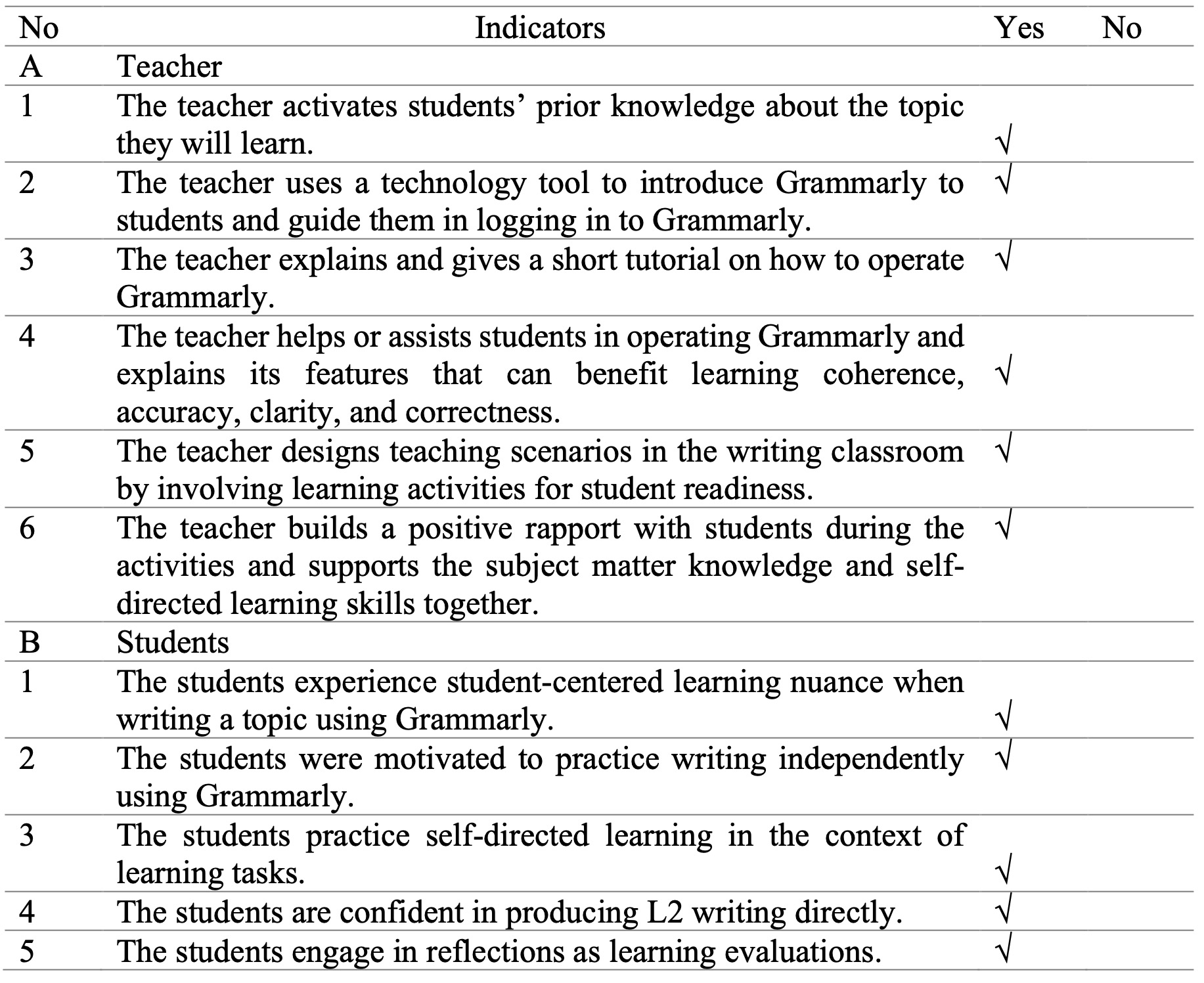
The classroom observation sheet (Appendix A) comprises students’ and teachers’ activities in a writing classroom. The topic students wrote about was the perception of using AI (Artificial Intelligence) for academic performance, in the form of an introductory section of a scientific paper. During the implementation, one of the researchers acted as an observer. Table 1 shows the observation results for the two-hour meeting activities, in which students were assigned to write the introductory section of a text. During the implementation, one of the researchers acted as a non-participant observer to document how the teacher facilitated the use of Grammarly and how students engaged with the tool in the writing process. As presented in Table 1, the observation results capture the teacher’s role in scaffolding the learning process and students’ engagement in SDL behaviors. These observational findings are subsequently linked to students’ writing performance, as shown in Tables 2 and 3, to provide a more comprehensive understanding of how the implementation of AWCF is related to students’ writing outcomes.
Table 1
Findings from Classroom Observation
The findings in Table 2 address Research Question 1 by examining students’ writing performance following the implementation of SDL through AWCF. The results of the writing test were summarized using descriptive statistics, including mean scores and frequency distributions. The writing test required students to compose the introduction section of a scientific paper. Students’ texts were evaluated using a rubric that assessed grammatical accuracy, coherence, clarity, and organization of ideas. Each criterion was scored on a scale of 0–25, resulting in a total possible score ranging from 0 to 100. The resulting scores were then analyzed using descriptive statistics to describe students’ writing performance after the implementation of SDL through AWCF. The scoring rubric is in Appendix D.
Table 2
Descriptive Statistics of the Writing Test Scores
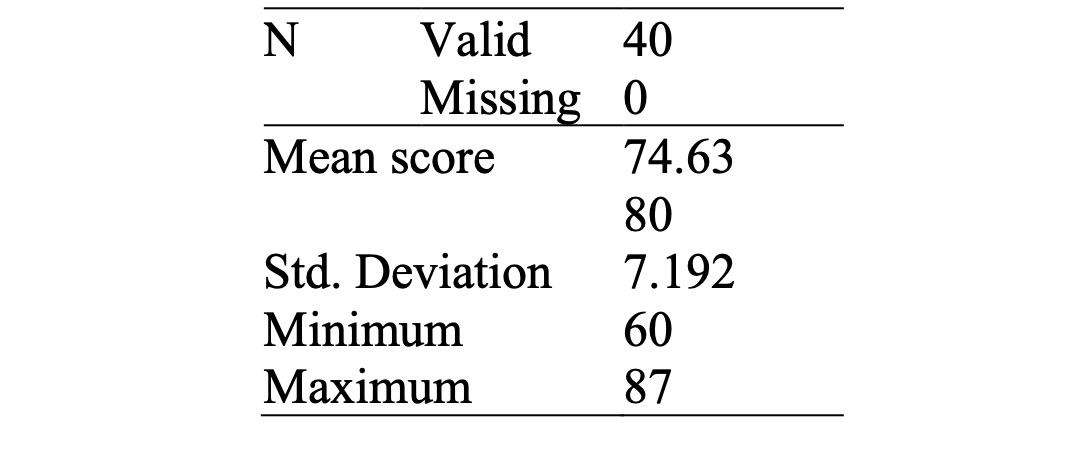
Table 3
Frequency of Writing Test Scores
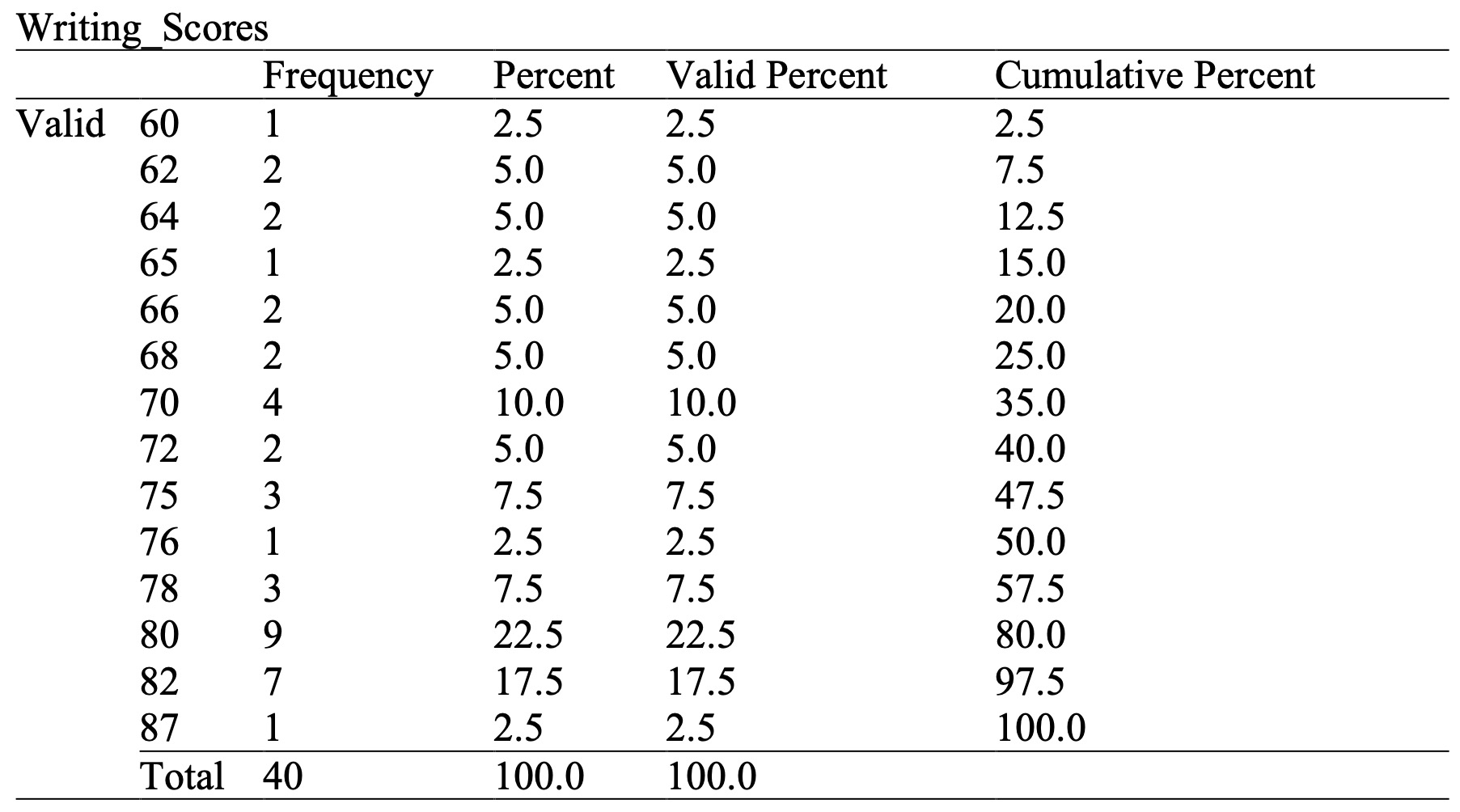
The frequency distribution in Table 3 shows that the majority of students achieved scores between 75 and 82, with the highest frequency at 80 (22.5%), followed by 82 (17.5%). This indicates that most students reached a satisfactory level of writing performance after the implementation of AWCF. The scores presented in this table represent the cumulative results of four equally weighted components in the analytic rubric: grammatical accuracy, coherence, clarity, and organization of ideas. While the distribution provides an overview of students’ overall performance, it does not differentiate among students’ performance in each individual component. Therefore, the table should be interpreted as a general indicator of writing achievement rather than a detailed representation of specific strengths and weaknesses across the rubric criteria.
Students’ Perceptions on Using AWCF for Self-Directed Learning in the EFL Writing Classroom
In this section, the researchers present findings and discuss the students’ reflections on their writing activities during the implementation of the AWCF. The interviews were conducted in Indonesian to enable participants to articulate their perspectives more readily. The recorded interviews were transcribed and then translated into English for analysis and reporting in this study. The data were collected through semi-structured interviews with 20 students, designated S1 to S20, to indicate their codes. The researchers’ questions (Appendix C) focused on the implications of Grammarly as an AWCF for their SDL in EFL Writing.
Students’ Perceptions of New Learning Experience Using Grammarly
Forty people participated in the study. Twenty students were purposefully chosen from the total number of participants to participate in semi-structured interviews for the qualitative data collection. This enabled a deeper understanding of students’ experiences with AWCF in the writing classroom. They were chosen based on their readiness to express their opinions and their active involvement in the learning process. The information gathered from classroom observations and writing test scores was then supplemented by the interview data. According to the results of the interviews, 15 of 20 participants believed that using Grammarly as an AWCF tool in the writing classroom was beneficial. Fourteen out of 20 participants stated that the tool increased their confidence in creating English sentences, helped them spot grammatical faults, and made their work clearer. When Grammarly was incorporated into the writing process, 12 out of 20 participants reported that the learning exercises became less repetitive and more interesting. Twelve participants also valued the chance to practice writing on their own while getting prompt system feedback. These perceptions suggest that the use of AWCF may support students’ writing development and encourage greater engagement in the writing process. Some participants expressed their experiences as follows.
Excerpt 1
“I experienced many things during writing class. Firstly, I was amazed by Grammarly’s features. All my wrong words or structures could be minimized. I learned to memorize the pattern, which improved my clarity in writing the topic.” (S1)
Excerpt 2
“Thanks for introducing the tool. My confidence improved. I loved the class because it was not monotonous. I could practice writing and be ready to write in English sentences as quickly as possible. It helped me to produce good paragraphs.” – (S3)
Excerpt 3
“The learning activities were so much fun for me. Hopefully, we can use the same technique in the next meeting to explore our writing competence.”- (S4)
Students’ Reflection on Their Writing Performance Assisted by AWCF
Additionally, the interview data showed that students’ use of AWCF improved their writing proficiency. According to eleven participants, using Grammarly increased their enthusiasm for honing their English writing skills and helped them track their writing development. Additionally, thirteen participants reported that the automatic feedback helped them pinpoint areas of their writing that needed more work, especially in structuring their arguments and generating ideas. All things considered, the reflections show that AWCF helped students become more conscious of their own writing progress in addition to promoting writing accuracy. From the interview data, 10 participants expressed similar views regarding the benefits of using AWCF. However, only two representative excerpts are presented in this section to illustrate these recurring perspectives while maintaining conciseness.
Excerpt 1
“I got 87, the highest. Usually, my writing score was in the area of 70. I felt grateful. My motivation to write more and more in English increased today.” – (S2)
Excerpt 2
“Amazing learning experience. My writing achievement was good enough. I could observe what I have to improve, not in grammar, but in the idea and how I explored the perspectives from a topic. I am satisfied with the result.” – (S5)
Discussion
The researchers present and integrate the findings from the classroom observations and writing test results to provide a comprehensive understanding of the implementation of AWCF and its impact on students’ writing performance. During the classroom observation, the teacher’s activity was monitored by activating students’ prior knowledge of the topic and by integrating technology tools to introduce Grammarly as AWCF and guide students in logging in and using its features. In this case, as an educational process, SDL emphasises that students have the primary responsibility for their academic experiences with an initiative to identify their learning needs, prepare goals, determine resources, and evaluate outcomes (Zhu et al., 2022) as the adult learners in the L2 writing context. Therefore, the teacher’s role in creating an SDL atmosphere was that of a facilitator, providing clear explanations and instructions to help students explore their knowledge.
In line with that, this study emphasizes promoting SDL via AWCF, with classroom activities embodying the essential elements of SDL as outlined by Garrison (1997). These elements encompass motivation, self-monitoring, and self-management. Throughout the implementation, students demonstrated motivation by actively participating in writing activities using Grammarly, self-monitoring by assessing the system’s automatic feedback, and self-management by autonomously editing their drafts in accordance with the feedback. These practices demonstrate how the incorporation of AWCF in the EFL writing classroom facilitated the advancement of SDL, corresponding with the study question investigating the impact of SDL via AWCF on students’ writing performance.
Those three elements influenced students’ cognitive and metacognitive processes for monitoring learning strategies and reflecting on their thinking (Zhu et al., 2022). A well-designed learning environment could enhance students’ motivation by fostering a sense of autonomy and relevance, encouraging them to engage more deeply with the writing material. By incorporating self-monitoring, students are empowered to track their progress, reflect on their learning strategies, and adjust their approach as needed. Including self-management helps students take ownership of their learning, promoting better organization and goal-setting. These elements support cognitive and metacognitive processes, enabling students to think critically about their learning and improve their overall performance.
Moreover, activating background knowledge in writing classrooms is urgently needed. Liu (2023) argued that students with poor background knowledge would affect their academic writing performance, since background knowledge is a sub-skill that reflects what students know and what they are expected to know. Teachers can use relevant schemes or headlines to stimulate students’ background knowledge when writing. In line with this, writing as a reflective activity (Fairooz, 2023) focuses on delivering information in a good scheme. The background knowledge comprises two types: knowledge of the world (content schemata) and different text forms (formal schemata), which play a significant role in students’ writing quality (Fairooz, 2023). However, by having good prior knowledge of L2 writing, students can engage more fully in their learning experiences. Besides that, they can practice SDL effectively in student-centred nuances.
A study by Voskamp (2022) investigated SDL to motivate adult students to learn, as it provides choice and responsibility. However, teaching practice for SDL in the 21st century is not as easy as it seems. EFL teachers face difficulties designing appropriate scenarios and styles for writing activities that stimulate and improve students’ competence, especially in producing L2 written texts. Writing anxiety appears and becomes an obstacle for the students. So, integrating technology in the writing classroom is an effort to boost their motivation. The modern era in this 21st century brings a thought that students show good attitudes and motivation toward using technology (Yuan et al., 2022). Consequently, teachers can integrate TPACK (Technological Pedagogical Content Knowledge) to apply digital tools in AWCF to support students’ learning and enhance their writing motivation (Almaiah et al., 2022).
In this study, Grammarly was used as an AWCF to help students make corrections across writing elements, including correctness, clarity, engagement, and delivery. All students could operate it and benefit from the features during the process. As presented in Table 2, students’ scores indicate that their writing achievement was good and reached the minimum completeness criteria. Students’ writing achievement was typically good and met the minimum completeness criterion, according to Table 2. This performance can be interpreted in terms of how students interacted with the AWCF while writing. In particular, students reviewed the system’s automated feedback, assessed its applicability, and made the necessary revisions to their compositions. In addition to accepting adjustments, participants were urged to evaluate the recommendations seriously and determine whether they were suitable for their writing context. Students actively monitored and refined their work in response to the technology’s feedback, reflecting key elements of SDL. Throughout the writing process, students assessed the comments produced by the system and amended their compositions accordingly. Students were encouraged to critically assess automated suggestions and determine whether improvements were suitable for their texts. This method exemplifies aspects of SDL, as students actively assessed and enhanced their writing while interacting with the feedback offered by the technology.
Furthermore, as a digital writing assistance tool, Grammarly can provide pedagogical and practical guidance to improve students’ writing and support teachers’ feedback (Calma et al., 2022). Based on the monitoring during the observation, the researchers also found that students demonstrated L2 writing confidence and were highly motivated to write independently. In this way, according to the researchers’ observations in the classroom, a number of students actively participated in the Grammarly writing exercise and were prepared to make autonomous revisions to their drafts. During the writing process, many students seemed intent on reviewing the automatic comments and editing their essays. These identifiable actions imply that students were encouraged to keep refining their drafts and demonstrated a certain level of confidence in their ability to produce L2 writing. Additionally, throughout the interview, a few students showed positive views toward the task, suggesting that using Grammarly encouraged them to participate in the writing assignment.
Proficiency in independently writing L2 text was the result of an SDL designed in the writing classroom.In gaining feedback on their L2 writing productivity, students were autonomous learners of the EFL context. They sought to correct their mistakes and turned them into new input to improve their skills. Additionally, the recent trend of heutagogy is sometimes used as an alternative term for SDL (Bhoyrub et al., 2010), which benefits adult students in helping them explore themselves and produce L2 writing. Furthermore, teachers were assisted here, integrated into technology, minimised their effort to teach additional components (Canţer, 2012), allowing students to learn independently using technology.
The findings from interviews with students in post-implementation on using AWCF for SDL in EFL writing classrooms reflect what students have experienced and felt. Automated corrections regarding writing patterns helped students identify errors. Students could monitor their mistakes using Grammarly’s features. As AWCF, Grammarly is appropriate for giving students additional and meaningful input in the writing process. In line with that, students realized that the quality of their writing depends not only on its content or length but also on its clarity (Wright, 2010). The writing quality is clear if the sentences in each paragraph are not vague.
In this case, confidence in the L2 context predicts writing success (Soffer & Cohen, 2019). Students with high confidence will write smoothly and take the time to monitor their writing to know the accuracy, even its errors. The following data are the interview results showing students’ satisfaction with their writing achievement using Grammarly. Satisfaction is positively related to students’ behavioral, emotional, and cognitive engagement (Wang et al., 2019) and is linked to their confidence and motivation to explore ideas in the L2 context. At this point, teachers should consider how to plan teaching scenarios to assess students’ actual performance (Herda et al., 2022), helped by Grammarly, as students could easily monitor their writing limitations by seeing the suggestions Grammarly gives.
As noted earlier, SDL becomes a focus for adult learners, which psychologically means that the more engaging students are academically, the more they want to experience higher levels (Guay, 2022). All students’ reflections indicate that SDL with AWCF affected their academic writing performances and psychological aspects, such as confidence and satisfaction with the process and its product. In line with this, technology in L2 writing promotes students’ intention and cognitive engagement (Kay & Pasarica, 2019), making them ready and responsible for their SDL.
The importance of adopting AWCF to boost students’ autonomy lies in its ability to promote independent learning and self-reliance. By incorporating technology into L2 writing, students are more encouraged to engage with their learning materials and actively improve their writing skills. AWCF delivers rapid, detailed feedback, allowing students to modify instantly while encouraging self-monitoring and introspective thinking. This technology allows students to recognize and remedy their mistakes, boosting their sense of responsibility for their advancement. As a result, students gain confidence in their abilities to govern their learning, emphasizing the value of autonomy in language development.
Conclusion and Recommendations
The researchers concluded that the praxis, or implementation, of SDL in academic writing for L2 students through AWCF was effective and well-structured, both in its procedures and its outputs. From the teacher’s perspective, the minimum explanation, as in the traditional teaching scenario, helped students become better prepared and more independent in producing L2 writing texts. However, the teacher was still responsible for guiding the students at the beginning with a brief tutorial on how to use Grammarly as the AWCF. The student-centred nuance allowed students to explore their concepts and abilities, where a positive rapport with the teacher should be balanced. The teachers’ guidance at the final stage could provide students with more ideas for further application of digital tools, improve their writing skills, and address their professional needs. From the students’ side, they were motivated to practice writing using the AWCF. They recognized Grammarly’s features that could help them identify their writing errors. Finally, they could produce fewer errors and reach good scores that passed the minimum completeness criteria. Additionally, their confidence in writing in L2 improved directly. and it was suitable for adult learners in the age of lifelong learning, where everything should be practical and on target. To improve the external validity of the findings, future studies might increase the sample size and incorporate participants from several educational environments. Using a longitudinal approach to monitor students’ development over an extended period should help one better grasp the long-term consequences of technology-enhanced language education on writing abilities. Finally, the researchers highly recommend that those interested in SDL and AWCF develop broad research concepts on L2 writing with classroom action research to improve or enhance students’ abilities, since the research not only explored students’ writing abilities but also highlighted how technology can be effectively incorporated into language education to support students’ development of their academic writing capabilities.
Notes on the Contributors
Rozanah Katrina Herda is a faculty member in the Faculty of Languages, Arts, and Cultures at Universitas Negeri Yogyakarta. She is a lecturer with expertise in English Language Teaching (ELT), focusing on integrating language skills, teacher professional development, and leveraging technology to enhance learning. She has completed her Doctoral Degree in Language Education Sciences from Universitas Negeri Yogyakarta. With a robust background in ELT, she excels in creating innovative pedagogy, aiming to foster dynamic language acquisition experiences. Additionally, she is committed to advancing pedagogical practices to ensure that language education evolves to meet the needs of diverse, ever-changing learning contexts. email: katrinaherda@uny.ac.id
Lilies Youlia Friatin is a lecturer in English Language Education at Universitas Galuh. Her research focuses on EFL pedagogy, particularly in speaking and writing instruction, socio-cognitive approaches, and technology-enhanced language learning, including automated feedback. She is actively involved in developing innovative instructional models to support self-directed learning and improve students’ communicative competence in diverse educational contexts. email: liliesyouliafriatin@unigal.ac.id
Sheilla Varadhila Peristianto is a lecturer in the Faculty of Psychology at Universitas Mercu Buana, Yogyakarta, Indonesia; a clinical psychologist; and an academic researcher specializing in culturally grounded approaches to mental health. Her work integrates clinical psychology, indigenous psychological constructs (e.g., rasa rumangsa, andhap asor), and community-based mental health interventions. She actively develops digital CBT programs and researches caregiving burden, emotional regulation, and culturally responsive psychological assessment. email: sheilla@mercubuana-yogya.ac.id
Elina S. Savitskaya is a Doctor of Education, Associate Professor, Head of FL Teaching Department, and Head of Philological Faculty at Moscow City University (Samara Campus). She is a specialist in Germanic philology, a teacher of English language and literature, a specialist in FL teaching methods, an academic writing tutor, and the author of more than 70 published books, articles, and teaching guidebooks – 47 of them on academic writing skills and their development. Her most popular guidebooks in teaching academic writing are Academic Writing: Teaching Professional Writing, Specific features of FL Writing culture, Academic writing as the aim: 7 reasons to develop writing skills professionally and Think. Write. Check. email: chuikovaes@mgpu.ru
Zohaib Hassan Sain is a scholar from Superior University with a research background in Quality Management, Education, Technology, and the Sustainable Development Goals (SDGs). He has extensive experience in delivering training sessions, conducting research, and engaging in various educational activities. In addition, he actively contributes as a moderator and judge in diverse academic and professional events across multiple platforms. email: zohaib3746@gmail.com
References
Allagui, B. (2022). Facilitating creativity through multimodal writing: An examination of students’ choices and perceptions. Creativity. Theories–Research–Applications, 9(1), 108–129. https://doi.org/10.2478/CTRA-2022-0006
Almaiah, M. A., Alfaisal, R., Salloum, S. A., Al-Otaibi, S., Shishakly, R., Lutfi, A., & Al-Maroof, R. S. (2022). Integrating teachers’ TPACK levels and students’ learning motivation, technology innovativeness, and optimism in an IoT acceptance model. Electronics, 11(19), 3197. https://doi.org/10.3390/electronics11193197
Barrot, J. S. (2023). Using automated written corrective feedback in the writing classrooms: Effects on L2 writing accuracy. Computer Assisted Language Learning, 36(4), 584–607. https://doi.org/10.1080/09588221.2021.1936071
Brisk, M. E. (2022). Engaging students in academic literacies: SFL genre pedagogy for K-8 classrooms. Routledge.
Bates, A. W. (2022). Teaching in a digital age: Guidelines for designing teaching and learning (3rd Ed.). Tony Bates Associates Ltd.
Calma, A., Cotronei-Baird, V., & Chia, A. (2022). Grammarly: An instructional intervention for writing enhancement in management education. The International Journal of Management Education, 20(3), 100704. https://doi.org/10.1016/j.ijme.2022.100704
Castillo-Cuesta, L., Quinonez-Beltran, A., Cabrera-Solano, P., Ochoa-Cueva, C., & Gonzalez-Torres, P. (2021). Using digital storytelling as a strategy for enhancing EFL writing skills. International Journal of Emerging Technologies in Learning, 16(13), 142–156. https://doi.org/10.3991/ijet.v16i13.22187
Engeness, I., & Gamlem, S. M. (2025). Exploring AI-driven feedback as a cultural tool: A cultural-historical perspective on design of AI environments to support students’ writing process. Integrative Psychological and Behavioral Science, 59(1), 23. https://doi.org/10.1007/s12124-025-09894-8
Fairooz, R. (2023). Using macro-level metadiscourse coherence devices in written texts: a product perspective. International Journal of Linguistics and Translation Studies, 4(3), 30–48. https://doi.org/10.36892/ijlts.v4i3.360
Fathi, J., & Rahimi, M. (2024). Utilising artificial intelligence-enhanced writing mediation to develop academic writing skills in EFL learners: a qualitative study. Computer Assisted Language Learning, 39(1-2), 263–302. https://doi.org/10.1080/09588221.2024.2374772
Fraenkel, J. R., Wallen, N. E., & Yun, H. H. (2022). How to design and evaluate research in education (11th Ed.). McGraw-Hill.
Fu, H., & Liu, X. (2022). EFL learner engagement in automatic written evaluation. Frontiers in Psychology, 13. 871707. https://doi.org/10.3389/fpsyg.2022.871707
Gay, L. R., Mills, G. E., & Airaisan, P. W. (2012). Educational research: Competencies for analysis and applications (10th Ed.). Pearson.
Garrison, D. R. (1997). Self-directed learning: Toward a comprehensive model. Adult Education Quarterly, 48(1), 18–33. https://doi.org/10.1177/07417 13697 04800 103
Ghahfarokhi, M., & Tavakoli, M. (2020). The effect of technology-mediated reading comprehension tasks on autonomy and metacognitive strategy use by Iranian EFL intermediate learners. Journal of Modern Research in English Language Studies, 7(3), 45–69. https://doi.org/10.30479/jmrels.2020.11739.1459
Guay, F. (2022). Applying self-determination theory to education: Regulations types, psychological needs, and autonomy supporting behaviors. Canadian Journal of School Psychology, 37(1), 75–92. https://doi.org/10.1177/08295735211055355
Guo, Q., Feng, R., & Hua, Y. (2022). How effectively can EFL students use automated written corrective feedback (AWCF) in research writing? Computer Assisted Language Learning, 35(9), 2312–2331. https://doi.org/10.1080/09588221.2021.1879161
Guo, X. (2024). Facilitator or thinking inhibitor: understanding the role of ChatGPT-generated written corrective feedback in language learning. Interactive Learning Environments, 33(5), 3526–35441. https://doi.org/10.1080/10494820.2024.2445177.
Halim, A., Sharina, S., & Zur, S. (2022). Grammarly as a tool to enhance students’ self-directed learning. KnE Social Sciences, 5-13. https://doi.org/10.18502/kss.v7i8.10719
Herda, R. K., Principe, R. A., Travero, A. S., Harahap, M. F. P., Viantika, S., & Hamidi, M. A. (2024). Voicing Philippines and Indonesian students’ needs of automated written corrective feedback in EFL writing classrooms. Journal of Education, Language Innovation, and Applied Linguistics, 3(1), 1–12. https://doi.org/10.37058/jelita.v3i1.8920
Herda, R. K., Widyastuti, I., Castro, M. C. S. A., & Damayanto, A. (2022). Going beyond the EFL teachers’ beliefs on authentic assessment: Reframing the five-dimensional approach. Tamansiswa International Journal in Education and Science (TIJES), 4(1), 1-19. https://doi.org/10.30738/tijes.v4i1.13346
Herda, R. K., Travero, A. S., Kafabih, A., Koeswoyo, A. W., Sari, R. N., Hakiki, F. I., & Wahidah, N. (2024). Opportunities of using ChatGPT in academic writing: perceptions of the Philippines and Indonesian students. Jurnal Wahana Pendidikan, 11(2), 205–214. http://dx.doi.org/10.25157/jwp.v11i2.14922
Holloway, S., & Qaisi, R. (2022). Composing meaning through multiliteracies and multimodality with adolescent and adult learners. Language and Literacy, 24(2), 85–106. https://doi.org/10.20360/langandlit29587
Howell, E. (2018). Scaffolding multimodality: Writing process, collaboration and digital tools. English Teaching: Practice & Critique, 17(2), 132-147. https://doi.org/10.1108/ETPC-05-2017-0053
Hu, L., & Wang, Y. (2023). The predicting role of EFL teachers’ immediacy behaviors in students’ willingness to communicate and academic engagement. BMC psychology, 11(1), 318. https://doi.org/10.1186/s40359-023-01378-x
Hyland, K. (2007). Genre pedagogy: Language, literacy and L2 writing instruction. Journal of second language writing, 16(3), 148–164. https://doi.org/10.1016/j.jslw.2007.07.005
Ibabe, I., & Jauregizar, J. (2010). Online self-assessment with feedback and metacognitive knowledge. Higher Education, 59(2), 243–258. https://doi.org/10.1007/s10734-009-9245-6
Jeong, K. O. (2022). Facilitating sustainable self-directed learning experience with the use of mobile-assisted language learning. Sustainability, 14(5), 2894. https://doi.org/10.3390/su14052894
Kanyopa, T. J., & Makgalwa, M. M. (2024). Adopting self-directed learning as an approach for enhancing academic achievement of university students. Journal of Ecohumanism, 3(7), 5273–5282. https://doi.org/10.62754/joe.v3i7.4637
Kay, D., & Pasarica, M. (2019). Using technology to increase student (and faculty satisfaction with) engagement in medical education. Advances in physiology education, 43(3), 408–413. https://doi.org/10.1152/advan.00033.2019
Knott, E., Rao, A. H., Summers, K., & Teeger, C. (2022). Interviews in the social sciences. Nature Reviews Methods Primers, 2(1), 73. https://doi.org/10.1038/s43586-022-00150-6
Kokkinos, L. (2024). Revolutionizing education: The dynamic intersection of technology and learning. Educational Research (IJMCER), 6(1), 26–32. https://www.ijmcer.com/wp-content/uploads/2024/01/IJMCER_E061026032.pdf
Kurni, M., & Mohammed, M. S. (2023). A beginner’s guide to introduce artificial intelligence in teaching and learning. Springer Nature.
Leavy, P. (2017). Research design: Quantitative, qualitative, mixed methods, arts-based, and community-based, participatory research approaches. The Guilford Press.
Link, S., Mehrzad, M., & Rahimi, M. (2022). Impact of automated writing evaluation on teacher feedback, student revision, and writing improvement. Computer Assisted Language Learning, 35(4), 605–634. https://doi.org/10.1080/09588221.2020.1743323
Liu, M. (2023). Problems and solutions in response to postgraduates’ English academic writing: A case of SWPU. Journal of Education and Educational Research, 3(3), 6–9. https://doi.org/10.54097/jeer.v3i3.9540
Lorenz, E., Krulatz, A., & Torgersen, E. N. (2021). Embracing linguistic and cultural diversity in multilingual EAL classrooms: The impact of professional development on teacher beliefs and practice. Teaching and Teacher Education, 105, 103428. https://doi.org/10.1016/j.tate.2021.103428
Mao, Z., Lee, I., & Li, S. (2024). Written corrective feedback in second language writing: A synthesis of naturalistic classroom studies. Language Teaching, 57(4), 449–477. https://doi:10.1017/S0261444823000393
Miles, M. B., Huberman, A. M., & Saldana, J. (2014). Qualitative data analysis: A method sourcebook (3rd Ed.). SAGE.
Naimanova, D., Lebedeva, L., Akpayeva, A., Astambayeva, Z., Ryabova, E., & Yessenova, K. (2023). Investigation of primary school teachers’ student-centered teaching and technology integration competencies. International Journal of Education in Mathematics, Science and Technology, 11(6), 1386–1404. https://doi.org/10.46328/ijemst.3681
O’Leary, M. (2020). Classroom observation: A guide to the effective observation of teaching and learning. Routledge.
Pižorn, K., & Bajec, M. L. (2025). Systematic review of digital writing assistants in EFL writing instruction. Sodobna Pedagogika, 76(3), 141–161. https://doi.org/10.63384/sptB5_z796a
Rad, H. S., Alipour, R., & Jafarpour, A. (2024). Using artificial intelligence to foster students’ writing feedback literacy, engagement, and outcome: A case of Wordtune application. Interactive Learning Environments, 32(9), 5020–5040. https://doi.org/10.1080/10494820.2023.2208170
Ranalli, J. (2018). Automated written corrective feedback: How well can students make use of it?. Computer Assisted Language Learning, 31(7), 653–674. https://doi.org/10.1080/09588221.2018.1428994
Russell, D. R. (2002). Writing in the academic disciplines: A curricular history. SIU Press.
Shadiev, R., & Feng, Y. (2024). Using automated corrective feedback tools in language learning: A review study. Interactive learning environments, 32(6), 2538–2566. https://doi.org/10.1080/10494820.2022.2153145
Shen, Y., Martinek, T., & Dyson, B. P. (2022). Navigating the processes and products of the teaching personal and social responsibility model: A systematic literature review. Quest, 74(1), 91-107. https://doi.org/10.1080/00336297.2021.2017988
Shokri, M. A., & Mousavi, K. (2024). Enhancing writing pedagogy: An exploration of metacognitive awareness raising strategies on creativity and critical thinking in writing courses. Bayan College International Journal of Multidisciplinary Research, 4(1), 11–41. https://bayancollegeijmr.com/index.php/ijmr/article/view/148/76
Singh, C. K. S., Gopal, R., Ong, E. T., Singh, T. S. M., Mostafa, N. A., & Singh, R. K. A. (2020). ESL teachers’ strategies to foster higher-order thinking skills to teach writing. Malaysian Journal of Learning and Instruction, 17(2), 195–226. https://doi.org/10.32890/mjli2020.17.2.7
Soffer, T., & Cohen, A. (2019). Students’ engagement characteristics predict success and completion of online courses. Journal of Computer Assisted learning, 35(3), 378–389. https://doi.org/10.1111/jcal.12340
Swenson, J., Rozema, R., Young, C. A., McGrail, E., & Whitin, P. (2005). Beliefs about technology and the preparation of English teachers: Beginning the conversation. Contemporary Issues in Technology and Teacher Education, 5(3), 210–236.
Tan, S., Cho, Y. W., & Xu, W. (2023). Exploring the effects of automated written corrective feedback, computer-mediated peer feedback and their combination mode on EFL learner’s writing performance. Interactive Learning Environments, 31(10), 7276–7286. https://doi.org/10.1080/10494820.2022.2066137
Tandika, P. B., & Ndijuye, L. G. (2020). Pre-primary teachers’ preparedness in integrating information and communication technology in teaching and learning in Tanzania. Information and Learning Sciences, 121(1-2), 79–94. https://doi.org/10.1108/ILS-01-2019-0009
Tao, Y., & Yu, J. (2024). Cultural threads in writing mastery: A structural analysis of perfectionism, learning self-efficacy, and motivation as mediated by self-reflection in Chinese EFL learners. BMC psychology, 12(1), 80. https://doi.org/10.1186/s40359-024-01572-5
Tsao, J. J. (2021). Effects of EFL learners’ L2 writing self-efficacy on engagement with written corrective feedback. The Asia-Pacific Education Researcher, 30(6), 575–584. https://doi.org/10.1007/s40299-021-00591-9
Viberg, O., Mavroudi, A., Khalil, M., & Bälter, O. (2020). Validating an instrument to measure teachers’ preparedness to use digital technology in their teaching. Nordic Journal of Digital Literacy, 15(1), 38–54. https://doi.org/10.18261/issn.1891-943x-2020-01-04
Voskamp, A., Kuiper, E., & Volman, M. (2022). Teaching practices for self-directed and self-regulated learning: Case studies in Dutch innovative secondary schools. Educational Studies, 48(6), 772–789. https://doi.org/10.1080/03055698.2020.1814699
Wang, Y., Tian, L., & Huebner, E. S. (2019). Basic psychological needs satisfaction at school, behavioral school engagement, and academic achievement: Longitudinal reciprocal relations among elementary school students. Contemporary Educational Psychology, 56, 130–139. https://doi.org/10.1016/j.cedpsych.2019.01.003
Widoyoko, E. S. (2012). Teknik penyusunan instrumen penelitian. Pustaka Pelajar.
Wright, K. (2010). Simple writing skills for students, part one: Structure and clarity. British Journal of Nursing, 19(11), 709–711. https://doi.org/10.12968/bjon.2010.19.11.48396
Yu, S., Yuan, K., & Wu, P. (2023). Revisiting the conceptualizations of feedback in second language writing: a metaphor analysis approach. Journal of Second Language Writing, 59, 100961. https://doi.org/10.1016/j.jslw.2022.100961
Yuan, X., Kaewsaeng-On, R., Jin, S., Anuar, M. M., Shaikh, J. M., & Mehmood, S. (2022). Time lagged investigation of entrepreneurship school innovation climate and students motivational outcomes: Moderating role of students’ attitude toward technology. Frontiers in Psychology, 13, 979562. https://doi.org/10.3389/fpsyg.2022.979562
Zhu, M., Bonk, C. J., & Berri, S. (2022). Fostering self-directed learning in MOOCs: Motivation, learning strategies, and instruction. Online Learning, 26(1), 153–173. https://doi.org/10.24059/olj.v26i1.2629
Appendix A: Observation Sheet
Appendix B: Instructions for Introduction Writing Task
Appendix C: Interview Guide
Appendix D: Writing Scoring Rubric
(See PDF version for the appendices.)

 SiSAL Journal