Daniel Hooper, Chuo University, Japan. https://orcid.org/0000-0001-9431-3195
Sam Reid, Tokyo Kasei University, Japan
Yuki Namiki, Tokyo Kasei University, Japan
Yusuke Kon, Tokyo Kasei University, Japan
Hooper, D., Reid, S., Namiki, Y., & Kon, Yusuke (2026). Negotiating autonomy and support: A case study of self-access student staff in Japan. Studies in Self-Access Learning Journal, 17(2), 218–246. https://doi.org/10.37237/170205
Abstract
This qualitative case study examines how self-access student staff (SASS) experience their participation in a self-access language center (SALC) community of practice (CoP) at a private university in Japan. Focusing on six SASS members working in a recently relaunched SALC over one academic year, the study draws on data from multiple rounds of semi-structured interviews. Data were analyzed using inductive reflexive thematic analysis. Findings are presented through the CoP dimensions of domain, community, and practice, illustrating how participation supported developing identities, a sense of belonging, and both role-specific and transferable skills. At the same time, participants reported challenges related to workload, fluctuating motivation, low attendance, and uncertainty arising from high levels of autonomy combined with limited early scaffolding. The findings highlight the emotional and developmental demands placed on student staff and suggest that autonomy-supportive environments require carefully negotiated forms of guidance. Implications are discussed for SALC administrators seeking to design sustainable student staffing structures that balance learner agency with appropriate institutional support.
Keywords: student staff, communities of practice, SALC management, learner development, qualitative case study
Due to the evolving nature of self-access language learning and the needs that it is designed to fulfill, SALCs have increasingly pivoted away from their traditional role as “materials repositories” and have come to operate more as social hubs that fully embrace the role of social connection in developing learner autonomy. Congruent with this paradigm shift is a growing recognition among both researchers and practitioners of the importance of providing learners with opportunities to move beyond acting as passive consumers of self-access facilities and services. Instead, SALCs are increasingly encouraging students to take an active contributory role in a SALC’s community of practice. One practical way in which such a policy has been operationalized is through the implementation of a self-access student staff (SASS) program in which students take on managerial, instructional, and other support roles within SALCs. These programs vary greatly in terms of scope and style, and may involve staff participating on a paid or volunteer basis. Previous studies have highlighted numerous benefits that SALC student staffing programs offer. These include SASS acting as near-peer role models that inspire and support other SALC users, staff members gaining confidence and an increased sense of belonging, and a SALC’s institutional culture being revitalized through new and innovative ideas (Heigham, 2011; Phelps, 2025; Suzuki & Hooper, 2024; Yamaguchi, 2011).
Despite the relative ubiquitousness of SASS in various SALCs worldwide, there is still little research into the experiences of these student staff members, the specific challenges they face, and the impact that the role has on their identity and personal development. A handful of exploratory studies (Malcolm, 2011; Noguchi, 2015; Yamaguchi, 2011) have attempted to address this lack of academic attention, but these have largely been limited in scale, meaning there remains a need for thick description and detailed case studies based on data over an extended period of time. In order to address this gap in the SALC literature, in this study we aim to focus deeply on the experiences of SASS members working in a relaunched SALC in a Japanese university over the course of one academic year. Three separate semi-structured interviews were conducted in conjunction with member-checking sessions, and were subsequently analyzed through inductive reflexive thematic analysis for salient codes. These codes were then developed into coherent themes by the research team. The themes formed the basis for a discussion of SASS patterns of experience and implications for what SALC faculty/staff members might do to provide a more productive and nurturing environment for these valuable self-access stakeholders.
Literature Review
Student Contributions and Ownership in Self-Access
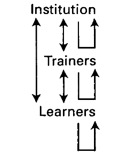
Early perspectives on self-access and its relationship with its student users highlighted an important tension relating to how much power or influence students have regarding a SALC’s content or management. Aston (1993) noted that, in many cases, students in SALCs tended to be perceived “simply as consumers of facilities provided for their benefit” (p. 221), an observation that has been echoed in SALC-based studies taking place almost twenty years after Aston’s (Malcolm, 2011). Even in the early days of SALC development, Aston argued that the three requirements for a SALC outlined by Holec (1985) – 1. providing materials/resources, 2. staff to offer learner support, and 3. SALC promotion – could feasibly be undertaken by students rather than faculty/staff members. Based on this assertion, he offered a student-centered SALC management model in which learners-as-managers not only contribute to their own learning and that of their peers, but also to the continued development of teachers/staff and the institution (see Figure 1).
Figure 1
An Interactive Learning Support Model (Aston, 1993, p. 223)
More contemporary studies have continued the early work that Ashton and his peers began, and have emphasized from both theoretical and pedagogical perspectives the value of direct student involvement in SALC management and practice. Cooker (2010), one of the pioneers of self-access in Japan, stated that one of her key principles for effective SALCs was that students should have “an integral role” (p. 7) in how a SALC is run and that, just as Aston (1993) claimed, learners can positively contribute as staff members, by selecting resources, and through promoting the center to their peers. Other researchers (Hooper, 2025; Tassinari, 2017; Yamaguchi, 2011) have foregrounded the importance of student participation in SALC management from a communities of practice (CoP) theoretical perspective. These studies argue that by encouraging SASS members to autonomously contribute to a SALC’s CoP and by integrating the varied perspectives and “funds of knowledge” (Moll et al., 1992) that they possess into the fabric of the community, a SALC becomes a more inclusive, sustainable, and agency-supportive environment.
Benefits of SACSS
When examining the benefits that SASS bring to a self-access center, it can be useful to first consider the topic from a wider, conceptual perspective. If the goal of a SALC is to foster learner autonomy and agency while also satisfying learners’ basic psychological needs (Ryan & Deci, 2017), active student involvement in its CoP is essential (Mynard, 2022). Even in the early days of SALCs, Holec (1980) remarked on the importance of the value of SASS as active agents shaping the learning environments they find themselves in.
The learner is no longer faced with an ‘independent’ reality that escapes him, to which he cannot but give way, but with a reality which he himself constructs and dominates. (Holec, 1980, as cited in Aston, 1993)
With this theoretical foundation in mind, one can narrow this lens to find various studies that discuss the micro-level, concrete benefits that SASS bring to self-access environments. Reporting on student management of the SALC at Sugiyama Jogakuen University in Japan, Heigham (2011) described how the presence and work of SASS positively contributed to the vitality and popularity of the center. This center developed a student staff team of approximately 30 members, on a paid or volunteer basis, who managed tutoring, advising, and discussion sessions as well as the day-to-day running of the facilities. Heigham discussed how these student staff members represented relatable near-peer role models (Murphey & Arao, 2001) who motivated regular SALC users and encouraged them to support future generations, a phenomenon that was bolstered by the local cultural norm of senpai-kōhai (senior/junior) relationships that guides much of mainstream Japanese society. This quote from a SALC user in Heigham’s study clearly illustrates the sense of empowerment and collective responsibility that student peer advisors (PAs) appeared to instill in other users.
I want to be a PA because previous PAs were my ideal. They were very kind to me, they looked after me friendly, and their amazing English motivated me to study hard. They inspired me. So, I want to be like them. I was looked after by them, so next, it’s my turn. I want to repay senior PAs by advising juniors as a PA. (Heigham, 2011, p. 83)
The positive value of SASS as near-peer role models was also highlighted by Yamaguchi (2011) and Suzuki and Hooper (2024), who reported student staff to be catalysts for enhanced engagement and increased confidence in other SALC users. In the case of Author 1’s study, it was also shown that student staff played a beneficial role in mitigating students’ linguistic or social anxiety during their first few months as neophyte SALC users.
When I first came to the LC, because I previously had few opportunities to speak English, I felt anxious. But at that time, when there was something I didn’t understand, the staff jumped in and helped me. I remember them really helping me. (Student A) (Suzuki & Hooper, 2024, p. 18)
Such accounts highlight the potential value of SASS in terms of SALC users’ wellbeing and the development of psychoemotionally supportive self-access environments. However, in order to provide adequate support for student staff, it is also worthwhile to examine the detailed experiences of SASS members and the benefits or challenges that they report after working in these roles.
SACSS Experiences
Despite the wealth of existing research focusing on the experiences of SALC users and regular staff/faculty (Murray & Fujishima, 2016; Mynard et al., 2020; Mynard & Shelton-Strong, 2022), there is a comparative scarcity of inquiry directly examining the experiences of SACSS members. One notable exception is a study by Noguchi (2015) investigating the impact of students’ work as SASS on both their willingness to communicate (WTC) and their identity construction within the local SALC community of practice (CoP). Based on interviews and informal observation of two student staff members (known as “SALCers”), Noguchi argued that, based on their work in an environment that mandated constant English use and a flattened power dynamic that engendered open cooperation and idea sharing, the SACSS members were able to develop confident and competent identities through participation in that CoP. Engagement in prosocial (benevolent) acts such as helping their co-workers with administrative or linguistic challenges was also argued to have contributed to their sense of belonging, and therefore, their WTC in that setting.
I think it’s because we have a relationship where we help each other by, for example, trying to figure out what someone wanted to say while suggesting possible words the person can use to express what he or she wanted to say, saying something like “Right, you can say that with something like this….” (Noguchi, 2015, p. 172)
Noguchi’s findings regarding the development of a sense of belonging within a SASS community were also mirrored in findings from Yamaguchi (2011), who conducted fine-grained narrative analysis based on the experiences of Kyoko (pseudonym), a student who had worked for two years as a SASS member. Yamaguchi described Kyoko’s gradual development in her SASS role, illustrating how she was inspired by a near-peer role model in the form of a senior student staff member, and how she eventually came to support another younger student who was struggling when using the SALC. In the following excerpt, Yamaguchi explains how this event appeared to symbolize Kyoko’s enhanced belonging and competence within that community.
The reference to [helping the student] and voicing the characters in the story allowed Kyoko to position herself as an active agent in the SALC. Then, she rephrased “I could” to “we could” (lines 46)”. By doing so, she interactionally presented herself not as an individual learner but as a member of the target community of the SALC. (Yamaguchi, 2011, pp. 275-276)
Despite these two studies providing valuable insights into the rarely-discussed experiences of SASS members, as with any research, there are numerous limitations that still need to be addressed in future research. These include limited participant size (generally only one or two participants), the lack of data collected across multiple points in time, and a lack of focus on challenges that SASS face. Studies of SALCs have found that examples of such challenges include insufficient training (Moore & Tachibana, 2015) and insufficient knowledge exchange between generations due to a lack of “institutional memory” (Fujishima, 2015).
Thankfully, many of these limitations relating to earlier SASS research were addressed in a recent project by Phelps (2025), who conducted a detailed narrative analysis of the experiences of eight different SASS members from two different university SALCs in Japan. Phelps utilized a theoretical lens based on self-determination theory (SDT) (Ryan & Deci, 2017) and examined in detail the various factors that impacted SASS members’ motivation and psychoemotional wellbeing. Phelps reported that a range of factors contributed to SASS members’ motivation in their roles: 1. general factors, including social connection and language learning opportunities, and 2. student staff-specific factors, such as being invited to become SASS, skill-building opportunities, and prosocially contributing to the SALC. Based on these findings, Phelps argued that interventions in areas such as leadership training, skills development, and social scaffolding could benefit future SASS members and, thereby, SALCs more broadly.
In this case study, we hope to further build on these pioneering studies and contribute to a deeper understanding of the multifaceted experiences of SASS members in order to help SALC administrators and faculty members provide more effective support for SASS in their crucial role.
Research Question(s)
Given the issues discussed in the previous sections and the relative lack of research in this area, the present study investigates the following questions:
- How do SASS understand and experience their participation in a SALC community of practice?
- What challenges do SASS face in their role and how could these be mediated by SALC administrators?
Methods
Context
The setting for the current study is the REAL Room , a small SALC at a medium-sized private university in the greater Tokyo area. The REAL Room was first established as part of the English department in 2009, but, despite its historical popularity, had fallen into disuse in recent years. Therefore, the decision was made in 2023 to relaunch the SALC with a new mission statement and operational model (Hooper & Namiki, 2025). The faculty members in charge of this project (the authors of the current study) elected to change the focus of the REAL Room from a place where students could interact with “native speakers”1 to a space in which students could be empowered through active involvement in the running of the SALC. Consequently, a team of nine paid student staff members was recruited and provided with basic training and guidance by the REAL Room faculty team.
Participants
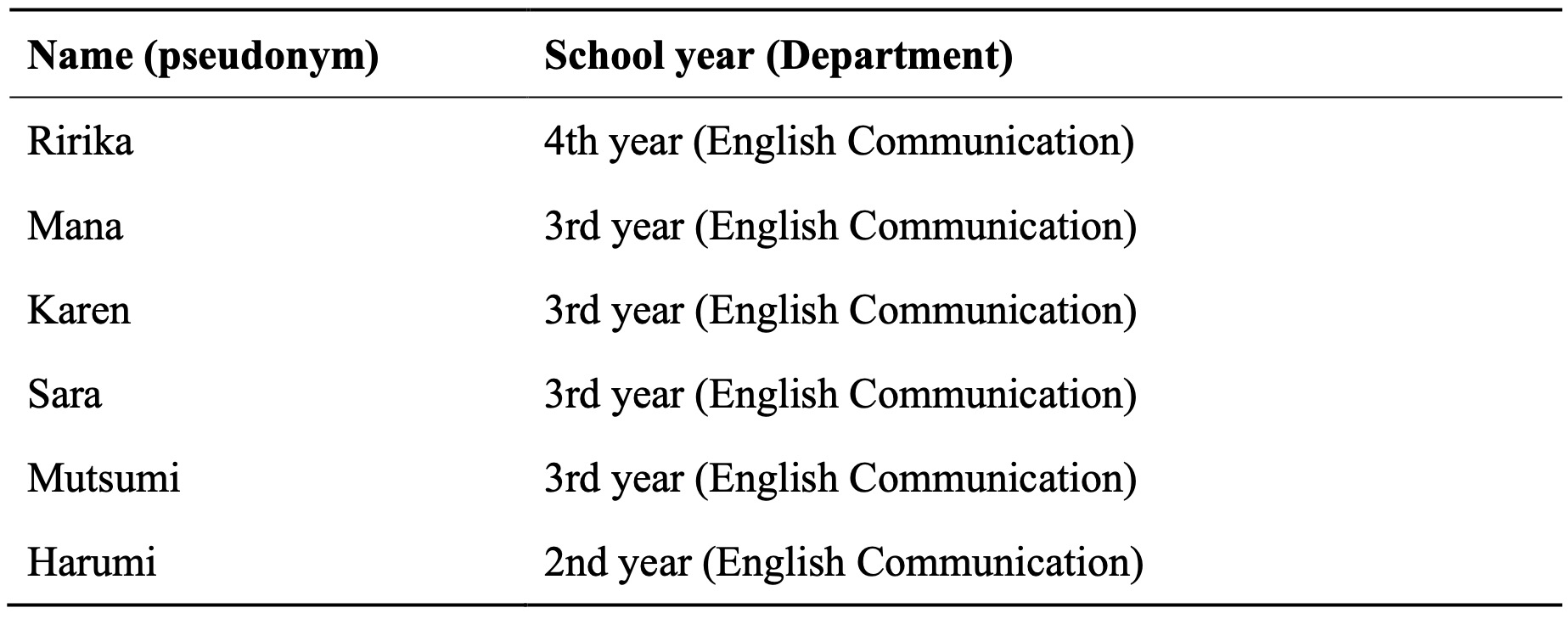
The participants in the current study were six student staff members in the REAL Room who had started working in the SALC in April 2025, all of whom were majoring in English. Participants were selected via purposeful sampling. We selected a range of SASS members based on their degree of seniority in the university (one second-year student, four third-year students, one fourth-year student) in order to get a variety of perspectives in our area of focus. More detailed information about these SASS members can be found in Table 1.
Table 1
Participant Information
All participants were provided a bilingual plain language statement in May 2025 outlining the focus and aims of the study, provided informed written consent, and were informed that they could withdraw from the study at any time. For the purposes of maintaining confidentiality, all participant names included in this study are pseudonyms.
Data Collection
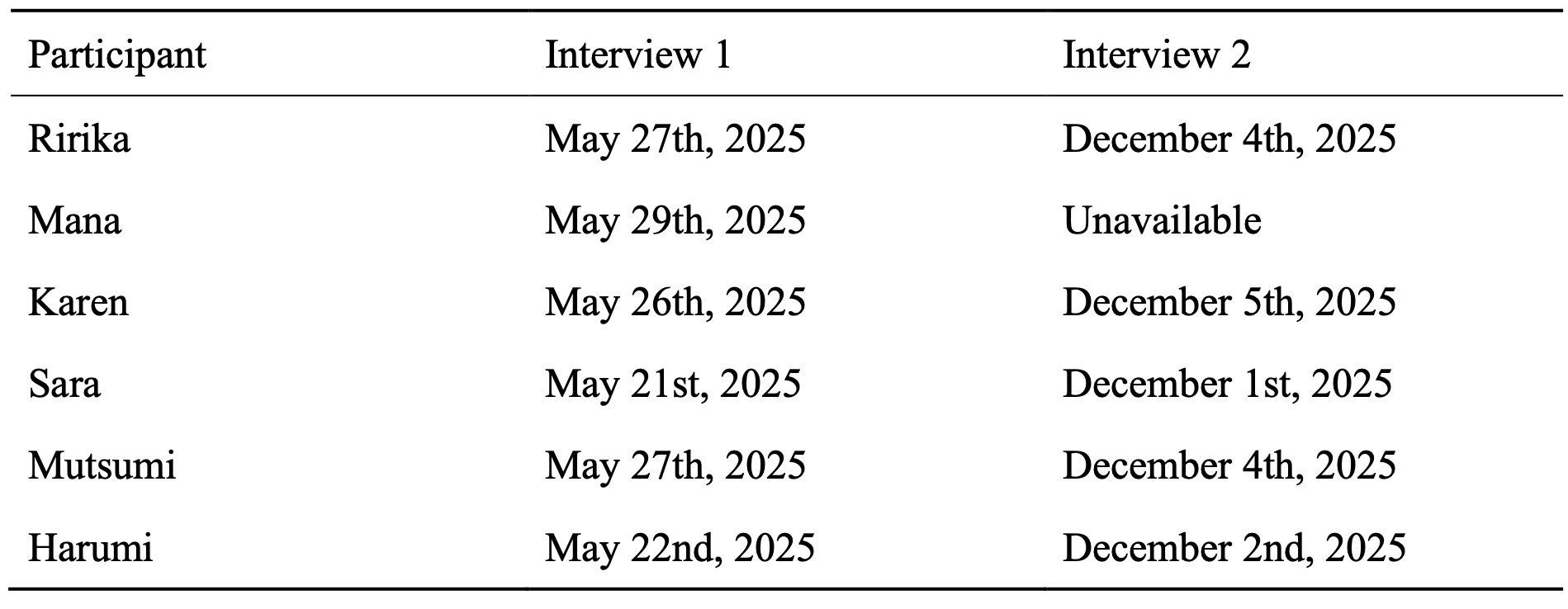
The primary data source for the current study was semi-structured interviews based on an interview protocol informed by communities of practice (CoP) theory and previous studies conducted on student experience in SALCs (Hooper, 2023; Mynard et al., 2020) (see Appendices A and B). The protocol included questions focusing on areas such as interpersonal connections, the perceived domain of the REAL Room, and SASS members’ views on leadership. The protocol was shared with all members of the research team and items were adjusted based on team discussions. The final draft was then translated into Japanese and checked by two members of our team (Author 3 and Author 4). Interviews were conducted at two points during the 2025-2026 academic year with the goal of collecting data detailing SASS members’ experiences over their first year in their roles (see Table 2 for detailed information).
Table 2
Interview Schedule
In order to get the greatest possible depth in participant responses, the interviews were administered in Japanese by Author 3 and Author 4. All interviews were conducted in a private room where confidentiality could be maintained, and were audio recorded. This audio data was later transcribed, translated into English, and then checked by the entire team before proceeding to the analysis stage.
Data Analysis
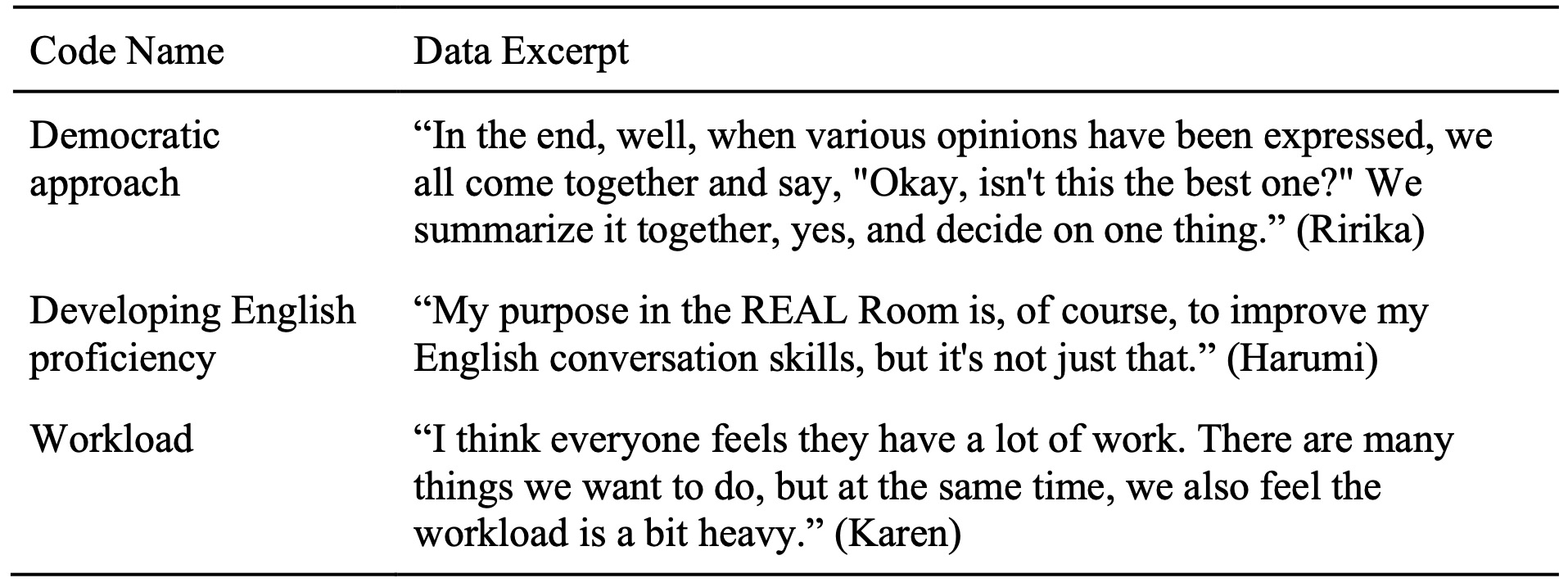
The transcripts were initially analyzed inductively through reflective thematic analysis (RTA) (Braun & Clarke, 2022). This process involved Author 1 and Author 2 working separately and utilizing qualitative analysis software while following Braun and Clarke’s original (2006) six-step guidelines for thematic analysis: 1) familiarization with data; 2) generation of initial codes; 3) searching for themes; 4) reviewing themes; 5) defining themes; and 6) final analysis. After individual coding (step 2) was completed, the entire research team met to discuss the identified codes and generate salient themes. This theme development stage (steps 3 and 4) was partly based on the categories of domain, community, and practice from the CoP literature. However, rather than theory guiding our whole analysis (deductive), our analysis was abductive in nature (moving iteratively between data and theory). Our rationale for this was that although CoP offered a valuable and established theoretical framework, we were concerned that a purely deductive approach might cause anomalies from the data that fell outside of the domain/community/practice framework to be viewed as “bothersome hiccup[s]” (Tavory & Timmermans, 2014, p. 2) rather than important areas for consideration. As such, we conducted the inductive analysis first, and then examined these codes for congruence or incongruence with our theoretical framework, thus incorporating “generation of the unexpected while also supporting the inferential explanatory process” (Proudfoot, 2023, p. 320). Furthermore, in line with the qualitative/interpretivist perspective of RTA, our theme development meetings were designed not to offset individual bias, but rather “enhance understanding, interpretation, and reflexivity” (Braun & Clarke, 2022, p. 8). For the purposes of transparency, Table 3 features examples of identified codes and corresponding data excerpts.
Table 3
Example Codes and Corresponding Data Excerpts
Trustworthiness
In order to enhance the trustworthiness of our study and its findings, we referred to Creswell’s (2013) four dimensions criteria of “credibility, transferability, dependability, and confirmability” (p. 244) to assess the rigor of this qualitative research. Creswell (2013) argues that a study should satisfy at least two of these criteria to guarantee an acceptable degree of trustworthiness. To ensure the transferability of the findings to other studies, we incorporated thick descriptions of participant narratives and included direct quotes in the findings. We also conducted member checking sessions (Jensen, 2008) in which we shared our analyses and conclusions with our SASS participants in order to both enhance transparency in our study and increase the credibility of our findings. Finally, due to our dual role as researchers and SALC managers, researcher positionality is also an issue that should be addressed. The mission statement that we developed for the SALC (Hooper & Namiki, 2025) emphasized student leadership and involvement, and this was an impetus for conducting this study. However, the power differential that unavoidably existed due to our roles as full-time faculty members likely impacted the responses that we received from SASS members.
Findings
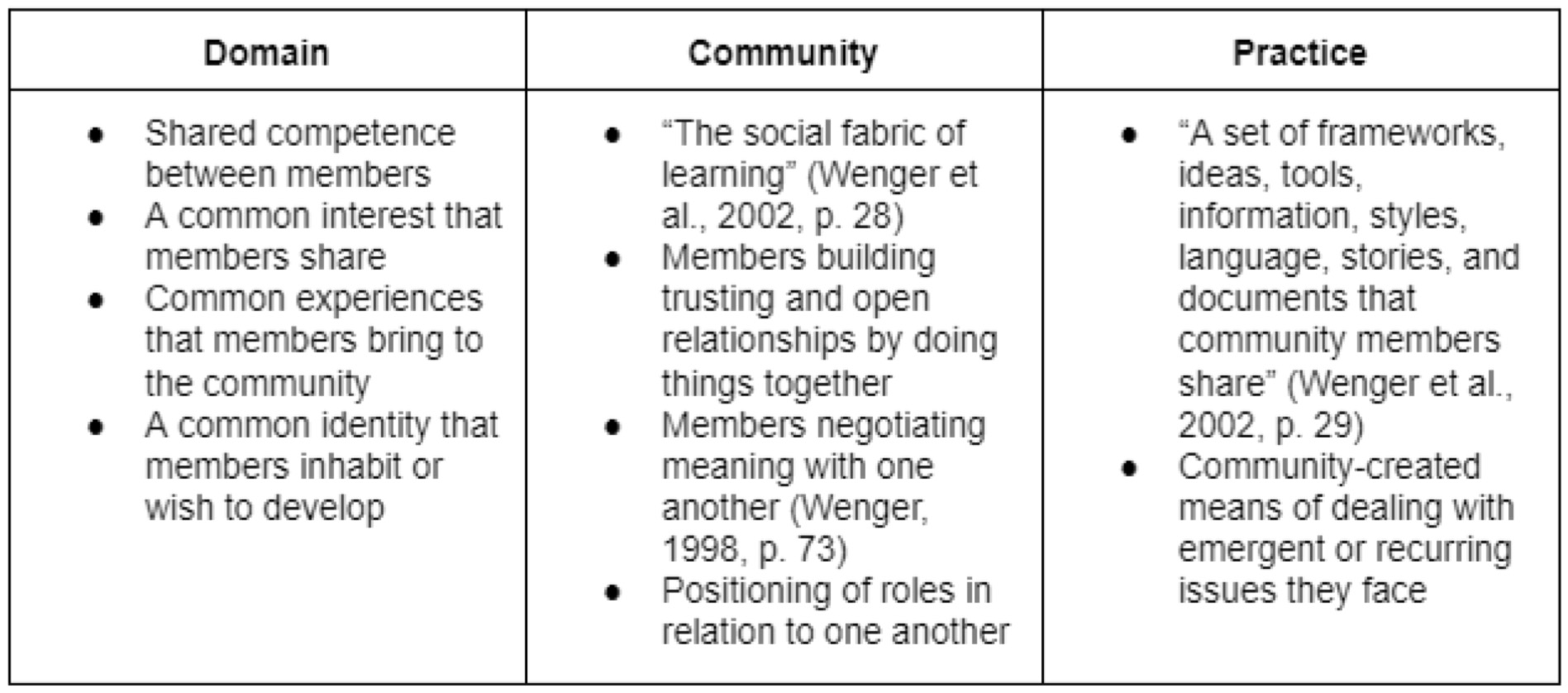
In order to coherently illustrate our findings relating to the experiences of SASS members within the CoP of the REAL Room, we have elected to structure the following section according to Wenger et al.’s (2002) framework of the key elements of a CoP: domain, community, and practice. Table 4 provides a brief outline of each of these components and their characteristics.
Table 4
Three elements of a CoP (adapted from Hooper, 2023)
Domain
A CoP’s domain is the shared interest, focus, or agenda that unites its members and a “shared competence that distinguishes members from other people” (Wenger-Trayner & Wenger-Trayner, 2015). Consistent with the CoP premise that learning involves “becoming a certain person” (Wenger, 2010, p. 181), the domain shapes not only what members do, but also, to some extent, who they become.
A fundamental aspect of domain is the sense of identity that membership of this domain confers. Ririka expressed the feeling in this way: “I’m not in any clubs, and I come to university for classes, so I don’t have many acquaintances. So, coming to university and being able to talk to people in a place like REAL Room, and having those connections, gives me a sense of security”. It would seem that the role of SASS provides the connections and sense of belonging akin to that of a university circle or club. Indeed, some SASS members’ (Mutsumi, Karen, Harumi) identification with the REAL Room CoP along with their sense of belonging appeared to strengthen as the year progressed, as observable in Karen’s claim that, “…the REAL Room plays a fairly significant role in my student life. It’s one of my places to belong, and being able to make use of what I’ve learned studying English with various people gives me a sense of purpose.” Another sense of domain which is closely related to identity is the idea of purpose. This is of particular importance in the present case because the SALC was conceived of with SASS deliberately included as decision-makers and stakeholders, tasked with helping create a mission statement and being given responsibility for planning events. Multiple comments attested to the SASS’ view of the REAL Room as a friendly welcome for students in the department, and a source of encouragement for increasing students’ exposure to English. For instance, in Ririka’s first interview she stated, “I feel there aren’t many opportunities to speak English frankly, or in a casual setting, otherwise”, and in the second interview she continued the theme with “my current understanding of the REAL Room’s purpose is that it’s really the most accessible first step for getting exposed to English”.
A further theme related to domain is the atmosphere which is created and sustained within the REAL Room. A prevalent topic was the freedom and honesty afforded SASS in their role. For example, Harumi commented that “We can exchange opinions without holding back, and there’s a sense of mutual support”. However, one negative side of the atmosphere was an issue with decreasing motivation towards the end of the year. In the second interview, Sara explained that “Everyone’s motivation seems to be dipping a bit. Ah, I see. Right! ‘Gap,’ ‘gap.’ I feel there’s a gap between the motivated ones, like Karen here, and those whose motivation has been slipping lately”. It appeared that the level of work and responsibility became something of a burden, and a certain amount of fatigue set in.
Community
Community concerns the social structure of a CoP, including the relationships and interactions among members, the ways they learn from one another, and how they position themselves within the group. Over time, members ideally develop mutual trust and feel increasingly able to express their ideas. When individuals contribute diverse perspectives while engaging with the shared domain, this interaction “creates a social learning system that goes beyond the sum of its parts” (Wenger et al., 2002, p. 34).
Perhaps the primary interpersonal connections that SASS experienced in their role were the relationships with other SALC users, which were overwhelmingly described as positive. The interviews suggested that SALCs are a space for students of different grades to interact on an even footing. To exemplify, Mutsumi felt that “Compared to other students in our department, I feel I’ve been able to build not just horizontal relationships with peers, but also vertical relationships with seniors and juniors”. Another beneficial aspect of relationships was the effect on SALC users of having fellow students in charge. For example, Mana felt that this encouraged users to visit, explaining “Since it is student-led, well, it is easy for other students of our department to come, and I think it is a strong point to connect with seniors, and to connect with seniors in the department”.
Moving to relationships among the SASS team members themselves, the perceived importance of interpersonal relationships and emotional intelligence in managing different personalities was clear from the initial data. Interviewees perceived other staff members as well motivated. For example, Ririka described fellow REAL Room members in this way: “They seemed like a group of very motivated and proactive students; that was my strong image”. Over the course of the year friendships among SASS deepened, as might be expected. For instance, Harumi said that “We meet often. We’ve become like friends. I talk normally with the second-years about things other than REAL Room too.” However, as with most groups, the dynamics were not completely smooth, and interpersonal friction occurred. For example, “At first, [other SASS] were really so opposite that I didn’t know how to handle them. But as time went by, I got used to it a little bit” (Sara).
Related to the personal relationships among SASS were the complementary roles they played in running the REAL Room. It seems that the interactions were largely democratic. According to Harumi, “This community doesn’t have a feeling of “who is the leader” being decided”. Karen explained why this was appreciated: “I was never told “do this, do that” forcefully, so I thought that was very skillful”. This difference in competencies was perceived as desirable, with a variety of different skill sets key to effective management of the REAL Room. For Ririka, “if you have many different kinds of people, then you have that many different ways of thinking, and different feelings, and I think you can create something different and better”.
While the SASS had a lot of autonomy, the role also necessitated working with faculty members, and this was perceived as beneficial. One aspect was the confidence boost, as exemplified by Mutsumi feeling that “Talking with many working adults also made me feel like, “Maybe I can do things too””. Another aspect was the opportunity to work with adults, as Harumi explained: “I think that routine of talking with adults is useful”. SASS also said they learned skills of facilitation by observing faculty members interacting with students in the REAL Room. For example, “through watching them [faculty members] I’ve learned how to facilitate more effectively” (Ririka).
Practice
Practice is “the specific knowledge the community shares, develops, and maintains” (Wenger et al., 2002, p. 29). As members collaborate toward collectively negotiated goals, they inevitably encounter challenges or identify areas for improvement within the CoP. It is through practice that such issues are addressed by members developing “a shared repertoire of resources: experiences, stories, tools, ways of addressing recurring problems” (Wenger-Trayner & Wenger-Trayner, 2015, para. 7).
One standout area of difficulty for SASS was developing skills and competencies. As the SALC was in its first year of operation, the SASS were learning a new skill set. Initially there were doubts expressed by SASS about their ability to perform the role, such as “I want to develop the ability to notice when someone isn’t talking, and the ability to facilitate smooth conversation” (Harumi) and “When we get a lot of people, too many people come for lunchtime discussions, and the staff can’t handle them” (Sara).
One recurring issue was pitching the appropriate level of English: “when I’m in a group with students from different academic years, like first-year students and myself, a third-year student, it’s hard to know what level to start at. If I start by speaking a lot of English quickly, they might feel pressured and not want to speak next” (Karen). SASS members also expressed doubts about their own English levels, such as Harumi’s comment that “When we don’t understand something or encounter a native expression, our knowledge is practically zero, so we sometimes make mistakes”. Another common issue was discussion topics. Ririka commented that “Since students are in different years and take different courses, the amount of shared experience is limited, which makes it harder to find fresh discussion topics” and Harumi said “It tends to become safe, uncontroversial topics—like “What did you do yesterday?” or “talking about things you like”.
As a result of these initial difficulties, SASS expressed a desire for additional training to help build their confidence and skill sets. For example, “we ourselves are still not entirely sure how to do things, or rather, we don’t have a definite grasp. We’re really just doing the same things all the time” (Ririka). In response to such comments two faculty held a workshop in the Fall semester to address some of the concerns that were raised. This appears to have helped, as evidenced by comments such as “When we held the workshop with [Faculty Member 1] and [Faculty Member 2], this issue came up directly, and people suggested possible solutions” (Ririka). Indeed, the second interview suggested SASS members felt increasing competence with performing their role. This was in terms of skills such as facilitating conversation, such as “I feel I’m finally able to ask questions that don’t shut down the conversation” (Ririka), and also in terms of providing language support, such as “My ability to listen, or to summarize – when I think, ‘Ah, I wonder if they mean this?’, I’ve become able to say, ‘Is this what you mean?’” (Sara).
Another key source of demotivation that SASS members had to face and negotiate was low attendance. One notable manifestation of this was a critical incident in the first semester where an event they planned was very poorly attended. This was a source of negative emotion and emphasized to the staff members the importance of promotion for the success of the REAL Room. Harumi reflected that “there was the opening event the other day. I made a poster, but in the end, only one person came. I wondered if it was because I didn’t promote it well enough, or if I should have promoted it more aggressively”. Related to this, a frequent theme in the second interview was decreased levels of SALC user attendance towards the end of the academic year. The feeling is summed up succinctly by Ririka: “In the spring, many students come because it feels “new” to them. But in the fall, everyone seems busier, and attendance drops across all days of the week”. While they understood the reasons for it, SASS experienced reduced user attendance as demotivating.
As well as gaining knowledge through experience, the SASS gained knowledge from engagement with external expert sources. Early in the project, SASS and faculty members made a visit to a well-established SALC in another university. This was widely cited as a source of inspiration and comradeship, such as Mutsumi’s comment that “We visited University [X] for reference, and then we had the idea that we wanted to create that kind of atmosphere”. It was also a positive stimulus in terms of skill-building, as Karen attested: “When we visited University [X], we were able to talk with their teachers. We learned about using various worksheets and got hints like, “If you talk about this topic, students will talk a lot.” That was very helpful. Also, learning about layout and space creation was very insightful”.
In addition to skills specific to the role of SASS, interviewees also mentioned they developed transferable skills for the future, including communication skills and increased initiative. For example, “The need for us to be proactive is something that will probably be true in any future job” (Karen) and “I think it will help me with problem-solving skills. The atmosphere is such that the members work as a group and try to do one thing, so I think that experience will be useful when I work on a project or plan a project together with other people” (Mutsumi). It seems SASS felt the autonomy and responsibility afforded them would be beneficial after graduation.
Discussion
Our SASS interview data illustrated a number of complex and nuanced issues impacting the formation of their CoP. Furthermore, we were also able to gain insight into some key challenges they faced and how these might be mitigated or scaffolded by faculty and other stakeholders. In this section, therefore, we pivot back to our two guiding research questions and discuss what we have learned from this study.
How Do SASS Understand and Experience Their Participation in a SALC Community of Practice?
First and foremost, our analysis strongly indicated that a CoP had indeed formed among the REAL Room SASS members. Just as in earlier studies (Noguchi, 2015; Yamaguchi, 2011), our interviewees identified as being members in a community working towards a coherent purpose. On a more individual level, several members referred to their group of SASS members as a surrogate for joining a university circle or sports club that afforded them caring and respectful interpersonal connections. This is congruent with findings from Phelps (2025), where he highlighted how respectful social connections underpinned the motivation and sustained participation of numerous SASS. In addition, several members perceived their collective work in the REAL Room, acting as an “accessible first step” (Ririka) to English communication, to be a meaningful endeavor that benefitted not only individual students, but the department as a whole.
As SASS members worked together facilitating REAL Room sessions and handling administrative tasks such as promotion and event planning, they came to understand how they could effectively apply their varied skillsets, strengths, and personality types to the challenges they faced. Although there appeared to be times where personality clashes occurred, the group was seemingly managed in a democratic fashion with friendship bonds forming both horizontally (between peers of the same age) and vertically (across senior and junior students). This echoes findings from Heigham (2011) and Yamaguchi (2011), where the presence of vertical connections between senpai (senior) and kōhai (junior) mediated neophyte SASS members’ transitions from peripheral participation to relational competence and confidence. However, our findings also illustrate how the borders of a SASS CoP could be considered blurry or porous, as various external influences had considerable positive effects on how the internal CoP’s practice developed. This is observable in how interactions and engagement with satellite stakeholders (faculty or university staff) and external authorities (the SALC they visited) appeared to have had a marked impact on SASS members’ sense of competence and feelings of legitimacy.
Across their first year working in the REAL Room, the SASS members shared numerous critical incidents, feelings of low self-efficacy, and challenges that they were forced to overcome as a group. Despite these setbacks and disappointments, however, the SASS team was able to develop a shared competence by coming together and dissecting past mistakes as a team in order to improve their next event or develop their skillset. Again, the resources beyond the immediate community, including faculty members and the broader SALC community in Japan, also facilitated this to a certain extent, with faculty-designed workshops and SALC visits often giving the SASS team new knowledge and avenues to explore. Despite their proactive attitude towards evolving from failures and the resources they drew upon to mediate demotivation, it must also be highlighted that a dip in enthusiasm and signs of identity strain were more evident in the SASS interviews at the end of the year. This foregrounds the need for SALC administrators to ensure the significant effort SASS invests is consistently recognized and their affective needs are supported for the entire academic year. An additional, more encouraging point to discuss regarding the various skills and tools that SASS members were building was that many members recognized their applicability beyond the scope of the REAL Room. Numerous transferable skills such as problem-solving and interpersonal communication were viewed as being applicable across time (in their future careers) and space (in different groups/CoPs) and, similar to Phelps’ (2025) study, likely contributed to feelings of competence among SASS members.
What Challenges do SASS Face in Their Role and How Could These Be Mediated by SALC Administrators?
Arguably one of the key findings from this study relates to the provision of autonomy and the need for scaffolding. The REAL Room SASS were provided almost complete autonomy in terms of their duties, event planning, and how they organized the internal structure of their team. Although faculty and staff supported them indirectly from the sidelines, it soon became clear that this was not meeting SASS members’ needs. From our early interviews, it became evident that several members were experiencing low confidence and self-efficacy due to their lack of familiarity with facilitating conversation sessions, which was then compounded by critical incidents such as unsuccessful events. Whereas existing studies (Heigham, 2011; Yamaguchi, 2011) have highlighted the benefits of autonomy for SASS, our findings add nuance to this by illustrating the potential emotional or motivational costs that may occur if not afforded scaffolding and dialogic support. Having said this, we recognize that it is crucial that support does not progress into the realm of micromanagement and encroach on SASS members’ autonomy – a common reason for the demise of many CoPs (Wenger et al., 2002). This is congruent with other research on CoPs, such as by Corso et al. (2009), that advocates for a negotiated balance of support and autonomy between a community and other stakeholders. Moreover, from a SDT perspective (Ryan & Deci, 2017), affording SASS members an effective balance in terms of their Basic Psychological Needs of autonomy (the need to act volitionally) and competence (the need to feel that success is possible) is essential for intrinsic motivation and psychoemotional wellbeing. Encouraging SASS members to take leadership roles and make key decisions while also ensuring that they have the tools, knowledge, and support to make success seem achievable is therefore, from an SDT perspective, likely to increase the chances of a positive SALC environment emerging
In our case, SASS members’ voices highlighted a need for more comprehensive SASS training, as was reported in Tachibana and Moore (2015), and also emphasized a desire to connect with similar CoPs in other university SALCs that they could utilize as illustrative examples of good practice. This is coherent with Wenger et al.’s (2002) suggestion for opening up dialogue between both internal and external perspectives relative to a CoP. Therefore, one potentially fruitful role of a SALC administrator could be to facilitate local training workshops and also establish links with external sources of knowledge and experience, which could then serve as a mediational means of scaffolding SASS members’ practice. The emotional pressures that the SASS team experienced throughout the year due to fluctuations in user attendance, dips in confidence, and challenges to their self-efficacy should also be noted. These hurdles illustrate how SASS support may need to incorporate not only practical skills, but also affective guidance from trained staff such as learning advisors.
The issue of what autonomy/support blend is desirable for a SASS team also foregrounded the role of research projects like this one as an additional means of communication with SALC users or staff. If this research project had not been conducted, it is conceivable that many of these issues may have fallen under the radar, meaning that training sessions and SALC visits may not have materialized. Therefore, as seen in similar research-focused interventions, SALC administrators can gain valuable insight into necessary changes and can thus facilitate evolutions in SALCs that are more inclusive of perspectives from a broader range of stakeholders.
A related finding is congruent with Fujishima’s (2015) argument for artifacts representing an “institutional memory” that could help to sustain a CoP across multiple generations. Although SASS members’ deep engagement and identification with the REAL Room CoP was central to the successes they experienced, a lack of administrative or governing “anchors” contributed to anxiety over duties and responsibilities. As such, this suggests a need for both participation and reification – giving concrete form to shared meanings through things such as tools, routines, and documents (Wenger, 1998) – to mutually reinforce each other. Although the training workshop organized by faculty members went some way to address this imbalance later in the academic year, earlier provision of concrete guidelines could have served to scaffold SASS members’ endeavors while retaining their sense of autonomy. Some practical examples of this reification in the form of community artifacts can be found in Phelps (2025), who offers examples of tools that SASS can use for training, hiring of new staff, monitoring progress, and proposing improvements or new events for their SALC (see Figure 2).
Figure 2
SASS Team Meeting Report Sheet (Phelps, 2025, p. 185)
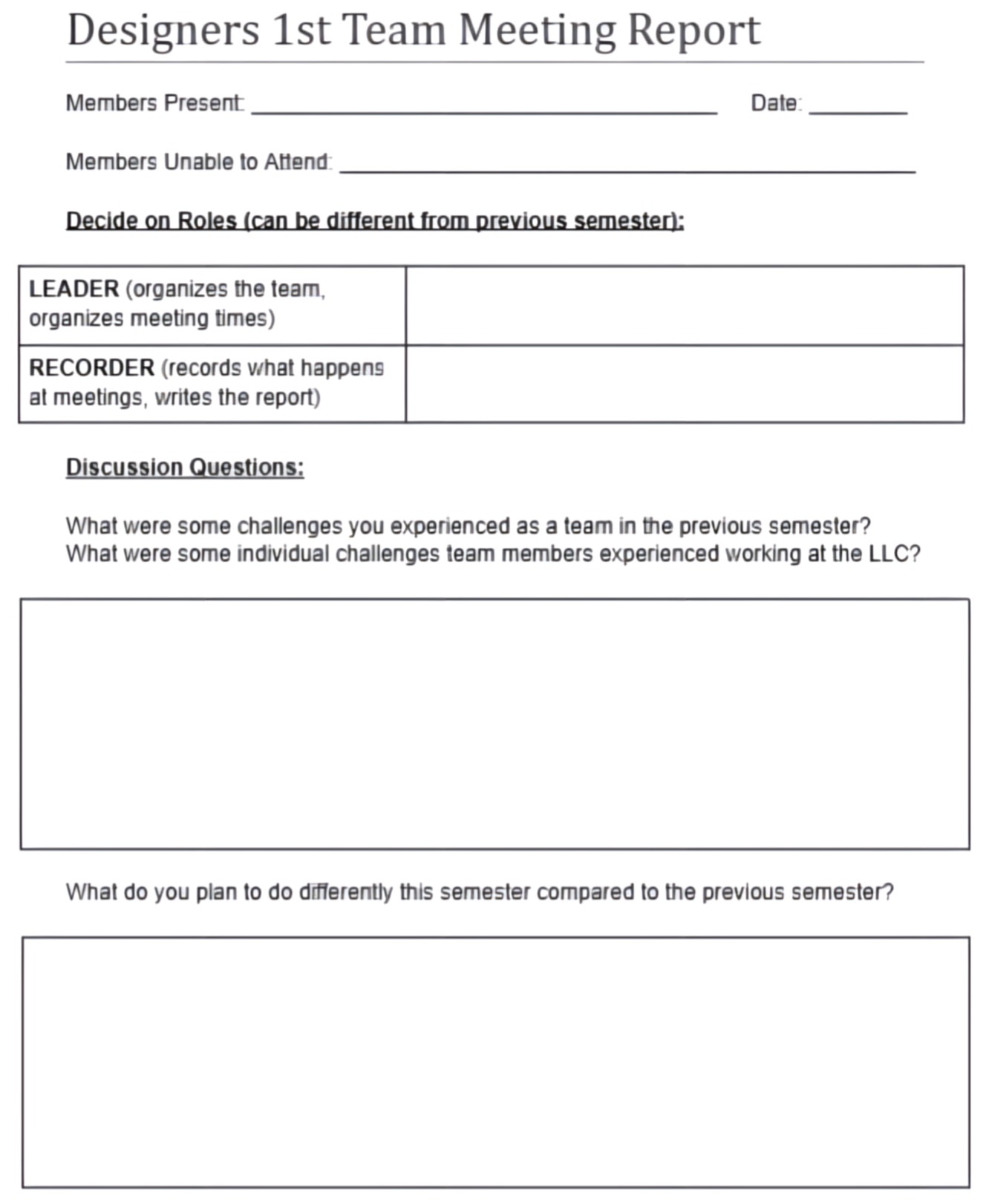
Such tools can enhance SASS members’ sense of competence and stability in their roles while also acting as a concrete artifact or element of “institutional memory” that can bridge generations of SASS users. Furthermore, these artifacts may also represent evidence that can help other SALC administrators to better ascertain the degree to which the SALC is operating in line with their mission statement, as well as helping them to identify areas which may require development in the future.
Conclusions
Through this qualitative study, we sought to deepen understanding of how self-access student staff (SASS) experience their participation in a SALC CoP, and what challenges emerge as they negotiate the challenges of this role. By examining the experiences of a small group of SASS members over the course of an academic year, we hope that this study can offer nuanced, process-oriented insights into affective, social, and developmental dimensions of SASS practice.
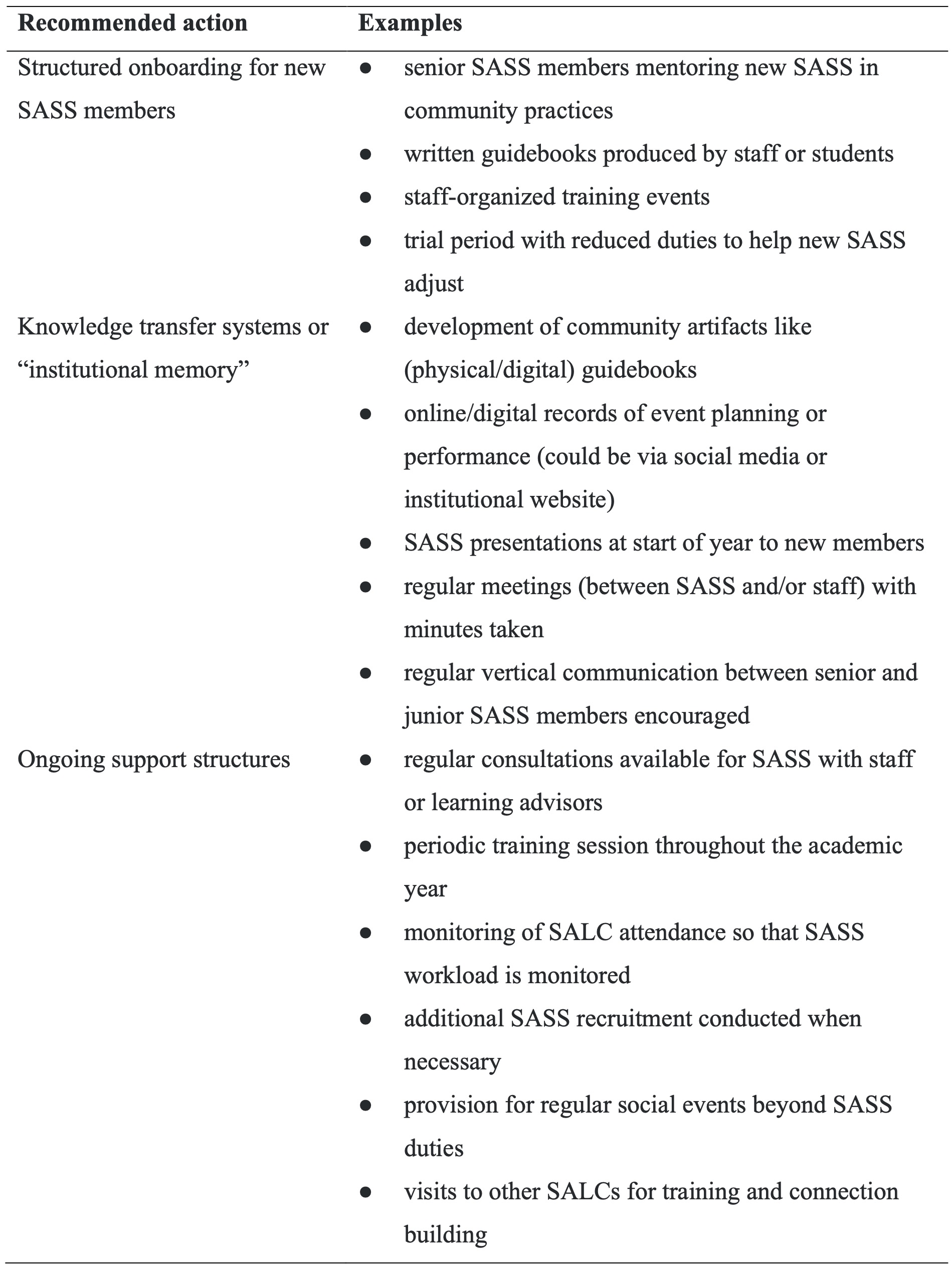
Our findings illustrate how participation as a SASS member is an ongoing process of identity development and skill building shaped by interactions across a CoP’s domain, community, and practice. Additionally, we highlight how the CoP’s boundaries are often blurry, and how peripheral stakeholders and external sources of support can greatly enrich its members. We also discovered that, while autonomy and responsibility were largely experienced as empowering, this also came with emotional strain and uncertainty. In this sense, the study adds to insights from existing SASS-focused studies by highlighting the less visible emotional labor involved in SASS roles and by illustrating how autonomy, when insufficiently scaffolded, can become a source of stress as well as growth. In Table 5, we summarize some takeaways based on the findings of this study that we hope could offer guidance for other SALC staff members aiming to support SASS development and wellbeing.
Table 5
Summary of Implications for SASS Support
Naturally, this study features several limitations that should be acknowledged. Our study is situated within a single institutional context and involves only English-major students, which may limit transferability to other more diverse SALCs. Furthermore, the dual role of faculty as researchers and our relative authority will have shaped participant responses to a certain extent, despite efforts to enhance trustworthiness.
Future research could build on this work through larger-scale cross-institutional studies or intervention-based research examining the impact of explicit leadership or facilitation training as examined in Hooper (2024) or the efficacy of scaffolding tools as advocated by Phelps (2025). Such work would further clarify how SALCs can support SASS members as active contributors within sustainable learning communities.
Notes on the Contributors
Daniel Hooper is an Associate Professor in the Faculty of Global Management at Chuo University. His research interests include teacher and learner wellbeing, reflective practice, self-access learning communities, and communities of practice.
Samuel Reid is an Associate Professor in the Department of English Communication at Tokyo Kasei University. He has taught at Japanese universities for over 20 years. His research interests include critical discourse analysis, critical thinking in a second language, and language advising.
Yuki Namiki is a Professor of English at Tokyo Kasei University. Her research focuses on 20th-century American literature, emphasizing urban space, family as affective locus, female empowerment, and intercultural competency within American studies.
Yusuke Kon (MA, Toyo University) is Assistant Lecturer in the Department of English Communication at Tokyo Kasei University. His research focuses on English phraseology and English Language education based on English Phraseology, emphasizing collocation, dictionary use.
References
Aston, G. (1993). The learner’s contribution to the self-access centre. ELT Journal, 47(3), 219–227. https://doi.org/10.1093/elt/47.3.219
Braun, V., & Clarke, V. (2006). Using thematic analysis in psychology. Qualitative Research in Psychology, 3(2), 77–101. https://doi.org/10.1191/1478088706qp063oa
Braun, V., & Clarke, V. (2022). Thematic analysis: A practical guide. Sage. https://doi.org/10.53841/bpsqmip.2022.1.33.46
Corso, M., Giacobbe, A., & Martini, A. (2009). Designing and managing business communities of practice. Journal of Knowledge Management, 13(3), 73–89. https://doi.org/10.1108/13673270910962888
Cooker, L. (2010). Some self-access principles. Studies in Self-Access Learning Journal, 1(1), 5–9. https://doi.org/10.37237/010102
Creswell, J. W. (2013). Research design: Qualitative, quantitative, and mixed methods approaches (4th Ed). SAGE Publications.
Fujishima, N. (2015). Training student workers in a social learning space. Studies in Self-Access Learning Journal, 6(4), 461–469. https://doi.org/10.37237/060413
Heigham, J. (2011). Self-access evolution: One university’s journey toward learner control. Studies in Self-Access Learning Journal, 2(2), 78–86. https://doi.org/10.37237/020204
Holec, H. (1980). Autonomy and foreign language learning. Pergamon Press.
Holec, H. (1985). On autonomy: Some elementary concepts. In P. Riley (Ed.), Discourse and learning (pp. 173–190). Longman.
Hooper, D. (2023). Exploring and supporting self-access language learning communities of practice: Developmental spaces in the liminal [Unpublished doctoral thesis]. Nagoya University of Foreign Studies. https://nufs-nuas.repo.nii.ac.jp/record/1814/files/(O7)Hooper_%E5%8D%9A%E5%A3%AB%E8%AB%96%E6%96%87%E5%85%A8%E6%96%87.pdf
Hooper, D. (2024). Integrating scientific and everyday concepts: Student leadership in a language learning community. Studies in Self-Access Learning Journal, 15(3), 366–392. https://doi.org/10.37237/150304
Hooper, D. (2025). Students’ narrative journeys in learning communities: Mapping landscapes of practice. Candlin & Mynard. https://doi.org/10.47908/36
Hooper, D., & Namiki, Y. (2025). Reviving the REAL Room: Integrating stakeholder voices in self-access center development. JASAL Journal, 6(1), 29–46. https://jasalorg.com/wp-content/uploads/2025/07/reviving-the-real-room-integrating-stakeholder-voices-in-self-access-center-development-1.pdf
Jensen, D. (2008). Credibility. In L. M. Given (Ed.), The Sage encyclopedia of qualitative research methods (Vols. 1& 2) (pp. 138–139). Sage.
Malcolm, D. (2011). Learner involvement at Arabian Gulf University Self-Access Centre. Studies in Self-Access Learning Journal, 2(2), 68–77. https://doi.org/10.37237/020203
Moll, L. C., Amanti, C., Neff, D., & Gonzalez, N. (1992). Funds of knowledge for teaching: Using a qualitative approach to connect homes and classrooms. Theory into Practice, 31(2), 132–141. https://doi.org/10.1080/00405849209543534
Moore, A. R., & Tachibana, M. (2015). Effective training for SALC student staff: Principles from experience. Studies in Self-Access Learning Journal, 6(4), 444–460. https://doi.org/10.37237/060412
Murphey, T., & Arao, H. (2001). Reported belief changes through near-peer role modelling. TESL-EJ, 5(3). https://www.tesl-ej.org/wordpress/issues/volume5/ej19/ej19a1/
Murray, G., & Fujishima, N. (2016). Social spaces for language learning: Stories from the L-café. Palgrave Macmillan. https://doi.org/10.1007/978-1-137-53010-3
Mynard, J., Burke, M., Hooper, D., Kushida, B., Lyon, P., Sampson, R., & Taw, P. (2020). Dynamics of a social language learning community: Beliefs, membership and identity. Multilingual Matters. https://doi.org/10.2307/jj.22730653
Mynard, J. (2022). Reimagining the self-access centre as a place to thrive. In J. Mynard & S. J. Shelton-Strong (Eds.), Autonomy support beyond the language learning classroom: A self-determination theory perspective (pp. 224–241). Multilingual Matters. https://doi.org/10.2307/jj.22679762.17
Mynard, J., & Shelton-Strong, S. J. (2022). Autonomy support beyond the language learning classroom: A self-determination theory perspective. Multilingual Matters. https://doi.org/10.21832/9781788929059
Noguchi, J. (2015). “I’m a SALCer”: Influences of identity on fear of making mistakes. Studies in Self-Access Learning Journal, 6(2), 163–175. https://doi.org/10.37237/060202
Phelps, C. (2025). Pulling back the curtain in self-access: Stories of student staff member motivation. Candlin & Mynard. https://doi.org/10.47908/39
Proudfoot, K. (2023). Inductive/deductive hybrid thematic analysis in mixed methods research. Journal of Mixed Methods Research, 17(3), 308–326. https://doi.org/10.1177/15586898221126816
Ryan, R. M., & Deci, E. L. (2017). Self-determination theory: Basic psychological needs in motivation, development, and wellness. Guilford. https://doi.org/10.1521/978.14625/28806
Suzuki, K., & Hooper, D. (2024). Analyzing self-access anxiety through the eyes of students, JASAL Journal, 5(1), 4–27. https://jasalorg.com/analyzing-self-access-anxiety-through-the-eyes-of-students/
Tassinari, M. G. (2017). Encouraging autonomy through a community of practice: The role of a self-access centre. Studies in Self-Access Learning Journal, 8(2), 157–168. https://doi.org/10.37237/080208
Tavory, I., & Timmermans, S. (2014). Abductive analysis: Theorizing qualitative research. The University of Chicago Press. https://doi.org/10.7208/chicago/9780226180458.001.0001
Wenger, E. (1998). Communities of practice: Learning, meaning, and identity. Cambridge University Press. https://doi.org/10.1017/CBO9780511803932
Wenger, E. (2010). Communities of practice and social learning systems: The career of a concept. In C. Blackmore (Ed.), Social learning systems and communities of practice (pp. 179–198). Springer. https://doi.org/10.1007/978-1-84996-133-2_11
Wenger, E., McDermott, R., & Snyder, W. M. (2002). Cultivating communities of practice: A guide to managing knowledge. Harvard Business School Press.
Wenger-Trayner, E., & Wenger-Trayner, B. (2015). Communities of practice: A brief introduction. https://www.wenger-trayner.com/introduction-to-communities-of-practice/
Yamaguchi, A. (2011). Fostering learner autonomy as agency: An analysis of narratives of a student staff member working at a self-access learning centre. Studies in Self-Access Learning Journal, 2(4), 268–280. https://doi.org/10.37237/020404
Appendix A
Interview 1 Protocol
1. ウォームアップ
新学期のスタートはどうすごしていますか?春休みは楽しく過ごせましたか?
REAL ルーム でのあなたの一日の過ごし方を、簡単に教えてもらえますか?
2. 実践共同体(CoP)の特徴:ドメイン(領域)
【導入】「では、なぜあなたがREALルームで活動しているかについて話しましょう。」
主な質問:
- あなたにとって、REALルームでの目的は何ですか?
- REALルームと、TKU の通常の英語の授業とを比べるとどうですか
- REALルームに来る典型的な人のイメージを教えてください。
3. 実践共同体(CoP)の特徴:コミュニティ(共同体)
【導入】「次に、REALルームにいる他の人たちについて話しましょう。」
主な質問:
- REALルームのスタッフの他のメンバーに初めて会った時、どう思いましたか?時間が経つ中で関係性に変化はありましたか?
- あなたは普段、REALルームで誰とよく関わっていますか?毎回同じ人ですか?どのように関わっていますか?
- REALルーム に、あなたが尊敬していたり、助けてくれる人はいますか?逆に、あなたが助けている人はいますか?
任意の質問:
- あなたはREALルームのスタッフを「コミュニティ」として見ていますか?それはなぜですか?
- REALルームの中で、あなたにとって一番親しい人たちは誰ですか?その人たちとの共通点は何ですか?
- 今年になって、その親しいグループに新しいメンバーが加わりましたか?そのきっかけは何でしたか?
4. 実践共同体(CoP)の特徴:実践(プラクティス)
【導入】「では、REAL ルーム での活動の中での課題について話しましょう。」
主な質問:
- REALルーム で困ったことや問題に直面したことはありますか?
- REALルーム の一番の強み、または弱点は何だと思いますか?
任意の質問:
- これらの問題や課題に対して、何か対応はされましたか?どのように?
- REALルーム をもっと良くするためのアイディアはありますか?
5. リーダーシップの継承
【導入】「それでは、あなたの最初の REALルーム スタッフとしての今学期について話しましょう。」
主な質問:
- どのようにして REALルーム のスタッフになったのですか?その時の気持ちは?
- 前学期におけるスタッフとしての最初の一か月を教えてください。
- この役割で、困ったことや不安なことはありましたか?どんなことですか?
- もし時間を戻せるなら、どんな準備をしておきたかったですか?どんなスキルを身につけておきたかったですか?
- 新しい役割で役に立ったサポートは何でしたか?今後、どのような追加のサポートがあると役に立ちそうですか?
- 来年、新しいスタッフを REALルーム に迎えるとしたら、どのように準備やサポートをしてあげたいですか?
- REAL ルーム のスタッフとしての最初の学期をたとえるなら、どんな比喩が浮かびますか?
6. リーダーシップの役割
【導入】「では、リーダーシップ全般について話してみましょう。」
主な質問:
- 効果的なリーダーとは、どのような人だと思いますか?
- 今までに良いリーダーだと思った人に出会ったことはありますか?その人のどのような部分がそう(効果的)思わせたのでしょうか?
- 以下の言葉の中で、REALルーム におけるリーダー像として最も近いと思うものはどれですか?もし他に思い浮かぶ言葉があれば、それも教えてください。選んだ理由も説明してください。
- 元気づける人(energizer)
- カウンセラー(counsellor)
- コーチ(coach)
- 教師(teacher)
- まとめ役(organizer)
- お姉さん的存在(big sister)
- 今年の REAL ルーム におけるあなたの目標は何ですか?その目標達成のためにどのようなことをしようと考えていますか?
- REAL ルーム のスタッフとしての経験は、将来あなたにとってどのように役立つと思いますか?
Appendix B
Interview 2 Protocol
1. ウォームアップ
- この数か月は、REALルームも含めてどんな様子でしたか?
- 最近のREALルームでの一日で、あなたの「今の経験」をよく表している日を教えてください。
2. REALルームの目的・理解の変化(ドメイン)
- 第1回インタビューの時と比べて、REALルームの目的の捉え方に変化はありますか?
- REALルームを利用する学生のタイプに変化はありましたか?
- 今、REALルームが特にうまくいっていると思う点は何ですか?
- 新しく見えてきたニーズや目標はありますか?
3. コミュニティと関係性
- 他のSASSメンバーとの関係は、前回からどのように変化しましたか?
- REALルームのコミュニティへの「所属感」は強くなりましたか?弱くなりましたか?理由は?
- 最近、あなたがサポートしたり、メンターのような役割をした人はいますか?
- あなたを支えてくれたり、ロールモデルになっている人はいますか?
- 今学期で、「コミュニティの一員だ」と強く感じた瞬間はありますか?
4. 実践・役割の発達
- 今、REALルームの仕事で以前より自信を持ってできるようになったことは何ですか?
- この学期、新しく担当するようになった仕事はありますか?
- 仕事を進めるうえで役に立っている工夫やルーティンはありますか?
- 最近、「REALルームに貢献できた」と感じた出来事はありますか?
5. 課題・困りごととサポートのニーズ
- 前回挙げていた課題は、改善しましたか?変わりませんか?悪化しましたか?
- この学期、新しく発生した困りごとはありますか?
- どんなサポートが一番役に立ちましたか?
- 今後、どのような追加サポートがあると助かりますか?
- 情報共有やトレーニング、コミュニケーションで気になる点はありますか?
6. アイデンティティとリーダーシップ
- 第1回インタビュー以降、SASSメンバーとしてどのように成長したと感じますか?
- 自信やアイデンティティに変化はありましたか?具体的には?
- 公式・非公式を問わず、リーダーシップを取る場面はありましたか?
- REALルームでの経験から、リーダーについて何を学びましたか?
- 新しいスタッフが今日入ってきたとしたら、どんなアドバイスをしますか?
7. まとめ
- 今年度の残りの期間、あなたの目標は何ですか?
- 今学期を比喩で表すと、どんなイメージが浮かびますか?
- 今日のインタビューで話し足りないことはありますか?