Mohammad R. Alnufaie, Jubail English Language & Preparatory Year Institute, Royal Commission for Jubail and Yanbu, Jubail Industrial City, Saudi Arabia. https://orcid.org/0000-0003-0646-8539
Alnufaie, M. R. (2026). Repositioning individual habitus and learner strategies in language learning and acquisition: The SRIG model. Studies in Self-Access Learning Journal, 17(2), 161–183. https://doi.org/10.37237/170202
Download paginated PDF version
Abstract
This paper proposes the Semantic Reception and Innate Generation (SRIG) model as a complementary explanatory lens for understanding second-language learning and acquisition in self-access and advising contexts. Rather than presenting a framework prescribing new directions for self-access practices, the model seeks to clarify why established practices such as reflective dialogue, personalised learning pathways, autonomy support, and learner-centred strategy development may work differently for different learners. Instead of focusing on a single explanatory factor, the model emphasises the interaction of three interconnected dimensions. The first is a semantic reception, through which learners interpret explicit and implicit meaningful input via multiple communicative channels within socially, culturally, and affectively mediated contexts. The second is an innate generation, in which an oriented generative capacity enables learners to produce infinitely novel utterances, guided primarily by meaning rather than explicit rules. The third is an overarching dimension of individual “habitus” (Bourdieu, 1990), encompassing the learner’s accumulated social, cultural, and symbolic capital, which shapes the selection of input, the construction of internal semantic representations, and the development of personalised, self-discovered learning strategies. The paper finally discusses implications for self-access learning, learner autonomy, strategy-based instruction, and future empirical research.
Keywords: semantic input, innate generation, habitus, learner strategies, self-directed learning, advising in language learning
What is the process of second language learning and acquisition? This question remains important for second language acquisition (SLA) and is especially relevant to self-access language learning (SALL), where learners are expected to make choices, interpret resources, seek support, and build personal learning ecologies beyond the formal classroom. Even after decades of intensive inquiry, no single, unified account of second language learning and acquisition has emerged. A nativist view (Chomsky, 1965; White, 2003), an interactionist view (Krashen, 1982; Lichtman & VanPatten, 2021), a sociocultural view (Lantolf & Thorne, 2006; Vygotsky, 1978), and strategy-based, affective, and autonomy-oriented perspectives each illuminate important aspects of this process. However, they do not always explain how meaningful input, internal representation, generative production, and learner-specific histories interact within a single developmental account. Research on self-access learning (Benson, 2011; Kato, 2026; Mynard, 2022; Shelton-Strong, 2025; Tassinari, 2026), learner strategies (Gu, 2012; Oxford, 2016), and affective factors (Dewaele & MacIntyre, 2014; Dörnyei, 2005) has increasingly emphasised the importance of individual differences in explaining why learners exposed to similar learning opportunities often follow different developmental pathways and achieve different outcomes.
To fill that gap, the Semantic Reception and Innate Generation (SRIG) model is proposed here as a heuristic synthesis of familiar concerns rather than a replacement for existing theories or practices. It integrates three dimensions through a triadic framework: multichannel semantic inputs, meaning-directed generative outputs, and an overarching individual habitus layer which accounts for learner-specific variation in learning and acquisition pathways. This conceptualisation was informed by engagement with learner strategy research (including my translation of Language Learner Strategies by Professor Michael Grenfell — my PhD supervisor — and Vee Harris, 2017) and by the need to explain why strategies are not simply transferred from instruction to learner in a uniform way.
Pierre Bourdieu (1990) describes habitus as a system of durable and transferable dispositions that individuals acquire through their social and cultural experiences. They influence how people perceive, interpret, think about, and respond to the world, often unconsciously. In simple terms, habitus refers to the internalised set of tendencies, perceptions, values, and behavioural patterns formed through a person’s upbringing, social environment, education, culture, and lived experiences. Within language acquisition/learning, the habitus might explain why learners exposed to similar instructional environments may nevertheless develop different learning strategies, motivations, interpretations, and outcomes. Each learner approaches language through a unique combination of social, cultural, symbolic, and experiential capital accumulated over time.
Many of the practices associated with the SRIG model (reflective and learner-centred practices) are already established features of contemporary self-access learning and advising (Kato, 2026; Mynard, 2022; Shelton-Strong, 2025; Tassinari, 2026). Modern self-access centres (SACs) have evolved into “supportive, meaningful, inclusive, and person-centred social learning environments that intentionally and actively promote language learner autonomy” (Mynard, 2023, p. 21). The SRIG model does not introduce these practices; rather, it provides a complementary framework for explaining why they may be effective from a language learning and acquisition perspective.
Theoretical Background and Positioning
The SRIG model is not a radical departure from its predecessors; rather, it is a critical synthesis that reconfigures relationships among existing proposals and adds dimensions they have not fully addressed. This section reviews the three most influential paradigms and identifies the explanatory gaps the current model seeks to address.
The Nativist Tradition
Chomsky’s (1965) proposal of a Language Acquisition Device (LAD) grounded in Universal Grammar (UG) remains the most influential statement of the nativist position: children are born with an innate language capacity that allows them to acquire language rapidly, even when the linguistic input they receive is incomplete or imperfect (the “poverty of the stimulus” argument). This position has been refined considerably by subsequent generativist work in SLA, such as White’s (2003) comprehensive review and Rothman and Slabakova’s (2018) defence of the generative approach. From the SRIG’s perspective, nativist theories place greater emphasis on syntactic structure than on semantic content. They view the language faculty as largely independent of input and therefore do not fully recognise the role of meaningful language experiences in activating and guiding language development.
The Input and Interaction Tradition
According to Krashen (1982, 2004), acquisition occurs when learners receive comprehensible input slightly above their current abilities (the i+1 formula). This was a significant advance because it highlighted the importance of meaning-bearing exposure and challenged behaviourist stimulus-response models. In their review of four decades of input-based research, Lichtman and VanPatten (2021) confirm that meaningful input remains necessary for acquisition. It appears, however, that the method of input delivery and the degree to which learners are cognitively and affectively engaged significantly influence the effects of acquisition. Individual differences are also not adequately accounted for in Krashen’s model: identical input in identical contexts can yield divergent outcomes for two students.
The Sociocultural Tradition
A sociocultural SLA scholar, Vygotsky (1978) and those who followed him — Lantolf and Thorne (2006) in particular — place language development within social interaction, emphasising signs, tools, and more capable others as mediators of the Zone of Proximal Development (ZPD). This is further enhanced by Swain’s (2000) Output Hypothesis, which proposes that productive language use itself is an acquisition site. In this tradition, we find the most detailed account of how language develops through social scaffolding. However, it tends to place less emphasis on internal generative mechanisms and on the role of individual capital in shaping the social interactions which learners access or benefit from.
Self-Access Language Learning and Learner Autonomy
SALL is a mature and multifaceted field that extends beyond independent study with resources in a physical centre. Contemporary accounts describe SALL as supported learning beyond the classroom, involving resources, advising, learning communities, social spaces, physical and digital environments, and learner development (Mynard, 2022, 2024; Mynard & Shelton-Strong, 2022; Tassinari, 2026). Tassinari (2026) conceptualises SALL as a learning ecosystem comprising learners, learning processes, environments, and support systems. Mynard (2024) likewise shows that contemporary SALL in Europe includes learner support, advising, learner-development courses, social learning opportunities, and self-evaluation.
Within this tradition, learners are viewed as active agents who construct their own learning pathways. Benson (2011) regards self-directed learning as both a process and a goal; Gu (2012) and Oxford (2016) emphasise the individual and self-regulatory nature of learning strategies; and Lai et al. (2022) show how learners develop highly personalised strategy repertoires shaped by their experiences, preferences, environments, and available resources. Grenfell and Harris (2017) further demonstrate that strategy use is shaped by learners’ social and cultural backgrounds, which Bourdieu (1990) terms habitus.
Contemporary self-access and advising research also emphasises learners’ social, affective, and psychological development. Advising in Language Learning (ALL) promotes autonomy, self-awareness, and self-direction through reflective dialogue (Kato, 2026). Central to this approach is Intentional Reflective Dialogue (IRD), through which advisors adapt their support to learners’ levels of awareness and facilitate deeper reflection (Kato, 2026). Similarly, self-determination theory (SDT) has become increasingly influential in SALL. Self-access environments can support learners’ needs for autonomy, competence, and relatedness (Mynard & Shelton-Strong, 2022), while autonomy-supportive advising contributes to personal growth, meaning, emotional connection, and sustained engagement with language learning (Mynard, 2022; Shelton-Strong, 2025).
Together, this literature shows that learner agency, reflection, advising, personalised learning, and strategy development are already central features of contemporary self-access practice. The SRIG model offers a complementary explanation of how learner individuality may shape semantic reception, internal representation, strategy emergence, and language production. In particular, it aligns with Grenfell and Harris (2017) in suggesting that habitus may help explain why learners exposed to similar opportunities often develop different strategies, motivations, interpretations, and outcomes.
What remains less clearly explained is how individual strategies emerge and how they connect the processing of meaningful input to language production. The SRIG model addresses this issue through a framework linking semantic reception, internal representation, generative production, and learner variation. Its contribution lies not in advocating autonomy or reflection, or in advising, but in proposing the Internal Semantic Representation (ISR) as a bridge between reception and generation, distinguishing among multiple channels of meaning, and treating habitus as a structuring influence on attention, interpretation, strategy development, and language use. These propositions remain theoretical and require empirical validation, but they provide a basis for future research into how learners develop strategies, construct meaning, and engage differently with the same learning opportunities.
Stage One: Semantic Reception
The first stage of the SRIG model focuses on the input that learners receive and how they process it. Acquisition-relevant input is not limited to spoken or written language but includes all meaningful signals that learners can perceive and interpret. Accordingly, the model proposes five semantic input channels ranging from explicit-literal meaning to deep-figurative meaning (see Figure 1). Drawing on multimodal learning theories (Plass & Jones, 2005; Sundqvist et al., 2021) and research on online socialisation (Thorne et al., 2009), the model views language acquisition as occurring through multiple channels of making meaning. At the deepest end of this continuum is the meta-semantic channel, which involves understanding the “meaning behind the meaning” in both literal and figurative communication. Rather than replacing constructs such as pragmatics, implicature, discourse competence, or socio-pragmatic interpretation, the meta-semantic channel refers to learners’ ability to integrate these dimensions into a deeper understanding of indirect, symbolic, affective, and culturally embedded meanings.
Figure 1
The Five Channels of Semantic Input in Stage One
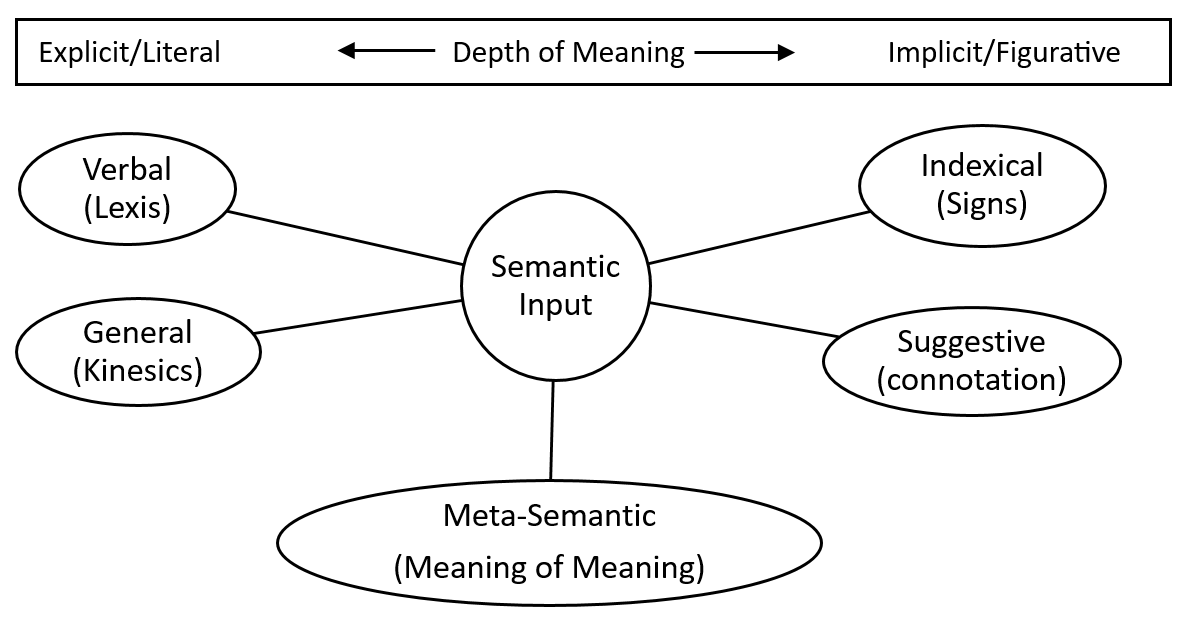
Meaning is not limited to the literal definitions of words and expressions. Skilled language users also interpret implications, cultural associations, and indirect communicative meanings. Learners who develop sensitivity to these deeper layers of meaning may employ more sophisticated acquisition and learning strategies than those who focus only on surface meanings. The model therefore proposes that acquisition depth is influenced by the diversity of input channels: the more channels through which meaning is processed, the richer and more durable the resulting acquisition and learning representation may become.
The Bridge: Internal Semantic Representation (ISR)
A distinctive feature of the SRIG model is its explanation of how Stage One (semantic reception) connects to Stage Two (language generation). This connection is provided by the ISR, which develops as learners receive and process multi-channel semantic input. Although the ISR shares similarities with constructs found in interlanguage theory, emergentist approaches, usage-based theory, and schema theory, it serves a different role within SRIG. Rather than functioning simply as a grammar system, a construction inventory, a probabilistic network, or a knowledge schema, the ISR serves as a semantic-generative bridge linking meaning reception to meaning-oriented production while remaining shaped by the learner’s habitus.
As shown in Figure 2, the ISR consists of three components: (a) semantic networks that connect meanings, (b) inductively abstracted rules that emerge from experience, and (c) stored constructional templates that support language generation. As the ISR develops, it gradually provides the generative system with sufficient resources to produce novel, meaning-directed language.
Figure 2
The bridge between Stage One (reception) and Stage Two (generation)
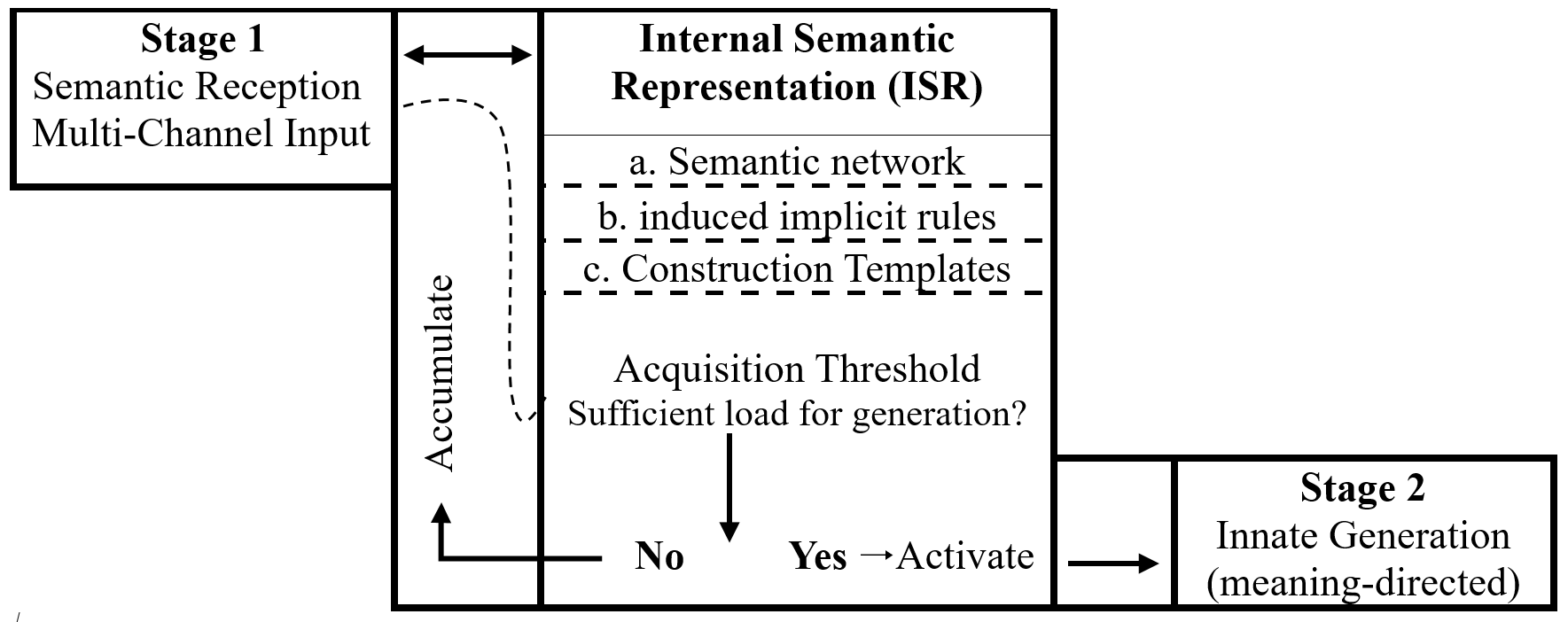
Within the SRIG model, the “vocabulary spurt” or “language burst” observed in language development (Ganger & Brent, 2004; McMurray, 2007) can be interpreted as the point at which the ISR reaches an acquisitional threshold for spontaneous language generation. This idea resembles Cummins’ (1979) Threshold Hypothesis, although the two concepts differ. Whereas Cummins’ threshold concerns the level of proficiency needed to gain cognitive and academic benefits from bilingualism, the SRIG threshold refers to the learner’s internal semantic density, network connectivity, and generative readiness. The model therefore proposes that sudden increases in language production are not solely the result of biological maturation or general cognitive development. Rather, they occur when the ISR has accumulated sufficient semantic richness, interconnectedness, and constructional resources to support productive language use. In this view, language emergence results from the interaction between innate generative capacity and an internally enriched representational system.
Cross-cultural observations may illustrate this process. In some Arabic-speaking religious and rhetorical traditions, children are exposed from an early age to dense and highly structured linguistic input through Qur’anic recitation, Prophetic traditions, poetry, and public speech. According to the SRIG model, such experiences do more than support memorisation; they may accelerate ISR development by providing semantically, rhythmically, and structurally rich input. Consequently, stored constructional templates can serve as developmental scaffolds that support later spontaneous and creative language use.
Stage Two: Innate Generation
Stage One concerns reception, whereas Stage Two concerns language production. At this stage, the SRIG model aligns with the nativist tradition but differs in one important respect: the generative faculty does not operate independently of meaning. Instead, it draws on the learner’s ISR to produce new utterances, with meaning typically guiding the construction of linguistic form. Through the habitus layer, a shared human generative capacity can produce individually shaped language use. From this perspective, early learner errors may arise more often from semantic-pragmatic mismatches than from structural-syntactic deficiencies, suggesting that learners can sometimes communicate intended meanings before achieving full grammatical control.
Stage Two is based on two principles. First, language generation is meaning-driven rather than structure-driven. Learners typically begin with a communicative intention, and the generative faculty then constructs an appropriate linguistic form. In this view, grammar serves meaning rather than governing it. This principle is consistent with the Nazm theory of Shaikh Abd al-Qahir Al-Jurjānī, who argued that linguistic excellence lies in the arrangement of meanings that determines the arrangement of words (Abu Musa, 1998). Al-Jurjānī (1992, pp. 48–55) maintained that words do not convey meaning independently; their meaning arises through their semantic relationships, and the arrangement of words follows the arrangement of meanings in the mind. Abu Musa (1998, p. 39) similarly argues that the most significant error is not grammatical but semantic—when the intended meaning differs from the expressed meaning.
Second, the generative faculty is habitus-sensitive rather than habitus-neutral. As a result, learners’ language production varies stylistically, lexically, pragmatically, and rhetorically because their ISRs reflect different habitus configurations, social experiences, and learning histories.
The Habitus Layer: Accounting for Individual Difference
The concept of habitus, introduced by Pierre Bourdieu (1990), refers to the durable dispositions that individuals acquire through socialisation. These dispositions—including ways of thinking, preferences, linguistic tendencies, and social orientations—shape how people perceive, interpret, and act in the world. Within Bourdieu’s framework, three forms of capital are particularly relevant to language learning: social capital, cultural capital, and symbolic capital (see Table 1).
Table 1.
Forms of Capital and Their Functions in Language Acquisition (after Bourdieu, 1990)
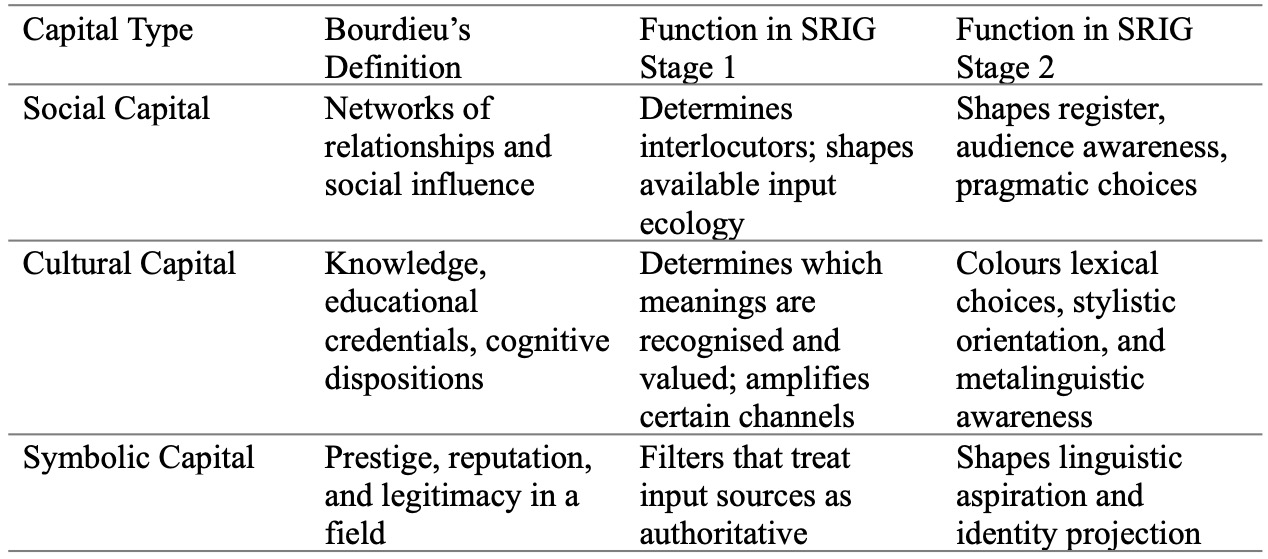
Social capital influences who provides language input, the kinds of interactions learners experience, and the richness of their linguistic environment. For example, a learner surrounded by educated multilingual speakers may receive richer semantic input than a learner with limited opportunities for interaction. During production, social networks also shape politeness norms, speech styles, audience expectations, and discourse habits. Cultural capital influences what learners notice and consider meaningful. For example, learners with extensive literary exposure may recognise irony, symbolism, intertextual references, and indirect meanings more readily than others. It also affects vocabulary choice, rhetorical style, and discourse organisation. Symbolic capital acts as a filter that shapes which accents, language varieties, and speakers are viewed as legitimate or prestigious. For example, a learner may imitate BBC English while dismissing non-prestigious local varieties. It also influences the type of speaker learners aspire to become, such as academic, native-like, or religiously authoritative speakers.
In the SRIG model, habitus is not a peripheral factor but the environment within which both acquisition stages operate (see Figure 4 below). It performs three main functions. First, it shapes how learners interpret input: they interpret input through their experiences, interests, emotions, and social positioning. Second, it influences strategic behaviour: learners often discover, refine, recycle, and adapt their own learning strategies rather than simply applying those taught by others. Third, it individualises language production, as learners express meaning through personally accumulated patterns of style, confidence, risk-taking, and communicative purpose.
The habitus layer helps explain individual differences without relying solely on isolated variables such as aptitude, motivation, personality, or learning style. Instead, these factors can be understood as dimensions of habitus shaped by family background, schooling, social interaction, cultural experience, emotional memory, and prior learning. However, habitus should not be viewed as deterministic. Rather, it functions as a probabilistic framework that influences attention, interpretation, strategic preferences, motivation, and communication. In this way, it helps connect sociocultural, cognitive, affective, and strategy-based accounts of language learning and explains why the same instructional experience may produce different outcomes for different learners.
This perspective builds on earlier work applying Bourdieu’s ideas to language learning. Darvin and Norton (2015) argue that learners invest in language when they believe it can provide access to desired identities, opportunities, relationships, or forms of capital. Block (2012) similarly advocates a stronger sociological perspective in SLA, while Shin (2014) shows that learners exposed to similar linguistic environments may nevertheless follow different acquisition pathways because they bring different habitus configurations to those environments. More direct support comes from research on strategy. Grenfell and Harris (2017) demonstrate that habitus influences not only strategy choice but also how learners accept, internalise, or resist strategy instruction. Consistent with this finding, the SRIG model treats habitus not merely as a sociological background factor but as a structural influence that shapes semantic reception, ISR development, self-discovered strategies, and language production.
Self-Discovered Learner Strategies
One of the main contributions of the SRIG model is its reinterpretation of learner strategies. Unlike traditional strategy research, which has largely focused on identifying, classifying, and teaching strategies (Oxford, 1990, 2016), SRIG seeks to explain where strategies come from and how they develop within the language acquisition process. This does not imply that contemporary self-access or advising practices ignore learner self-discovery. Rather, current approaches already build on learners’ goals, experiences, emotions, motivations, and existing practices. The SRIG model complements these approaches by explaining how learners come to recognise, develop, and refine effective strategies.
According to SRIG, many effective strategies emerge through self-discovery rather than instruction alone. They develop through repeated cycles of experience, reflection, adaptation, and refinement within learners’ habitus-specific contexts (Grenfell & Harris, 2017). As learners receive input, build their ISR, and engage in language production, they gradually notice recurring patterns in how they learn most effectively. Before learners consciously recognise such patterns, their behaviour remains largely exploratory and based on trial and error. A strategy emerges when learners become aware of a useful learning behaviour and can intentionally apply it across different situations. SRIG distinguishes this metacognitive threshold for strategy formation from the acquisitional threshold that enables Stage Two language production.
Once formed, self-discovered strategies operate throughout the acquisition system. They help strengthen ISR development, improve semantic reception, and support language generation. For example, two learners may attend the same conversation lounge but develop different strategies. One learner may discover that repeating useful expressions improves fluency, while another, whose educational background emphasises accuracy and teacher correction, may prefer to prepare in writing before speaking. In advising sessions, reflective dialogue helps learners recognise, understand, and adapt such strategies rather than follow a single prescribed approach. From the SRIG perspective, this illustrates how habitus influences the emergence, refinement, or rejection of strategies.
Self-discovered strategies develop gradually rather than appearing fully formed. As shown in Figure 3 below, learner strategies follow a recurring cycle of discovery, refinement, transfer to new contexts, and eventual integration into the learner’s repertoire—or replacement by more effective alternatives. Because habitus shapes both the types of strategies that emerge and their developmental pathways, self-discovered strategies are continually adapted and reconstructed across contexts. Structured support can help learners articulate, evaluate, and refine their developing strategies (Benson, 2011; Gu, 2012).
Discovery-oriented strategy development is not unique to SRIG. It is already central to contemporary SACs and advising. As Kato (2026) explains, advisors use Intentional Reflective Dialogue (IRD) to help learners explore, articulate, and refine their learning patterns while developing greater self-awareness. Similarly, structured awareness-raising practices help learners understand themselves and their learning through reflection on their interests, experiences, preferences, and existing practices (Mynard & Shelton-Strong, 2022). The SRIG model, therefore, does not propose a new advising methodology. Rather, it suggests that strategies emerge through the interaction of language experience, ISR development, reflection, affective significance, and habitus-sensitive interpretation.
Figure 3.
The Developmental Lifecycle of Self-Discovered Strategies
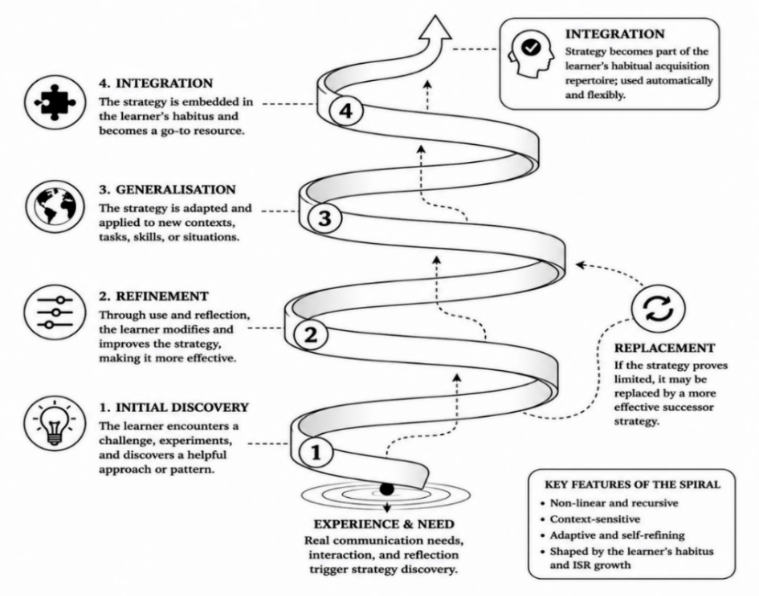
In this view, direct instruction alone cannot fully explain the development of highly personalised and transferable learner strategies. Such strategies appear to emerge through learners’ habitus-shaped experiences and reflective engagement with language.
The Integrated SRIG Model
A fully integrated SRIG model can now be displayed (Figure 4). Its architecture has two primary processing levels: Semantic Reception and Innate Generation. Overarching both levels is the habitus layer: the total acquisitional environment shaped by the learner’s accumulated social, cultural, and symbolic capital. Connecting the two levels is the ISR, which functions as a semantic-generative bridge mediating between reception and production. In addition, the model includes an adaptive strategic layer consisting of self-discovered learner strategies that emerge recursively through interaction, reflection, and contextual adaptation. Embedded in the learner’s habitus, this strategic layer continuously evolves through recursive feedback loops when generative output re-enters and enriches the ISR.
Figure 4.
The Fully Integrated Semantic Reception and Innate Generation (SRIG) model
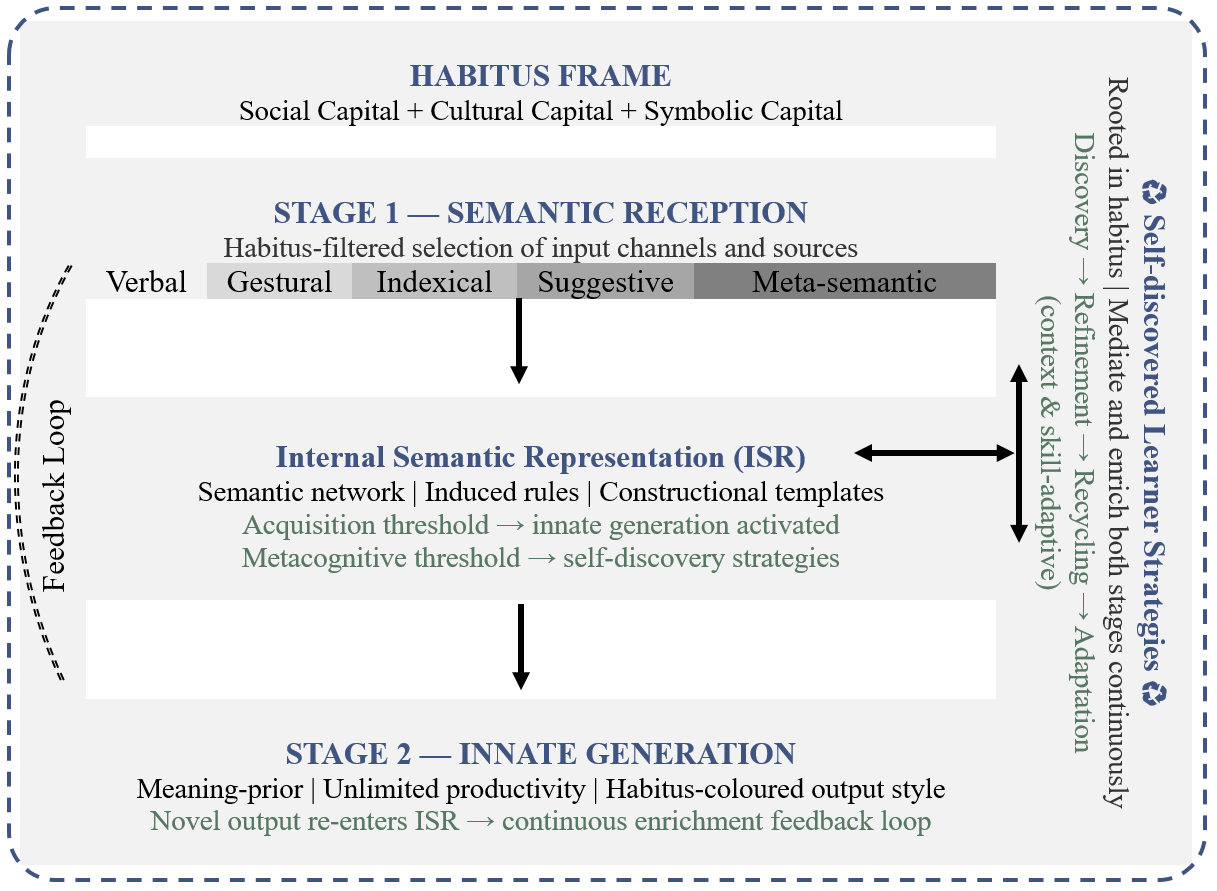
Five Testable Principles of the SRIG Model
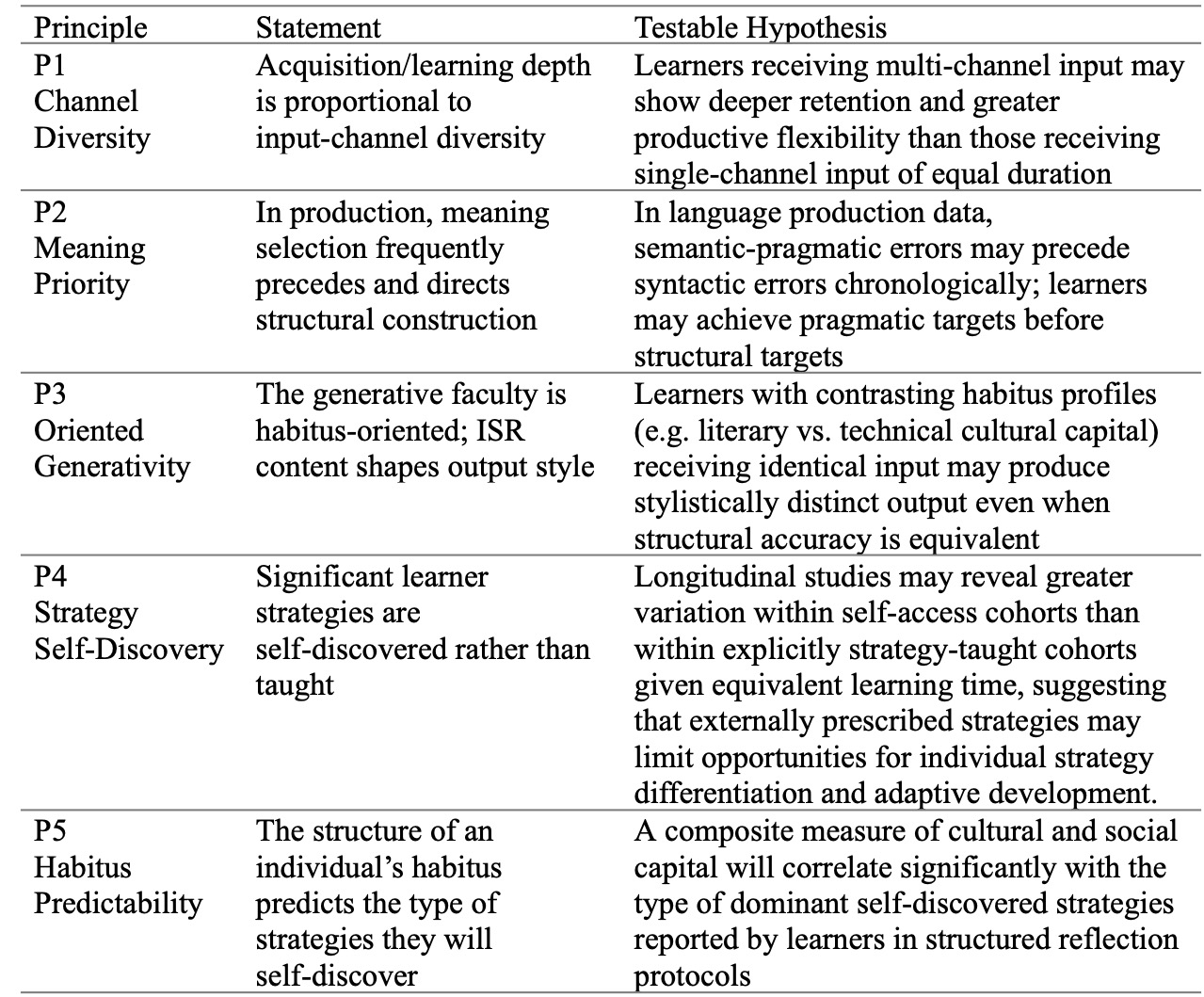
The SRIG model is defined by five empirically testable principles (see Table 2 below). Each of these principles yields a falsifiable hypothesis in accordance with Popper’s (1959) falsifiability criterion.
Table 2.
The Five Principles of the SRIG Model with Associated Testable Hypotheses
Implications for SALL and Strategy Facilitation
The SRIG model has direct implications for SALL, particularly for SAC design, learner advising, and Strategy-Based Instruction (SBI). The following implications illustrate how the SRIG model can be used as an interpretive framework for self-access practice. They suggest how the model may serve as a complementary interpretive lens for practitioners and researchers already engaged in these areas. Collectively, these implications support the alignment of existing self-access facilitation with the habitus-sensitive, meaning-rich processes of acquisition described in the model.
Ecological Design and Learner Advising
If multi-channel semantic input is required, then an effective SAC may benefit from providing not merely text-based or audio resources but also a rich environment of meaning-making opportunities: conversation lounges, multimodal digital environments, culturally varied authentic materials, and socially structured encounters that maximise both incidental and affective-emotional engagement. Thorne et al. (2009) provide empirical evidence for accelerated autonomous acquisition in context-rich, meaning-saturated environments. Environmental richness is, therefore, an important design criterion for SACs. Modern SACs already embody this principle through spaces that support diverse learning preferences, social interactions, and interest-based communities (Mynard, 2022; Mynard & Shelton-Strong, 2022).
Contemporary advising practice similarly reflects many of the principles highlighted by the SRIG model. As Kato (2026) explains, transformational advising incorporates Intentional Reflective Dialogue (IRD), where advisors tailor their strategies to each learner’s metacognitive awareness and learning paths. Shelton-Strong (2025) further demonstrates that autonomy-supportive advising contributes to the satisfaction of learners’ basic psychological needs and promotes personal growth, hope, meaning, and resilient engagement with language learning.
From the SRIG perspective, each learner’s ISR develops differently because it is shaped by a unique configuration of habitus, social experience, and accumulated language exposure. As a result, advising is unlikely to be well served by a one-size-fits-all approach. Instead, advisors may help learners explore their existing learning behaviours, identify dominant and underdeveloped input channels, reflect on emerging self-discovered strategies, and examine how these strategies might be adapted or transferred across contexts. Advising that begins with the learner’s perspective and facilitates the articulation and refinement of personally meaningful strategies aligns with the natural developmental trajectory of self-discovered strategies within the learner’s acquisitional system.
This interpretation is consistent with the advising literature that emphasises learners’ self-awareness (Benson, 2011; Kato, 2026), as well as with Lai et al.’s (2022) finding that successful self-directed learners employ highly individualised strategy repertoires. Because habitus shapes how learners interpret, value, and engage with language input, advisors should therefore focus on helping learners understand their evolving strategic repertoires and the conditions under which particular strategies become personally meaningful, effective, and transferable. In this sense, the contribution of SRIG is not to replace current advising practices but to provide a cognitive-acquisitional account of why learner-centred, reflective, and autonomy-supportive approaches may facilitate language learning and strategy development.
Rethinking Strategy-Based Instruction (SBI)
The SRIG model tries to reinterpret the conditions under which SBI may be most effective. It offers a cognitive-acquisitional explanation of how current self-access practices (Kato, 2026; Mynard, 2024; Mynard & Shelton-Strong, 2022; Shelton-Strong, 2025) may contribute to the emergence and refinement of learner strategies.
From the SRIG perspective, strategy instruction might be most effective when it interacts dynamically with learners’ emerging, self-discovered repertoires. Traditional SBI frameworks generally assume that providing learners with a taxonomy of “effective strategies” and teaching them to apply those strategies will improve acquisition outcomes. The SRIG model does not reject this assumption, but it suggests that strategy instruction could be more effective when it is combined with structured opportunities for self-discovery. Such opportunities may include guided journaling, reflective portfolios, peer discussions of learning practices, and advising conversations specifically designed to examine emerging strategic patterns. Many productive strategies emerge through habitus-shaped experience and self-directed experimentation rather than through direct transmission alone.
This position places the SRIG model in productive dialogue with conventional SBI approaches. Cohen and Macaro (2007) report that strategy training often produces positive outcomes, but it also produces considerable inconsistency across learner populations and instructional contexts. Grenfell and Harris (2017), whose work constitutes one of the most comprehensive recent accounts of SBI across diverse learner populations, similarly document this inconsistency and attribute it to the differential fit between pre-packaged strategy instruction and the individual learner’s habitus-driven acquisition trajectory. Their five-stage SBI cycle (awareness → modelling → practice → transfer → evaluation) preserves an important discovery element at its final stage. However, the SRIG model suggests that the cycle may be most productive when discovery precedes rather than follows formal strategy labelling. The awareness stage in their cycle focuses primarily on externally presented strategies, whereas the SRIG perspective highlights emerging self-discovered strategic tendencies that arise through meaningful engagement with language. In this view, strategy instruction is assumed to be most successful when it aligns with learners’ developing self-discovered strategies and becomes less effective when it conflicts with them.
As a result, SRIG-informed SBI shifts the emphasis from strategy transmission to strategy facilitation. This orientation is already reflected in contemporary self-access and advising literature (Kato, 2026; Mynard, 2024; Mynard & Shelton-Strong, 2022; Shelton-Strong, 2025). Instead of beginning with predefined strategy taxonomies, instruction starts by identifying learners’ existing strategies through structured reflection and meaningful task engagement. In this process, instructors and advisors help learners identify, name, extend, transfer, and refine strategies that already exist within their ISR and habitus. Explicit strategy awareness is therefore relocated to a retrospective phase. After engaging in a meaningful language activity, learners reflect on what they did, why they did it, and whether it was effective. Advisors or instructors then connect these reflections to broader strategic concepts. According to Grenfell and Harris (2017), post-task reflection promotes deeper integration of strategies than pre-task instruction, and this sequencing aligns closely with Oxford’s (2016) framework for self-regulation.
Affective-emotional context is equally important in this process. Dewaele and MacIntyre (2014) demonstrate that foreign language enjoyment positively predicts achievement, while MacIntyre et al. (2016) argue that positive psychology variables mediate the relationship between instruction and learning outcomes. The SRIG model incorporates this insight by proposing that affective-emotional conditions influence which strategies become reinforced within the ISR. Consequently, strategy discovery in environments characterised by enjoyment, low anxiety, learner autonomy, and psychological support is more likely to result in lasting integration than purely cognitive forms of strategy training. This interpretation is also consistent with research on learner flourishing, well-being, and autonomy-supportive learning environments from a Self-Determination Theory perspective (Mynard & Shelton-Strong, 2022; Shelton-Strong, 2025).
The SRIG proposes that strategies emerge, strengthen, and transfer successfully when instruction aligns with learners’ habitus, accumulated language experiences, developing ISR structures, reflective awareness, and affective engagement.
Habitus-Sensitive Strategy Facilitation in Self-Access Contexts
According to the SRIG model, no single set of learning strategies is equally optimal for all learners. Different forms of capital influence learners’ strategic orientations and learning behaviours. For example, learners with high levels of literary-cultural capital may gravitate toward deep textual engagement, whereas learners with strong social capital may prefer interaction-based approaches. From this perspective, it may be unrealistic and theoretically inconsistent to assume that all learners will adopt or benefit equally from the same strategy instruction.
The model therefore supports habitus-sensitive differentiation in SBI, where advising and facilitation begin with learners’ existing orientations, identities, experiences, and learning histories rather than with fixed strategy checklists. This position is consistent with Block’s (2012) social-class perspective on SLA and Darvin and Norton’s (2015) investment model. Grenfell and Harris (2017) similarly demonstrate that learners’ orientations toward their native language systematically influence how they develop target-language strategies. Learners who perceive the target language as extending rather than displacing their linguistic identity tend to develop richer self-directed strategy repertoires.
SACs are particularly well suited to this SRIG-informed approach because they provide the ecological richness, temporal flexibility, and individualised advising support necessary for habitus-sensitive strategy development. In her reconceptualisation of SACs as places to thrive, Mynard (2022) argues that an SDT-informed SAC design that supports autonomy, competence, and relatedness, while engaging learners’ internal motivational resources, creates a rich learning environment that promotes meaningful engagement and learner development. Tassinari (2026) likewise highlights the ecological complexity of contemporary SALL, showing that effective self-access support involves the interaction of individual factors (such as goals, beliefs, emotions, and autonomy capacity), social factors (such as advisors, peers, and learning communities), and environmental factors. Together, these perspectives align closely with the SRIG model’s account of habitus-shaped acquisition and meaning-driven learning.
The model’s multi-channel input principle further suggests that SACs should expose learners to varied real-life examples of learning strategies, including learner journals, peer discussions, reflective narratives, and demonstrations of strategies in authentic contexts. Such opportunities allow learners to observe, experiment with, adapt, discover, and personalise strategies for themselves without compromising their autonomy or freedom to develop individual learning trajectories.
From this perspective, SBI should facilitate the discovery of strategies rather than merely transmit them to learners. A productive instructional sequence may involve authentic engagement → structured post-task reflection → strategy articulation → metalinguistic enrichment → adaptive recycling. Through this process, learners first engage meaningfully with language, then reflect on their learning experiences, articulate emerging strategic patterns, connect those patterns to broader conceptual understandings, and gradually adapt and refine them across new contexts. A learner’s habitus influences which strategies emerge naturally through experience and which may require additional support or scaffolding.
Conclusion
This paper has proposed the Semantic Reception and Innate Generation (SRIG) model as an integrated account of language learning and acquisition that addresses three persistent explanatory gaps: how input is selected and processed, how input is transformed into output, and why learners develop differently under seemingly similar conditions. The model draws on nativist, interactionist, sociocultural, and self-access traditions while introducing a multi-channel semantic input framework (including the meta-semantic channel) and treating habitus as a structural, rather than merely sociological, influence on acquisition. Its novelty lies not in introducing entirely new components, but in integrating semantic reception, Internal Semantic Representation (ISR), generative output, habitus, and self-discovered strategies within a single explanatory framework. In particular, the model positions the ISR as a bridge between reception and production, incorporates habitus as a factor shaping input, internal representation, strategy emergence, and language generation, and distinguishes between acquisitional and metacognitive thresholds. For the self-access community, the SRIG model offers a cognitive-acquisitional explanation for many established self-access and advising practices. Modern SACs already support learner agency, reflective dialogue, psychological well-being, and the satisfaction of basic psychological needs (Mynard, 2022; Mynard & Shelton-Strong, 2022; Shelton-Strong, 2025). The SRIG model adds a cognitive-acquisitional account of the underlying processes that may operate within these supportive environments. The SAC is therefore understood not simply as a collection of resources, but as a rich environment in which meaning-driven, habitus-sensitive learning and strategy development can emerge.
Future research should empirically test the model and its five principles in authentic learning contexts, investigate how learners with different habitus profiles develop over time, explore connections between SRIG and existing SDT-informed approaches to self-access and advising (Mynard & Shelton-Strong, 2022; Shelton-Strong, 2025), and examine how personalised advising can help learners recognise, refine, and transfer their naturally developed learning strategies across contexts.
Disclosure of AI-Assisted Writing Support
Generative AI tools were used in a limited capacity for language refinement, grammar correction, summarising previously written content, and organisational feedback during the preparation of this manuscript. All theoretical arguments, interpretations, conceptual development, references, and final academic content were independently developed, verified, and revised by the author. No AI tools were used to generate research data, fabricate references, invent sources, or produce fictitious findings.
Notes on the Contributor
Mohammad Alnufaie is an associate professor of second language education at the Jubail English Language and Preparatory Year Institute, Royal Commission for Jubail and Yanbu, Saudi Arabia. He completed his PhD in Education at Trinity College, University of Dublin under the supervision of Professor Michael Grenfell. He is mainly interested in language teaching and learning, particularly in learner strategies and strategy instruction.
References
Abu Musa, M. M. (1998). Madkhal ilā kitābay ʿAbd al-Qāhir: Dalāʾil al-iʿjāz wa Asrār al-balāghah [Introduction to the two books of Abd al-Qahir: Dala’il al-I’jaz and Asrar al-Balagha] (1st ed.). Maktabat Wahbah.
Al-Jurjānī, A. Q. (1992). Dalāʾil al-iʿjāz fī ʿilm al-maʿānī [Proofs of inimitability in the science of meanings] (M. M. Shakir, Ed.). Maktabat al-Khanji. (Original work composed ca. 1068)
Benson, P. (2011). Teaching and researching autonomy in language learning (2nd ed.). Pearson Education.
Block, D. (2012). Class and SLA: Making connections. Language Teaching Research, 16(2), 188–205. https://doi.org/10.1177/1362168811428418
Bourdieu, P. (1990). The logic of practice (R. Nice, Trans.). Stanford University Press. (Original work published 1980)
Chomsky, N. (1965). Aspects of the theory of syntax. MIT Press.
Cohen, A. D., & Macaro, E. (Eds.). (2007). Language learner strategies: Thirty years of research and practice. Oxford University Press.
Cummins, J. (1979). Linguistic interdependence and the educational development of bilingual children. Review of Educational Research, 49(2), 222–251. https://doi.org/10.3102/00346543049002222
Darvin, R., & Norton, B. (2015). Identity and a model of investment in applied linguistics. Annual Review of Applied Linguistics, 35, 36–56. https://doi.org/10.1017/S0267190514000191
Dewaele, J.-M., & MacIntyre, P. D. (2014). The two faces of Janus? Anxiety and enjoyment in the foreign language classroom. Studies in Second Language Learning and Teaching, 4(2), 237–274. https://doi.org/10.14746/ssllt.2014.4.2.5
Dörnyei, Z. (2005). The psychology of the language learner: Individual differences in second language acquisition. Lawrence Erlbaum Associates. https://doi.org/10.4324/9781410613349
Ganger, J., & Brent, M. R. (2004). Reexamining the vocabulary spurt. Developmental Psychology, 40(4), 621–632. https://doi.org/10.1037/0012-1649.40.4.621
Grenfell, M., & Harris, V. (2017). Language learner strategies: Contexts, issues and applications in second language learning and teaching. Bloomsbury Academic. https://doi.org/10.5040/9781474264174
Gu, Y. (2012). Learning strategies: Prototypical core and dimensions of variation. Studies in Self-Access Learning Journal, 3(4), 330–356. https://sisaljournal.org/archives/dec12/gu/
Kato, S. (2026). Advising in language learning. In H. Nesi, & P. Milin (Eds.), International Encyclopedia of Language and Linguistics (3rd ed., Vol. 8, pp. 697–702). Elsevier. https://doi.org/10.1016/B978-0-323-95504-1.00222-2
Krashen, S. D. (1982). Principles and practice in second language acquisition. Pergamon Press.
Krashen, S. D. (2004). The power of reading: Insights from the research (2nd ed.). Libraries Unlimited.
Lai, Y., Saab, N., & Admiraal, W. (2022). Learning strategies in self-directed language learning using mobile technology in higher education: A systematic scoping review. Education and Information Technologies, 27(6), 7749–7780. https://doi.org/10.1007/s10639-022-10945-5
Lantolf, J. P., & Thorne, S. L. (2006). Sociocultural theory and the genesis of second language development. Oxford University Press.
Lichtman, K., & VanPatten, B. (2021). Was Krashen right? Forty years later. Foreign Language Annals, 54(2), 283–305. https://doi.org/10.1111/flan.12552
MacIntyre, P. D., Gregersen, T., & Mercer, S. (Eds.). (2016). Positive psychology in SLA. Multilingual Matters. https://doi.org/10.21832/9781783095360
McMurray, B. (2007). Defusing the childhood vocabulary explosion. Science, 317(5838), 631. https://doi.org/10.1126/science.1144073
Mynard, J. (2022). Reimagining the self-access centre as a place to thrive. In J. Mynard & S. J. Shelton-Strong (Eds.), Autonomy support beyond the language learning classroom: A self-determination theory perspective (pp. 224–241). Multilingual Matters. https://doi.org/10.21832/MYNARD9042
Mynard, J. (2023). Autonomy-supportive self-access learning: Meeting the needs of our students. In K. Schwienhorst & J. Ramos-González (Eds.), Making space for autonomy in language learning (pp. 20–36). Candlin & Mynard. https://www.candlinandmynard.com/nordic14.html
Mynard, J. (2024). Self-access language learning support in Europe: Observations and current practices. Studies in Self-Access Learning Journal, 15(2), 258–279. https://doi.org/10.37237/150209
Mynard, J., & Shelton-Strong, S. J. (2022). Self-determination theory: A proposed framework for self-access language learning. Journal for the Psychology of Language Learning, 4(1), e414522. https://doi.org/10.52598/jpll/4/1/5
Oxford, R. L. (1990). Language learning strategies: What every teacher should know. Heinle & Heinle.
Oxford, R. L. (2016). Teaching and researching language learning strategies: Self-regulation in context (2nd ed.). Routledge. https://doi.org/10.4324/9781315719146
Plass, J. L., & Jones, L. C. (2005). Multimedia learning in second language acquisition. In R. E. Mayer (Ed.), The Cambridge handbook of multimedia learning (pp. 467–488). Cambridge University Press. https://doi.org/10.1017/CBO9780511816819.030
Popper, K. (1959). The logic of scientific discovery. Routledge.
Rothman, J., & Slabakova, R. (2018). The generative approach to SLA and its place in modern second language studies. Studies in Second Language Acquisition, 40(2), 417–442. https://doi.org/10.1017/S0272263117000134
Shelton-Strong, S. J. (2025). Promoting learner flourishing and well-being beyond the classroom: The role of advising in language learning from a self-determination theory perspective. Learning and Motivation, 90, 102127. https://doi.org/10.1016/j.lmot.2025.102127
Shin, H. (2014). Social class, habitus, and language learning: The case of Korean early study-abroad students. Journal of Language, Identity & Education, 13(2), 99–103. https://doi.org/10.1080/15348458.2014.901820
Sundqvist, P., Wikström, P., & Sylvén, L. K. (2021). Young L2 learners’ extramural English activities and language learning outcomes. Language Teaching Research, 25(5), 763–783. https://doi.org/10.1177/1362168819857861
Swain, M. (2000). The output hypothesis and beyond: Mediating acquisition through collaborative dialogue. In J. P. Lantolf (Ed.), Sociocultural theory and second language learning (pp. 97–114). Oxford University Press.
Tassinari, M. G. (2026). Self-access language learning. In H. Nesi, & P. Milin (Eds.), International Encyclopedia of Language and Linguistics (3rd ed., Vol. 9, pp. 2–8). Elsevier. https://doi.org/10.1016/B978-0-323-95504-1.00335-5
Thorne, S. L., Black, R. W., & Sykes, J. M. (2009). Second language use, socialization, and learning in internet interest communities and online gaming. The Modern Language Journal, 93(s1), 802–821. https://doi.org/10.1111/j.1540-4781.2009.00974.x
Vygotsky, L. S. (1978). Mind in society: The development of higher psychological processes. Harvard University Press.
White, L. (2003). Second language acquisition and Universal Grammar. Cambridge University Press. https://doi.org/10.1017/CBO9780511815065