
Sureerat Talapngoen, Nakhon Phanom University, Nakhon Phanom, Thailand. https://orcid.org/0009-0004-4774-5496
Wadinlada Thuratham, Rajamangala University of Technology Tawan-ok, Chonburi, Thailand. https://orcid.org/0000-0001-7281-3818
Talapngoen, S., & Thuratham, W. (2025). The effect of Quillbot utilization on the development of university students’ writing Skills. Studies in Self-Access Learning Journal, 16(2), 360–380. https://doi.org/10.37237/160206
Abstract
To develop and elevate the writing skills of English education students’ programs, modern teaching and learning can be enhanced by integrating technology. However, students still lack the ability to apply technology to improve their writing skills. Thus, the study is interested in using QuillBot as an assistive tool for students. This research aims to (1) examine students’ writing ability improved through QuillBot utilization in the classroom, and (2) investigate students’ perceptions toward the use of QuillBot activities in developing writing skills. The participants in this study are 54 English education students from a public university in the Greater Maekong Sub-Region, Thailand. There were three instruments comprising the writing achievement test, questionnaire, and semi-structured interviews. The study used SPSS to determine mean scores and standard deviations for analyzing the quantitative data. The study’s results showed significant differences at the .05 confidence level in a paired t-test between the pre- and post-test scores. It can be proven that students who engage in QuillBot activities enhance their writing skills, extend their horizons through valuable features, and enable autonomous learning. Furthermore, the results from the questionnaire and interviews reflected students’ perceptions toward QuillBot as a productive method that facilitates developing their writing.
Keywords: QuillBot utilization, EFL, Writing skills, Writing process, English education, Learner autonomy
Technology-Enhanced Language Learning (TELL) has gained momentum in language teaching for many decades, using diverse teaching strategies worldwide (Baron et al., 2023; Burkhard, 2022). Specifically, writing assistance tools have become important resources for learners to practice writing independently and overcome the limitations of classroom learning, such as reducing students’ hesitation regarding feedback from teachers and peer review (Alharbi, 2023). In addition, writing assistant tools can help students manage their writing problems early, limit grammar mistakes, enable their autonomous learning, encourage self-practice in writing, which can further improve their writing skills, and foster creativity that will benefit lifelong learning (Baron et al., 2023). Additionally, these tools also encourage self-practice in writing, which can further improve their writing performance. Autonomous learning nowadays has involved applying more AI writing assistance tools to support EFL learners (Kholis, 2023). An in-depth understanding, autonomous learning is defined as a process or approach which emphasizes self-directed learning, where learners can control the pace and content by setting goals, selecting sources, and monitoring their progress individually (Alharbi, 2023; Duncanson, 2024). Many studies have been conducted on AI writing technologies to assist students’ written language and how to effectively use them for higher education, classroom instruction, and the EFL context, but enhancing technology in writing skills as a learning autonomy and instruction has not been adequately investigated in the Thai English education context (Jeanjaroonsri, 2023; Thangthong et al., 2024). Supporting this, Amyatun and Kholis (2023) also reviewed the integration of AI writing assistance, which has significantly resulted in the improvement of students’ writing skills. It is important to clarify in the Thai context how AI writing assistance tools can improve students’ grammar, enrich their vocabulary and sentence structures, and improve coherence.
Additionally, Kaewkamnerd et al. (2024) illustrated that although automated learning is not widely promoted in Thai classroom instruction, it is necessary for classroom management and important for individual learners. The study demonstrated a statistically significant and positive correlation between technology and the development of learner autonomy, as it improved students’ writing skills. In contrast, there are some limitations of using AI technology in EFL classroom teaching. Thai teachers struggle with students’ discipline, motivation, and plagiarism, so this is a big challenge for implementing an AI writing assistance tool as a self-learning tool. However, the implications of writing assistance tools have significantly impacted language learning and teaching by transforming the production and perception of language (Jaradara et al., 2023; Zulfa et al., 2023). To illustrate more findings, the study by Thangthong et al. (2024) highlighted that writing AI assistance tools help improve linguistic accuracy, enhance affective factors, and also provide pragmatic advantages. Under these circumstances, it is acceptable to highlight TELL in the classroom, which is facilitated as a tool to be leveraged in the realm of teaching and learning for EFL learners.
QuillBot has become a popular tool for integrated AI-based learning in the language classroom (Zulfa et al., 2023). QuillBot is an effective grammar checker, assisting learners in double-checking and detecting mistakes. It also aids in generating paraphrasing ideas. The process of double-checking through artificial intelligence (AI) could assist their learning and help determine whether to implement the tool’s suggestions on their own (Baron et al., 2023; Kassahun & Wale, 2024). Especially, QuillBot is advantageous for students to prevent, correct, and minimize their errors before submitting their assignments. This process can promote the students’ confidence, especially with a solid foundation of grammar checking, vocabulary enrichment, and mechanics used in paragraph writing as a flexible utilization of editing their work from anywhere (Ginting et al., 2023; Kawinkoonlasate, 2021). Moreover, QuillBot also plays an important role as an autonomous learning tool to expand the educational environment beyond the traditional classroom setting. It offers personalized feedback and resources without any bias, along with real-time suggestions for learners. Students can repeat their practice and experimentation at their own convenience any time or anywhere. Finally, QuillBot is available for self-access and independent learning, allowing students to do extra practice, reflect on their own knowledge, compare different writing styles, and improve their writing skills for those who are hesitant to participate in the traditional classroom (Duncanson, 2024; Wiboolyasarin et al., 2024).
Although there are many other AI writing assistant tools such as ChatGPT, Grammarly, and Google Docs that can improve students’ grammar, they do not have as many features and easy access as QuillBot, including a grammar checker, paraphraser, AI detector, summarizer, and translator. The features in QuillBot are completely available in a web-based tool accessible via browsers without installation or registration, like other platforms. The study expects that adopting QuillBot will become a normalized tool in classroom writing and promote students’ autonomous learning, where students can use it to improve their grammar, sentence structure, vocabulary usage, coherence, and more. It is worthwhile to implement AI writing assistance tools in the writing classroom, as they promote students’ autonomous learning in Thai university students (Burton et al., 2024; Chui, 2022; Fitria, 2021).
Thus, the researchers decided to scrutinize this topic by concentrating their investigation on students’ writing skills and perceptions regarding the use of QuillBot in paragraph writing courses for English Education students. This study specifically identifies two research questions:
Research Questions
1. To what extent can QuillBot improve university students’ writing skills?
2. What are university students’ perceptions toward QuillBot utilization?
Theoretical Background
Problems of Technology and EFL Writing in Thailand
Writing for EFL learners has become problematic for Thai students’ writing ability for decades, as it is the most difficult skill and is not widely taught (Ginting, 2023). Writing skills are obligatory in the Basic Education Core Curriculum (BEC) for students to achieve a high standard level upon graduation. English teaching in Thailand requires additional focus on writing in EFL classrooms as it is a significant way to engage students in the writing process across various settings (Nguyen & Suwannabubpha, 2021). While schools offer reading, grammar, and communication courses, there is a lack of a basic writing course for Thai students during their high school years. There are some significant reasons that could account for this failure, such as there being no widely taught writing courses in schools, outdated teaching approaches, and national tests, namely O-NET (Ordinary National Education Test) and the General Aptitudes Test, designed to evaluate Thai students’ capabilities in grammar usage, vocabulary, and reading by identifying errors and completing sentences (Franco & Roach, 2018; Kaewkamnerd et al., 2024; Kawinkoonlasate, 2021). Students in Thailand focus on these tests throughout the year, which leads them to read and practice for the test by memorizing. Perceived major problems include limited vocabulary, lack of knowledge about sentence connectors, and lack of revision skills (Wiboolyasarin et al., 2024). This gap restricts them from studying many other aspects of writing, such as organization, creative ideas for writing, linguistic accuracy, or even how to utilize AI writing assistance tools in the classroom to promote self-learning (Jeanjaroonsri, 2023; Johinke, 2023). Consequently, students have few opportunities to convey their ideas and expertise through writing (Padgate, 2008). These obstacles are likely to hinder the national goals of strengthening Thai pupils’ writing skills as outlined in BEC (Ministry of Education, 2008).
Moreover, the teaching approach in high school has not aligned with the English writing course at the university level. In accordance with the study conducted by Jeanjaroonsri (2023) identified that teaching language in Thai culture generally employs rote memorization, with repeated information that students repeat for short-term memory. In other words, teaching approaches in Thai education, such as grammar translation and a teacher-centered approach, are traditional pedagogy in the Thai context. This becomes problematic for students in terms of generating ideas, sentence structure comprehension, coherence, enriching vocabulary, and organization, which can diminish their abilities in academic writing at the university level (Kaewkamnerd et al., 2024). Furthermore, Nguyen and Suwannabubpha (2021) illustrated that Thai teachers often have an overloaded, busy schedule with academic contests and other activities, which might cause them to be unaware of how effectively to apply AI writing assistance tools in the classroom. Moreover, there are some limitations in their perceptions toward the integrated AI writing assistance in the classroom, and the Thai educational environment lacks opportunities for the integration of technology in classroom writing. This is also the deficiency of well-trained EFL teachers in schools in using various AI-assisted tools among educators (Jeanjaroonsri, 2023; Nguyen & Suwannabubpha, 2021). Consequently, the shortage of integrating AI writing assistance tools in classroom teaching and the limitation of students’ writing ability of Thai EFL students are interesting to find out how effectively AI writing assistance tools can be applied in the classroom to improve writing appropriately.
The Importance of the Writing Process
The writing process is key to the success of a good writer. It is an efficient method to produce a well-structured written product (Mallia, 2017). Flower and Hayes (1977) revealed that the writing process is “a set of related steps that most writers follow in composing text.” It is a lengthy process for both learners and teachers and serves as an important indicator of a learner’s progress. In addition, Albesher (2012) illustrates four steps of writing as a recursive process that requires learners to go back and rewrite while they are completing these steps: prewriting, drafting, revising, and editing. Consequently, the writing process cannot be separated from the written product; instead, embedded in many steps of writing. When analyzing the development in theory, research, and practice, Ackerman (1993) claimed that the “strong text” of writing explicitly confirms that all writing is learning, and learning while writing should occur under certain contextual conditions. Lastly, in the writing process, AI writing assistance tools have affected the way of producing and perceiving language. These AI technologies have had a profound influence on students’ learning and have promoted alternative pedagogy for teachers and learners to determine how effective writing is taught, produced, learned, edited, or evaluated through AI technology (Johinke et al., 2023; Kurniati & Fithriani, 2022).
Highlighting the writing process is a crucial strategy for learners, not only for developing their grammar, sentence structure, mechanics, and vocabulary, but also how to craft using their language knowledge and influencing learners’ motivation, self-control, personal skills, and decision-making (Chui, 2022; Jaradara et al., 2023). In the digital era, the implications of AI writing assistance in the process of revision reduce the frequency of feedback from the teacher or peer review, as pointed out by Wiboolyasarin et al. (2024). The process of writing, especially revising and editing, is a crucial step in the writing process to create an acceptable result. Therefore, it is more beneficial for the teacher’s course syllabus to consider not only which writing tasks to assign but also how to balance content coverage with students’ efforts to improve their writing efficiency through AI writing assistance tools in the writing process (Muhtia et al., 2018). However, the challenge of integrating the implications of AI writing assistance tools and writing process approaches in the field of teaching writing is a complex and multifaceted issue.
The Implementation of QuillBot in the Writing Classroom
Recently, TELL has become a crucial component in teaching and learning, especially in the context of Thailand, where learning English as a foreign language. Due to the changing technology and the pandemic of Covid-19, students’ writing encounters nuanced struggles with teaching and learning styles resulting from social distancing. The numerous techniques for teaching and learning English in globalization, especially related to TELL, which is a facilitated tool integrated into teaching and learning for EFL learners, would play a vital role in teaching English as a foreign language classroom (Kassahun & Wale, 2024). In the Thai context, teaching writing relies on the teacher, who is the key person in providing feedback and correcting students’ mistakes in linguistic aspects, ideas, and organization. Peer feedback from classmates is another method applied in the classroom that helps to support teacher feedback. However, there are some limitations to teacher and peer feedback from the perspectives of time constraints and bias. This requires a lot of time from the teacher’s corrections and also causes students to be afraid of asking for help (Khalifa & Albadawy, 2024). Consequently, the existence of AI technology is necessary for the modern style of learning, as students in the new era are more independent and need self-directed learning. Although there are some weaknesses in using AI technology in terms of cheating and dishonesty, the implementation of TELL in the writing process can be beneficial for students through autonomous learning, as a supportive writing environment (Johinke et al., 2023). Alharbi (2023) confirmed that the use of AI-powered technologies enhances students’ motivation in comprehending English courses, fostering an engaging environment, and monitoring individual learning progress and their personal learning processes. Thus, integrating AI writing assistance tools in the educational system would require verifying and scrutinizing both their strengths and weaknesses in order to reveal the best ways to solve and assess students’ problems and perceptions for EFL learners and teachers in Thailand. Finally, it is essential to acknowledge that students and teachers adjust their learning and teaching approaches with appropriate technology in both classroom and personal settings.
QuillBot is one of the effective AI writing assistance tools. It has various features suitable for facilitating writing, including grammar checking, paraphrasing, summarizing, AI detection, plagiarism checking, and citation generation. Learners can easily access the QuillBot website to use the service via browsers without a sign-in requirement, and no installation is required. However, for more convenience, the installation is needed to offer browser extensions for Google Chrome and integration with Google Docs and Microsoft Word. QuillBot operates three main tiers on a freemium pricing model, including a free plan, a premium plan, and a team plan. However, a free plan has adequate features for learners to use a paraphraser (125 words), a grammar checker, a 1200-word summarizer, and basic synonym suggestions (Fitria, 2022). In recent years, QuillBot gained a lot of interest as a key focus of research, thoroughly identifying areas for improvement and its use in many facets of teaching writing and learning. Many research investigations have delved into the possible advantages and disadvantages of QuillBot, illuminating its efficiency and pinpointing areas for enhancement. A research study by Amyatun and Kholis (2023) showed that there was a remarkable improvement in students’ writing test scores when incorporating QuillBot into the writing classroom. Additionally, research by Baron et al. in 2023 also revealed that students reacted positively to QuillBot. They can be relied upon to check their grammar and correct their linguistic mistakes.
All in all, in the Thai context, the investigation of the specified AI assistance tools, such as QuillBot, should be promoted. There are many studies on AI writing assistance tools such as ChatGPT, Grammarly, and Google Docs, but they mostly emphasize an overview of the advantages and limitations of using AI technology. However, there are restrictions on a comprehensive investigation of how to implement AI writing assistance tools in the writing process and the EFL writing classroom.
Methodology
Research Design
The study employed a mixed-methods approach to determine students’ perceptions of using QuillBot to enhance their writing ability. This study aimed to determine the impact of using QuillBot on writing ability and students’ perceptions after using the QuillBot tool. Accordingly, the pre-test and post-test design, questionnaire, and a semi-structured interview were used in this study. The study used a one-group design with participants applying the QuillBot tool during the study to assess how students improve their writing skills with QuillBot. Moreover, the study conducted a paragraph writing pre-test on a one-group of participants before the treatment and a post-test after the treatment to evaluate their writing ability. Subsequently, a questionnaire was provided to all participants to explore their perceptions of the QuillBot tool. Finally, a semi-structured interview was conducted to gain a more in-depth understanding of their perceptions.
Participants of the Study
The participants were third-year EFL English Education students registered in the English Paragraph Writing Course at a public university in northeastern Thailand. The participants consisted of 20 males and 34 females, with a total of 54 participants. Their ages ranged from 20-21 with a language proficiency level of A2 plus to B1 level based on the Common European Framework of Reference for Languages (CEFR). In addition, the English Paragraph Writing Course is taught in the context of English as a Foreign Language. The participants were selected using a purposive sampling technique, which is acceptable as judgmental, selective, or subjective sampling that the researcher employs in the study to select the best and most appropriate individuals, cases, events, or pieces of data. The study strictly adhered to the Thai Research Protocol, ensuring participants’ agreement to participate and contribute to this study. Additionally, the study was approved by the Research Ethics Review Committee for Research Involving Human Research Subjects of Nakhon Phanom University on August 9, 2023 (REC. No. 144/66).
Data Collection and Analysis Procedures
The data were collected through the paragraph writing test, the perceptions questionnaire, and a semi-structured interview. The pre- and post-tests were designed to examine, a one-group of participants, the progress of students’ writing ability. The pre-tests were conducted at the beginning of the writing course before introducing the QuillBot tool, and the post-test at the end of the QuillBot treatment, which lasted for 8 weeks. The study created pre- and post-test papers for narrative essay writing with a minimum of 150 words, and the researchers administered these tests to the participants using identical papers. To assess the answer scripts, the researchers utilized a custom-made rubric with criteria including readability, plagiarism, creativity, syntactic complexity, well-constructed sentences, lexical variety, grammar, mechanical errors, and transitional words.
The questionnaire was distributed a week after the post-test in the writing course through a Google Form consisting of closed-ended questions using the six-point Likert scale (ranging from ‘strongly agree, agree, slightly agree, slightly disagree, disagree, and strongly disagree) (Vate-U-Lan & Masouras, 2018). It was used to investigate the students’ perceptions of QuillBot usage. The perception questionnaire consists of three parts: the respondents’ general information, their perceptions toward QuillBot utilization, and suggestions containing 15 statements adapted from studies by Kurniati and Fithriani (2022) and Fitria (2021). This was applied to determine the Index of Item Objective Congruence evaluation by three experts, and the result showed above .05 for all items. Subsequently, the perception questionnaire, after validation, was also administered to investigate the quality of the paper test among English major students enrolled in a writing course at Rajamangala University of Technology Tawan-ok (RMUTTO) with a reliability coefficient of 0.75.
After completing the questionnaire, 10 students were randomly selected to participate in semi-structured interviews to gain further insight into their perceptions of QuillBot usage. The 10 students were picked according to their good academic standing, their ability to express their ideas, and their willingness to participate. The interviewer posed open-ended questions in Thai, and the interviews were recorded and transcribed for content analysis. The interview questions were validated by three qualified English lecturers in the field of English language teaching before conducting the interviews. The interviews offer the advantage of obtaining in-depth information from the interviewees. Therefore, the study used the interviews as an instrument to explore the participants’ perceptions of using QuillBot in the writing course. The data collection procedure was outlined in three phases, as depicted in the figure below.
Figure 1
Research Procedures

To analyze the results, students’ productions of essay writing pre-tests and post-tests were examined using the t-test in the SPSS program, which compared the results of the pre- and post-tests to clearly illustrate the students’ writing skills. The p-value was presented as the result of the t-test and will also indicate statistical significance. Thereafter, the students’ perceptions of QuillBot utilization and their English writing problems questionnaire, scoring the level of attitudes according to the six-point Likert scale (1-6), were analyzed after the treatment to explore different facets of QuillBot utilization. Finally, semi-structured interviews were conducted to gather detailed insights from participants on their comprehension and attitudes toward the use of QuillBot.
Results and Discussion
The study demonstrated the issues with English writing skills among English education students, as well as the students’ writing proficiency, through the comparison of the pre-test and post-tests. Additionally, the students’ perceptions of QuillBot utilization were highlighted. The two questions below were thoroughly addressed.
1. To What Extent Can QuillBot Enhance University Students’ Writing Skills?
According to the test, the results could be explained to show the improvement in the students’ writing ability. The findings were elaborated as follows.
Table 1
The Essay Writing Scores of the Experimental Group
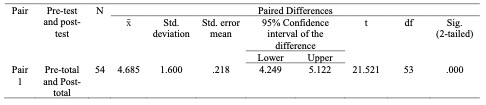
Table 1 indicates a mean score difference of 4.685. A paired t-test analysis revealed a significant improvement in students’ writing performance, with a p-value ≤ 0.05, suggesting that the training with QuillBot positively impacted their writing skills.
This result implies that QuillBot can serve as an effective tool to enhance students’ writing ability, confirming the potential benefits of AI-assisted writing tools. Specifically, QuillBot’s grammar and punctuation checking, sentence paraphrasing, and vocabulary enhancement features provide users with comprehensive support throughout the writing process (Zulfa et al., 2023). This aligns with prior findings by Nurmayanti and Suryadi (2023), who observed that QuillBot’s features assist learners in creating polished, high-quality writing. Additionally, Kurniati and Fithriani (2022) noted that QuillBot aids EFL students by reducing proofreading time and alleviating anxiety about accuracy.
Beyond technical enhancements, QuillBot motivates students to produce well-structured texts and encourages self-editing practices. However, learners are still encouraged to engage in critical thinking to avoid over-reliance on automated corrections, which may not account for contextual nuances. Integrating QuillBot with manual revision and teacher feedback could help students strike a balance, enhancing their linguistic awareness and fostering improved writing skills overall.
2. What Are University Students’ Perceptions of QuillBot Utilization?
To illustrate the students’ perceptions, the researchers distributed a questionnaire to the participants and interviewed some students to explore in-depth information on QuillBot utilization. The findings are detailed in Table 2.
Table 2
Students’ Perceptions Toward QuillBot Utilization in Academic Paragraph Writing
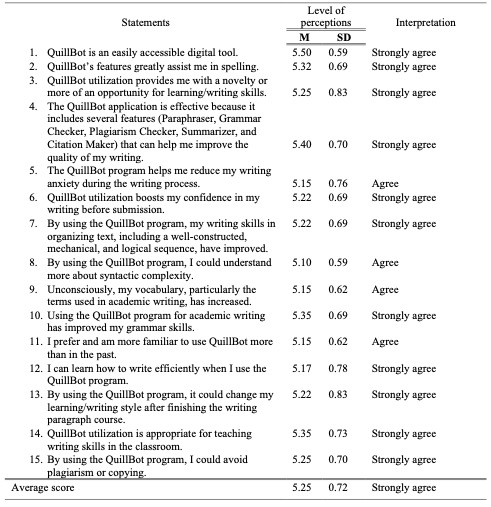
From Table 2, the results show that there was a high degree of agreement to the items in the instrument, with an average score of 5.25 (SD=0.72) overall. Items 1, 4, 10, 2, and 14, were ranked the highest. It could be seen that the participants viewed QuillBot as an easily accessible AI tool to assist users, with the highest agreement score of 5.50 (Item 1). The mean score of 5.4 for Item 4 shows that students believed that QuillBot has effective features to help them improve their writing ability. Responses to items 10 and 14, both with mean scores of 5.35, show that students believe that QuillBot helps them improve their grammar skills and is suitable for teaching writing skills in the classroom. Additionally, participants also strongly agreed that QuillBot is suitable for checking spelling, with a mean score of 5.32 (Item 2).
The findings aligned with many studies indicating that AI writing assistance tools have highlighted improvements in linguistic and lexical aspects, especially in developing vocabulary, sentence structure, and grammar (Alharbi, 2023; Thangthong et al., 2024; Zulfa et al., 2023). Moreover, the findings provide valuable perspectives from EFL learners as a beneficial AI writing assistance tool. In addition, items 3 and 15 (Mean = 5.25), indicate that participants found QuillBot enjoyable while providing learning opportunities. Students also agree on the importance of avoiding plagiarism. In other words, students have acknowledged their desire to avoid copying other work and strongly agree on enhancing their writing skills through QuillBot. This result aligns with the study by Latifah et al. (2024), who illustrated that AI writing assistance tools can reduce students’ plagiarism. Moreover, items 6, 7, and 13 yield the same result of 5.22. These could be attributed to students strongly agreeing to use QuillBot as a tool to encourage their confidence before submitting their tasks, enhance their writing skills, including well-structured, mechanical, and logical sequences, and alter their learning style after the QuillBot training.
However, students agreed on four items between 4.33 and 5.16, specifically items 5, 8, 9, and 11. Items 5, 9, and 11 showed the same opinions with a mean score of 5.15, which could indicate that users liked using QuillBot more than they did in the past (Item 11) and agreed that using QuillBot alleviated anxiety during writing (Item 5). In addition, QuillBot supported students with their self-confidence in terms of reducing mistakes, and enhancing their academic vocabulary (Item 9). Lastly, students responded to Item 8, indicating that QuillBot helped them understand syntactic complexity, with a mean score of 5.10. This result implies that students perceived QuillBot as a readily accessible AI tool to assist EFL language learning in the writing course. The results from Latifa et al. (2024) also found that students held positive perceptions toward QuillBot, which is considered a TELL method in the new era. Additionally, QuillBot utilization was reported to play a crucial role in supporting writers in overcoming challenges and difficulties by other researchers (e.g., Kholis, 2023; Nurmayanti & Suryadi, 2023; Zulfa et al., 2023).
More comprehensive insights into students’ perceptions of QuillBot utilization are shown in the results of the semi-structured interviews. The students’ responses were analyzed using content analysis and categorized into six facets, as outlined below.
Table 3
The Students’ Alternative Perspectives on QuillBot Utilization From the Interviews
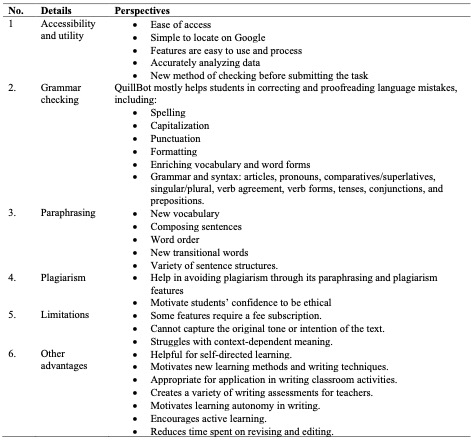
Table 3 shows the results of the semi-structured interviews that revealed that students had different perspectives on QuillBot in terms of its advantages and limitations. Firstly, students were familiar with using QuillBot as it is easy to access and use. Secondly, QuillBot helped them check grammar mistakes. One participant said, “I don’t know my own mistakes, and it is difficult for me to edit my work better.” QuillBot encouraged the participants to see how their language could improve and develop their understanding of grammar. Mostly, students mentioned that it created a new way of deeply learning the language in linguistic and lexical aspects: vocabulary, sentence structure, and grammar. They were able to learn grammar through error detection and paraphrasing. This feature generated awareness in students regarding how language or sentences should be improved. A study by Amanda et al. (2023) also showed that QuillBot was a helpful tool for students to recognize grammar and punctuation mistakes, paraphrase sentences, and improve their writing skills.
Additionally, the paraphrasing feature was a valuable tool for students. Students learned to be creative after using this feature in the classroom many times. Students mentioned that they learned how a sentence is composed and understood word functions better. It provided a valuable paraphrasing and grammar-checking tool that was free and easily accessible for EFL learners to overcome difficulties and challenges (Baron et al., 2023). The participants were eager to use QuillBot for every process that teachers assigned them, indicating thoroughly motivating autonomous learning. QuillBot provided a way to autonomously improve their writing skills by themselves. Some students said that they gained a better understanding of linguistic context through QuillBot. These findings align with a study by Rahmani (2023), where students were found to have a favorable view of QuillBot in terms of its usefulness, ease of use, and their willingness to use it to improve their writing skills.
The participants of the current study realized that transitional words and conjunctions are important for paragraph writing, which helps in highlighting coherence. They also faced challenges in avoiding plagiarism through the plagiarism detection feature. Lastly, students had the opportunity to use QuillBot in classroom activities and were motivated to apply it for self-directed learning at home. They confirmed that QuillBot helped them be cautious learners, overcome the difficulty of writing, and reduce editing. This is an easy way to have one’s own personal proofreader. This result relates to research by Kurniati and Fithriani (2022), who confirmed that QuillBot utilization could be associated with three advantages, including reducing anxiety and promoting positive attitudes toward writing, providing easy access and friendly writing features, and enhancing language learning. However, some limitations were mentioned in the interviews, such as some features needing to be paid for by subscription and the tool’s inability to capture the tone of the original text. This implies that QuillBot may be appropriate for higher education, where students have the ability to understand the linguistic context (Khalifa & Albadawy, 2024; Kassahun & Wale, 2024).
Limitations
The study is limited by time constraints. Students should have more time to practice their writing skills to reach the desired learning outcomes and create actual learning behaviors.
Conclusion
It is essential to promote the development of English education students’ writing skills and provide quality teaching and education uniformly, particularly in the Northeast of Thailand, a region in the Greater Mekong Sub-Region. Additionally, to help English education students improve their writing skills for job opportunities in teaching, foreign affairs, and personal growth, instructors must understand students’ perceptions of technology (QuillBot) used in the classroom and its impact on their writing ability at an early stage. Therefore, students would benefit if instructors incorporated new technology in classroom writing to enhance learning outcomes and foster positive attitudes toward AI-powered writing tools.
This study reported the effects of QuillBot utilization on students’ writing ability. The paper investigated students’ perceptions and writing skills regarding QuillBot usage. The study showed that QuillBot utilization can improve students’ writing quality and offers a variety of features that enhance writing quality, efficiency, and fluency. Participants learned to structure sentences, select suitable words, and boost creativity through paraphrasing. QuillBot also aided participants in saving time during the editing process, a task that students often find challenging. This presents a new learning approach for students to acquaint themselves with QuillBot to address obstacles and challenges. This method can be integrated into the writing process to encourage self-directed learning and provide an alternative method for teacher assessment. Thus, the use of QuillBot in paragraph writing should be particularly highlighted in the writing process in classroom teaching. The study proved that AI writing assistant tools, which include QuillBot, can be aligned with the writing process in writing classrooms and should be promoted as a normalized tool for EFL learners to use in appropriate ways, such as the application in the editing process instead of using only peer review. Consequently, students can generate their own work without plagiarism, access how to correct language, learn writing skills individually, encourage self-directed learning, and also provide an alternative method for teacher assessment, which is suitable for preparing students for professional roles. However, teachers may use both AI writing assistant tools and manual editing to boost students’ autonomous learning and prevent overreliance on AI tools.
For future research, it would be interesting to examine QuillBot’s impact on other types of writing tasks or to explore how students’ attitudes toward AI-assisted learning evolved with sustained use.
Notes on the Contributors
Sureerat Talapngoen is a lecturer in the English Department at the Faculty of Education, Nakhon Phanom University. She is a dedicated English lecturer with a strong passion for teaching English as a Foreign Language (TEFL) and Technology-Enhanced Language Learning (TELL). With her academic interests, she is committed to helping students develop English language competence and encourages a lifelong love of language learning.
Wadinlada Thuratham is an assistant professor and a lecturer in the Department of English for International Communication, Faculty of Humanities and Social Sciences, Rajamangala University of Technology Tawan-ok, Thailand. Her research interests cover English language teaching, English for specific purposes, language learning strategies, technology-enhanced learning, and blended learning.
References
Ackerman, B. P. (1993). Children understanding of the speaker’s meaning in referential communication. Journal of Experimental Child Psychology, 55(1), 55–86. https://doi.org/10.1006/jecp.1993.1003
Albesher, K. B. (2012). Developing the writing skills of ESL students through the collaborative learning strategy. Doctor of Philosophy in Education and Applied Linguistics, School of Education, Communication and Language Sciences, Newcastle University, UK. https://theses.ncl.ac.uk/jspui/bitstream/10443/1836/1/Al-Besher%2012.pdf
Alharbi, W. (2023). AI in the foreign language classroom: A pedagogical overview of automated writing assistance tools. Education Research International, 2023, 4253331. https://doi.org/10.1155/2023/4253331
Amanda, A., Sukma, E. M., Lubis, N., & Dewi, U. (2023). Quillbot as an AI-powered English writing assistant: An alternative for students to write English. Jurnal Pendidikan dan Sastra Inggris, 3(2), 188–199. https://doi.org/10.55606/jupensi.v3i2.2026
Amyatum, R. L., & Kholis, A. (2023). Can artificial intelligence (AI) like QuillBot AI assist students’ writing skills? Assisting learning to write texts using AI. ELE Reviews English Language Education Reviews, 3(2), 135–154. https://10.22515/elereviews.v3i2.7533
Baron, G., Lorenzo, C., & Benoît, D. (2023). Students’ perception on the use of Quillbot to improve grammar. Lingeduca: Journal of Language and Education Studies, 2(3),
250–265. https://doi.org/10.55849/lingeduca.v2i3.547
Burkhard, M. (2022). Student perceptions of AI-powered writing tools: Towards individualized teaching strategies. Proceedings of the 19th International Conference on Cognition and Exploratory Learning in Digital Age (CELDA 2022), 73–81. https://files.eric.ed.gov/fulltext/ED626893.pdf
Burton, G., Borsetto, E., Giglio, A., & Voltmer, L. (2024). Creating a self-access academic writing center at a trilingual university: What have we learned in the first three years? Studies in Self-Access Learning Journal, 15(2), 127–147. https://doi.org/10.37237/150202
Chui, H. C. (2022). The QuillBot grammar checker: Friend or foe of ESL student writers? Journal of Creative Practices in Language Learning and Teaching (CPLT), 10(1), 10–31. https://cplt.uitm.edu.my/v1/images/v10n1/Article2.pdf
Duncanson, J. (2024). Supporting L2 writing using QuillBot. GATESOL Journal, 33(1), 33–39. https://georgiatesoljournal.org/index.php/GATESOL/article/view/195
Fitria, T. N. (2021). Grammarly as an AI-powered English writing assistant: Students’ alternative for writing English. Metathesis: Journal of English Language, Literature, and Teaching, 5(1), 65–78. https://doi.org/10.31002/metathesis.v5i1.3519
Fitria, T. N. (2022). Avoiding plagiarism of students’ scientific writing by using the QuillBot paraphraser. Elsya: Journal of English Language Studies, 4(3), 252–262. https://doi.org/10.31849/elsya.v4i3.9917
Flower, L. S., & Hayes, J. R. (1977). Problem solving strategies and the writing process. College English, 39, 449–461. https://doi.org/10.2307/375768
Franco, A., & Roach, S. (2018). An assessment of the English proficiency of the Thai workforce and its implication for the ASIAN economic community: An empirical inquiry. Open Journal of Business and Community, 6(3), 658–677. https://doi.org/10.4236/ojbm.2018.63050
Ginting, P., Batubara, H. M., & Hasnah,Y. (2023). Artificial intelligence powered writing tools as adaptable aids for academic writing: Insight from EFL college learners in writing final project. International Journal of Multidisciplinary Research and Analysis, 6, 4640-4650. https://doi.org/10.47191/ijmra/v6-i, 10–15
Jaradara, A. R., Jafar, M. B., & Salija, K. (2023). QuillBot web-application: Utilizing online technology on academic writing at an Indonesian Islamic higher education. Celebes Journal of Language Studies, 3(2), 275–284. https://doi.org/10.51629/cjls.v3i2.152
Jeanjaroonsri, R. (2023). Thai EFL learners’ use and perceptions of mobile technologies for writing. LEARN Journal: Language Education and Acquisition Research Network, 16(1), 169–193. https://so04.tci-thaijo.org/index.php/LEARN/article/view/263438
Johinke, R., Cummings, R., & Di Lauro, F. (2023). Reclaiming the technology of higher education for teaching digital writing in the post-pandemic world. Journal of University Teaching and Learning Practice, 20(2), 1–16. https://doi.org/10.53761/1.20.02.01
Kaewkamnerd, P., Dibyamandala, J., Mangkhang, C., & Khuankaew, S. (2024). Building autonomy in English language learning: integrating digital technology with CEFR-CLIL in Thai EFL education. Korean Journal of English Language and Linguistics, 24(1),
660–688. https://doi.org/10.15738/kjell.24..202407.660
Kassahun, Y. F., & Wale, B. D. (2024). The transformative power of AI writing technologies:
Enhancing EFL writing instruction through the integrative use of Writerly and Google
Docs. Human Behavior and Emerging Technologies, 1, 9221377, 1–15. https://doi.org/10.1155/2024/9221377
Kawinkoonlasate, P. (2021). A study of using e-writing instructional design program to develop english writing ability of Thai EFL learners. English Language Teaching, 14(6), 43–61. https://doi.org/10.5539/elt.v14n6p43
Khalifa, M., & Albadawy, M. (2024). Using artificial intelligence in academic writing and research: An essential productivity tool. Computer Methods and Programs in Biomedicine Update, 5, 100145, 1–10. https://doi.org/10.1016/j.cmpbup.2024.100145
Kholis, A. (2023). Can artificial intelligence (AI) like QuillBot AI assist students’ writing skills? assisting learning to write texts using AI. ELE Reviews: English Language Education Reviews, 3(2), 135–154. http://dx.doi.org/10.22515/elereviews.v3i2.7533
Kurniati, E. Y., & Fithriani, R. (2022). Post-graduate students’ perceptions of Quillbot utilization in English academic writing class. Journal of English Language Teaching and Linguistics, 7(3), 437–451. https://doi.org/10.21462/jeltl.v7i3.852
Latifah, S., Muthim, A., & Nasrullah, N. (2024). The use of QuillBot in academic writing: A systematic literature review. Journal of English Language and Pedagogy, 7(1), 110–121. http://dx.doi.org/10.33503/journey.v7i1.4047
Mallia, J. (2017). Strategies for developing English academic writing skills. Arab World English Journal, 8(2), 3–15. https://dx.doi.org/10.24093/awej/vol8no2.1
Muhtia, A., Suparno, S., & Sumardi, S. (2018). Investigating the implementation of blended learning in a paragraph writing course to promote student engagement. Issues in Language Studies, 7(2), 87–103. http://dx.doi.org/10.33736/ils.1613.2018
Nguyen, T. T. L., & Suwannabubpha, S. (2021) EFL writing at Thai secondary schools: Teachers and students’ views, difficulties and expectations. Language Related Research, 12(3), 187–214. https://doi.org/10.29252/LRR.12.3.7
Nurmayanti, N., & Suryadi. (2023). The effectiveness of using Quillbot in improving writing for students of English education study program. Jurnal Teknologi Pendidikan: Jurnal Penelitian dan Pengembangan Pembelajaran, 8(1), 32–40. https://doi.org/10.33394/jtp.v8i1.6392
Padgate, W. (2008). Beliefs and opinions about English writing of students at a Thai university. PASAA, 42(1), 31–54. http://dx.doi.org/10.58837/CHULA.PASAA.42.1.2
Rahmani, E. F. (2023). Undergraduate students’ perceptions on Quillbot paraphrasing tool. Scripta English Department Journal 10(2),182–190. https://doi.org/10.37729/scripta.v10i2.3674
Thangthong, P., Phiromsombut, J., & Imsa-ard, P. (2024). Navigating AI writing assistance tools: Unveiling the insights of Thai EFL learners. Thai TESOL Journal, 37(1), 111–131. https://so05.tci-thaijo.org/index.php/thaitesoljournal/article/view/270168/182418
Vate-U-Lan, P., & Masouras, P. (2018). Thriving social network for communication on e-learning: Exploring gender differences and attitudes. Proceedings of the first international conference on data science, e-learning and information system, Madrid, Spain, October 1 – 2, 2018, 1–6 http://doi.org/10.1145/3279996.3280010
Wiboolyasarin, W., Wiboolyasarin, K., Suwanwihok, K., Jinowat, N., & Muenjanchoey, R. (2024). Synergizing collaborative writing and AI feedback: An investigation into enhancing L2 writing proficiency in viki-based environments. Computers and Education: Artificial Intelligence, 6, 100228. https://doi.org/10.1016/j.caeai.2024.100228
Zulfa, S., Dewi, R. S., Hidayat, D. N., Hamid, F., & Defianty, M. (2023). The use of AI and technology tools in developing students’ English academic writing skills. Proceedings of the International Conference on Education, Institut Agama Islam Negeri, Kediri, Indonesia, August 8, 2023, 47–63. https://jurnalfaktarbiyah.iainkediri.ac.id/index.php/proceedings/article/view/1811/624
 SiSAL Journal