
Roderick Julian Robillos, Faculty of Education, Khon Kaen University, Thailand. https://orcid.org/0000-0001-7190-7679
Robillos, R. J. (2025). Integrating computer-aided argument mapping and the Flipgrid application to foster self-directed learning and enhance students’ argumentative writing skills. Studies in Self-Access Learning Journal, 16(2), 320–341. https://doi.org/10.37237/160204
Abstract
This study investigates the impact of integrating computer-aided argument mapping (CAAM) and the Flipgrid app to foster self-directed learning and enhance argumentative writing skills among university EFL learners. A mixed-methods approach with a single-group pre- and post-test design was employed, involving 27 third-year university EFL students selected through purposive sampling. Over 13 sessions, with 11 dedicated to the intervention and 1 each for pre- and post-testing, participants engaged in CAAM and Flipgrid-facilitated activities designed to improve argumentative writing. Results reveal a significant improvement in students’ writing performance, indicated by a substantial increase in their overall writing score from M=11.25 to M=18.77, (p<.001), confirming the intervention’s effectiveness. In the ‘writing content,’ aspect, notable progress was observed in the ‘evidence’ sub-component, while improvement in ‘counter-arguments’ was minimal. An improvement in the ‘writing coherence’ aspect was also observed with ‘logical connections 1’ showing substantial progress. Additionally, students’ writing tasks indicated marked improvement, with significant differences in the scores between the first and subsequent writing tasks. Qualitative feedback showed that students not only gained confidence in organizing their arguments but also showed significant growth in their ability to engage in self-directed learning. The study shows how combining CAAM with Flipgrid can enhance students’ argumentative writing in self-access settings, suggesting that visual argument mapping with interactive video platforms may effectively support skill development in self-directed learning.
Keywords: computer-aided argument mapping, Flipgrid application, argumentative writing, EFL learners, self-directed learning
Writing is a fundamental skill that extends beyond the classroom (Stephen, 2024), serving as a cornerstone for effective communication and critical thinking in today’s dynamic global setting (Davies et al., 2021). Among the various writing genres, argumentative writing plays a crucial role in enabling students to articulate their viewpoints, construct logical arguments, critically evaluate evidence, and engage in meaningful discourse (Hasani, 2016). In the 21st century, the ability to communicate ideas persuasively and critically, as posited by Robillos (2023), is considered a vital component of literacy, enabling individuals to navigate complex information and contribute actively to civic life. Consequently, the emphasis on argumentative writing fosters analytical thinking, encouraging students to consider multiple perspectives and develop well-reasoned positions on issues of societal relevance (van Gelder, 2013).
Argumentative writing is central to educational curricula worldwide, fostering critical thinking essential for academic and professional success (Al-Mahrooqi & Denman, 2020; Promwinai, 2010). In an era of information overload, the ability to craft well-reasoned arguments is invaluable for distinguishing fact from opinion and building coherent perspectives. Emphasizing argumentative writing equips students with skills to navigate complex social, academic, and professional settings, strengthening communication for mutual understanding and collaboration (Robillos & Thongpai, 2022). Yet, it remains challenging, particularly for EFL learners, due to analytical and syntactical demands requiring advanced vocabulary and precision. Many students struggle not only with generating persuasive content but also with organizing arguments in a logical, cohesive manner (Harrell & Wetzel, 2013; Robillos & Thongpai, 2022).
In the Thai EFL context, students face considerable challenges in mastering argumentative writing, largely due to limited exposure to English academic writing conventions, which often hinders their understanding of effective argument structure and presentation (Promwinai, 2010; Robillos, 2023). In addition, this difficulty is further compounded by traditional instructional approaches that emphasize rote memorization over critical thinking, limiting students’ ability to engage with content analytically or form independent ideas, essential skills for constructing persuasive arguments (Promwinai, 2010). Consequently, many students are inadequately prepared for the demands of higher education, where well-reasoned, structured arguments are vital for academic success (Robillos & Thongpai, 2022). Furthermore, argumentative writing requires synthesizing a substantial volume of readings (Harrel & Wetzel, 2013), but when information is presented solely in academic prose, students often struggle to retain and logically organize extensive content, resulting in cognitive overload that disrupts the clarity and coherence of their arguments (Sweller, 1994; Robillos & Phantharakphong, 2020). To address these issues, educators have explored innovative methods, with Computer-Aided Argument Mapping (CAAM) standing out as a particularly effective tool for enhancing students’ argumentation skills (Davies, 2011; Davies, 2014; Davies et al., 2021; Malmir & Khosravi, 2018; Robillos & Phantharakphong, 2020; van Gelder, 2013).
CAAM organizes arguments into clear elements—such as claims, evidence, and counter-arguments—providing a structured framework that clarifies the logical flow of ideas and reveals gaps in reasoning (Harrel & Wetzel, 2013). By reducing cognitive strain, CAAM helps students process complex information from multiple sources more efficiently, easing the load on working memory (Robillos & Thongpai, 2022; Sweller, 1994). This structured approach aids in synthesizing information and crafting cohesive arguments, while also stimulating critical thinking and enhancing learning performance (Dwyer et al., 2011; Malmir & Khosravi, 2018; Pahlavani & Maftoon, 2015). Research links CAAM with notable improvements in critical thinking as it encourages systematic analysis, evaluation, and synthesis of information (Davies, 2014; Davies et al., 2021; van Gelder, 2013). However, despite the existing advantages, there is a significant gap in the literature regarding the integration of online feedback mechanisms with CAAM. While CAAM is effective in assisting students with structuring their arguments and facilitating revisions during the writing process, the potential of online platforms to foster collaborative discussions about argument maps and provide constructive feedback is underexplored.
Meanwhile, the inadequacy of effective feedback mechanisms significantly hampers students’ writing development, limiting their growth in critical argumentation skills (Biber et al., 2011; Yang et al., 2021). Research by Hattie and Timperley (2007) and Yang et al. (2021) highlights that many feedback approaches fail to offer the constructive, actionable guidance students need to refine their writing skills. Without such tailored feedback, students often struggle to build core competencies in argumentation, analysis, and synthesis—abilities that are essential in today’s information-saturated world, where they must navigate and critically assess diverse perspectives and complex ideas (Yang et al., 2021). By addressing these limitations in feedback practices, educators can provide the necessary guidance to foster students’ confidence and clarity in constructing well-supported arguments.
Interestingly, in today’s era of digital technologies, tech-savvy students increasingly benefit from online platforms that facilitate more accessible and effective feedback. Digital tools like Flipgrid (Green & Green, 2018) are instrumental in delivering synchronous and asynchronous types of feedback. Flipgrid is a video-based platform where students and educators can exchange feedback through recorded videos, allowing for a more personal and engaging feedback process. Additionally, Flipgrid fosters online face-to-face interactions and facilitates virtual discussions, enabling students to communicate and collaborate with their peers (Budiarta & Santosa, 2020; Robillos, 2023). As a result, students can watch, reflect on, and respond to feedback at their convenience, fostering autonomous and deeper learning (Green & Green, 2018). Thus, Flipgrid enhances traditional feedback by accommodating different learning needs and preferences, making them valuable tools for cultivating students’ critical thinking and argumentation skills. Previous studies have demonstrated that Flipgrid not only effectively engages students within online learning communities but also positively impacts learning outcomes, particularly in EFL speaking and writing classes (Fahey et al., 2019; Flanagan, 2019; Robillos, 2023).
Moreover, through repeated practice and peer interaction on Flipgrid, students enhance their metacognitive awareness, enabling them to pinpoint areas for improvement and set proactive learning goals. In this context, timely, personalized feedback not only encourages students to articulate their thoughts more clearly but also fosters deeper engagement with their peers’ arguments. This adaptability in feedback mechanisms enriches students’ understanding of effective argumentation and empowers them to develop stronger critical thinking and communication skills—essential competencies for navigating today’s complex information landscape. Online feedback tools such as Flipgrid foster a collaborative learning environment by enabling students to record, share, and respond to video comments asynchronously (Fahey et al., 2019; Robillos, 2023). This modality affords learners the flexibility to engage at their own pace and engage in deeper reflection on their peers’ contributions, thereby promoting learner autonomy and facilitating self-directed learning. Through this interactive and learner-centered platform, students assume greater responsibility for their educational journey, actively engage in peer feedback, and enhance their critical thinking skills, which collectively contribute to a more enriched learning experience (Flanagan, 2019; Robillos, 2023). Fahey et al. (2019) further assert that Flipgrid empowers participants to embody dual roles as both instructors and learners, thereby cultivating a dynamic and inclusive learning community. Consequently, such online feedback mechanisms not only support autonomy but also reinforce self-directed learning practices, significantly augmenting the overall educational process.
Despite the recognized potential of both CAAM and Flipgrid in enhancing learning outcomes, their combined effect on improving argumentative writing skills remains underexplored, especially in the Thai educational context. While CAAM has been widely studied for enhancing students’ reasoning and critical thinking (Davies et al., 2021; Malmir & Khosravi, 2018; van Gelder, 2007), and Flipgrid has gained popularity for fostering engagement and reflection (Budiarta & Santosa, 2020; Fahey et al., 2019), little is known about integrating these tools to support both argumentative writing and broader self-access learning skills. This gap in the literature, particularly in the Thai EFL context, highlights the need for more effective instructional strategies that promote independent learning and deeper engagement in academic writing. Thus, the following research questions were sought to be addressed:
1. Is there a significant difference between the students’ argumentative writing performance in terms of the development of writing content and writing coherence before and after the implementation of the intervention?
2. Are the students’ argumentative writing task performances improved using CAAM with the FlipGrid application to facilitate their writing process?
3. What learning experiences have the students obtained after the intervention was provided?
Design
This study utilized sequential mixed methods research to assess the impact of synergizing CAAM and Flipgrid on students’ argumentative writing skills in terms of development of writing content and writing coherence. Initially, quantitative methods were employed to collect data, followed by an analysis that informed the qualitative phase, allowing for a deeper exploration of the findings (Creswell & Creswell, 2018). The quantitative phase aimed to measure the effects of the combined interventions on student performance in argumentative writing. To complement this, qualitative data was gathered to understand students’ learning experiences throughout the intervention.
Additionally, the study adopted a single-group pre- and post-test design, enhancing the clarity of results. Data collection also included semi-structured interviews, focusing on how the intervention influenced the development of writing content and writing coherence. The intervention unfolded over 13 sessions, with eleven sessions dedicated to implementing the intervention itself, alongside one session each for the pre- and post-writing tests.
Participants
The research involved 27 EFL third-year students from a provincial university in Northeastern Thailand, consisting of 10 males and 17 females aged 20 to 21 and were selected via purposive sampling method (Creswell & Creswell, 2018). These students were taking the ‘Approaches to Writing’ course aimed at developing their academic and critical writing skills, particularly in crafting argumentative essays that analyze multiple perspectives and formulate well-reasoned arguments. All participants had received nearly 10 years of English instruction, as mandated by the Thai Ministry of Education, which requires English language learning from elementary through secondary education prior to matriculation into university. They were assessed at the B1 to B2 level of the Common European Framework of Reference (CEFR), indicating a competent grasp of English. The main objective of the Approaches to Writing course was to develop students’ writing skills through various pedagogical strategies, with an emphasis on fostering learner autonomy and engagement. Within this course framework, the current study specifically aimed to promote self-directed learning by integrating CAAM and the Flipgrid app. This synergy empowered students to take greater responsibility for their own learning, tailor their activities to personal needs, enhance digital literacy, and prepare for collaborative communication in a technology-rich environment. Thus, while the course provided broader context for writing skill development, the research intervention focused on utilizing these tools to cultivate self-directed learning and improve students’ argumentative writing abilities.
Research Instruments and Data Collection
Pre- and Post-Argumentative Writing Tests
The study utilized pre- and post-writing tests, both designed to assess students’ argumentative writing proficiency. The pre-writing test required participants to compose a 250-word argumentative essay within one hour, with the topic drawn from IELTS Writing Task 2 which were also aligned to the topics they were taking in their Approaches to Writing course. Prior to the writing task, students participated in a 60-minute planning session involving brainstorming and engagement with a reading text to activate their background knowledge. Similarly, the post-writing test, conducted after the intervention, followed the same format to ensure consistency. Students wrote another 250-word essay on an IELTS-based topic, again aligned with the course’s objectives. During this post-writing test, they were allowed to use the CAAM tool to support their planning and organization. However, even with access to CAAM, they were still required to complete the writing within a 60-minute time limit, ensuring they could apply their skills efficiently under timed conditions. The post-writing essays were evaluated by three English experts, who also served as university English lecturers, focusing on the development of writing content and writing coherence to gauge students’ progress and ensure reliable assessment.
Argumentative Writing Task Performances
Writing tasks were an integral part of the intervention program, comprising four argumentative topics of increasing difficulty. These topics were developed by the participants during the intervention period and served as their writing tasks. The selected argumentative writing topics were closely aligned with the course objectives, focusing on evaluating the students’ ability to comprehend arguments and subsequently write argumentative essays in English. To assess the students’ performance, each written essay was evaluated using a writing rubric (see scoring rubric) specifically designed for this purpose. The writing tasks were intended to provide students with comprehensive practice in writing argumentative essays using the CAAM tool. At the same time, the FlipGrid app facilitated the process by supporting planning, drafting, receiving feedback (in English), engaging in peer critique, conducting self-evaluation, and finalizing their argumentative drafts.
Semi-Structured Interviews
Conducted the day after the intervention, the semi-structured interviews aimed to gain a comprehensive understanding of students’ engagement with CAAM and FlipGrid and its impact on their argumentative writing tasks. These interviews sought nuanced insights into students’ learning experiences and perceptions, ensuring that all of them were fully informed and provided voluntary, informed consent before engaging in the research process.
Scoring Rubric
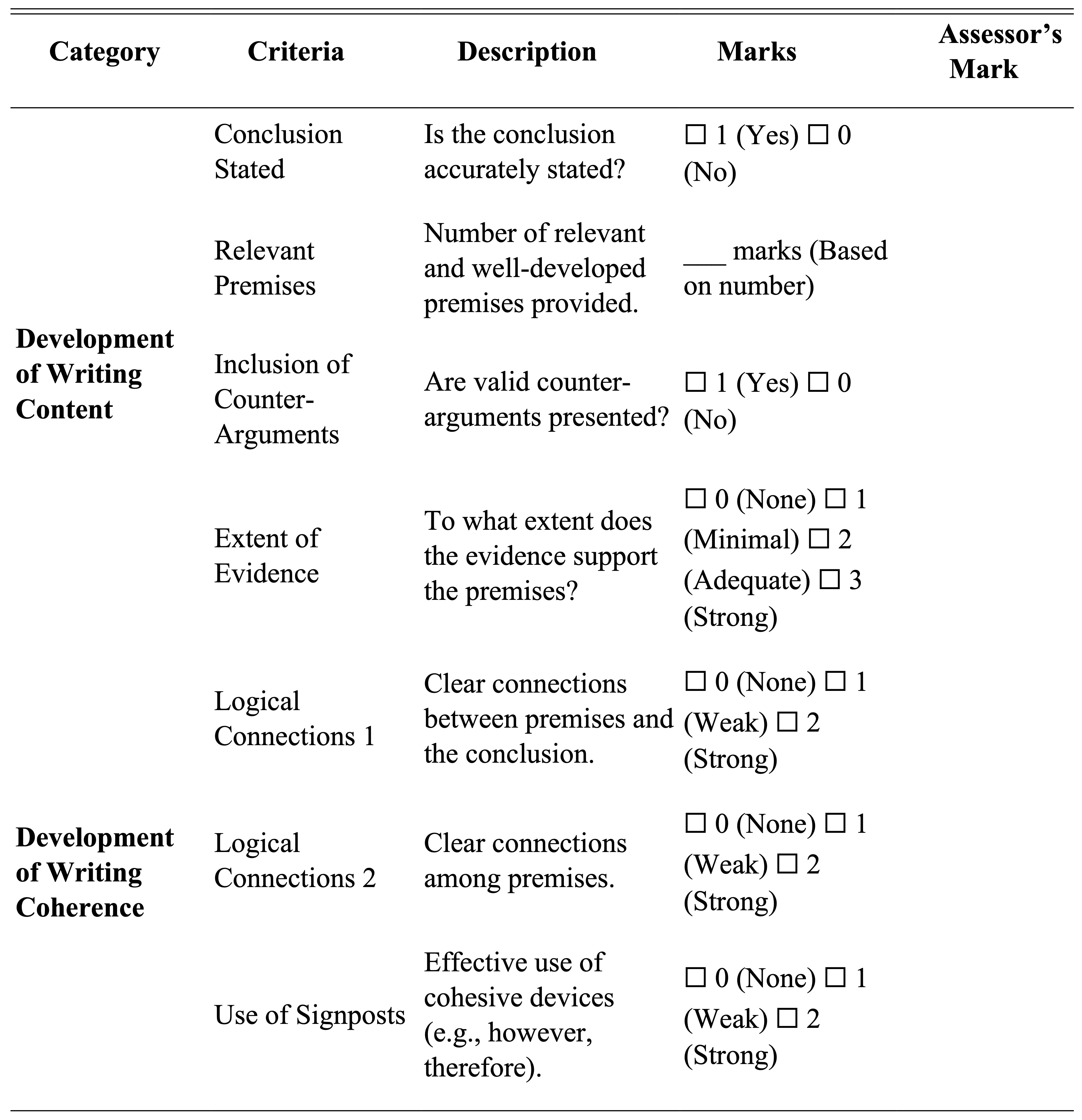
The students’ pre- and post-writing tests were assessed using a writing scoring rubric. The rubric, adapted from Harrell and Wetzel (2013), considered writing development aspects, such as development of writing content, and development of writing coherence; however, slightly modified by the researcher himself to suit students’ cognitive level. For the development of writing content, marks were assigned: 1 mark for accurately stating the conclusion and 0 mark if not, marks based on the number of relevant premises, marks for including counter-arguments, and a mark reflecting the extent of evidence supporting premises. Further, for the development of writing coherence, it involved marking logical connections: “logical connections 1” – connections between premises and the conclusion, “logical connections 2” – connections between premises, and “signposts” for usage. 0 marks were awarded for none, 1 mark for weak usage, and 2 marks for strong usage. The rubric modifications (see Appendix A), reviewed by English experts, ensured its validity in evaluating students’ argumentative writing skills. Furthermore, the writing rubric was piloted with a group of students outside the study sample to assess its reliability, yielding a Cronbach’s Alpha coefficient of 0.79. This result indicates an acceptable level of internal consistency, suggesting that the rubric items reliably measure the intended aspects of students’ writing performance.
CAAM Tool
CAAM tool by Rationale (Davies, 2011) was utilized as a writing tool to assist students in developing, analyzing, and evaluating their arguments. The CAAM tool played a crucial role in helping students develop their argumentative essays by allowing them to visually map their arguments, identify gaps, and refine their reasoning before drafting. They first used CAAM during the drafting of their argument maps, utilizing the tool’s Argument Mapping Panel to visually structure their ideas, critically examine their reasoning, and refine their arguments by adding or deleting details as necessary. After completing the argument map, students transitioned to the Essay Panel to begin writing their drafts, using the structure of their argument map as a guide. After drafting, students revisited the Argument Mapping Panel and the Essay Panel within CAAM for evaluation, assessing the clarity of their reasoning, making revisions based on peer feedback, and ensuring their arguments were well-supported with evidence, as shown in Figure 1.
Figure 1
Editor’s page in CAAM by Rationale (Davies, 2011)

FlipGrid Application
This APP was utilized as a research instrument to enhance online interaction and communication skills among students. Students used FlipGrid primarily during the peer feedback sessions of the writing process. After drafting their argument maps and essays, students recorded videos explaining their argument maps, discussing their central claims, reasoning, and challenges faced during the mapping process. These video responses were uploaded to the platform, allowing peers to engage with and provide feedback on each other’s arguments. Students then reviewed videos from two classmates, offering constructive feedback on argument structure and reasoning. After receiving feedback, students revised their argument maps and essays, incorporating suggestions to strengthen their arguments. However, peer feedback was not the sole form of feedback provided during the intervention. Multiple sources of feedback were intentionally integrated to holistically support the development of students’ argumentative writing skills. The teacher-researcher offered formative feedback throughout the process, guiding students in organizing their ideas, constructing arguments, and improving their written outputs. In parallel, peer feedback was actively facilitated, particularly through the Flipgrid app, where students shared video responses and exchanged comments on each other’s work, fostering a collaborative learning environment. Self-assessment was also encouraged, prompting learners to critically reflect on their own argument maps and writing drafts to enhance critical thinking and self-directed learning. Additionally, while Flipgrid did not provide automated scoring, its interactive features—such as reactions, replies, and comments—served as informal feedback mechanisms that stimulated learner engagement and interaction. These diverse forms of feedback worked synergistically to create a rich and supportive learning context throughout the intervention.
Research Procedures
I. Pre-Writing Test
Before the intervention, the students composed a 250-word argumentative essay within 60 minutes. The essay topic was chosen from IELTS writing task 2, aligning with their Approaches to Writing course. Before the actual writing task, they engaged in 30 minutes of planning activities, activating their background knowledge through brainstorming and interacting with a reading text.
II. Intervention
The intervention program comprised 11 sessions, strategically structured to enhance students’ argumentative writing skills using CAAM. The first two sessions, each lasting 180 minutes, delved into the intricacies of the first argumentative writing task. Concepts such as the genre of ‘argumentative’ writing and key CAAM elements were explained (1st session), and the initial writing topic was introduced (2nd session).
The 3rd session centered on the drafting processes, where students utilized CAAM to create their argument map/s and integrated Flipgrid to enable them to record videos explaining their argument map/s. The process begins with students creating an argument map (AM) using the CAAM tool for at least 180 minutes. During this time, they worked asynchronously to identify a central claim, and broke down arguments into major premises, supporting evidence, and potential counter-arguments, which they visually organized in CAAM. Next, students record videos on Flipgrid explaining their AM. They articulated their central claims, reasoning, and challenges faced during the mapping process. Following the video recordings, students engage in a peer feedback session. They review two classmates’ videos, providing constructive feedback on argument structure and reasoning, which promotes critical thinking and community. After receiving feedback, students revise their AM, addressing areas needing clarification or additional evidence based on peer suggestions. They then upload revised argumentative written essays that reflect these improvements, reinforcing their understanding and the importance of the revision process. Finally, students post follow-up videos on Flipgrid reflecting on the improvements made to their arguments after peer feedback.
The subsequent six sessions (4th to 11th sessions with two sessions/writing task) concentrated on enhancing argumentative writing skills through writing tasks, further reinforcing the application of CAAM and FlipGrid. In these sessions, the researcher exposed students to four additional writing exercises that were built upon the procedures established in the 2nd and 3rd sessions
III. Post-Writing Test
The post-writing test, conducted after the intervention, followed the same format as that of the pre-writing test to ensure consistency. Students wrote another 250-word essay on an IELTS-based topic, again aligned with the course’s objectives. However, during this post-writing test, they were allowed to use the CAAM tool to support their planning and organization. However, even with access to CAAM, they were still required to complete the writing within a 60-minute time limit, ensuring they could apply their skills efficiently under timed conditions.
Results
Quantitative Analysis
Participants’ Pre- and Post-Argumentative Writing Performance
Table 1 shows the students’ pre- and post-argumentative writing test results, focusing on the development of writing content components. The findings reveal a notable overall improvement in writing content after the intervention, with the ‘evidence’ sub-component exhibiting the most significant improvement (x̄=1.86 to x̄=2.87). However, ‘counter-arguments’ showed the least improvement, posing a challenge for participants. The significant difference in all sub-components, indicated by a p-value of 0.001 below p<.05, emphasizes the effectiveness of the intervention in shaping writing content development.
Table 1
Participants’ Pre- and Post-Argumentative Writing Performance in Terms of Writing Content
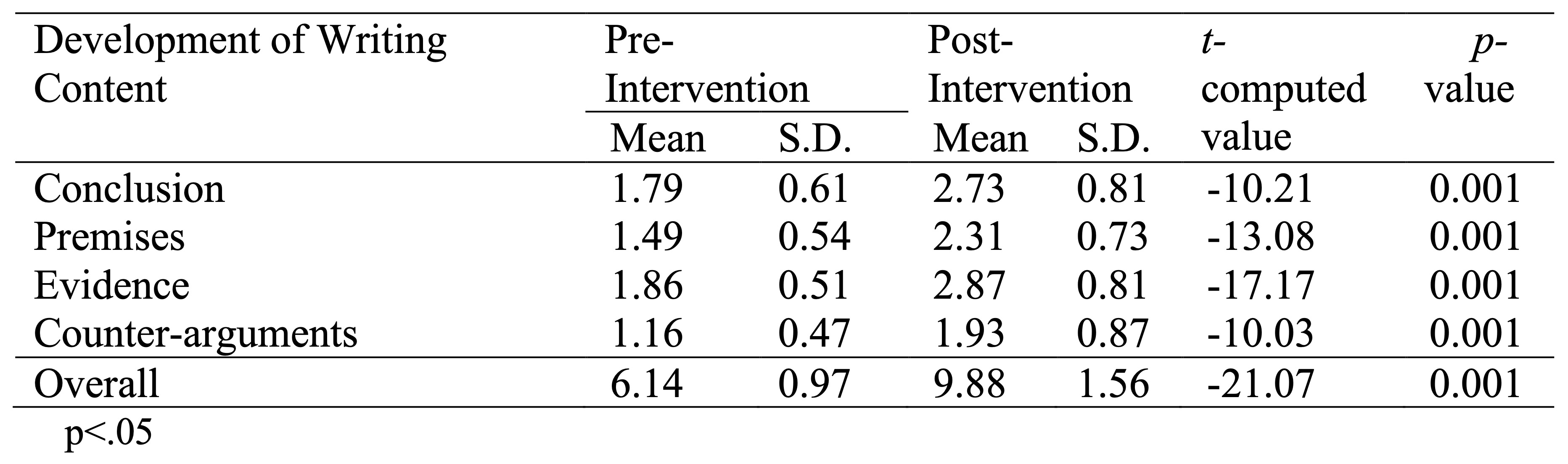
Table 2 presents the comparison of participants’ pre- and post-argumentative writing tests, focusing on the development of writing coherence. Notably, ‘logical connections 1’ demonstrated substantial improvement (x̄=1.75 to x̄=3.89), emphasizing the intervention’s effectiveness in fostering more logical connections between premises and conclusions. Although ‘logical connections 2’ showed the least improvement, the overall significant difference in all sub-components, with a p-value of 0.001, underscores the positive impact of the intervention on enhancing writing coherence.
Table 2
Participants’ Pre- and Post-Argumentative Writing Performance in Terms of Writing Coherence

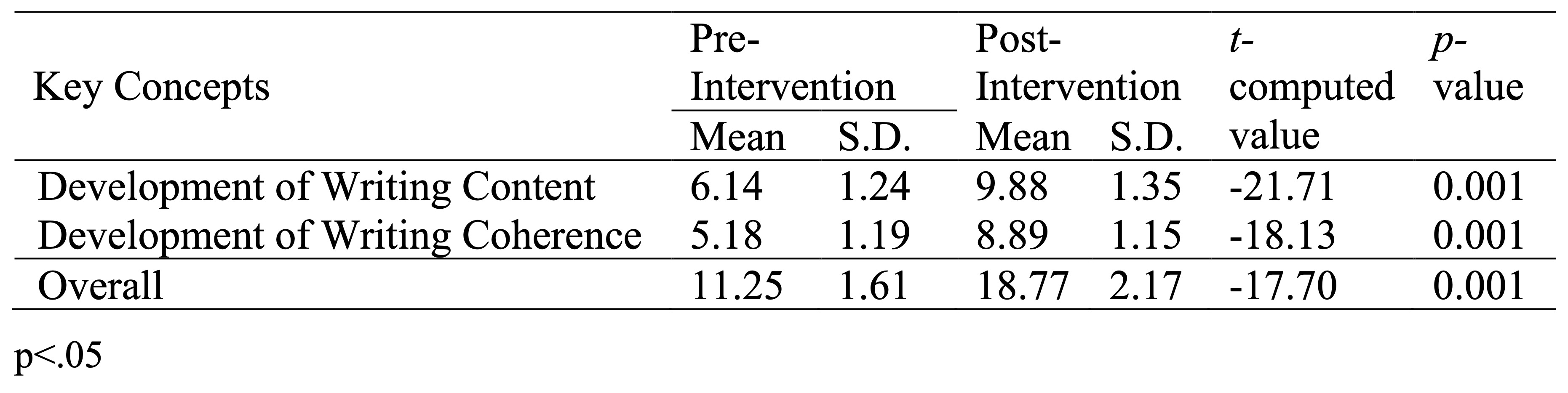
Table 3 presents the overall results, demonstrating a significant difference in participants’ argumentative writing performance before (x=11.30; SD=1.74) and after (x=18.74; SD=2.01) the intervention. The substantial increase in mean scores further reinforces the effectiveness of the intervention influencing both the development of writing content and development of writing coherence. The resulting p-value of 0.001, which is less than the level of significance at p<.05, confirms significant improvement on participants’ argumentative writing performance.
Table 3
Overall Test of Difference on the Participants’ Pre- and Post-Argumentative Writing Performance
Students’ Argumentative Writing Task Performances
Table 4 presents the pairwise comparison of means for the four writing tasks. The p-values for all comparisons were found to be 0.001, indicating significance at the p<.05 level. This indicates that there is a significant difference between the scores in writing task 1 and the scores in the other three writing tasks. Further analysis of the mean scores in the second table reveals that the mean score in writing task 1 is lower than the mean scores of the other three writing tasks. This means that the participants’ scores in writing task 1 are significantly lower than their scores in the other writing tasks.
Table 4
Pairwise Comparisons of the Means of the Four Writing Tasks. Measure: Measure 1

Qualitative Analysis
Two themes emerged after the conduct of the semi-structured interviews with the respondents.
Theme 1: Improved Students’ Argumentative Writing through CAAM with FlipGrid
Clearness of Reasoning. In written prose, ambiguously stated arguments and unclear ideas can cause mental overload, especially when trying to distinguish conclusions, supports, and objections (Davies, 2011). This process can be time-consuming due to the lexical density of written text (Robillos, 2021). The synergy of CAAM and FlipGrid in this study helped participants achieve greater clarity in identifying argument components. Mapping arguments visually through CAAM enabled easier recognition of conclusions and premises, reducing cognitive strain and promoting a more transparent flow of ideas. FlipGrid further supported this process by allowing participants to receive immediate feedback, reinforcing clarity and preventing mental congestion. P2 articulated:
“Using CAAM and FlipGrid helped me clearly identify and organize my arguments, making the writing process much easier.”-P2
Improved Coherence Through Linguistic Signposts. The synergy between CAAM and FlipGrid played a key role in helping participants incorporate linguistic signposts—concise phrases that connect ideas (Davies, 2014; Davies et al., 2021)—into both the mapping process and their argumentative writing. CAAM enabled participants to visually organize their arguments, while FlipGrid offered immediate feedback on their use of signposts. This combined approach improved their ability to link evidence to premises, enhancing the clarity, coherence, and logical flow of their arguments while preventing mismatches between premises and evidence. P7 conveyed that:
“CAAM and FlipGrid helped me clearly connect my ideas and strengthen my arguments with better feedback and organization.”-P7
Improved Collaborative Writing. The synergy between CAAM and FlipGrid significantly enhanced collaborative writing by combining structured argument mapping with peer-driven feedback. While CAAM provided students with a clear framework for organizing their ideas, FlipGrid fostered collaboration by allowing them to engage with and critique each other’s work. This interaction not only strengthened students’ critical thinking skills as they evaluated peer arguments but also encouraged them to reflect on and refine their own writing. As a result, the social and supportive environment created by FlipGrid, combined with the organization offered by CAAM, empowered students to take creative risks with their ideas. As P8 shared:
“CAAM and FlipGrid together aided me to easily organize my ideas and get helpful feedback from my peers to improve my writing.”-P8
Theme 2: Empowered and Flexible Learning
Enhanced Self-Directed Learning. The integration of CAAM and FlipGrid enhances self-directed learning by providing students with a structured framework to map their arguments, track progress, and take ownership of their learning. CAAM helps students break down complex ideas, identify gaps, and refine their arguments, fostering engagement and accountability. Coupled with FlipGrid , which supports both synchronous and asynchronous feedback from peers and teachers, this synergy promotes a reflective and iterative learning process. Students can present their mapped arguments, receive immediate or delayed feedback, and make thoughtful revisions, leading to a more proactive approach to their learning and strengthening their ability to self-direct their progress, as P3 expressed:
Promote Self-Directed Learning. The synergy between CAAM and FlipGrid fosters self-directed learning by providing students with the flexibility to revisit and refine their arguments at their own pace. CAAM’s visual framework allows students to track their progress, while FlipGrid enables them to access and review their mapped arguments and videos whenever necessary, supporting personalized learning outside the traditional classroom structure. This flexibility promotes individualized progress, continuous improvement, and reflection. Additionally, FlipGrid ’s interactive platform encourages collaboration and feedback sharing, creating a sense of community that supports and enhances self-directed learning. This iterative process fosters ownership and continuous development, empowering students to take charge of their learning, as P9 conveyed:
“Being able to revisit my argument maps and videos whenever I wanted helped me improve my ideas and take full control of my learning.”-P9
Discussion
Participants’ Pre- and Post-Argumentative Writing Performance in Terms of the Development of Writing Content
The pre- and post-argumentative writing tests show significant improvement in students’ writing content through CAAM and FlipGrid, especially in the ‘evidence’ sub-component. Students became more adept at integrating relevant examples into their arguments, which they attributed to the visual mapping process. Qualitative data also revealed that students found the mapping process helpful for organizing and identifying evidence more effectively. However, the ‘counter-arguments’ sub-component showed the least improvement, as students struggled to balance opposing viewpoints with their main arguments. Feedback through FlipGrid was beneficial, but more targeted strategies are needed for presenting ‘counter-arguments.’ The p-value of 0.001 further underscores the effectiveness of CAAM and FlipGrid in enhancing writing content.
These findings support existing literature on the effectiveness of CAAM and FlipGrid in improving students’ argumentative writing skills (Davies et al., 2021; Robillos & Thongpai, 2022). CAAM’s systematic approach helps students break down complex arguments into manageable components, promoting deeper cognitive processing (Davies, 2011). Research has shown that CAAM enhances critical thinking and writing skills by encouraging analysis and synthesis (Davies et al., 2021; Malmir & Khosravi, 2018; van Gelder, 2013). This aligns with the observed improvement in the ‘evidence’ sub-component. Additionally, peer discussions, as emphasized by Derry et al. (2010), help refine arguments, and FlipGrid enhances this by fostering peer feedback and communication (Budiarta & Santosa, 2020; Fahey et al., 2019; Flanagan, 2019; Robillos, 2023).
Participants’ Pre- and Post-Argumentative Writing Performance in Terms of the Development of Writing Coherence
The results in Table 2 show a significant improvement in participants’ argumentative writing, particularly in the ‘logical connections 1’ sub-component, reflecting the effectiveness of CAAM in enhancing logical links between premises and conclusions. Qualitative feedback indicated that students felt more confident in structuring their arguments with CAAM’s support, helping them visualize their thoughts and clarify reasoning, which aligns with previous studies on the role of CAAM in improving coherence (Malmir & Khosravi, 2018). The integration of FlipGrid further enhanced verbal articulation and peer feedback, contributing to deeper understanding. Students appreciated FlipGrid’s interactive nature, as it allowed them to refine their ideas by engaging with diverse perspectives and providing feedback. However, ‘logical connections 2’ showed less improvement, possibly due to limited exposure to opposing views, which hindered students’ ability to effectively address ‘counter-arguments.’ Robillos (2021) suggested that this challenge stems from the complexity of engaging with opposing viewpoints.
These findings are consistent with literature on CAAM’s effectiveness in improving argumentative writing (Davies, 2014; Davies et al., 2021; Pahlavani & Maftoon, 2015). This study highlights that CAAM not only enhances writing content but also improves coherence, as the structured framework enables more logically constructed arguments (Malmir & Khosravi, 2018; Robillos & Thongpai, 2022). Thus, combining CAAM and FlipGrid provides a powerful approach to enhancing argumentative writing, reinforcing the benefits of interactive and visual tools in education.
Students’ Argumentative Writing Task Performances
The significant differences in writing task scores indicate that CAAM and FlipGrid significantly improved students’ argumentative writing skills. The p-values of 0.001 for all pairwise comparisons suggest substantial improvement in later writing tasks (writing task 2, writing task 3, and writing task 4) compared to writing task 1. The lower score in writing task 1 reflects students’ initial struggles with structuring and articulating their arguments, likely due to unfamiliarity with CAAM and FlipGrid’s reflective processes. As students became more familiar with these tools, they were able to apply the skills gained to improve the coherence and flow of their arguments.
This finding is consistent with research on the effectiveness of digital tools in supporting argumentative writing. Robillos and Thongpai (2022) reported that combining CAAM with interactive digital tools enhances both critical thinking and writing skills. In this study, the integration of CAAM and FlipGrid facilitated deeper engagement with the argumentative writing process, helping students develop stronger, more coherent arguments.
Conclusions and Limitations
The integration of CAAM and the FlipGrid app sheds light on the effective enhancement of students’ argumentative writing skills and the fostering of critical thinking. This synergy not only provides a structured framework for organizing thoughts but also encourages active engagement through peer interaction and reflection. The findings of this study highlight significant improvements in writing content and writing coherence, with students expressing increased confidence in their abilities to articulate and substantiate their arguments. Overall, this approach empowers students to take ownership of their learning and cultivates a supportive environment that encourages collaboration and deeper understanding.
This study makes a novel contribution by demonstrating how the integration of CAAM and the Flipgrid app can effectively support self-directed learning, empowering students to take greater ownership of their argumentative writing process. By engaging independently with CAAM to organize their ideas and using Flipgrid to articulate and reflect on their arguments, students are encouraged to monitor their own progress, critically evaluate their work, and actively incorporate peer feedback to refine their reasoning. This synergy not only enhances learner autonomy but also cultivates essential academic and professional skills such as critical thinking, digital literacy, and effective communication.
From a pedagogical perspective, the findings indicate that embedding CAAM and Flipgrid within the curriculum can transform argumentative writing instruction by promoting a student-centered learning environment. This approach encourages learners to assume responsibility for their learning trajectory, set personal goals, and engage in reflective practices, all of which are key components of self-directed learning. Additionally, the collaborative elements of Flipgrid foster meaningful peer interaction and collective knowledge-building, balancing individual reflection with social learning.
Importantly, this structured yet flexible approach accommodates diverse learner needs and paces, illustrating the potential of innovative digital tools to create an adaptive and inclusive classroom culture. By fostering a reflective, collaborative, and technology-enhanced learning environment, the combined use of CAAM and Flipgrid significantly strengthens students’ argumentative skills while preparing them to be autonomous, self-directed, lifelong learners.
Despite the promising results, this study has inherent limitations that warrant consideration. One significant limitation is the potential for technology-related barriers that may have influenced student engagement. Variability in students’ familiarity and comfort with digital tools like CAAM and FlipGrid could have resulted in unequal participation levels, impacting the overall effectiveness of the intervention. Additionally, the study does not fully account for individual differences in students’ self-regulation and motivation. While some students may excel in a self-access learning environment, utilizing the tools effectively, others may struggle without direct guidance and support. This discrepancy may lead to an uneven representation of the impact of the intervention across the participant group. Future research should investigate how technological proficiency, and individual self-regulatory skills interact to affect the outcomes of similar interventions, providing insights into how to tailor approaches to meet diverse learner needs.
Notes on the Contributor
Dr. Roderick Julian Robillos serves as a lecturer in the TESOL Program within the Faculty of Education at Khon Kaen University, Khon Kaen, Thailand. His scholarly pursuits focus on L2 and EFL pedagogical approaches, metacognitive processes, learner self-regulation, the psychology of English language acquisition, translanguaging pedagogy, and the role of technology in language learning environments. His Email: rodero@kku.ac.th
References
Al-Mahrooqi, R., & Denman, C. J. (2020). Assessing students’ critical thinking skills in the Humanities and Sciences Colleges of a Middle Eastern University. International Journal of Instruction, 13(1), 783-796. https://doi.org/10.29333/iji.2020.13150a
Budiarta, K., & Santosa, M. H. (2020) TPS-FlipGrid: Transforming EFL speaking class in the 21st century, English Review: Journal of English Education, 9(1), 13–20. https://journal.uniku.ac.id/index.php/ERJEE/article/view/3824
Creswell, J. W., & Creswell, J. D. (2018). Research design: Qualitative, quantitative, and mixed method approaches. SAGE Publications.
Davies, M. (2011). Concept mapping, mind mapping, argument mapping: What are the differences and do they matter?. Higher Education, 62 (3), 279–301. https://doi.org/10.1007/s10734-010-9387-6
Davies, W. M. (2014). Computer-aided argument mapping as a tool for teaching critical thinking. International Journal of Learning and Media, 4(3–4). https://doi.org/10.1162/IJLM_a_00106
Davies, W. M., Barnett, A., & Gelder, T. van (2021). Using computer-aided argument mapping to teach reasoning. In J. Anthony Blair (Ed.), Studies in critical thinking, 2nd Edition, (pp. 115–152). Windsor Studies in Argumentation.
Fahey, S., Moura, K., & Saarinen, J. (2019). The educator’s guide to Flipgrid. Retrieved from https://static.flipgrid.com/docs/Flipgrid_eBook_ 2nd_edition.pdf
Flanagan, B. (2019). Creating community, enhancing engagement, and fostering verbal expression through a video discussion platform. 2019 International Universal Design for Learning Implementation & Research Network Summit (UDL-IRN) https://doi.org/10.13140/RG.2.2.24667.62247
Green, T., & Green, J. (2018). Flipgrid: Adding voice and video to online discussions. TechTrends, 62(1), 128–130. https://link.springer.com/article/10.1007/s11528-017-0241-x
Harrell, M., & Wetzel, D. (2013). Improving first-year writing using argument diagramming. In M. Knauff, M. Pauen, N. Sebanz, & I. Wchsmuth (Eds.), Proceedings of the 35th Annual Conference of the Cognitive Science Society (pp. 2488–2493). Cognitive Science Society. https://escholarship.org/uc/item/0m18f5tv
Hasani, A. (2016). Enhancing argumentative writing skill through contextual teaching and learning. Educational Research and Reviews, 11(16), 1573–1578. https://doi.org/10.5897/ERR2016.2806
Hattie, J., & Timperley, H. (2007). The Power of feedback. Review of Educational Research, 77(1), 81-112. https://doi.org/10.3102/003465430298487
Malmir, A., & Khosravi, F. (2018). The effect of argument mapping instruction on L2 writing achievement across writing tasks and writing components: A case of Iranian EFL learners. Applied Research on English Language, 7(4), 515–540. https://doi.org/10.22108/are.2018.111870.1318
Pahlavani, P., & Maftoon, P. (2015). The impact of using computer-aided argument mapping (CAAM) on the improvement of Iranian EFL learners’ writing self-regulation. The Journal of Teaching Language Skills, 7(2), 127–152. https://doi.org/10.4304/TPLS.4.5.982-988
Promwinai, P. P. (2010). The demands of argumentative essay writing: Experiences of Thai tertiary students. PhD Dissertation, Faculty of Education, University of Wollongong. https://ro.uow.edu.au/theses/3298/
Robillos, R. J. (2023). The impact of the FlipGrid application within the genre-based framework on students’ writing skills and self-regulation of learning awareness. Studies in Self-Access Learning Journal, 14(4), 456–475. https://doi.org/10.37237/140404
Robillos, R. J., & Thongpai, J. (2022). Computer-aided argument mapping within metacognitive approach: Its impact on students’ argumentative writing skill and self-regulated learning. LEARN Journal: Language Education and Acquisition Research Network, 15(2),160–186. https://so04.tcithaijo.org/index.php/LEARN/index
Stephen, J. S. (2024). Academic success in online programs. Springer. https://doi.org/10.1007/978-3-031-54439-2_9
Sweller, J. (1994). Cognitive load theory, learning difficulty, and instructional design. Learning and Instruction, 4, 295–312. https://doi.org/10.1016/0959-4752(94)90003-5
van Gelder, T. (2013). Teaching critical thinking: Some lessons from cognitive science. College Teaching, 61(1), 15–22. https://doi.org/10.3200/CTCH.53.1.4-48
van Gelder, T. (2007). The rationale for Rationale™. Law, Probability and Risk, 6, (1), 23-42. DOI:10.1093/lpr/mgm032
Yang, L., Chiu, M. M., & Yan, Z. (2021). The power of teacher feedback in affecting student learning and achievement: insights from students’ perspective. Educational Psychology, 41(7), 821–824. https://doi.org/10.1080/01443410.2021.1964855
Appendix A
Scoring Rubric Used on Students’ Argumentative Writing Pre- and Post-Tests and Four Writing Tasks
 SiSAL Journal