
Leoncio P. Olobia, Leyte Normal University, Tacloban City, Philippines
Olobia, L. P. (2023).Familiarity and self-perceived competence to communicate in a second language. Studies in Self-Access Learning Journal, 14(4), 476–488. https://doi.org/10.37237/140405
Abstract
Communicating in English as a second language spoken inside classroom, among friends and schoolmates, relies on comfort and proficiency. Viewed from an autoethnographic lens, this paper aims to explore and analyze pressing issues besetting a student from communicating fluidly in English as a second language in a classroom context. The methodology of the study consists of the autoethnographer’s self-reflections of classroom learning, analyzed using the interpretive paradigm of the self as located within the culture. The paper reveals that speaking in English as a second language largely depends on self-motivation, economic status, social background, and technological capacity. Moreover, self-perceived competence to communicate manifests in a person’s readiness and openness to communicate a foreign language that impact one’s individual and cultural identity.
Keywords: second language familiarity, competence in communication, language hybridity.
Grounding
This autoethnography is a sequel to the first paper, titled: “Readiness in Communicating in English as a Second Language,” published in SiSAL Journal, Volume 14, Number 3, in September 2023. The study found that communicating in English as a second language is fraught with readiness issues that are grounded on fear and anxiety, resolved through the blending of local and foreign languages in an attempt to blend the two without encroaching upon the local language (Olobia, 2023). The present paper highlights issues related to familiarity and self-perceived competence to communicate (SPCC) in English as a second language, foregrounded by the thick narratives of the author’s journey as a continuing saga of second language communication. The stories embody certain contradictory instances impacting the author’s inner life, uncovering deep levels of both comfort and anxiety in language speaking.
In effect, second language use is influenced by individual and cross-cultural issues affecting the author’s level of interest and motivation to speak. Familiarity and SPCC in English are among the concerns pondered in this autoethnographic sketch due largely to the colonial baggage afflicting communicators. As such, this paper dwells upon nuances of communication, both literal and symbolic, in the hope that speaking a second language will cease to become a difficult experience.
Factors Affecting Communicative Competence
An individual who immerses themselves in a foreign language can achieve language familiarity. On the other hand, familiarity with a certain topic facilitates learner understanding of a text or a speech in a top-down manner; that is, it reduces the need for attending to the larger structure and assists the learner in focusing on the details (Bui & Luo, 2021). Broadly speaking, culturally familiar elements enhance students’ reading comprehension of the texts as familiarity provides them with a platform to contextualize the content of the reading materials (Fikray & Habil, 2019). Therefore, students generally self-report greater interest in culturally familiar topics (Sheridan et al., 2019).
On the other hand, SPCC refers to learners’ perceptions of the extent of their “adequate ability to pass along or give information” (McCroskey & McCroskey, 1988, p. 109, cited in Subekti, 2020). Taking the second language context specifically, SPCC means learners’ views on how well they have the capability to communicate in a second language. This leads to an essentially good communication practice when competence is well-managed. In other words, at some point, learners’ SPCC plays a role in determining whether or not they engage in actual communication regardless of their real competence (Subekti, 2020).
Following this, perception of competence from the point of view of experience is crucial in explaining confidence. As a cognitive process, confidence is the formation of certain critical factors influencing behaviors to actually speak the foreign language. Next, SPCC releases a positive attitude in speaking a foreign language. However, humans have the tendency to manipulate meanings intentionally or unintentionally in order to improve their understanding of communicative statements. “To manipulate someone” is “to have something in one’s hand,” to have power over something, to treat something as an object, and to use something for one’s own needs (Wyrostkiewicz, 2014, p. 21).
Furthermore, language learning competence means communicative competence (Shobikah, 2020). Yashima (2002) illustrates that proficiency, among other factors such as motivation, in the English language increases willingness to communicate (WTC) as English is regarded as a knowledge-based subject needed for achievement and training (Yashima, 2002). Proficiency in the context of Japanese culture falls under the umbrella of ‘international posture’ (Yashima, 2002). Öz et al. (2015) indicate that L2 competence is a strong predictor of WTC among students in Turkey. There may be many ways language educators can promote accurate SPCC through reducing anxiety and improving self-evaluation; however, it seems to depend on culturally sensitive, supportive, clearly structured, student-centred approaches which promote autonomy and a growth mindset and retain learner awareness of progress (Lockley, 2014).
Methodological Journey
This qualitative research utilized autoethnography as a method of inquiry. Autoethnography is a research method that uses personal experience (“auto”) to describe and interpret (“graphy”) cultural texts, experiences, beliefs, and practices (“ethno”) (Adams et al., 2017). In this study, data collection comprised mostly of self-reflections of the author, clustered and interpreted within the context of self-culture interrelationship.
In deciphering issues, the author utilized an inductive approach using specific to general themes drawn heavily from introspections as a recollection of experiences highlighting communication practice using English as a second language. These themes were analyzed further in order to illuminate socio-cultural implications and patterns, telling communicators to be aware of recurring issues surrounding foreign language use.
Continuing Saga
I am an ordinary person with an inquisitive mind and eager to learn. I was born in Tacloban City in the Philippines, a place where people speak the national language and English as a second language. Growing up in a family of educators – my late father being a banker and a part-time instructor, and my beloved mother a schoolteacher, it dawned upon me to follow the footsteps they set for me and my siblings, that is, to become inquisitive learners just the same. Thus, I was drawn to a multitude of learning possibilities, given the wide opportunities offered to me. In fact, college was my venue for communicative engagements that honed my learning of the English language while fostering strong bonds with other people.
Colonial Mindedness
I studied Economics at a university that was transitioning to become a national institution in national language instruction. At first, I felt proud that I could speak in English along with some of my classmates and friends who came from different socio-economic backgrounds, even if it was not proficient enough. In effect, there was pride in such communication practice. Consequently, pride is felt in communicative contexts, whereas a feeling of ‘non-pride’ can occur in learning contexts (Ross, 2016). In communicative situations, a sense of dignity is generally felt by speakers who can articulate their thoughts in English. However, in a general learning context, where communication may not play as great a role as in the case of self-independent learning, a feeling of ‘non-pride’ may be felt. In my case, college education was full of communication-related activities, from formal classroom recitations, discussions, and teacher-student interactions to informal encounters happening outside the walls of the classroom. On the other hand, some of my classmates were mostly at home speaking the English language especially those in the upper-income bracket.
That being said, being in a country with a colonial history from centuries of rule by Spain and later by the United States, I thought there was pride in speaking a colonial language that was enjoyed by certain class structures, mostly in the upper echelons of society where some of my classmates belonged. Related to this is the concept of colonialingualism, covertly or overtly, that upholds colonial legacies, imperial mindsets, and inequitable practices (Meighan, 2022). In my context, colonialingualism was manifested when my classmates spoke the English language as if it were their first language. There was finesse in their utterances, audacity, and style in articulating words and phrases, which I thought was a natural gift. However, there were others with muted voices who did very minimal interaction as they looked timid and reserved. On one occasion, I asked why they chose to remain silent, and the answer was an overwhelming feeling of seclusion and inferiority grappling with their sense of personhood.
Having said that, did it matter that I spoke using the colonial tongue? The struggle to communicate was a testament to my inherent desire to speak despite inequity and reservation. Moreover, being in the lower middle class, there was always a constant struggle to blend in as shown in my ‘misunderstood’ communication practice with friends and classmates who literally disregarded me in group activities. Generally speaking, anxiety can affect the student’s productivity, performance and academic achievement in many ways (Moneva et al., 2020). Many learners often complain about being anxious while learning a foreign language claiming to have a mental block when learning the language (Male, 2018). Moreover, speaking activities, error correction, and communicating with English speakers are sources of high anxiety for Filipino learners, while writing activities, negative self-perception, and non-comprehension are sources of moderate anxiety (Jugo, 2020).
True enough, anxiety manifested itself in a wide range of complicated issues, particularly when I experienced a mental block, severely affecting my oral communication skills, which led to stammering out of nervousness for uttering an incorrect sentence. On the whole, the ability to correctly arrange my thoughts made it more calming than to verbalize my views. Spontaneity in oral communication, on the other hand, made it harder for me to communicate.
In addition, I realized that being in the lower middle class made me quite hesitant to raise my hand during class recitations after my teacher delivered the lecture. I also noticed that my well-off classmates dominated those class discussions. In fact, I believed that certain cultural and economic factors affected my level of language proficiency. It should be noted that learners who belong to wealthier socio-economic and cultural family environments are apparently more prone to achieving higher success in English (Salameh & Sathakathulla, 2018). As someone without travel experience abroad, I could not fully express what I wanted to say, thus affecting my motivation as well. Perhaps, it was their economic status that made them feel more up-to-date with information about state-of-the-art technology as well, leading them to keep abreast with English-based knowledge and information. Incidentally, I was harboring this feeling of inadequacy every time I was around them, which consequently affected my relationships.
From Student to Teacher
After four years as a college student, I became a teacher in Economics, and the medium of instruction I adopted in class was the English language. To my surprise, I had chosen this career to speak in front of a large audience of about 30 to 40 students per section for the main reason that I wanted to conquer my fear of public speaking. More than anything else, I wanted to feel a level of comfort every time I communicated, whether in class or in a meeting with fellow faculty and, of course, with friends whom I considered equals. I felt a sense of pride as a teacher with a good level of English proficiency until the feeling of anxiety re-surfaced once again. For one, it was a requirement for a teacher to speak English clearly while delivering the lessons. I thought that as a teacher, I would no longer encounter communication anxiety. On the contrary, I was dismayed even to realize that speaking a foreign language in front of students had to be consciously managed. That being said, second language anxiety should be treated as a situational phenomenon that involves a complex adaptive system of multiple physiological, behavioral, psychological, cognitive, and context‐specific factors (Hardacre & Güvendir, 2020). One of the manifestations of my growing fear was that when I raised my hand during faculty meetings, I would never stop struggling to find the right words, and my heart would beat fast. In a general sense, students face difficulties speaking in English in order to express their thoughts because of psychological obstacles like fear (Sultana, 2021).
Such uneasiness continued for a long time. Much later in my career, anxiety turned into language comfort. This needed persistent practice and led to a slow acceptance of the difficulties. My anxiousness ultimately decreased as a result of the opportunities I had to practice communicating in English with my friends, students and colleagues whenever I got the chance. In formal communication, I practiced the art of persuasion with my perceived second language mastery in the sense that I could already manage to communicate effectively with whomever I was talking to. I thought that persuasion was effective so that words and phrases just came out spontaneously. Hence, I had a way of ‘manipulating’ the meanings because of an acquired level of proficiency.
Moreover, there was a moment when I felt so relaxed that words came out naturally without much effort, and I didn’t even think about persuasion. As I distinctly recall, it happened when the room was quiet and there was a microphone and a good speaker. When I heard my voice amplified by the speaker, I was suddenly excited and my fear of speaking disappeared. Incidentally, a proper venue with good facilities positively affected the way I communicated my thoughts, leading me to believe that I was becoming familiar with the English language.
Not contented with my self-directed learning approaches to speaking good English, I studied communication as a degree, thinking that it would ultimately eliminate all fears I harbored in communication, especially with second language speaking. Self-directed learning seems to have signposted an effective and economical way for English Second Language (ESL) learners to improve linguistic, sociolinguistic and pragmatic competence beyond the language classroom (Wang, 2012, cited in Alaon et al., 2023).
Independent learning as a self-directed initiative proved to be a worthwhile endeavor. To my delight, I realized that I was growing with the language. I noticed a slowly growing degree of comfort and a level of competence. This was evident in the way I spoke. First, I was beginning to utter sentences more spontaneously than before. Second, the environment around me was cultivating a positive spirit since I could hear interactions in English. Third, the papers submitted in class were all written in English which increased my desire to hone the skill all the more. Fourth, since it was a self-induced level of competence, it was an art of reflective communication, being conscious enough to self-evaluate while speaking spontaneously, like thinking and talking at the same time.
Language Tensions
One of the main challenges of second language speaking is its tendency to create a division between good and bad speakers. Good speakers are essentially placed on a pedestal, embracing popularity. Contextual factors–including self-practice, teacher role, experience abroad, out-of-class technology use, and affective factors, including motivation and anxiety–are important for speaking enhancement (Dincer, 2020), which are economically driven elements in good communication.
As one of the identified contexts, travelling is one factor that influences language proficiency. For one, there is a general consensus that studying abroad fosters the development of communicative competence in a foreign language (Iglesias, 2015). In fact, language learning in contextual and interactional settings is an individual socialization process aimed at mastering linguistic conventions, communicative competence, cultural norms, and social behavior of target communities (Lu et al., 2021). In that sense, foreign language is embroiled in interactive communication among tourists and with the local people. In my case, my travels abroad later in my career have impacted the way I communicate in English. I noticed that I was trying to imitate the accent with my repeated conversations with foreigners who spoke in English naturally. However, I thought it was superficial because I could not communicate with my classmates in school the same way I did when I was traveling abroad.
In exploring the socio-economic dimension of second language speaking, the normalization thesis or the Matthew Effect, whereby the “rich get richer” (DiMaggio et al., 2004; Haight et al., 2014; Helsper, 2012; van Dijk, 2005, all cited in Pearce & Rice, 2014), become relevant. Differences in socio-demographics, access, skills, interests, and infrastructure all represent variations in abilities, costs, and barriers, so more usage, activities, and benefits flow to those with greater resources, abilities, and information needs (DiMaggio et al., 2004; Zillien & Hargittai, 2009, all cited in Pearce & Rice, 2014). Some differences may decrease over time (such as basic access), some differences may expand (capital), and some may be replaced (e.g., from dial-up to broadband) (van Dijk, 2005, cited in Pearce & Rice, 2014). Following the argument on the language divide as implicitly segregating good speakers from bad speakers, the issue is met with technological concerns because the rich have access, and the poor have little to no chance of affordance. This polarity results in a learning gap. In the narrative, I cite technological affordances in relation to my capacity to under-utilize technology according to my limited access. If this is the prevailing paradigm of technological learning in the digital age, it could easily displace non-technological learners. Sadly, language learning becomes attached to one’s capacity to utilize digital tools that will enhance communication.
However, language competence is an individual skill that will not always be dependent on technology. People are becoming more reliant on communicating with friends and family through mobile phones and are neglecting to engage personally (Subramanian, 2018). As an affordance tool, technology is arguably not the message. However, while digital native teachers consistently respond more positively towards the benefits/uses of mobile devices in EFL teaching/learning than the older digital immigrant teachers often at a significant level, all teachers—regardless of age—agree on the benefits and promotion of mobile devices as EFL learning aids (Howlett & Waemusa, 2018). In second language learning, it benefits one to navigate through technology based on learning and teaching styles. However, since every learner has a distinct learning style, it is important for a teacher to consider the way technological tools are used in teaching (Atsari, 2020).
Lastly, psychological fear builds around a person who does not possess good communication skills, including technological challenges, as stated before. Learners have emotional tensions, physiological symptoms, and mental difficulties when they speak English, and the fear of losing face or negative feedback also contributes to the anxiety of the students (Pabro-Maquidato, 2021).In effect, there is a cognitive imbalance that happens when language communication becomes a tedious process due to a lack of readiness, emotional setbacks, and technological challenges.
Conclusion
Familiarity and SPCC are two important issues raised in this autoethnographic sketch. First, both have to be dealt with seriousness for communication balance to occur, which will ultimately lead to proficiency. As a cognitive process, familiarity can lead to overfamiliarity, leading a person to be overconfident, which essentially leads to boredom due to repetitive practice. However, familiarity mirrors a delightful learning process where a positive attitude such as motivation fuels in. Here, prior knowledge and a good vocabulary help a student learn better. This statement implies that familiarity is a broad issue that incorporates topic familiarity, level of comprehension, and vocabulary, among many considerations as background information needed to achieve a level of familiarity. This goes with familiarity with the audience, the place, and time as critical factors in achieving a sense of comfort.
Second, familiarity and SPCC affect each other iteratively. Their close relationship creates a thread of interconnectedness so that a strange place, for instance, can contribute to a dismal interaction, or an unfamiliar topic can lead to stuttering of speech. Conversely, a familiar environment with familiar people essentially gives comfort and ease to the speaker, making one’s utterances spontaneous and engaging.
Lastly, as the nature of autoethnography is a subjective inquiry, emphasis on self-elucidation of meanings, attitudes, and perceptions foregrounds a personal reality that is self-driven and multiple perspectives manifest. Bordering on the self within cultural context, second language speaking is affected by social forces highlighting openness, and acculturation, among other societal factors. When familiarity and self-perceived competence to communicate come together and magnify solidity, a sense of social cognition manifests so that what is cognitive becomes part of the lived experience within a community of learners. Towards this end, drawing upon cultural hybridity as a form of synergy, second-language communication leverages accommodation and understanding as a dynamic cross-cultural exchange. In the next episode, this autoethnography will stretch around social media utilization, pondering on the effects and implications of communicating in English as a second language.
Notes on the Contributor
Dr. Leoncio P. Olobia holds a Doctor of Communication degree from the University of the Philippines Open University. He currently serves as the Program Coordinator of the Bachelor of Arts in Communication Program of Leyte Normal University.
References
Adams, T. E., Ellis, C., & Jones, S. H. (2017). Autoethnography. The international encyclopedia of communication research methods. In J. Matthes, C. S. Davis, & R. F. Potter (Eds.). https://doi.org/10.1002/9781118901731.iecrm0011
Alaon, C. L., Delos Santos, J., & San Jose, A. (2023). Improving speaking communication skills in English through self-directed strategy. International Journal of Educational Innovation and Research, 2(1), 1–9. https://doi.org/10.31949/ijeir.v2i1.2920
Atsari, F. (2020). Learning styles and the role of technology in second language learning. Advances in social science, education and humanities research, Volume 434. International Conference on English Language Teaching (ICONELT 2019), (pp. 23–27). Atlantis Press.http://dx.doi.org/10.2991/assehr.k.200427.006.
Bui, G., & Lou. X. (2021). Topic familiarity and story continuation in young English as a foreign language learners’ writing tasks. Studies in Second Language Learning and Teaching, 11(3), 377–400. http://dx.doi.org/10.14746/ssllt.2021.11.3.4
Dincer, A. (2020). Proficient speakers of English as a foreign language: A focus-group study. IAFOR Journal of Education, 8(1), 83–99. http://dx.doi.org/10.22492/ije.8.1.05
Fikray, F., & Habil, H. (2019). The significance of schemata and cultural familiarity in second language reading: A systematic review. International Journal of Recent Technology and Engineering (IJRTE), 8(1C2), 618–624. https://www.researchgate.net/profile/Farhanah-Mohamad-Fikray/publication/355163529_A11010581C219_4/links/6161816eae47db4e57b064e4/A11010581C219-4.pdf
Hardacre, B., & Güvendir, E. (2020). Second language learning anxiety. The TESOL encyclopedia of English language teaching. John Wiley & Sons, Inc. http://dx.doi.org/10.1002/9781118784235.eelt0988
Howlett, G., & Waemusa, Z. (2018). Digital native/digital immigrant divide: EFL teachers’ mobile device experiences and practice. Contemporary Educational Technology, 9(4), 374–389. http://dx.doi.org/10.30935/cet.471007
Iglesias, M. I. (2015). Second language acquisition and the language tourism experience. Procedia Social and Behavioral Sciences, 178, 139–145. http://dx.doi.org/10.1016/j.sbspro.2015.03.170
Jugo, R. R. (2020). Language anxiety in focus: The case of Filipino undergraduate teacher education learners. Education Research International, 2020, article ID 7049837, 1–8. https://doi.org/10.1155/2020/7049837
Lockley, T. (2014). Exploring self-perceived communication competence in foreign language learning. Studies in Second Language Learning and Teaching, 3(2), 187–212. http://dx.doi.org/10.14746/ssllt.2013.3.2.3
Lu, L., Wong, I. A., & Zhang, Y. (2021). Second language acquisition and socialization in international trips. Journal of Hospitality and Management, 47, 1–11. https://doi.org/10.1016/j.jhtm.2021.02.007
Male, H. (2018). Foreign language learners’ anxiety in language skills learning: A case study at Universitas Kristen Indonesia. Journal of English Teaching, 4(3), 170–182. https://files.eric.ed.gov/fulltext/EJ1314972.pdf
Meighan, P. J. (2022). Colonialingualism: colonial legacies, imperial mindsets, and inequitable practices in English language education. Diaspora, Indigenous, and Minority Education, 17(2), 146–155. https://doi.org/10.1080/15595692.2022.2082406
Moneva, J. C., Acibar, L. B., & Monding, N. O. (2020). Class size and students’ anxiety in oral recitation. Journal of Social Science Studies, 7(2), 15–28. http://dx.doi.org/10.5296/jsss.v7i2.16518
Olobia, L. P. (2023). Readiness in communicating in English as a second language. Studies in Self-Access Learning Journal, 14(3), 380–398. https://doi.org/10.37237/140308
Öz, H., Demirezen, M., & Pourfez, J. (2015). Willingness to communicate of EFL learners to Turkish context. Learning and Individual Differences, 15(37), 269–275. http://dx.doi.org/10.1016/j.lindif.2014.12.009
Pabro-Maquidato, I. M. (2021). The experience of English speaking anxiety and coping strategies: A transcendental phenomenological study. International Journal of Tesol & Education, 1(2), 45–64. https://i-jte.org/index.php/journal/article/view/32/10
Pearce, K. E., & Rice, R. E. (2014). The language divide-the persistence of English proficiency as the gateway to the Internet: The case of Armenia, Azerbaijan, and Georgia. International Journal of Communication, 8(2014), 2834–2859. https://ijoc.org/index.php/ijoc/article/view/2075
Ross, A. S. (2016). Learner perceptions and experiences of pride in second language education. Australian Review of Applied Linguistics, 39(3), 272–291. http://dx.doi.org/10.1075/aral.39.3.04ros
Salameh, W. & Sathakathulla, A. A. (2018). The impact of social-economic factors on students’ English language performance in EFL classrooms in Dubai. English Language and Literature Studies, 8(4), 110–118. http://dx.doi.org/10.5539/ells.v8n4p110
Sheridan, R., Tanaka, K. M., & Hogg, N. (2019). Foreign language; local culture: How familiar contexts impact learning and engagement. The Electronic Journal for English as a Second Language, 23(1), 1–27. https://files.eric.ed.gov/fulltext/EJ1215496.pdf
Shobikah, N. (2020). Competences in English. Journal of Research on English and Language Learning, 1(1), 23–36. http://dx.doi.org/10.33474/j-reall.v1i1.5280
Subekti, A. S. (2020). Self-perceived communication competence and communication apprehension: A study of Indonesian college students. EduLite Journal of English Education Literature and Culture, 5(1), 14, 1–13. http://dx.doi.org/10.30659/e.5.1.14-31
Subramanian, K. D. (2018). Technology and transformation in communication. Journal of Advance Research in Electrical and Electronics Engineering, 5(8), 1–13. http://dx.doi.org/10.53555/nneee.v5i8.157
Sultana, N., & Bedoura, J. (2021). Overcoming fear to improve English speaking skill. International Journal of Research and Innovation in Social Science (IJRISS), V(XII), 17–27. http://dx.doi.org/10.47772/IJRISS.2021.51202
Wyrostkiewicz, M. (2014). Manipulation and communication – manipulation as anti-communicative act. Biuletyn Edukacji Medialnej, 2, 21–32. https://cejsh.icm.edu.pl/cejsh/element/bwmeta1.element.desklight-8a554a4e-1e9f-4f22-bdbd-e70ad2fe6ea3
Yashima, T. (2002). Willingness to communicate in a second language: the Japanese EFL context. Modern Day Journal, 86(1), 54–66. http://dx.doi.org/10.1111/1540-4781.00136
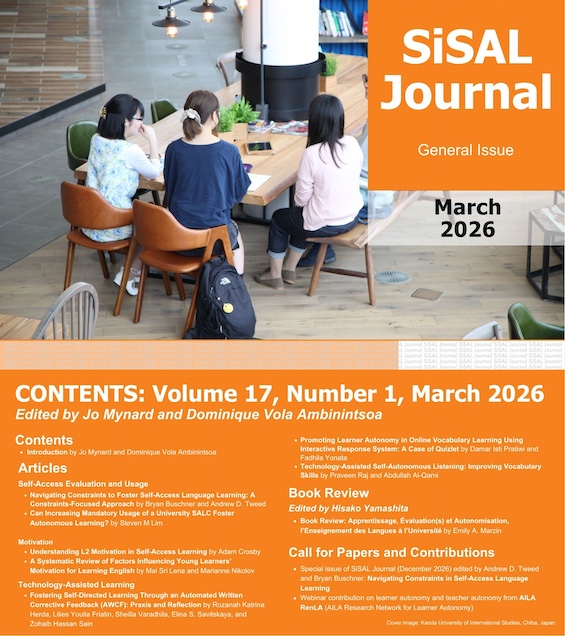
 SiSAL Journal