
Roderick Julian Robillos, Faculty of Education, Khon Kaen University, Thailand. https://orcid.org/0000-0001-7190-7679
Robillos, R. J. (2023). The impact of the FlipGrid application within the genre-based framework on students’ writing skills and self-regulation of learning awareness. Studies in Self-Access Learning Journal, 14(4), 456–475. https://doi.org/10.37237/140404
Download paginated PDF version
Abstract
This study investigated the potential impact of integrating the FlipGrid application within the genre-based framework (intervention used in the study), addressing both the enhancement of writing skills across writing genres and the cultivation of self-regulation among 30 Thai English as a Foreign Language (EFL) university students who participated in a 10-week writing course. This study employed a sequential mixed methods approach, utilizing a single group of pre- and post-test design. Study results demonstrated a significant improvement in students’ writing skills, as indicated by the higher scores in the post-test (x̄=15.35) compared to the pre-test (x̄=10.29). Regarding students’ four quiz performances, they exhibited the most improvement in the ‘narrative’ and ‘process’ genres, while the ‘argumentative’ genre showed the least progress. Notably, across these genres, the ‘content’ component saw the most improvement, whereas ‘lexical resources’ displayed the least. Additionally, the students’ SRL awareness significantly increased after the intervention, suggesting a greater understanding of self-regulatory skills such as planning, self-monitoring, evaluation, reflection, effort, and self-efficacy. The study likewise revealed a significant relationship between the students’ writing performance and their awareness of self-regulated learning (SRL). The qualitative data supported these findings, emphasizing the students’ positive experiences in the intervention. This study contributes to digital writing pedagogy by offering practical insights for innovative, technology-driven writing instruction, fostering proficient and self-directed digital-era writers.
Keywords: genre-based approach, writing skills, FlipGrid application, self-regulation of learning
Writing is a fundamental skill in language learning, assessing one’s capacity to express thoughts, convey opinions, and use language effectively (Malmir & Khosravi, 2018; Robillos & Thongpai, 2022). Writing has become an indispensable requirement for students in tertiary education (Robillos & Thongpai, 2022) and has an important function in achieving academic success at the university level (Matsuda & Silva, 2010). However, university students often find themselves grappling with the challenging task of writing, particularly those who compose their work in English (Malmir & Khosravi, 2018). The challenges that hinder the development of effective L2 writing abilities stem from multiple facets, including a grasp of the subject matter, managing syntactic and lexical complexity, ensuring cohesion and coherence, establishing logical connections, and maintaining a fluent expression of ideas. These challenges become more complex when students are exposed to different writing genres, such as descriptive, narrative, process, and argumentative styles (Hyland, 2013; Malmir & Khosravi, 2018). Notably, these issues are not unique to a specific region or student population. Thai university students, for instance, also grapple with similar writing problems (Robillos, 2023b; Visser & Sukavatee, 2020). They often face difficulties related to a lack of content knowledge, struggles with grammar usage, limited vocabulary, and difficulties in achieving the desired level of proficiency in various writing genres.
Many second language acquisition (SLA) scholars have emphasized the importance of understanding how genres create, reproduce, and revise the systems in which they are used (Bazerman, 2013). Acquiring proficiency in specific genres plays a crucial role in developing an authorial identity, making effective choices, and supporting academic progress (Bazerman, 2013; Robillos & Thongpai, 2022). However, when dealing with specialized writing genres characterized by complex terminology and lexico-syntactical structures, L2 writing becomes more challenging (Hyland, 2013; Malmir & Khosravi, 2018; Robillos & Thongpai, 2022). To address these challenges, effective methodologies are needed to enhance writing proficiency across various genres. The genre-based approach (GBA) stands out as a promising strategy recognized and supported by scholars and academics (Hyland, 2014; Kinik & Genc, 2022; Nagao, 2018; 2019; Purba et al., 2020; Sari, 2019).
The GBA effectively enhances students’ writing skills by focusing on text organization and composition strategies (Hyland, 2013). It is a comprehensive approach in L2 education that categorizes texts by purpose, structure, and context, emphasizing proper language use in diverse genres and task types. Students benefit from studying and emulating examples within specific genres, highlighting the value of exposure to multiple genre instances for improving their writing skills. The key GBA stages, including field knowledge, text modeling, joint construction, and individual writing (Halliday & Matthiessen, 2004), assist students in managing and completing their writing tasks effectively (Hyland, 2014). Furthermore, GBA seeks to enhance students’ understanding of how information is structured in writing by analyzing distinctive features in purposeful texts. This emphasizes that genre writing extends beyond writing itself, underscoring how writers use language to achieve specific goals. For instance, writers must consider the communicative purpose, linguistic features, and rhetorical structure when undertaking various writing tasks such as description, retelling, and reporting.
Several studies (Kinik & Genc, 2022; Nagao, 2019; Purba et al., 2020; Sari, 2019) confirm GBA’s effectiveness in improving L2/EFL writing skills. Nagao (2019) implemented GBA across four stages in an EFL course, enhancing learners’ understanding of lexico-grammatical features and generic structures in discussion writing, especially among low-proficiency learners. For instance, Purba et al. (2020) found that GBA, used as a tutorial tool, improved students’ writing abilities and promoted higher-level skills. Sari (2019) conducted a qualitative study supporting GBA’s role in enhancing writing performance. Kinik and Genc (2022) demonstrated positive outcomes when teaching argumentative essays using GBA. These studies collectively highlight GBA’s effectiveness in enhancing writing skills in various educational contexts.
Whilst GBA is not a recent instructional method in language learning, its combination with technology has yielded significant outcomes (Cunningham, 2019; García Castro, 2018; Korkmazgil, 2022). Technology has the capability to enhance writing by providing tools that aid students in planning, monitoring, revising, and evaluating their work while also facilitating collaboration and sharing among students, peers, and teachers in the classroom, fostering positive learning reflections (Robillos & Thongpai, 2022; Tangjitnusorn & Sukavatee, 2016). Moreover, the current generation of learners exhibits a natural inclination towards digital learning rather than traditional methods (Morabit & Soughati, 2023). Among the various digital technologies popular among students, Web 2.0 applications, such as FlipGrid, have gained prominence (Fahey et al., 2019; Robillos, 2023b). These applications enhance motivation and engagement and offer convenient access anytime and anywhere (Li et al., 2017).
The integration of GBA with technology has shown promise in enhancing language learning (Cunningham, 2019; García Castro, 2018; Korkmazgil, 2022). Technology offers tools for planning, monitoring, revising, and collaboration, catering to the digital inclinations of today’s learners (Robillos & Thongpai, 2022; Tangjitnusorn & Sukavatee, 2016). Web 2.0 applications like FlipGrid are particularly popular (Fahey et al., 2019; Robillos, 2023b), enhancing motivation and accessibility. FlipGrid, a popular free online platform from Microsoft, is gaining popularity among teachers and students. It allows teachers to create ‘grids’ for their classes, where students can be organized into sections. Within these grids, teachers can pose discussion prompts, and students respond with video recordings or written outputs, enabling interactive discussions (Fahey et al., 2019). This tool not only facilitates online face-to-face interaction but also fosters virtual discussions, promoting engagement and ease of use of technology for students (Bartlett, 2018).
The integration of technology into GBA aligns with the development of instructional designs suitable for both online and in-person learners, improving L2/EFL writing skills and collaborative learning (Cunningham, 2019; García Castro, 2018; Korkmazgil, 2022; Visser & Sukavatee, 2017). For example, Cunningham (2019) explored the use of GBA in synchronous computer-mediated communication, revealing successful navigation of genre-specific stages. Visser and Sukavatee (2017) noted improvements in students’ writing tasks in a blended learning environment. Korkmazgil (2022) investigated the impact of GBA-mediated technology on L2 writers’ proficiency. García Castro (2018) integrated GBA with email and blog platforms, providing workplace-relevant experiences.
Self-regulated learning, or SRL, involves actively controlling and directing one’s learning process through cognitive, metacognitive, and motivational strategies (Zimmerman, 2008). For writers, SRL plays a vital role in achieving writing goals, effective planning, organization, reflection, and perseverance (Robillos, 2023a). GBA to writing is closely linked to SRL, offering a structured framework that promotes metacognitive thinking (Toering, 2011). GBA enhances student learning by providing a clear structure for writing tasks and the study of different genres, such as descriptive, narrative, process, and persuasive essays, allowing students to grasp specific genre characteristics and conventions (Kinik & Genc, 2022; Purba et al., 2020; Sari, 2019). Furthermore, GBA fosters reflection and metacognitive thinking (MacArthur et al., 2022). By actively analyzing and deconstructing various genres, students become more self-aware of their writing strengths and areas for improvement. They learn to identify genre-specific goals and requirements, applying this knowledge to their own writing. This reflective process cultivates autonomy and responsibility, key components of self-regulation in learning (Robillos & Thongpai, 2022).
The integration of technology into GBA has demonstrated positive outcomes in improving students’ writing skills (Cunningham, 2019; García Castro, 2018; Visser & Sukavatee, 2017). GBA, closely tied to SRL, provides students with a well-defined framework for their writing tasks, encouraging reflection and metacognitive thinking (MacArthur et al., 2022) to foster self-regulation (Robillos & Thongpai, 2022). Nevertheless, the utilization of the FlipGrid application in GBA for L2 writing remains an underexplored area, particularly within the Thai EFL context. Thus, this study sought to address this research gap and sought answers to the following research questions:
- How do the students’ writing skills improve before and after the implementation of the intervention?
- Do the students’ writing quiz performances across genre types (descriptive, narrative, process, and argumentative) improve using the intervention?
- Does the implementation of the intervention enhance students’ awareness of SRL in terms of its six components, namely planning, self-monitoring, evaluation, reflection, effort, and self-efficacy?
- Is there a significant relationship between the students’ writing skill and their awareness towards SRL?
- What learning experiences have the students gained in terms of improving their writing skills and SRL awareness after following the intervention implemented on them?
Methodology
Method and Participants
This study employed a sequential mixed-method type of research. First, quantitative data were used to assess the impact of the intervention on students’ writing skills across various genres and their awareness towards SRL. The subsequent qualitative phase delved into students’ experiences with the FlipGrid application in the GBA framework, examining its effects on writing tasks and SRL. This combined approach allowed for a thorough investigation of the research questions by integrating statistical analysis with an in-depth exploration of student perspectives (Creswell & Creswell, 2018). Additionally, the study utilized a pre- and post-test design with 30 purposefully selected 2nd year Thai university students with 11 males and 19 females, the age range was between 19 and 20 years, and collectively, they exhibited an average of more than ten years of exposure to English language instruction within the Thai national education system preceding their matriculation into the university. The participants are enrolled in the Approaches to Writing course, which focuses on enhancing academic and critical writing skills through exposure to diverse writing task types. Thai university students are required to study and be exposed to various writing genres in English since it ensures they become academically prepared by familiarizing themselves with diverse assignments common in higher education. Additionally, exposure to different genres cultivates critical thinking and analytical skills as students learn to adapt their writing styles to different contexts. The requirement is also driven by the need for professional relevance, preparing students to communicate effectively in diverse workplace scenarios. Proficiency in various writing genres is essential in the global context, where English serves as a universal language of communication.
By utilizing the Flipgrid application, Thai university participants can not only explore written genres but also engage in dynamic discussions and analyses of these genres through spoken communication. This multimodal approach is particularly beneficial as it allows participants to not only understand the conventions of various genres but also articulate their thoughts verbally, fostering a deeper comprehension of the nuances of each genre. This integration of the genre-based approach with Flipgrid aligns with contemporary educational methodologies, acknowledging the importance of both written and oral communication skills in academic and professional settings.
Data Collection
Pre- and Post- Writing Tests
To evaluate the impact of the intervention on students’ writing performance, pre- and post-writing tests were used. The pre-test involved writing a 250-word essay on a descriptive topic which was aligned with their course content. Participants engaged in 60 minutes of planning activities before the pre-test. The post-writing test, which used a similar descriptive topic, occurred one day after the intervention. Essays were assessed by two English lecturers using the scoring rubric designed by the researcher himself, which consisted of five components namely: content, grammar and structure, lexical resource, logical order, and supporting details. The total score ranged from 1 (lowest) to 4 (highest), resulting in a total of 20 marks.
Writing Quizzes Across Task Types
A total of four writing quizzes, i.e., one writing quiz for descriptive, narrative, process, and argumentative genres, were used. These quizzes were aimed at evaluating students’ ability to write essays across various genres in L2. The topics of the quizzes were aligned with the subject’s course objectives. Each essay was assessed using a writing rubric developed by the researcher himself and checked by experienced English instructors from the university. The rubric used to assess the students’ writing quizzes were the same as those scoring rubric criteria used in their pre- and post- tests.
Self-Regulation of Learning Scale or SRLS.
The SRLS was administered to the participants before and after the intervention (episodically) to track their awareness of SRL. This questionnaire, originally developed by Toering (2011), consists of 46 items that were divided into six components: planning, self-monitoring, evaluation, reflection, effort, and self-efficacy. In the present study, some modifications were made to the scale. The subscales of planning, self-monitoring, effort, and self-efficacy, initially scored on a 4-point Likert scale, were revised to a 5-point Likert scale to align with the subscales of evaluation and reflection. Reliability values for the revised subscales ranged from 0.69 to 0.78. The evaluation subscale ranged from ‘never’ to ‘always’ on a scale of 1 to 5, while the reflection subscale ranged from ‘strongly agree’ to ‘strongly disagree.’ Prior to data analysis, the scores on the reflection subscale were reversed to match the scoring direction of the other five subscales. To ensure questionnaire reliability, a pilot study involving 51 3rd year college students who were not part of the target group was conducted, yielding a reported reliability value of 0.84 Cronbach’s Alpha.
Interviews
Semi-structured interviews were conducted to gain comprehensive insights and detailed information regarding the students’ utilization of the intervention in enhancing their writing tasks. Additionally, these interviews sought to delve into the ways in which the intervention impacted the students’ SRL awareness.
The Intervention
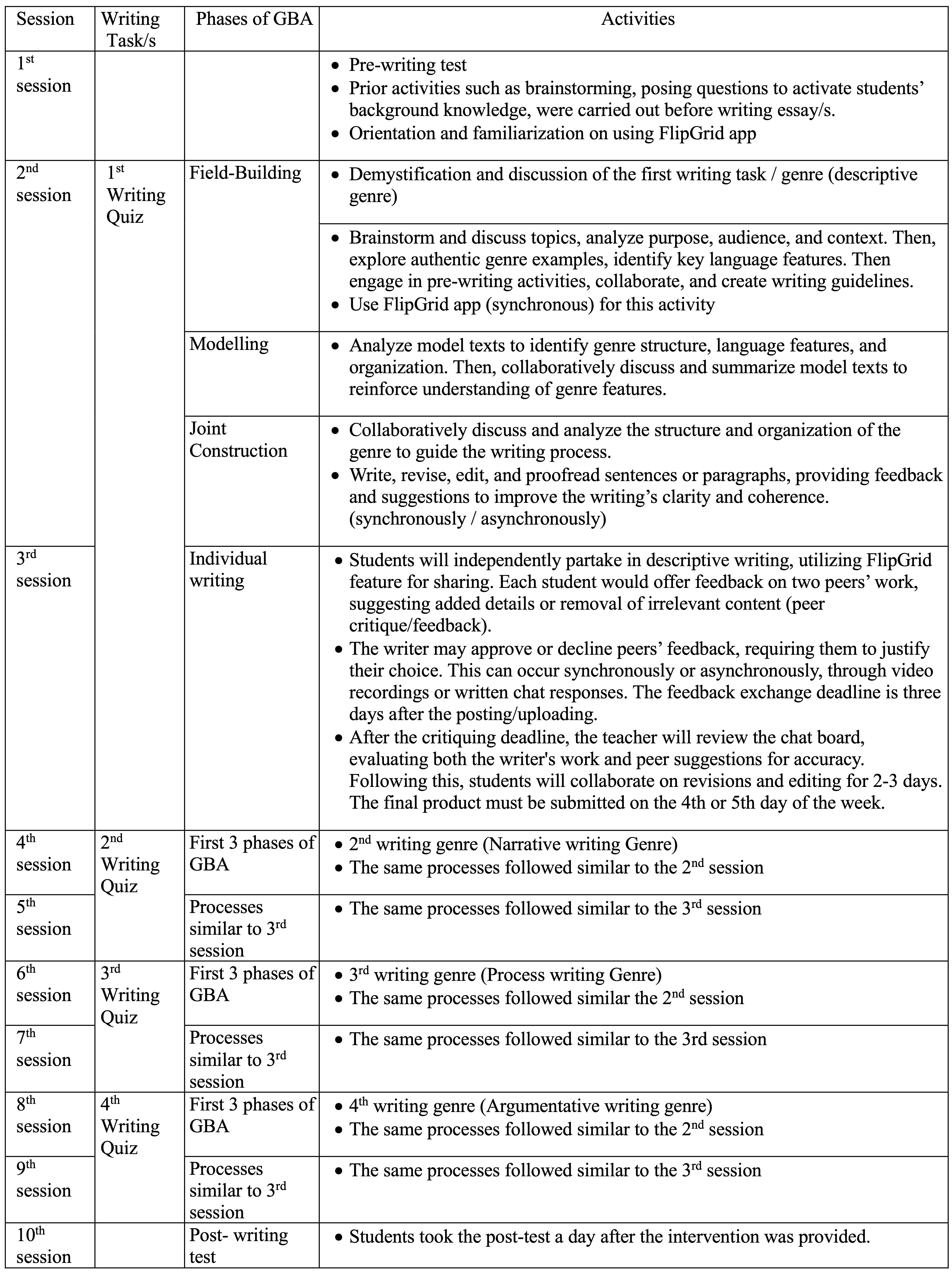
The intervention was carried out over the course of 10 sessions, including the following: One session for the pre-writing tests along with the orientation and familiarization of the participants with the usage of the FlipGrid application, one session for the post-writing test, and eight sessions for implementing the intervention to support both group and individual writing tasks, whether conducted synchronously or asynchronously. The participants engaged with four distinct writing genres during the strategy intervention. To facilitate the students’ writing tasks, the instructional framework of the GBA writing instruction was based on the teaching and learning cycle model (Hyland, 2013), as well as the processes involved in utilizing the FlipGrid application. Table 1 presents details of the intervention program.
Table 1
Intervention
Results
Quantitative Analysis
Table 2 displays the overall t-test results and shows that there was a significant difference in the participants’ pre- and post-writing performances. As shown, the overall mean results before the intervention (x̄=10.29) and after the intervention (x̄=15.35) show that when compared statistically, the differences between the two results were significant, as evidenced by a p-value of 0.000 which is less than the 0.05 level of significance. This only suggests that the students’ writing performance was influenced by the intervention.
Table 2
Overall Test of Difference on the Students’ Pre- and Post- Writing Tests

Writing Quiz Results Across Four Genres
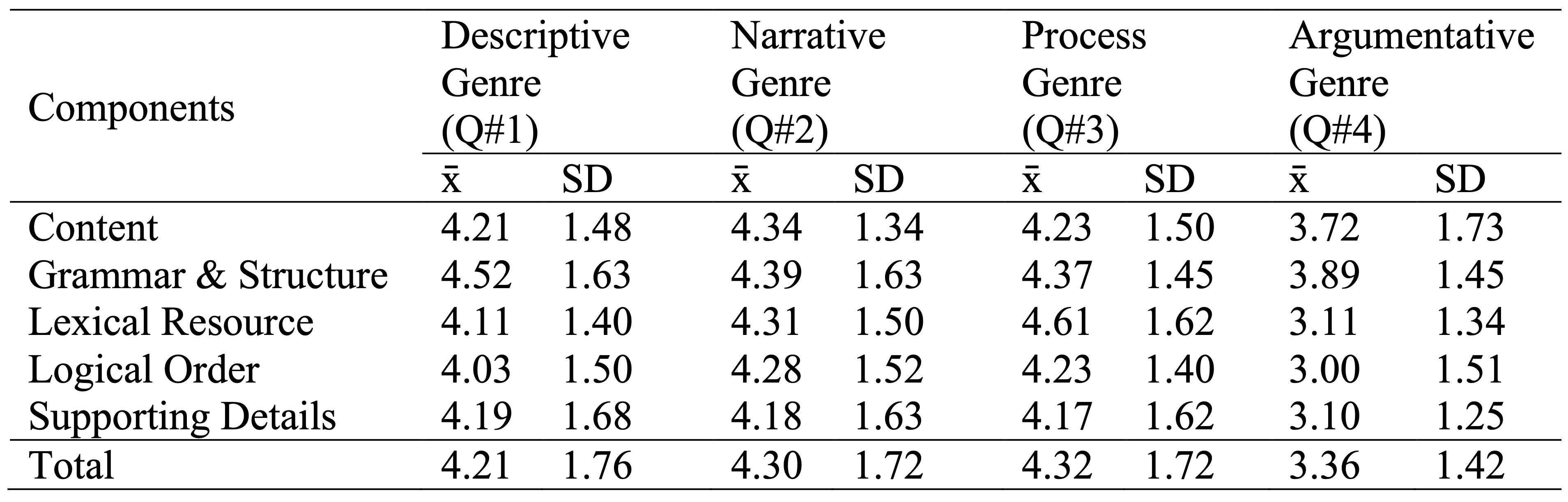
Table 3 presents the descriptive statistics for four writing quizzes across genres. It revealed that the ‘process’ and ‘narrative’ genres showed the most improvement based on mean and standard deviation, with x̄=4.32; S. D=1.72 and x̄=4.30; S. D=1.72, respectively. The ‘argumentative’ genre, however, had the lowest mean score of x̄=3.35; S. D=1.42. Notably, the ‘content’ component demonstrated the most improvement across descriptive, narrative, and argumentative genres, while ‘lexical resources’ showed the least improvement. The descriptive and argumentative genres had the least improvement in ‘logical order,’ while the narrative and process genres had the least improvement in ‘supporting details.’ These results indicate that although students may improve in one genre, transferring their writing skills to another genre can be challenging.
Table 3
Descriptive Statistics for Each of the Four Writing Quizzes (Q) Across Genres
Students’ Pre- and Post-SRL Awareness Results
Table 4 presents the test of the difference between students’ pre- and post-SRL awareness. The findings indicate a significant difference in all six SRL components. The post-SRL awareness test had a higher mean score of x̄=4.46 and SD=.930 than the pre-SRL awareness test with a mean score of x̄=3.00 and SD=1.07. When compared statistically, the differences between the two results were significant, with a p-value of 0.000 which is less than 0.05 level of significance. Notably, the components that showed the most improvement were ‘self-monitoring,’ ‘evaluation,’ and ‘self-efficacy’ whilst planning, reflection, and effort demonstrated less improvement.
Table 4
Test of Difference on Students’ Pre- and Post- SRL Awareness

Relationship Between Students’ Writing Performance and SRL Awareness
Table 5 reveals significant relationships between students’ writing performance/s and SRL awareness. The components of planning, self-monitoring, evaluation, reflection, effort, and self-efficacy yielded t–computed values of 2.22, 2.17, 2.26, 2.16, 2.11 and 2.08 respectively, and are higher than the t-critical value of 2.05. This showed a significant relationship between the respondents’ writing performance and the six SRL components. Overall, the implementation of the intervention to improve the participants’ writing performance showed a significant relationship with their awareness towards SRL since the t-computed value of 2.16 is higher than the t-critical value of 2.05.
Table 5
Relationship Between the Students’ Writing Performance and SRL Awareness

Qualitative Analysis
There were three themes that emerged after the interviews. These were the benefits of using the intervention, challenges encountered, and enhanced SRL awareness.
Theme 1: Benefits of Using FlipGrid Application Within the GBA Framework
The first theme focused on the benefits of using the intervention with three sub-codes: enhanced grasp of writing precision, deeper understanding of language features, and enhanced collaborative skills.
Enhanced grasp of writing precision. The emphasis of GBA on understanding various genres and their specific linguistic features equips students with a practical and functional understanding of writing. This approach fosters grammatical proficiency, enabling students to construct sentences with greater accuracy and clarity. Additionally, GBA enhances lexical accuracy by exposing students to genre-specific language use, helping them select the most appropriate words and phrases. As Participant (P4) explained:
“I have significantly enhanced my understanding of grammatical rules and improved my command over lexical accuracy in writing.” P4
Deeper understanding of language features. GBA has played a significant role in helping them gain a deep understanding of language features, vocabulary, and genre-specific purposes. This implies that GBA has contributed to refining their writing skills, especially in terms of comprehending and effectively utilizing language features. These features may include grammar, syntax, rhetoric, and the nuances of language use specific to different genres or contexts. P1’s statement suggests that GBA has had a positive impact on their writing skills, particularly in relation to understanding how to tailor their writing to the requirements of different genres. This understanding is invaluable in academic and professional contexts, where writing style and purpose can vary greatly. P1 stated that:
“GBA helped me gain a deep understanding of language features, vocabulary, and genre-specific purposes, refining my writing skills.” P1
Enhanced collaborative skills. The FlipGrid application serves as a designated place for enhanced collaboration as participants used its chat feature for interactions and collaborations. By designating this tool, participants acknowledge its pivotal role in facilitating a dynamic, collaborative learning environment. In fact, collaborative writing has proven to be a motivating factor for participants, fostering a collaborative mindset and enhancing their overall motivation to complete writing assignments. The statements made by participants highlight that working with peers not only improves the quality of their work but also boosts their motivation. Collaborative writing often involves brainstorming, peer feedback, and mutual support, which can make the writing process more engaging and rewarding. As P8 and P11 stated:
“Collaborating with my peers boosts my collaborative mindset and increases my motivation to complete my writing task” P8
“The chat feature of FlipGrid application served as our designated platform for more interactions and collaborations particularly” P11
Theme 2: Challenges Encountered by the Participants in Using FlipGrid Application
The third theme had two sub-codes: uploading difficulty and transferability of applying to another genre.
Uploading difficulty. The participant’s mention of issues related to uploading video responses and managing the interface highlights potential hurdles like slow upload times, format compatibility, and interface navigation complexities. These challenges impact the user experience, potentially leading to reduced engagement and hindered access to the intervention’s educational content. As P13 mentioned:
“Sometimes I experienced difficulty in uploading my video response and managing the interface and made me stop working” P13
Transferability of applying to another genre. The sub-code “transferability of applying to another genre” delves into the challenge faced by participants when attempting to transfer their writing skills and linguistic competence from one genre to another. The participant’s statement stated below underscores the struggle of adapting writing skills across distinct writing styles or genres. This challenge underscores the need for explicit instruction and guidance on genre-specific writing skills. Participants might require support in understanding the nuanced differences between genres, providing them with the necessary tools to effectively adapt their writing skills. P14 expressed her opinion about this:
“I find it difficult to use the same linguistic and grammatical features of one genre to another genre, i.e., narrative versus persuasive, they are quite different” P14
Theme 3: Enhanced SRL Awareness
The last theme had two sub-codes: time management and self-reflection.
Time management. With improved time management, participants can allocate their study time effectively, set specific learning objectives, and monitor their progress towards these goals. This sub-code emphasizes that the intervention has played a pivotal role in fostering a greater sense of control and responsibility over their learning journey, resulting in more efficient and goal-oriented learning practices. The participant’s response highlights the development of critical self-regulation skills. P6 expressed that:
“I could be able to independently manage my time, set goals, and monitor my progress” P6
Self-reflection. Through self-reflection, participants critically evaluate their strengths, weaknesses, and learning strategies. They consider what worked well and what could be improved (Bozorgian, 2014), subsequently adjusting their study methods (Robillos, 2023). This metacognitive practice fosters greater self-awareness and the ability to adapt to more effective learning approaches. Self-reflection is a key component of self-regulated learning, encouraging participants to become more proactive, reflective, and adaptive learners. Participant 5 conveyed:
“The app allowed us to evaluate our performance and make adjustments accordingly” P5
Discussion
The study’s findings revealed that the students’ writing performances across various genres were significantly improved after the intervention was implemented. The result might be attributed to the agentive features of the intervention, where the students’ writing tasks were effectively facilitated. Since the emphasis of GBA is on understanding various genres and their specific linguistic features (Kinik & Genc, 2022), it enabled the students to equip themselves with a practical and functional understanding of writing (Hyland, 2014) and fostered grammatical proficiency (Nagao, 2019), enabling students to construct sentences with greater accuracy and clarity. This corroborates the fact that GBA enhances lexical accuracy by exposing students to genre-specific language use, helping them select the most appropriate words and phrases. This finding is in line with the studies conducted by Kinik and Genc (2022) and Nagao (2019), reporting that GBA aids students in refining their writing skills, especially in terms of comprehending and effectively utilizing language features. Furthermore, it is notable that the students became more motivated and more engaged in accomplishing their writing tasks due to the aid of FlipGrid. The finding is in agreement with the studies that reported the impact of integrating technology into GBA (Cunningham, 2019; Fahey, 2019; Korkmazgil, 2022; Visser & Sukavatee, 2017). Using the FlipGrid application can create an engaging EFL learning atmosphere (Fahey et al., 2019) and facilitate writing tasks in a more engaging way (Robillos, 2023a).
Regarding the students’ writing quiz performances, it was revealed that the ‘narrative’ and ‘process’ genres were the most improved genres whilst the ‘argumentative’ genre was found to be the least improved. It can be noted that the ‘narrative’ genre often focuses on past experiences and storytelling. The use of Flipgrid’s chat and feedback features may have facilitated students’ engagement and creativity, allowing them to express their ideas more effectively and enabling them to narrate their experiences and stories with greater fluency and expression. The ‘process’ writing genre, however, typically involves explaining step-by-step procedures or instructions. By using the Flipgrid application features, students may have found it easier to communicate complex procedures effectively, resulting in improved clarity and organization within the ‘process’ genre. Conversely, the ‘argumentative’ genre, which was found to be the least improved genre, often requires a deeper understanding of the topic and critical thinking skills. It might be due to the challenges the students encountered in formulating strong arguments and effectively addressing opposing viewpoints, which may not have been adequately addressed by the Flipgrid application alone. During the semi-structured interviews, one respondent explained that the teaching and learning cycle that the GBA provided aided her to enhance her understanding of linguistic and grammatical rules and eventually improved her command over lexical accuracy in writing, however, she found it more complex when writing ‘argumentative’ essay.
However, challenges arose during the implementation of the intervention. One challenge encountered by the students was the transferability of writing skills acquired through GBA to different contexts or genres. When students engage in a GBA to writing, they focus on understanding and practicing specific genres or types of writing to help students develop a deep understanding of the structure, language features, and purposes of different genres. Whilst students may demonstrate improved writing performance within the specific genre, they may encounter challenges when trying to transfer and apply these skills to other writing genres. During the interview, one respondent struggled to effectively apply the structure and linguistic features when writing another genre.
Study results likewise indicate that the intervention enhanced students’ self-regulatory processes throughout their writing tasks. Firstly, in terms of planning, the intervention provided a structured platform for students to engage in pre-writing activities, provided them a visual and interactive tool to conceptualize and organize their ideas effectively. In addition, the invention also supported self-monitoring of students’ writing progress as it encouraged them to reflect on their writing and identify areas for improvement. Finally, the intervention facilitated evaluation of their writing by providing opportunities for self-assessment and peer feedback, compared them to genre-specific criteria, and reflected on their performance.
Conclusions and Limitations
The utilization of the FlipGrid application in GBA resulted in positive outcomes concerning students’ writing performance across writing genres. Notably, the ‘narrative’ and ‘process’ genres displayed the highest levels of improvement indicative that the intervention facilitated students in effectively conveying their personal experiences through narratives and providing clear step-by-step instructions in the process genre. However, it was observed that the “argumentative” writing genre exhibited the least amount of improvement. This may be attributed to “genre transferability” when they try to transfer and apply genre skills to other genres. To enhance students’ proficiency in this genre, it may be beneficial to incorporate instructional methods or supplementary resources that specifically focus on developing argumentation skills.
Moreover, the strategy intervention used in the present study had a positive impact on students’ SRL awareness, as evidenced by improvements in components such as planning, self-monitoring, evaluation, reflection, effort, and self-efficacy. This aligns with the theoretical underpinnings of self-regulation and metacognition, emphasizing the role of self-awareness and strategic thinking in optimizing learning outcomes. Furthermore, the interactive and multimedia features of FlipGrid facilitated engagement, creativity, and authentic communication, while also providing opportunities for peer feedback and collaboration.
The participants’ positive reception of the FlipGrid application underscores their adaptability and willingness to embrace technological innovations in their language learning journey. The user-friendly interface, instant feedback, and accessibility of the application resonated well with the participants, creating an environment conducive to immersive language practice. By utilizing the unique features of FlipGrid application, educators can create a supportive and engaging learning environment that encourages students to become more proficient writers across genres (Robillos & Thongpai, 2023).
Despite the promising outcomes, some limitations should be considered. First, the scope of the study was confined to a specific context and a relatively small sample size, which may limit the generalizability of the findings. Secondly, the SRL assessment which occurred episodically, only before and after the intervention, potentially missing the dynamic changes in SRL during the intervention period. Future research should consider assessing SRL continuously at various points throughout the intervention to gain a more comprehensive and accurate understanding of how students’ SRL skills evolve over time, offering insights that are valuable for educational practice and the development of effective interventions.
In addition, connections can be drawn between the findings of the in-class experiment and potential applications for practitioners and researchers working in extracurricular or informal learning contexts. For example, strategies and tools tested in the classroom setting could be adapted or modified for learners engaged in self-directed language learning beyond formal instructional environments. Improvements in SRL awareness and language proficiency identified in this study are highly transferable to scenarios where learners are not physically present in a classroom. Educators, language tutors, or app developers can leverage the principles and successes observed in this study to design interventions that cater to learners in diverse settings, such as online language courses, language exchange programs, or independent language study (i.e., computer-aided argument mapping or CAAM, and the like).
Moreover, there are potential challenges and opportunities specific to out-of-class environments which offer potential benefits for learners. By delving into settings outside traditional academia, individuals can engage with the language in real-world contexts, fostering a more profound comprehension and application of linguistic skills. However, this shift poses challenges such as the absence of structured guidance, limited accountability, and potential technological barriers. To mitigate these obstacles, strategies include integrating technology for independent learning, establishing virtual communities to encourage peer interaction, and promoting personalized learning plans to sustain motivation. Opportunities arise through flexible learning paths, real-world applications of language skills, and access to diverse digital resources. Self-paced learners need tailored interventions, such as individualized support and adaptive learning platforms, which can be implemented to optimize language acquisition. By broadening the discourse to encompass applications beyond the classroom, this recommendation aims to not only enhance our understanding of in-class dynamics but also offer valuable insights for practitioners and researchers seeking to enrich language learning experiences across various learning contexts.
Notes on the Contributor
Dr. Roderick Julian Robillos holds a Ph.D. in Development Education from Central Luzon State University, Philippines, and has a decade of English teaching experience in the Philippines. He is currently affiliated with the TESOL Program at Khon Kaen University, Khon Kaen, Thailand. His expertise lies in L2/EFL pedagogies, self-regulated learning, metacognitive strategy instruction, translanguaging, and educational technology. Dr. Roderick’s impactful contributions span both teaching and research, enriching the global discourse on innovative language education.
References
Bazerman C. (2013). A theory of literate action (Vol. 2). WAC Clearinghouse. https://doi.org/10.37514/PER-B.2013.4791
Bartlett, M. (2018). Using Flipgrid to increase students’ connectedness in an online class. eLearn Magazine. https://dl.acm.org/doi/10.1145/3302261.3236703
Creswell, J. W., & Creswell, J. D. (2018). Research design: Qualitative, quantitative, and mixed method approaches. SAGE Publications. https://doi.org/10.1080/15424065.2022.2046231
Cunningham, D. J. (2019). Telecollaboration for content and language learning: A Genre-based approach. Language Learning & Technology, 23(3), 161–177. http://hdl.handle.net/10125/44701
Fahey, S., Moura, K., & Saarinen, J. (2019). The educator’s guide to FlipGrid. Retrieved from https://static.flipgrid.com/docs/Flipgrid_eBook_2nd_edition.pdf.
García Castro, J. F. (2018). Enhancing the writing skill through the use of genre-based approach and online engaging tools. [Unpublished master’s thesis]. Universidad del Norte, Colombia.
Halliday, M. A. K., & Matthiessen, C. M. I. M. (2004). An introduction to Functional Grammar (3rd ed.). Routledge. https://doi.org/10.4324/9780203783771
Hyland, K. (2013). Second language writing: The manufacture of a social fact. Journal of Second Language Writing, 22, 426–427.10.1016/j.jslw.2013.08.001
Hyland, K. (2014). Genre and Second Language Writing. USA: The University of Michigan Press. https://doi.org/10.3998/mpub.23927
Kinik, B., & Genc, B. (2022). A genre-based approach in teaching writing to student teachers of English language teaching in a digital context. The Reading Matrix: An International Online Journal, 22(2), 35–49. https://www.readingmatrix.com/files/29-dvis3gls.pdf
Korkmazgil, S. (2022). Technology-enhanced genre-based writing. In G. Yangın-Ekşi, S. Akayoglu, & L. Anyango, L. (Eds.), New directions in technology for writing instruction. English language education, vol 30 (pp. 3–66). Springer. https://doi.org/10.1007/978-3-031-13540-8_1
Li, Z., Dursun, A., & Hegelheimer, V. (2017). Technology and L2 writing. The handbook of technology and second language teaching and learning, 77–92. https://doi.org/10.1002/9781118914069.CH6
MacArthur, C. A., Philippakos, Z. A., May, H., & Compello, J. (2022). Strategy instruction with self-regulation in college developmental writing courses: Results from a randomized experiment. Journal of Educational Psychology, 114(4), 815–832. https://doi.org/10.1037/edu0000705
Malmir, A., & Khosravi, F. (2018). The effect of argument mapping instruction on L2 writing achievement across writing task and writing components: A case study of Iranian EFL Learners. Applied Research on English Language, 7(4), 514–538. https://doi.org/10.22108/ARE.2018.111870.1318
Matsuda, P. K., & Silva, T. (2010). Writing. An Introduction to Applied Linguistics, 232–246. https://www.taylorfrancis.com/chapters/edit/104324/9780203783733-19
Morabit, N. E., & Soughati, N. (2023). Digitizing writing: An empirical exploratory study towards students’ writing skill fluency improvement in ‘Padletosphere’. In International Conference on Big Data and Internet of Things (pp. 148-159). Springer, Cham. https://doi.org/10.1007/978-3-031-28387-1_14
Nagao, A. (2018). A genre-based approach to writing instruction in EFL classroom contexts. English Language Teaching, 11(5), 130–147. https://doi.org/10.5539/elt.v11n5p130.
Nagao, A. (2019). The SFL genre-based approach to writing in EFL contexts. Asian-Pacific Journal of Second and Foreign Language Education, 4(1), 1–18. https://doi.org/10.1186/s40862-019-0069-0
Purba, R., Thao, N. V., & Purba, A. (2020). Using genre-based approach to overcome students’ difficulties in writing. Journal of Education and e-Learning Research, 7(4), 464–470. https://doi.org/10.20448/journal.509.2020.74.464.470
Robillos, R. J. (2023a). Effect of metacognitive-based digital graphic organizer on learners’ oral presentation skill and self-regulation of learning awareness. International Journal of Instruction, 16(3), 639–654. https://doi.org/10.29333/iji.2023.16334a
Robillos, R. J. (2023b). Improving students’ speaking performance and communication engagement through technology-mediated pedagogical approach. International Journal of Instruction, 16(1), 551–572. https://doi.org/10.29333/iji.2023.16131a
Robillos, R. J., & Thongpai, J. (2022). Computer-aided argument mapping within metacognitive approach: Its impact on students’ argumentative writing performance and self-regulated learning. LEARN Journal: Language Education and Acquisition Research Network, 15(2), 160–186. https://so04.tci-thaijo.org/index.php/LEARN/index
Sari, D. M. M. (2019). An overview of genre-based approach in EFL writing class. Journal of English Education (JournE), 1(1), 31–40. https://doi.org/10.1075/aral.10.2.10ham
Tangjitnusorn, K., & Sukavatee, P. (2016). The effects of community-based instruction using hybrid learning on English oral communication for tourism industry of undergraduate students. Journal of Education Naresuan University, 18(4), 14V28. https://doi.org/10.5539/elt.vl2n7p12
Toering, T. T. (2011). Self-regulation of learning and the performance level of youth soccer players. The University of Groningen. https://pure.rug.nl/ws/portalfiles/portal/14564998/02c2.pdf
Visser, P., & Sukavatee, P. (2017). Effects of the genre-based writing instructional module in a blended learning environment. Journal of Education Naresuan University, 22(2), 1–18. https://so06.tci-thaijo.org/index.php/edujournal_nu/article/view/102209
Zimmerman, B. J (2008). Investigating self-regulation and motivation: historical background, methodological development, and future prospect. American Educational Research Journal, 45(3) 166–185. https://www.jstor.org/stable/30069464
 SiSAL Journal